Nabeshima Sake: The Saga Bottle That Made Me Fall in Love with Nihonshu
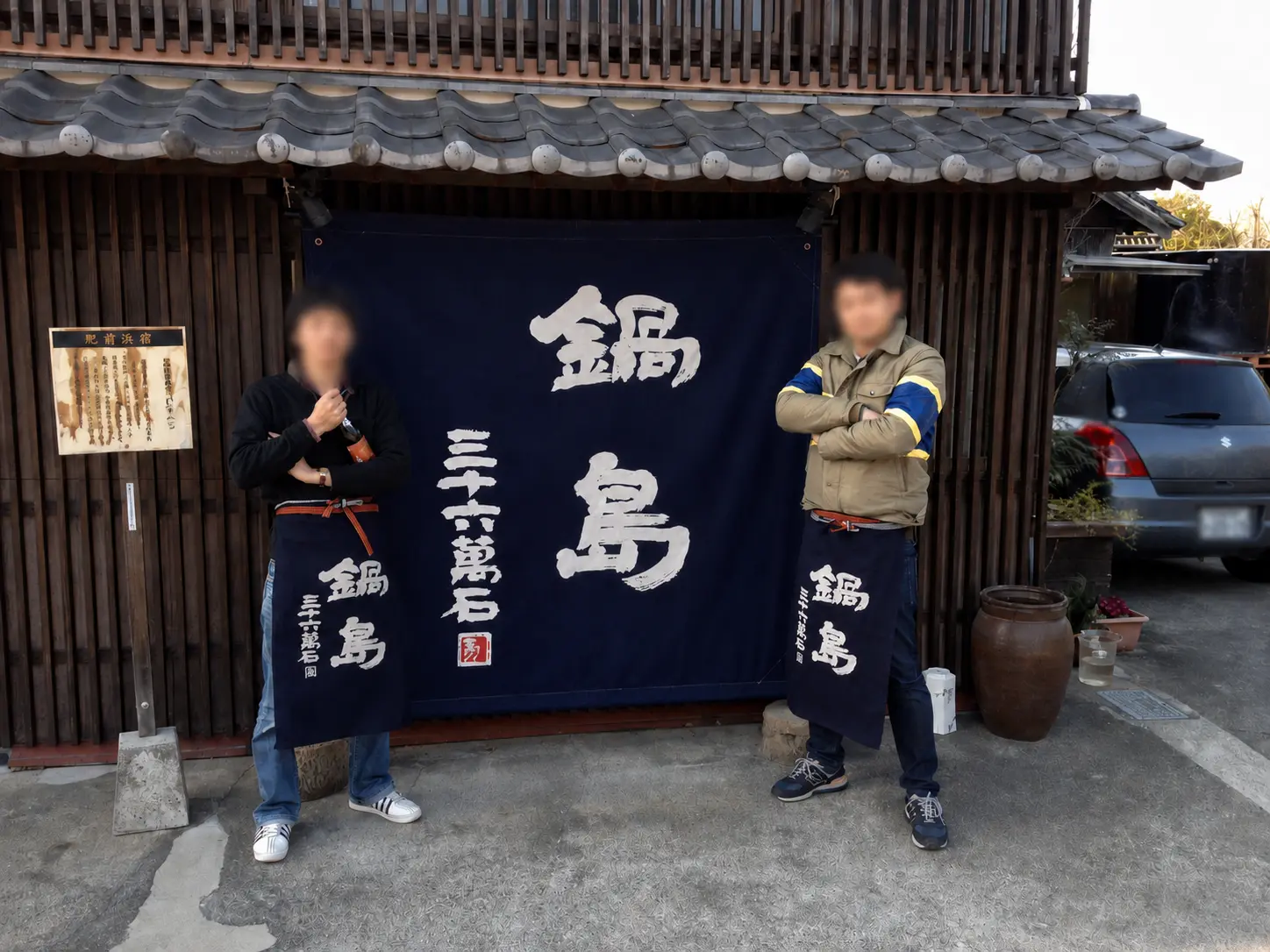
Table of Contents
Disclosure: This article may contain links to sake shops or related resources. Some may become affiliate links in the future. I only write about bottles and shops I genuinely find worth sharing.
This site is called The Sake Encounter, and every name has an origin. Mine is a single bottle: Nabeshima, from a small brewery in Kashima, Saga Prefecture. This is the story of my first encounter — the one that turned someone who quietly avoided sake into someone who now spends his evenings chasing new bottles.
If you are new to Japanese sake and wondering where to begin, Nabeshima is one of the bottles I would happily recommend. This article is not a technical review, but the story of the sake that changed my mind — with a little background on the brewery, the flavor, and how readers outside Japan may be able to find it.
A quick word on words: in Japan, we often call sake nihonshu to distinguish it from the broader word sake, which can simply mean alcohol in general. On this blog, I use both words: sake for readability, and nihonshu when I want to stay close to the Japanese meaning.
I used to dislike sake
I should be honest about where I started. I’m Japanese, but my alcohol tolerance is nothing remarkable — average at best. And for years, I genuinely disliked sake.
The reason was the way I first met it. At university drinking parties some twenty years ago, the culture was different from today: when someone senior filled your glass, refusing wasn’t really an option, and the sake being poured was whatever was cheapest and closest at hand. I was newly of legal drinking age in Japan, with no idea what sake was supposed to taste like. I drank far more than I should have, decided this was what sake tasted like, and woke up the next morning with a hangover and a conclusion: sake was not for me.
Looking back, the problem was never sake itself. It was drinking the wrong bottle, the wrong way, in the wrong amount — a first impression formed under the worst possible conditions. But impressions like that are stubborn. For the better part of a decade, I politely avoided nihonshu at every table.
Then work brought me to Kashima
Seven or eight years later, work took me to Kashima, a quiet city in Saga Prefecture on the island of Kyushu. At my welcome party, someone poured me Kashima’s local pride: Nabeshima.
My honest first reaction was the old reflex — ugh, sake. But it was my own welcome party, the bottle looked genuinely elegant, and turning down the local sake being poured in my honor felt wrong. So I decided to take one polite sip, just enough not to offend anyone.
That sip erased ten years of prejudice in about two seconds.
What does Nabeshima sake taste like?
Freshness, first — almost startling. Then a gentle sweetness, a floral lift, and a wave of umami that filled the whole mouth at once. And what wasn’t there mattered just as much: none of the harsh, hot alcohol bite I had braced for. I remember staring at the glass and thinking, this cannot be the same drink.
It wasn’t, really. It was my first encounter with sake made with care — and it happened to be one of the best.
Falling down the Nabeshima rabbit hole
After that night, I became a regular at the local shops around Kashima that carried Nabeshima, and the deeper I went, the deeper it got. Nabeshima isn’t one sake; it’s a whole family of them. Different rice varieties. Different polishing ratios. Nama — unpasteurized sake — versions that taste like they were bottled yesterday, alongside pasteurized ones built for calm elegance. Seasonal releases you have to catch or miss. Cloudy nigori. Some with a faint, playful fizz.
One brand, endlessly varied — that depth pulled me in. And once Nabeshima had opened the door, I wanted to know what other encounters were waiting. I started seeking out other breweries, other regions, other styles, hoping to be moved like that again. Somewhere along the way, without ever deciding to, I had become a sake lover.
The habit never faded, either. Just the other day, I brought home two Nabeshima Junmai Ginjo bottles from a trusted local sake shop — one brewed with Akaiwa Omachi rice, the other with Yamadanishiki, both polished to 50%. Same brand, two rice varieties, two personalities: that is the Nabeshima rabbit hole in a single purchase.
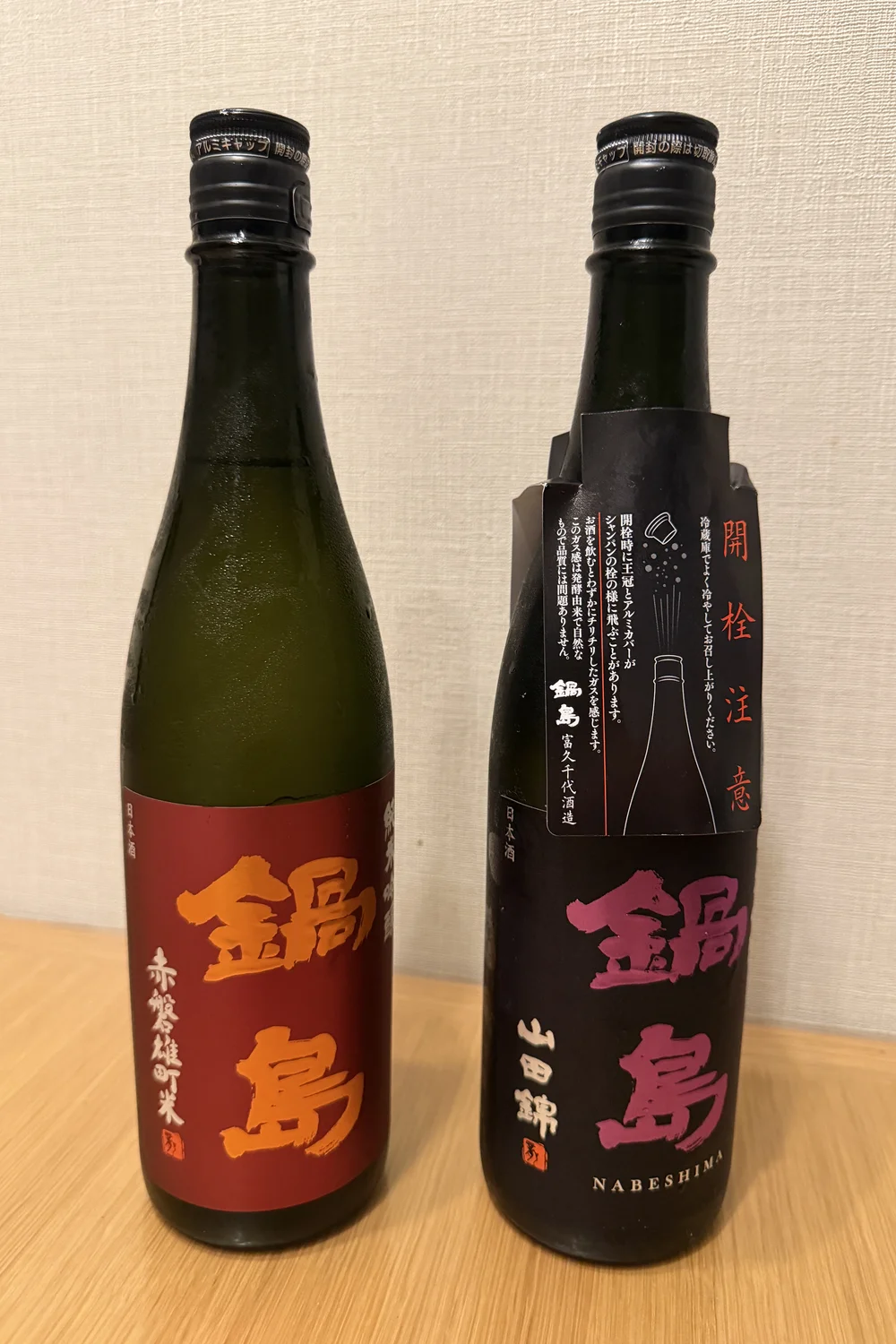
Nabeshima Junmai Ginjo “Akaiwa Omachi” on the left and “Yamadanishiki” on the right — still chasing, all these years later.
The brewery behind Nabeshima
Nabeshima is brewed by Fukuchiyo Shuzo, a small but highly respected brewery in Kashima named after the Nabeshima clan, the historical lords of the Saga domain. In 2011, its daiginjo took the Champion Sake title at the International Wine Challenge — a remarkable moment for a small Kyushu brewery, and part of what put Nabeshima on the map far beyond Saga.
One weekend, a friend and I spent a day hunting Nabeshima through the local sake shops of Kashima. At one of them, Ogusu Saketen, we spotted Nabeshima maekake — traditional indigo aprons worn at breweries and sake shops — and bought them on the spot, like the fans we had clearly become. Then we drove over to the brewery, put them on, and took a photo in front of the gates. That photo is the one at the top of this article.
I didn’t go inside, and I wouldn’t ask to. A sake brewery is a working sanctuary: small teams, delicate fermentation, strict hygiene, and an environment where invisible microorganisms matter. Very few breweries can spare the hands for visitors, and honestly, I find something moving about that closed door — the sake itself is the tour.
There is, however, one lovely exception in the town itself. Every spring, Kashima holds Sakagura Tourism, a festival weekend when visitors can walk around the sake-brewing district, visit participating breweries and shops, and feel how closely the town is connected to its sake. If a trip to Japan ever lines up with it, it is a rare chance to experience Kashima as a sake town.
That is also how this blog will generally work. I write from the drinking side of the counter: bottles actually tasted, shops actually visited, conversations actually had. When a brewery does open its doors to me someday, I’ll consider it a rare gift and report accordingly.
Where in Japan
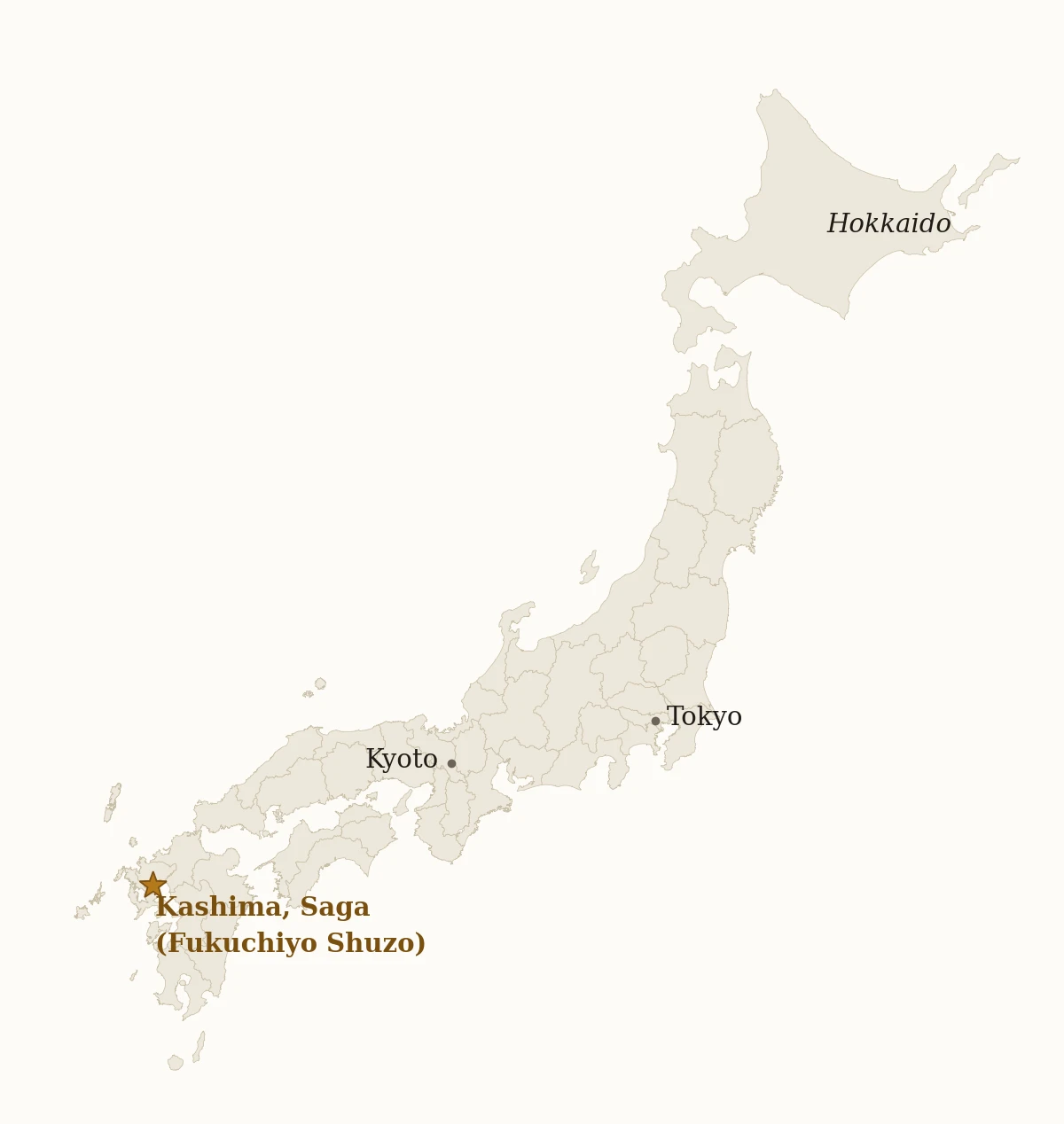
Kashima sits in Saga Prefecture, on the island of Kyushu — about five hours from Tokyo by train, and roughly two from Kyoto.
Finding Nabeshima outside Japan
Here’s the good news if this story made you curious: unlike many of the bottles I’ll write about here, Nabeshima has crossed the ocean.
At the time of writing, Palate Project (formerly Tippsy) lists the Nabeshima Junmai Daiginjo “Aiyama” in the U.S. market — brewed with the prized Aiyama rice, full and juicy with peach-like sweetness, and a very good representative of what makes this brand special. Seasonal releases like the unpasteurized “New Moon” Junmai Ginjo Nama may also appear from time to time. Availability changes quickly with nama sake, so it is worth checking back if it is currently sold out. A few other U.S. retailers carry Nabeshima as well, so it’s worth a search at your local Japanese bottle shop.
One honest note, in keeping with how I write here: the bottles I fell in love with in Kashima were bought locally in Japan, and the export lineup is a subset of the full range. But the house style — that freshness, that quiet confidence — carries through the whole family.
Approachability
Approachability: 5 / 5
A low score reflects difficulty for a newcomer, not quality. How I score this →
I came to this bottle convinced that sake was simply not for me, and it overturned that almost immediately. Elegant, refined, and it glides. If sake has never worked for you, this is where I would ask you to start.
Why this blog exists
Learning about sake also meant learning about the people who make it: small teams in quiet rural towns with clean water and good rice, putting their souls into something most of the world has never properly tasted. If writing about these encounters in English helps even a few more people discover what I discovered at that welcome party — and helps these brewers keep doing what they do — then this blog will have done its job.
Kanpai. Here’s to first encounters, and to all the ones still waiting.
Please enjoy sake responsibly and follow the drinking laws in your country or region.
Sake is an alcoholic beverage. This article is intended for readers of legal drinking age in their country — please drink responsibly.