Senkin Senko-Hanabi 2026 Review|A Sake That Fades Like a Japanese Sparkler
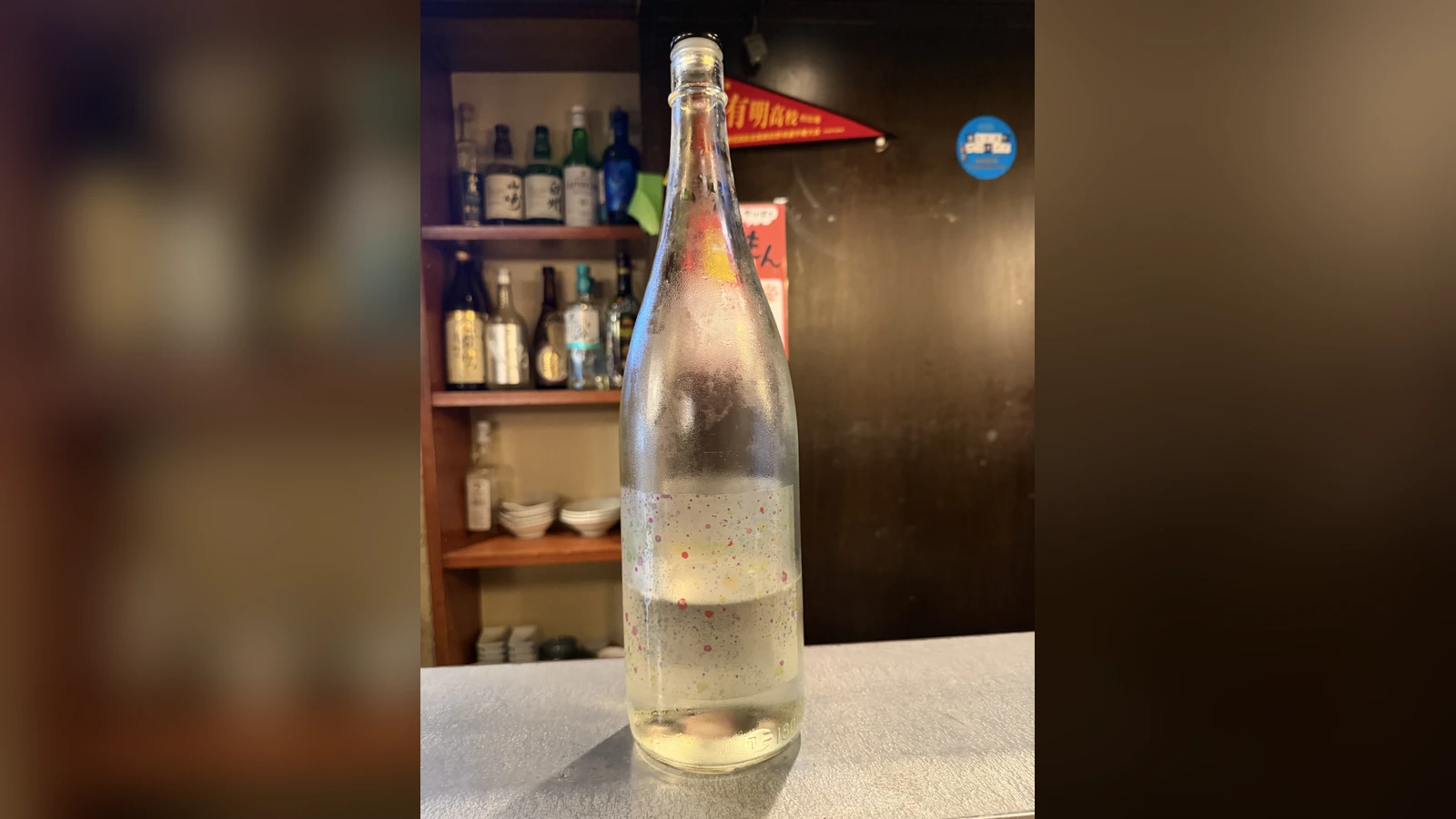
Table of Contents
- What Is Senko-Hanabi?
- Senkin and Its "Return to Edo" Philosophy
- Senkin Senko-Hanabi 2026: Brewing Details
- Where in Japan
- First Impression: Easy to Drink Before the Food Arrived
- Tasting Notes
- Why the Name "Senko-Hanabi" Made Sense to Me
- With Food: More Versatile Than I Expected
- An Approachable Style of Sake
- Senkin's Track Record
- Approachability
- Can You Buy Senkin in the United States?
- Final Thoughts
This article contains affiliate links. If you buy through my Palate Project link or use my discount code, you may receive a discount, and I may earn a small commission at no extra cost to you — it never changes what I recommend. Full disclosure.
Late August in Japan still feels like summer, but there are small signs that autumn is approaching.
That was the setting in which I encountered Senkin Senko-Hanabi 2026, a seasonal sake from Senkin in Tochigi Prefecture.
I didn’t drink it at a formal tasting event or open a fresh bottle at home. Instead, I found it at Sandaimme Ateya Mamefuku, a sake-focused izakaya in Kumamoto, where a chilled 1.8-liter bottle was already sitting behind the counter.
That casual setting turned out to suit this sake perfectly.
Senko-Hanabi was juicy, gently sweet, and refreshing. But what stayed with me most was its finish—and, as I found out, that finish is exactly why the sake carries this name.
What Is Senko-Hanabi?
Senko-hanabi is a small traditional Japanese sparkler.
Unlike large fireworks that explode across the night sky, senko-hanabi is quiet and intimate. A tiny glowing ball forms at the end of the sparkler, sending out delicate sparks before gradually weakening and disappearing.
For many Japanese people, senko-hanabi carries a distinctly nostalgic feeling. It is associated with summer evenings, family gatherings, childhood memories, and—perhaps most importantly—the realization that summer is almost over.
Senkin releases Senko-Hanabi around the transition from summer toward autumn, and retailers describe the 2026 edition as expressing both the brightness of the departing summer and the freshness of the approaching season.
Senkin and Its “Return to Edo” Philosophy
Senkin is based in Sakura City, Tochigi Prefecture.
Today, the brewery describes its philosophy through the idea of “Edo-gaeri,” or a return to Edo. Rather than simply reproducing old sake, Senkin looks back at brewing practices from the Edo period and reinterprets them through modern brewing.
On its official website, Senkin describes this as recreating elements of sake brewing from a period before modern polishing machines and today’s established sake rice varieties, while continuing to search for new expressions.
That balance between old and new also appears directly on the Senko-Hanabi label:
“Let us surpass the old and the new. Let us focus on what’s truly good.”
For a sake named after one of Japan’s most nostalgic summer traditions, that philosophy feels particularly fitting.
Senkin Senko-Hanabi 2026: Brewing Details
| Item | Detail |
|---|---|
| Brewery | Senkin |
| Prefecture | Tochigi |
| Rice | Yamadanishiki 66%, Omachi 34% |
| Alcohol | 13% |
| Starter | Kimoto |
| Style | Assemblage |
| Other | Unfiltered, undiluted, pasteurized |
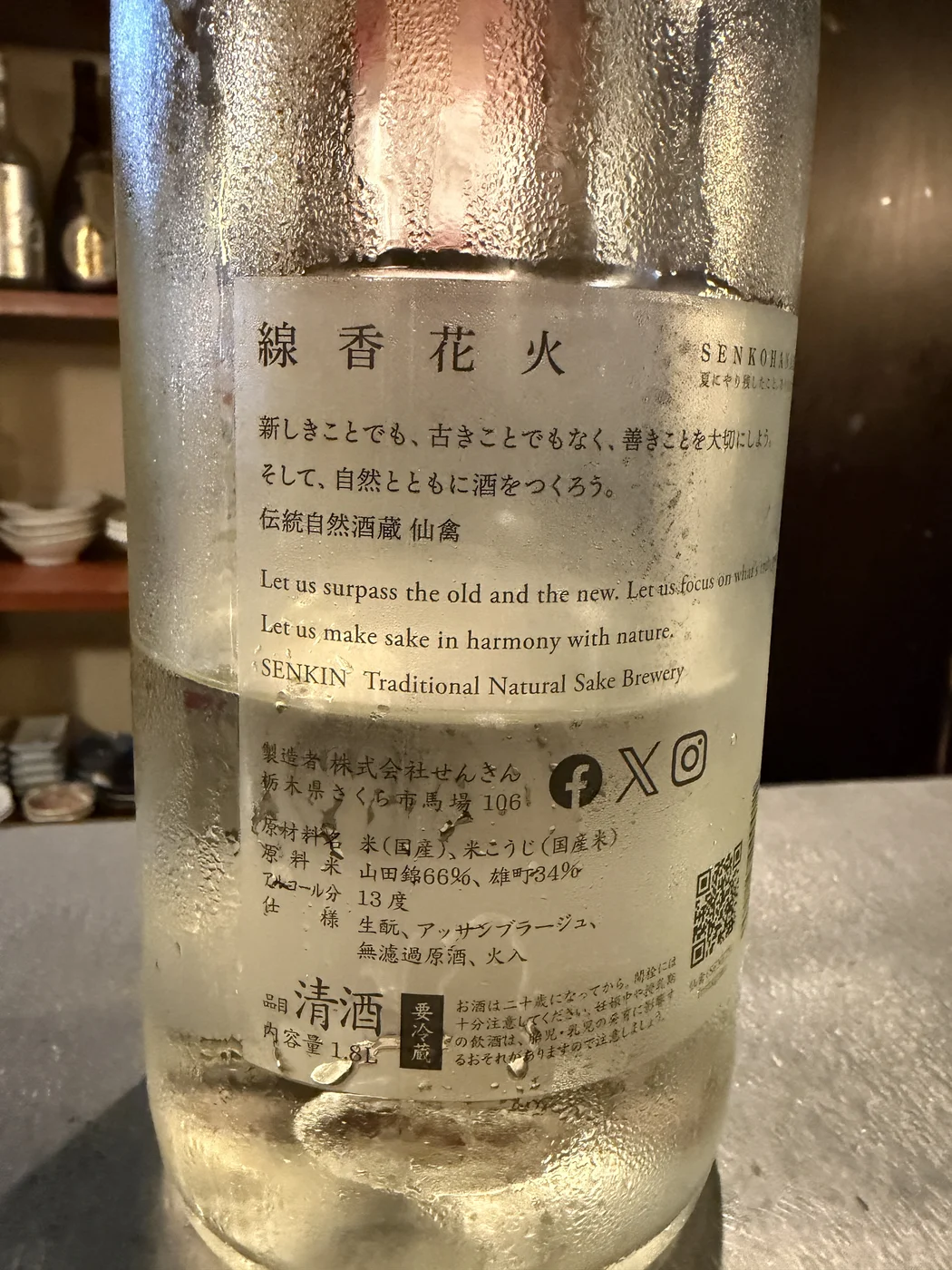
The 2026 Senko-Hanabi was created by selecting brewing lots prepared in spring and blending them specifically for this seasonal release.
The brewery also adjusted the composition for 2026 to emphasize acidity and a cleaner, sharper finish compared with previous editions. Retail information describes the sake as combining Senkin’s characteristic sweet-and-tart juiciness with a clearer and more refreshing structure.
At only 13% ABV, it is relatively light for an undiluted sake.
Where in Japan
This sake connects to two places.
Senkin brews Senko-Hanabi in Sakura City, Tochigi Prefecture, north of Tokyo.
I drank it far to the south, at Sandaimme Ateya Mamefuku in Kumamoto, Kyushu—more than a thousand kilometers from the brewery itself.
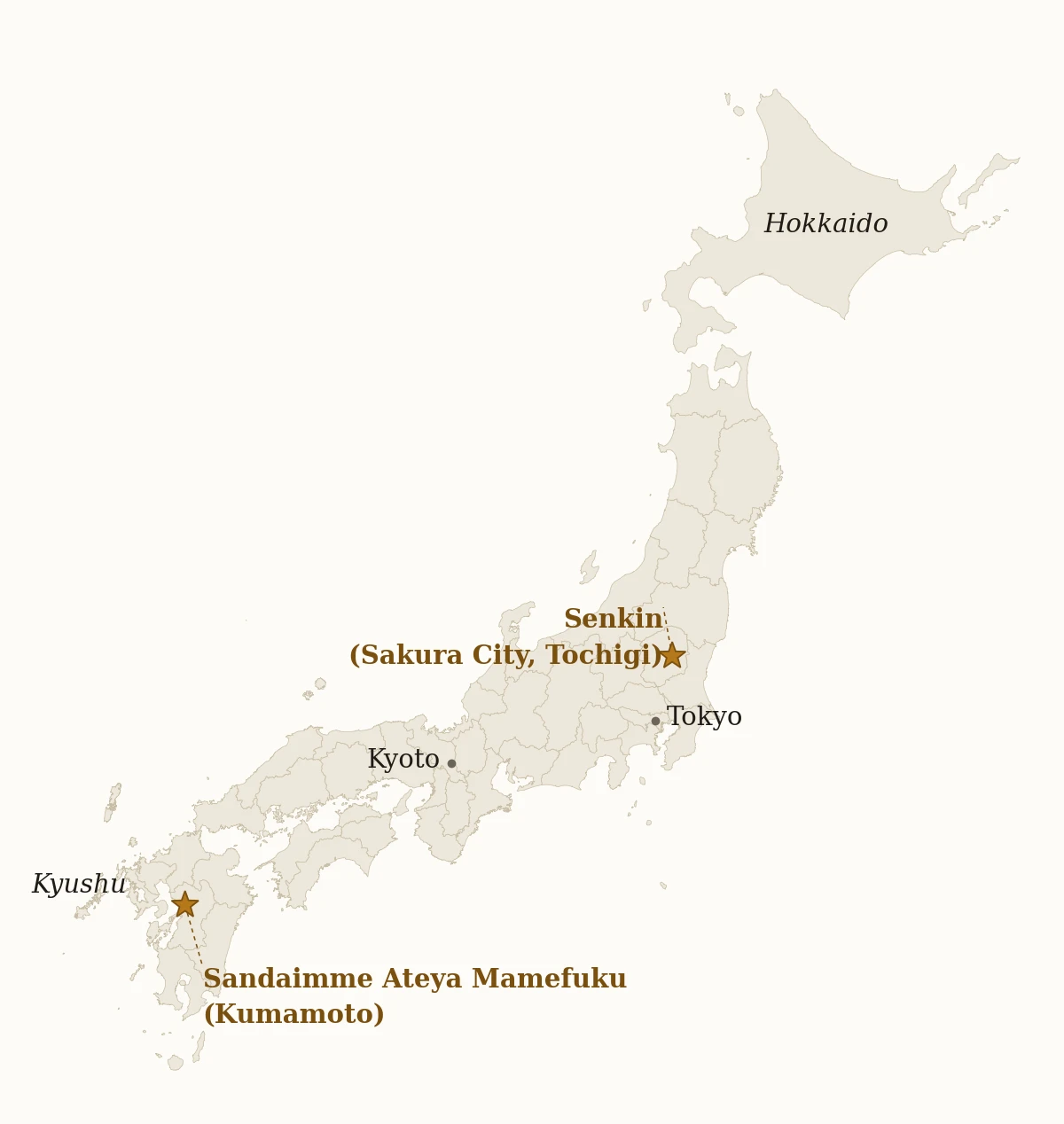
Where in Japan: Senkin brews Senko-Hanabi in Sakura City, Tochigi Prefecture. I drank this bottle at Sandaimme Ateya Mamefuku in Kumamoto, Kyushu.
First Impression: Easy to Drink Before the Food Arrived
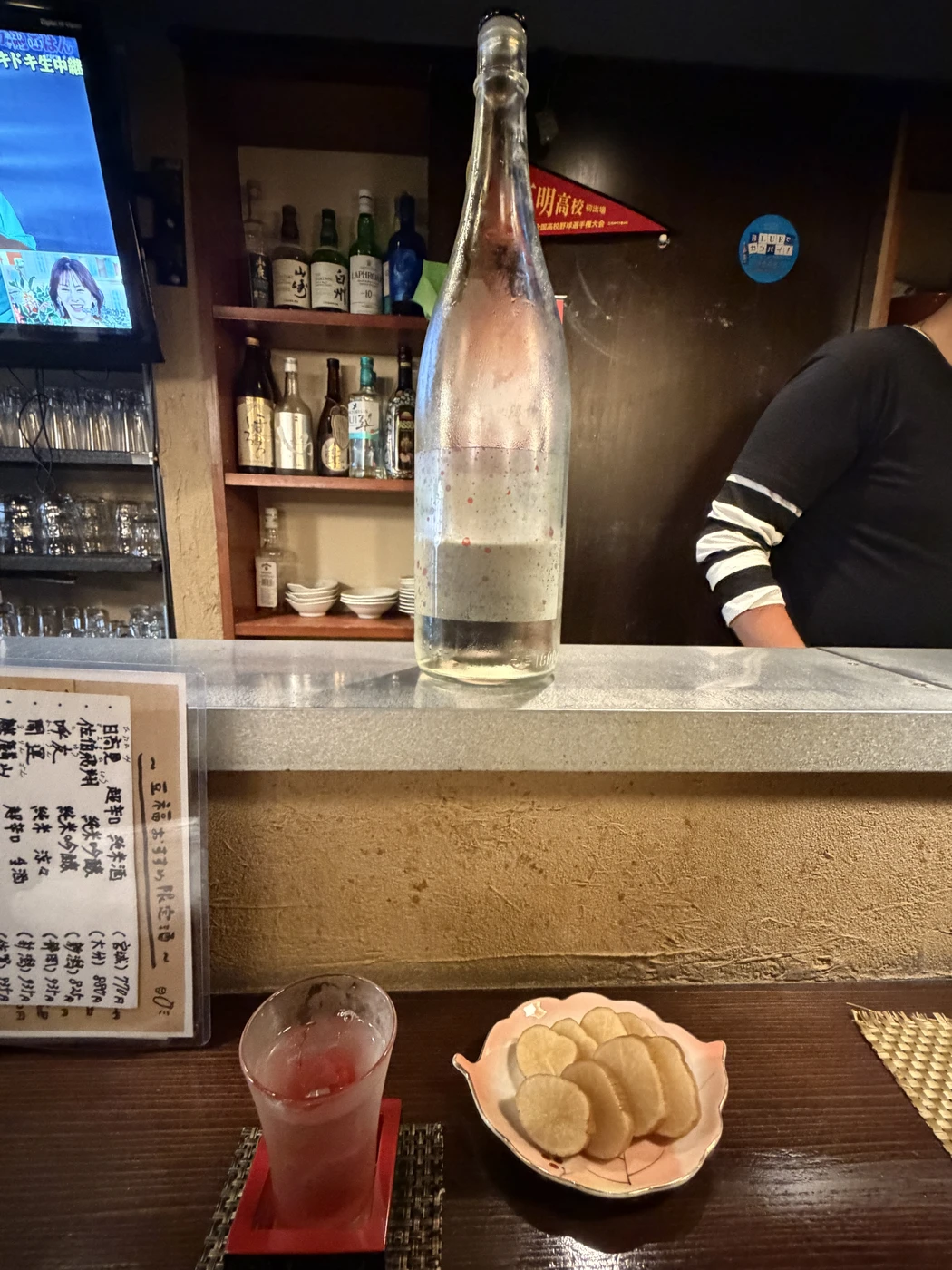
Senko-Hanabi was the first sake I drank that evening, before eating anything.
That made its balance immediately noticeable. Despite being made using the kimoto method, I did not find it heavy or rustic—it felt juicy and surprisingly easy to drink from the very first sip.
Tasting Notes
Appearance
Clear and essentially colorless. I did not notice visible bubbles in my glass.
There is an important caveat, though. The sake was being served from an already-opened 1.8-liter bottle, and more than half of the bottle had already been consumed, so I cannot say how much time had passed since opening. If Senko-Hanabi shows more carbonation or freshness immediately after opening, my glass may not represent that initial condition. Even so, the sake was in very good condition and thoroughly enjoyable.
Aroma
The clearest fruit impression was melon, alongside a distinct but gentle lactic character. There were no obvious herbal notes.
Sweetness
Medium to moderately pronounced, but kept in balance by the acidity.
Acidity
Medium. Fresh and refreshing rather than sharp or aggressive. The acidity became particularly important toward the finish.
Umami
Medium to moderately pronounced. There was enough savory depth to keep the sake from feeling simply light or fruity.
Bitterness
Low. Bitterness played only a minor role.
Body
Medium. Despite the relatively low 13% alcohol content, it did not feel thin.
Texture
Juicy. This was one of the defining impressions of the sake.
Finish
Medium to long. A gentle lactic character remained, while the acidity slowly became quieter. Rather than disappearing suddenly, it seemed to narrow and fade.
Why the Name “Senko-Hanabi” Made Sense to Me
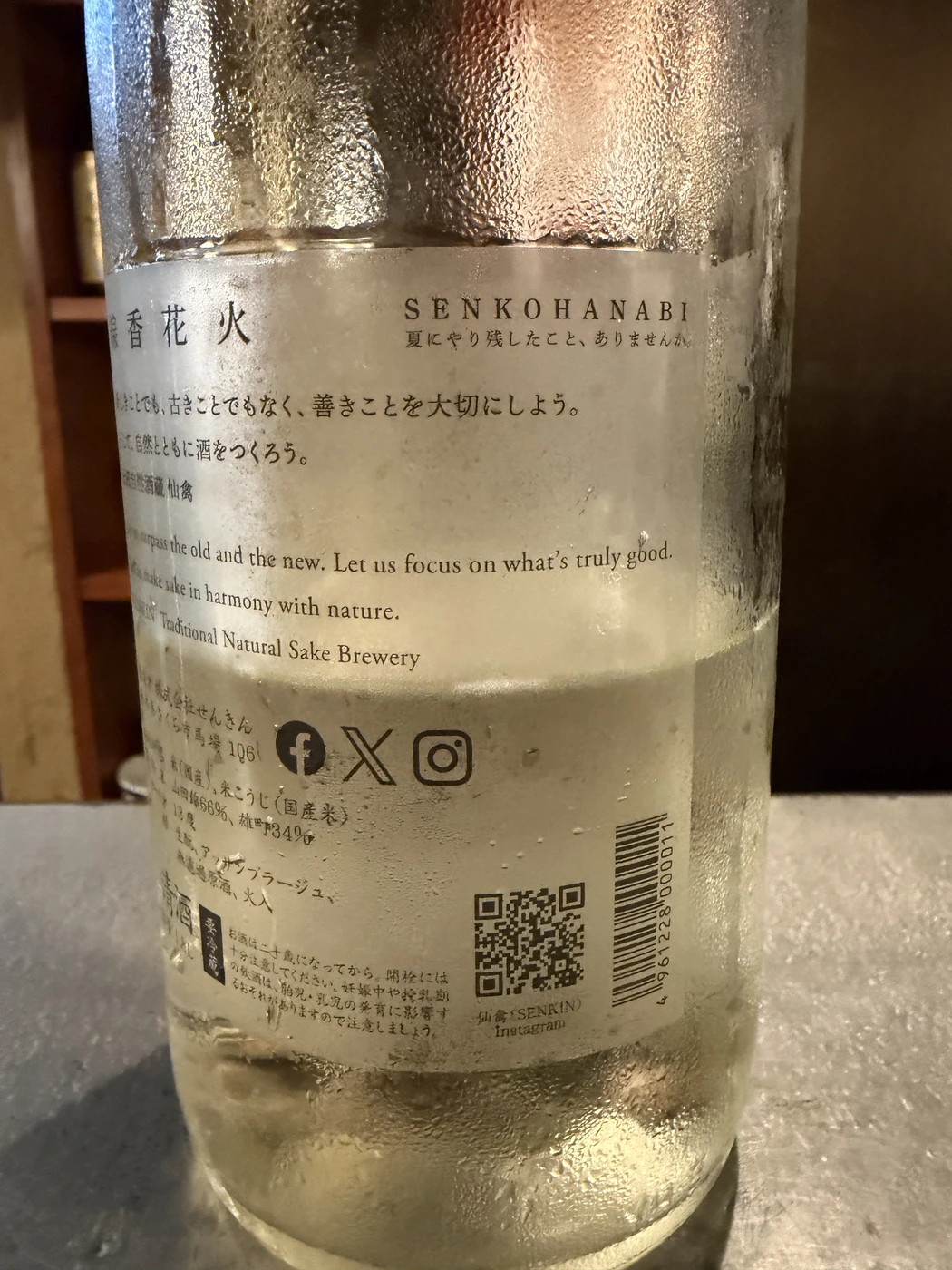
Before tasting it, I mainly thought Senko-Hanabi was simply a beautiful seasonal name.
After drinking it, the name began to make more sense.
The sake initially showed sweetness, umami, fruit, and refreshing acidity. Then, toward the finish, the acidity remained as a thin line. It gradually weakened until it quietly disappeared.
That fading sensation reminded me of the final stage of a senko-hanabi sparkler—the moment when the sparks become smaller and smaller before the glowing ember finally falls away.
Of course, this is a personal impression rather than a technical tasting descriptor. But it was also the moment when the sake’s name and its flavor came together for me.
More importantly, this style closely matched what I personally enjoy in sake: enough sweetness and umami to provide satisfaction, balanced by fresh acidity and a lingering but gentle finish.
With Food: More Versatile Than I Expected
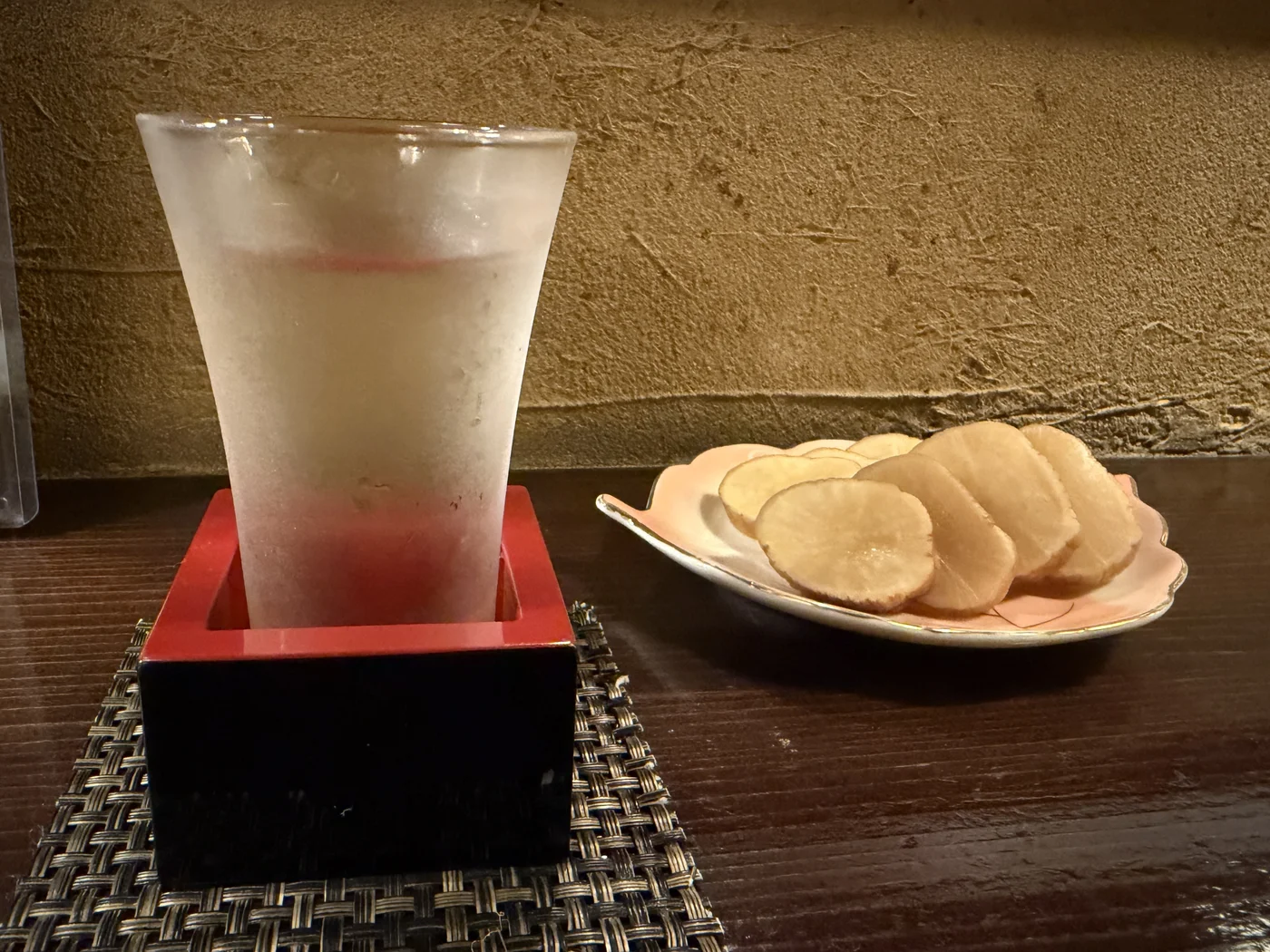
I initially enjoyed Senko-Hanabi on its own, but continued drinking it with several dishes.
One pairing was iburigakko, smoked pickled daikon. The smoky, salty character of the pickles worked naturally with the sake’s sweetness and acidity.
Later, I also drank it with lightly seared shime-saba, cured mackerel, and agedashi nasu, fried eggplant served with dashi. Unfortunately, I did not take photographs of those dishes, but both were excellent pairings. The mackerel brought fat, acidity, and roasted aroma, while the agedashi nasu had oil, dashi, and savory richness. Senko-Hanabi handled both without feeling overwhelmed.
It worked as an aperitif, was enjoyable on its own, and remained comfortable alongside very different types of Japanese food.
An Approachable Style of Sake
I would place Senko-Hanabi firmly on the approachable side of sake.
That does not mean it lacks complexity. Rather, the complexity is delivered without requiring the drinker to work hard to understand it. The combination of moderate sweetness, refreshing acidity, juicy texture, gentle lactic notes, medium body, and relatively low 13% alcohol makes it particularly easy to enjoy.
It also felt very different from the much drier and more assertive Mii no Kotobuki +14 I had tasted previously. Neither style is inherently better—they simply show how broad the range of sake can be.
Curious what a Sake Meter Value actually tells you? Read my guide to What Does +14 Mean on a Sake Label? →
For someone beginning to explore sake, Senko-Hanabi offers plenty of character without feeling demanding.
Senkin’s Track Record
Senko-Hanabi itself is not primarily known as a competition sake, but Senkin has a strong record in major Japanese sake competitions.
At SAKE COMPETITION 2018, Classic Senkin Muku placed fourth in the Junmai category, while Senkin Kamosu took first place in the Super Premium category. In 2023, Modern Senkin Muku received Gold and placed tenth in the Junmai category. More recently, Senkin Modern Ichishiki placed fifth and received Gold in the Modern Natural category at SAKE COMPETITION 2025.
These awards are for other Senkin labels, not Senko-Hanabi itself, but they help place the brewery within the broader contemporary sake scene.
Approachability
Approachability: 4 / 5
A low score reflects difficulty for a newcomer, not quality. How I score this →
A lactic character and a sweet impression, with less alcoholic presence than I had expected. Easier for a newcomer to warm to than the style might suggest.
Can You Buy Senkin in the United States?
Yes.
For readers in the United States, Palate Project currently lists several Senkin products, including Senkin Classic, Retro, and Modern. Its Senkin collection also includes the premium Immortal Wing Urara, although availability varies and some bottles may be sold out.
I could not confirm a current Palate Project listing for Senko-Hanabi itself, so I would not assume that this particular seasonal release is always available in the U.S. Still, American readers interested in the style of Senkin can explore other bottles from the brewery.
If you’re curious to explore Senkin or other Tochigi sake for yourself and you are in the United States, you can browse Japanese sake through Palate Project. My referral link may give you a 10% discount, and I may earn a commission if you make a purchase.
You can also use the discount code FRIEND-BZXDMXW for 10% off.
Final Thoughts
I drank Senkin Senko-Hanabi in a very ordinary setting: sitting at the counter of a sake izakaya in Kumamoto, with a bottle behind the counter that had clearly been poured for other guests before me.
There was no controlled tasting setup. I did not even photograph every dish that accompanied it.
But perhaps that is part of why I remember it. This was not sake studied in isolation. It was sake being enjoyed exactly where sake often belongs—at an izakaya, before dinner and then alongside food.
The melon-like aroma, gentle lactic character, juicy sweetness, fresh acidity, and savory depth made it immediately enjoyable. And then came the finish, narrowing and fading, leaving behind the same slightly wistful feeling suggested by its name.
A small spark, slowly fading at the end of summer.
For me, Senko-Hanabi was one of those rare sake whose name felt even more appropriate after drinking it.
This article contains affiliate links. If you buy through one, I may earn a small commission at no extra cost to you. It never changes what I honestly think.Full disclosure here.
Sake is an alcoholic beverage. This article is intended for readers of legal drinking age in their country — please drink responsibly.