Gen-emon Kiln Soba Choko: Arita Porcelain for Sake and Somen
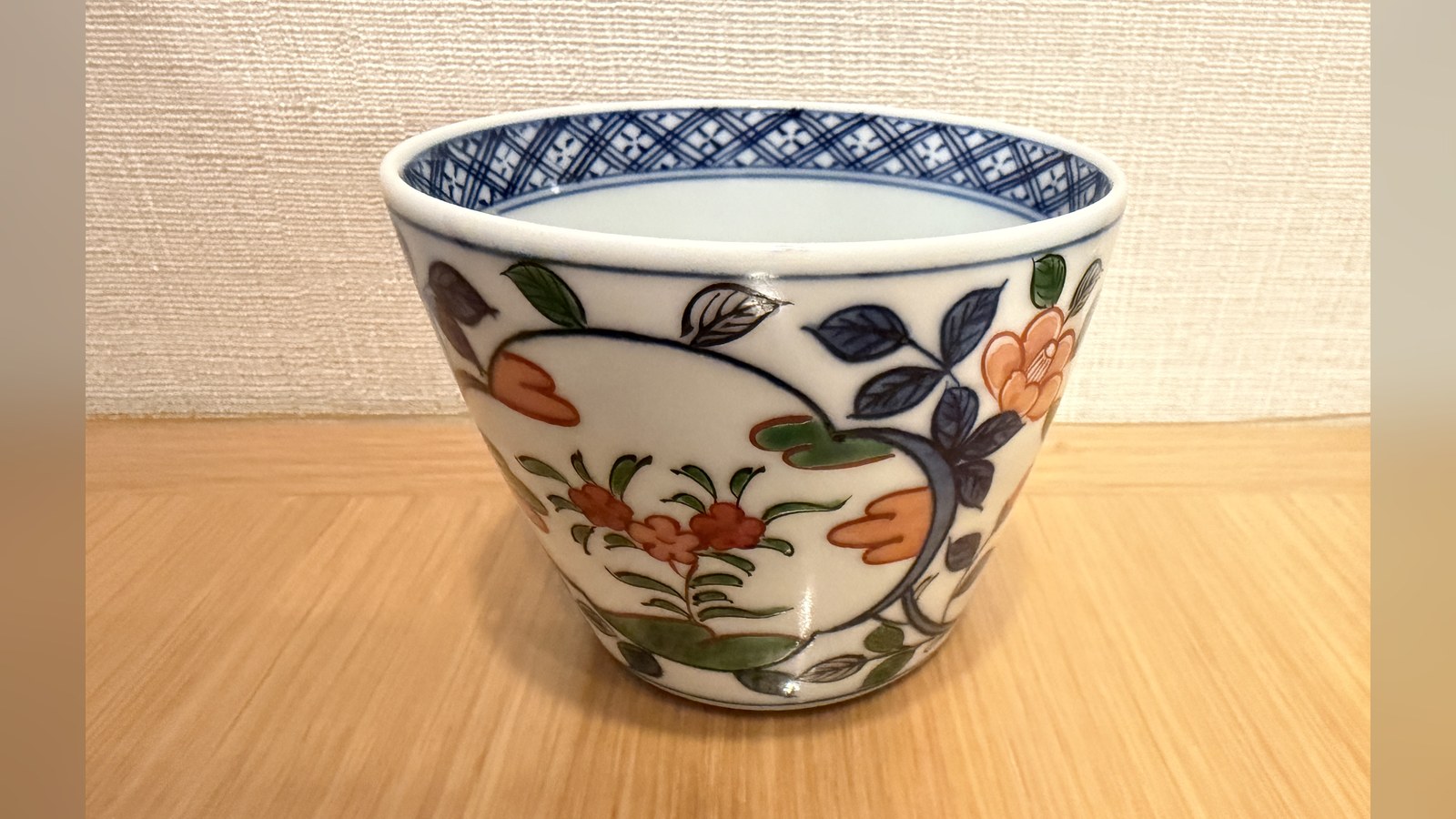
Table of Contents
Disclosure: This article contains links to ceramic makers and related resources. Unless otherwise noted, these are not affiliate links.
A soba choko is traditionally used for dipping sauce with Japanese noodles, but this small porcelain cup from Gen-emon Kiln has become much more than that in our home.
I bought it as a gift for my wife when we visited the Gen-emon Kiln showroom and shop in Arita, Saga Prefecture, in November 2021. She was drawn to its bright floral design, and I also liked its gently curved shape, thin rim, and delicate feel in the hand.
Since then, we have used it for somen dipping sauce, small dishes, sorbet, and even sake.
That versatility is what makes this piece so interesting to me. It is not a dedicated sake cup, yet it works beautifully as one — especially with a bright, fruity junmai ginjo.
This is the story of a small Arita porcelain cup that connects sake, food, travel, and everyday Japanese tableware.
Why This Cup Matters to Me
I bought this soba choko as a present for my wife.
During our visit to Gen-emon Kiln, she found this piece and liked it immediately. I could understand why. The shape feels soft and comfortable in the hand, the rim is fine and delicate, and the painted design has a cheerful, graceful quality.
It also had the kind of character I associate with Gen-emon Kiln: decorative and refined, but still suitable for everyday use.
What made it especially appealing was that it did not feel like something that would sit unused on a shelf. It was beautiful, but also practical.
That combination was one of the reasons we chose it.
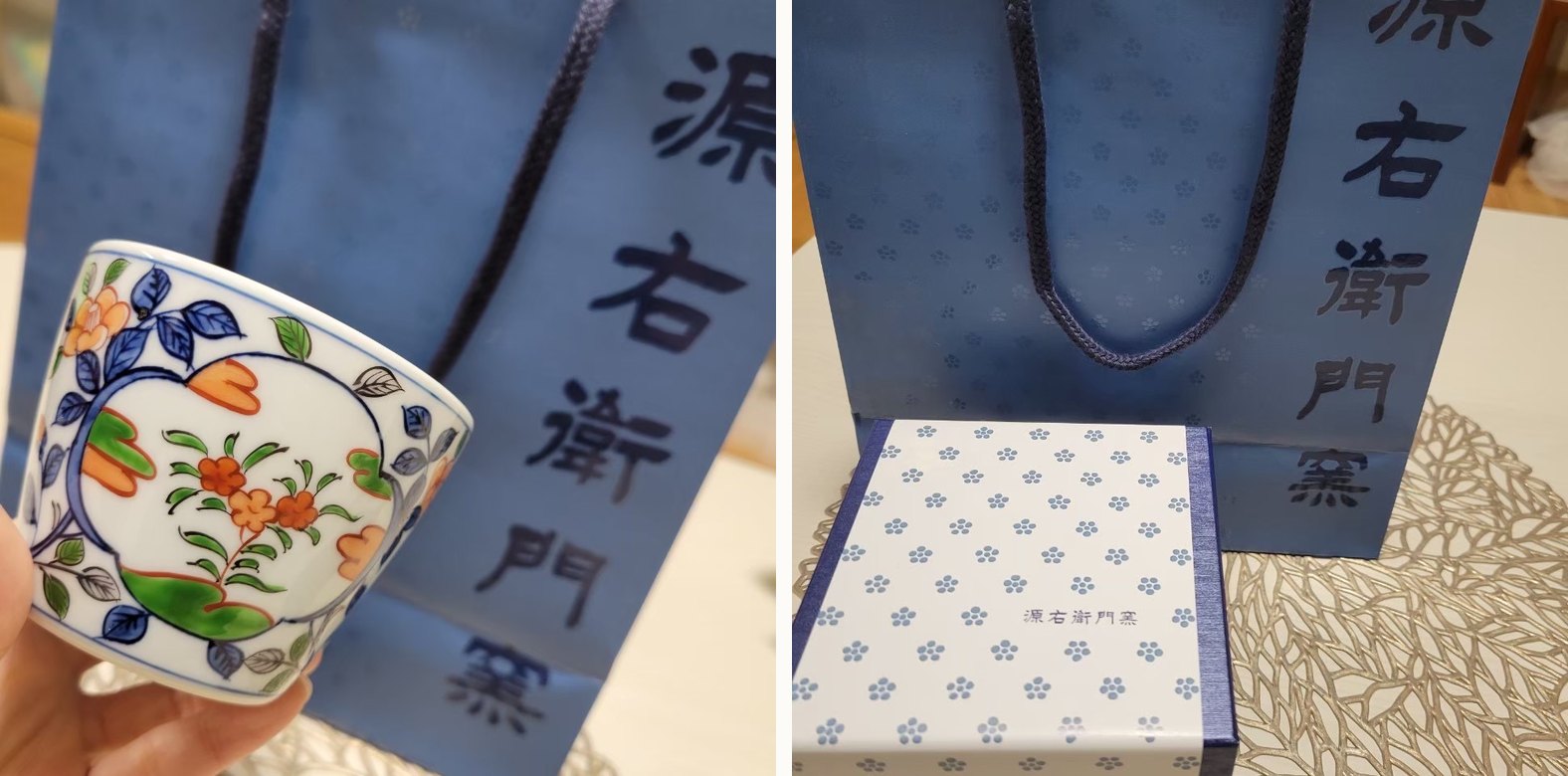
The soba choko with the blue Gen-emon paper bag (left) and the original box (right).
Where in Japan
Gen-emon Kiln is located in Arita, Saga Prefecture, on the island of Kyushu in southwestern Japan.
Arita is closely associated with Japanese porcelain, and visiting the area gives you a stronger sense of the connection between ceramics, place, and daily life.
We visited the showroom and shop at Gen-emon Kiln in November 2021 and bought this soba choko there, along with the paper bag and box it came in.
For readers outside Japan, Japanese ceramics may often appear first as beautiful products online. Visiting a kiln adds another layer: the object becomes connected to a place, a craft tradition, and a memory.
For me, that makes the cup more than simply a piece of tableware. It is also a reminder of visiting Arita in person.
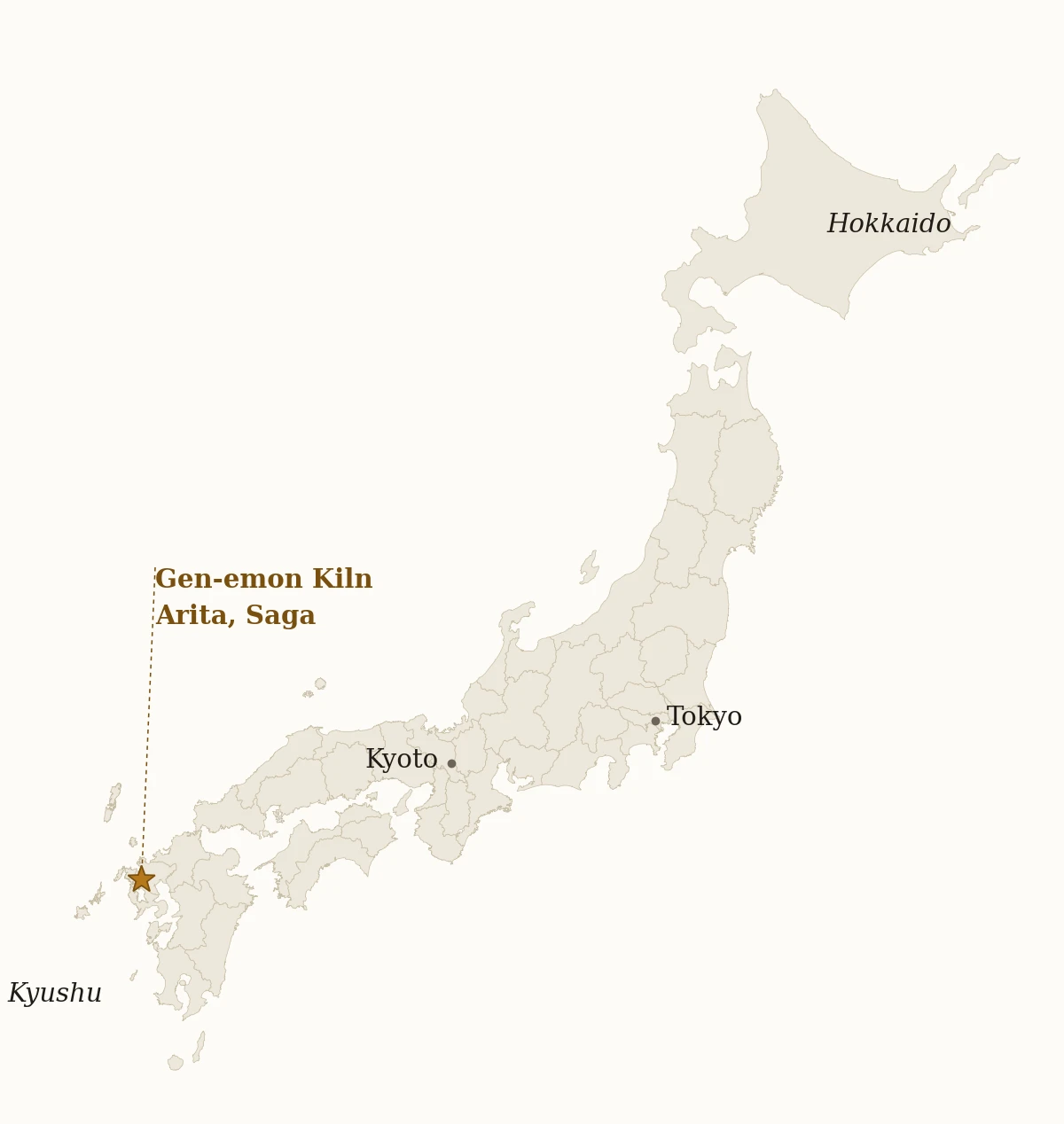
Where in Japan: Gen-emon Kiln sits in Arita, Saga Prefecture, in northwestern Kyushu — well west of both Tokyo and Kyoto.
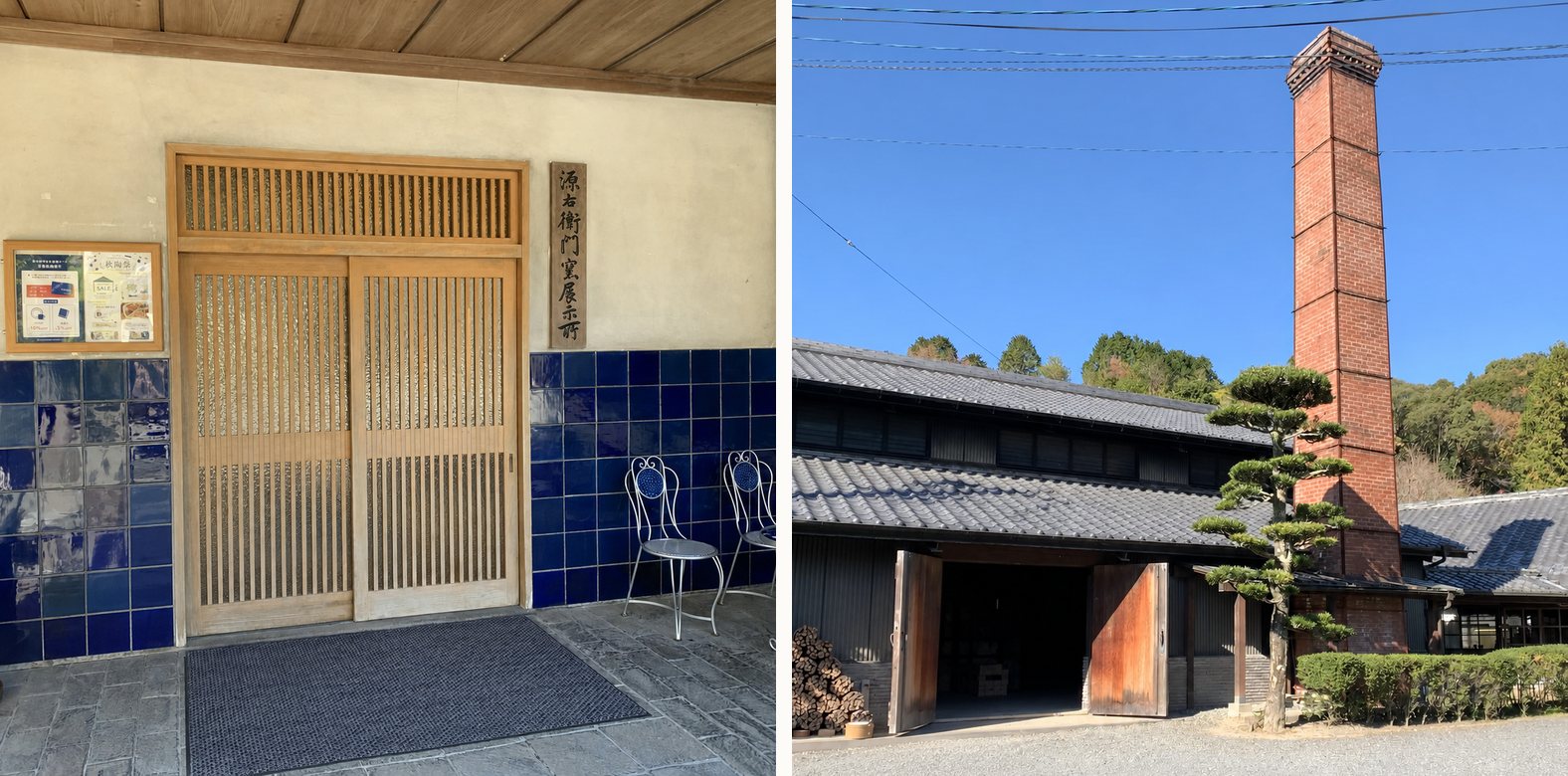
The showroom entrance (left) and the kiln’s brick chimney (right).
What Is a Soba Choko?
A soba choko is a small Japanese cup traditionally used for dipping sauce when eating soba, yet its actual use can be much broader.
Although the name refers to soba, I also use this cup with somen at home.
At home, a soba choko can work as a small bowl, a cup for dipping sauce, a dish for side foods, a dessert cup, or even a sake vessel.
That flexibility is one of the reasons I like this form so much.
Rather than being limited to a single purpose, it fits naturally into different parts of a meal.
The Design of This Cup
The first thing I notice about this cup is its painted decoration.
Blue leaves and outlines create the basic structure of the design, while orange flowers and touches of green add warmth and brightness. The inside of the rim is decorated with a detailed blue geometric pattern, which becomes more visible when the cup is empty or filled with a pale liquid.
The overall impression is cheerful and delicate.
At the same time, the shape is important.
The body curves gently inward and feels natural in the hand. The rim is relatively thin, which gives it a refined feeling when drinking from it.
It is not a heavy or rustic piece. It feels light, graceful, and precise. Despite its delicate look, it sits stably in the hand and is easy to pick up during a meal.
That combination of shape and decoration was one of the reasons both my wife and I liked it.
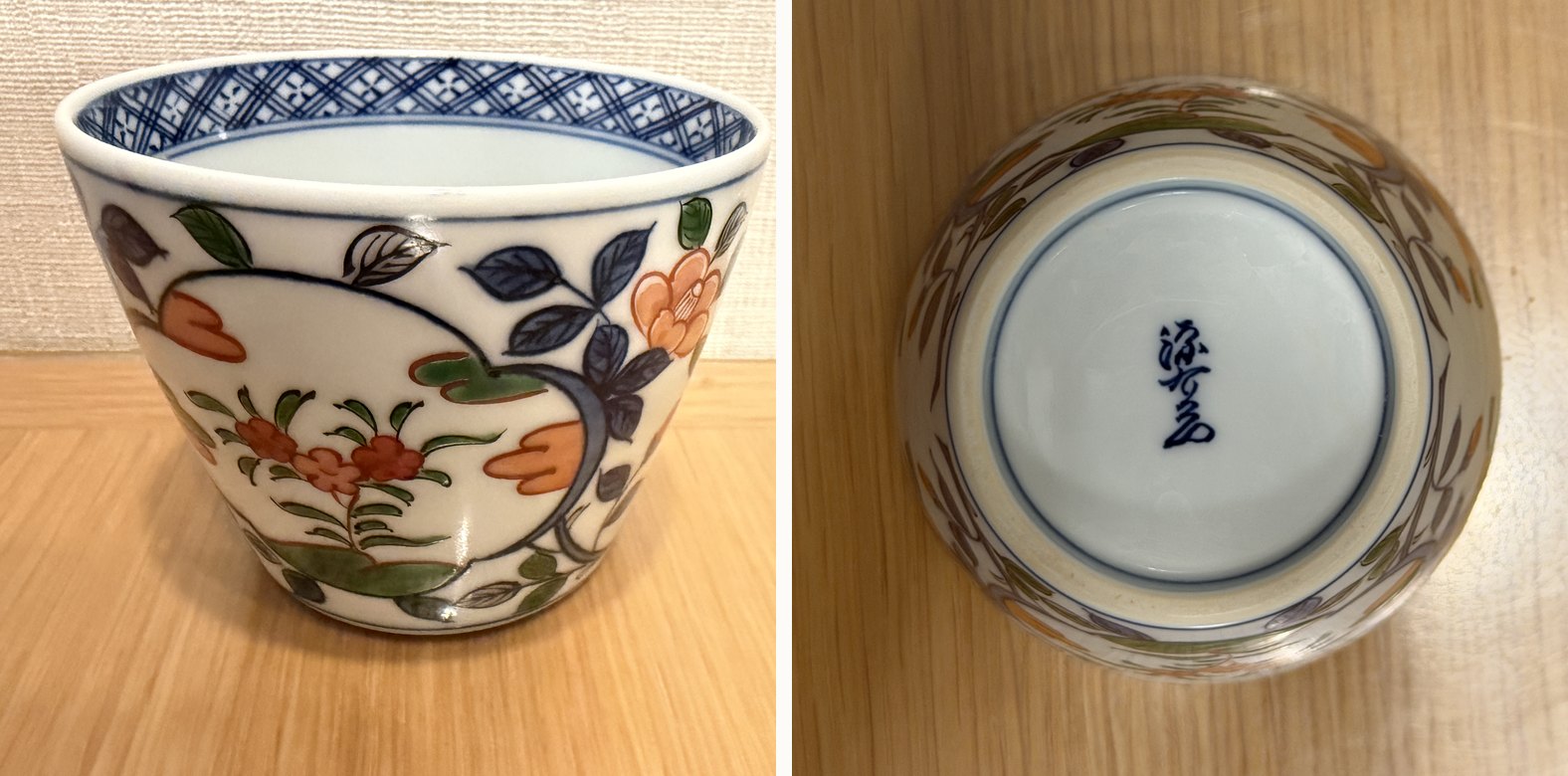
The floral decoration (left) and the Gen-emon mark on the base (right).
Using It for Sake
Although this is not technically a guinomi or ochoko, I also enjoy using it for sake.
Its wider shape and slightly larger volume make it feel more relaxed than a small ochoko. It works especially well when drinking sake with food.
The thin rim also helps it feel surprisingly natural as a drinking vessel.
For this particular design, I think a bright, fruity junmai ginjo would suit it especially well.
That is not because the cup changes the sake itself in a dramatic way, but because the character of the sake and the visual character of the cup seem to work together.
A fragrant, fruit-forward junmai ginjo has a light, lively impression, and that feels well matched to the colorful floral decoration and delicate shape of this soba choko.
Together, they create a more harmonious experience at the table.
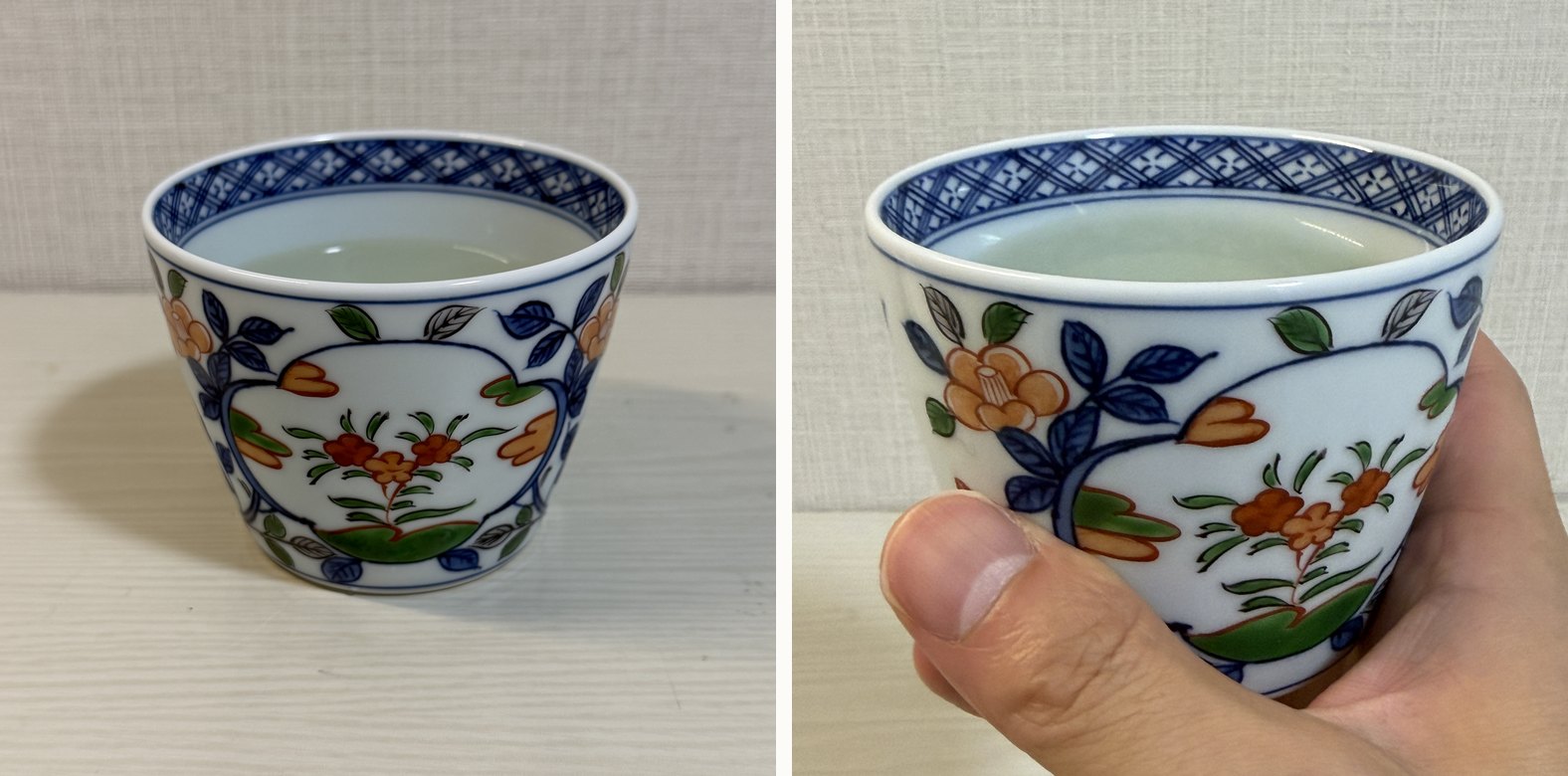
Sake in the soba choko (left), and the cup in the hand (right).
More Than a Sake Cup
What I like most about this piece is how naturally it moves between different uses.
Its original role as a soba choko is still very practical. We use it for dipping sauce, including with somen.
The proportions work well: it is wide enough to dip noodles comfortably, but still compact enough to hold easily.
With somen, the cup feels especially natural: the sauce, noodles, and small scale of the vessel all work together.
It can also work for dessert.
A small serving of sorbet fits surprisingly well, and the vivid purple color of the dessert creates a strong contrast with the blue, orange, and green decoration on the porcelain.
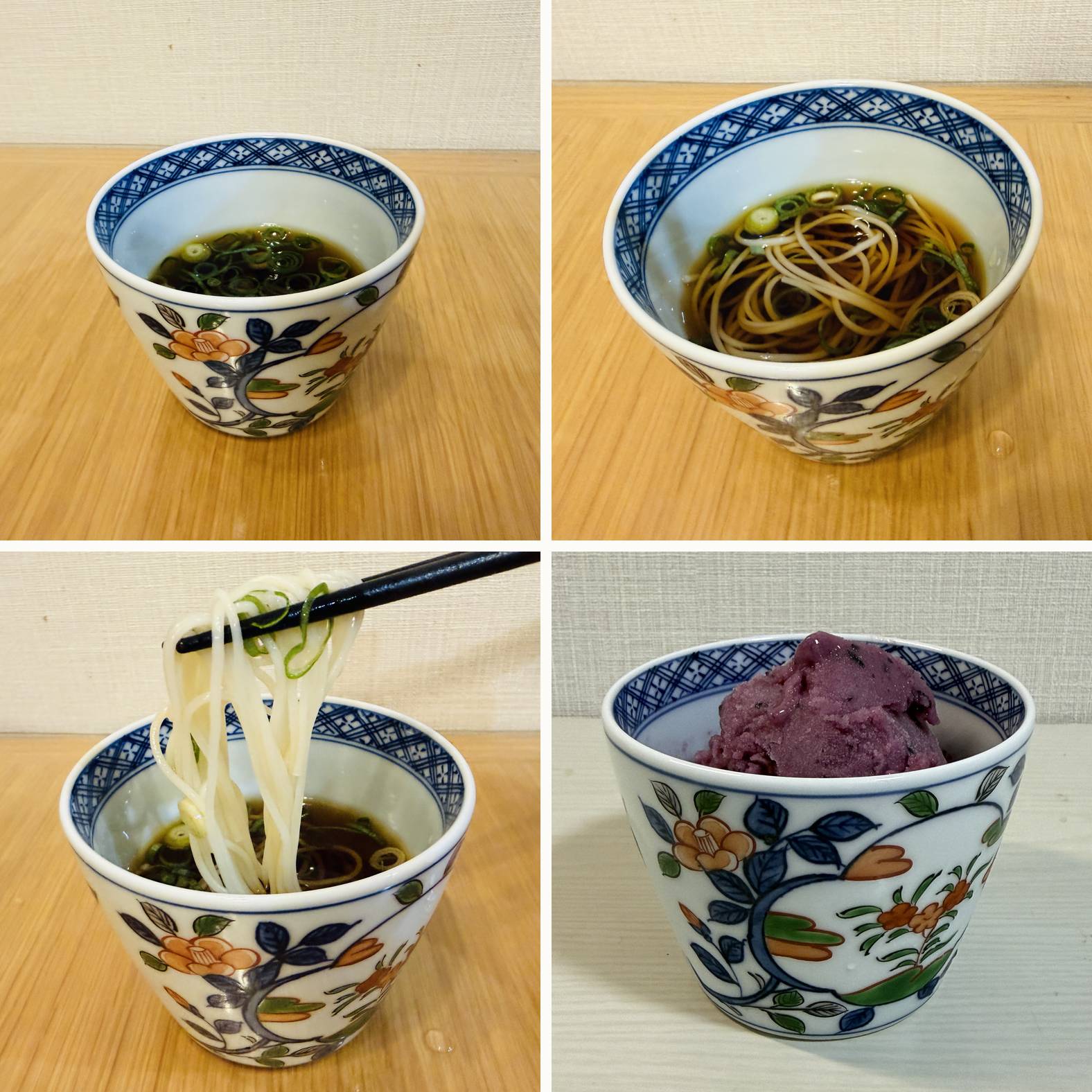
Clockwise from top left: dipping sauce, somen in the cup, noodles lifted from the sauce, and sorbet for dessert.
The same cup can therefore move from noodles, to sake, to dessert without feeling out of place.
That flexibility is one of the qualities I appreciate most about Japanese tableware.
Soba Choko vs Guinomi
A guinomi is more directly associated with sake, while a soba choko is more versatile.
It is usually larger, more open, and easier to incorporate into a meal in different ways.
That difference is important. A guinomi feels like a dedicated sake vessel. A soba choko feels more closely connected to the dining table as a whole.
For that reason, I find a soba choko especially appealing when enjoying sake together with food. It does not separate the drink from the meal. It becomes part of the same setting.
Read about my Fukagawa Seiji Botan Kinmiru guinomi →
Final Thoughts
This soba choko has become one of those pieces we use because it is both beautiful and practical.
It began as a gift for my wife, chosen during our visit to Gen-emon Kiln in Arita in November 2021. Since then, it has become part of our daily table: sometimes for somen dipping sauce, sometimes for dessert, and sometimes for sake.
I especially like it with a bright, fruity junmai ginjo — a pairing I keep coming back to.
But the main reason I value it is simpler.
It reminds me of a trip, a gift, and the quiet versatility of Japanese tableware.
That is also why it belongs on The Sake Encounter.
Sake is not only about what is inside the bottle. The cup, the food, the place, and the memory surrounding it can all become part of the experience.
Sake is an alcoholic beverage. This article is intended for readers of legal drinking age in their country — please drink responsibly.