Fukagawa Seiji Botan Kinmiru Guinomi: A Cobalt-and-Gold Sake Cup I Found in Hakata
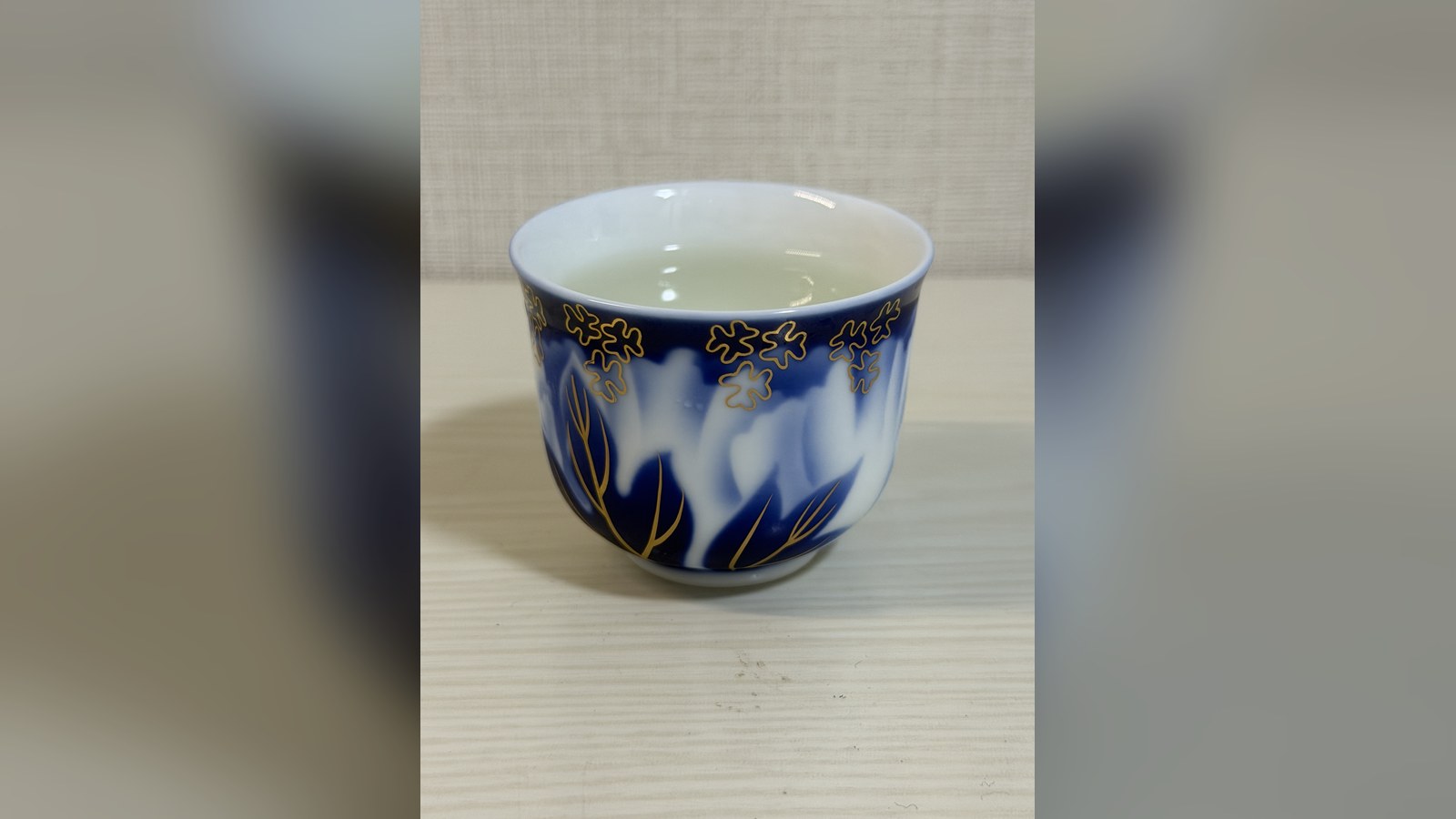
Table of Contents
- The Cup I Found at Fukagawa Seiji Hakata
- Where in Japan
- What Is Fukagawa Seiji?
- What Does Botan Kinmiru Mean?
- Cobalt Blue, White Porcelain, and Gold
- How the Guinomi Feels in the Hand
- The Thin Rim and Clean Mouthfeel
- The White Interior Makes the Sake Easier to See
- Does the Cup Change the Taste of Sake?
- Drinking Nabeshima Junmai Ginjo Yamadanishiki from It
- Drinking Kaze no Mori Akitsuho 657 from It
- Fukagawa Porcelain vs My Satsuma Ware Guinomi
- What Kind of Sake Suits This Cup?
- Price and Accessibility
- Availability and Finding the Same Cup
- Caring for the Gold Decoration
- Visiting Fukagawa Seiji Hakata
- Is a Fukagawa Seiji Guinomi a Good Souvenir?
- Final Thoughts
Disclosure: This article contains links to ceramic makers and related resources. Unless otherwise noted, these are not affiliate links.
I had already spent part of the day looking for a sake cup in Fukuoka.
I checked department stores and specialty shops, hoping to find Nabeshima ware, Satsuma glass, or another piece of Arita porcelain that felt right.
I could not find the Nabeshima ware I had imagined. The Satsuma glass I saw was beautiful, but considerably more expensive than I planned to spend. Kakiemon pieces felt closer to works of art than everyday tableware, while I passed on Gen-emon Kiln this time because I already owned one of its soba cups.
Later, I traveled to the Nakasu-Kawabata area for lunch at Hotel Okura Fukuoka.
After lunch, I noticed a Fukagawa Seiji store nearby and stepped inside.
That was where I found a small porcelain guinomi in cobalt blue, white, and gold.
It was not what I had set out to find.
But that is often how the most memorable encounters begin.
The Cup I Found at Fukagawa Seiji Hakata
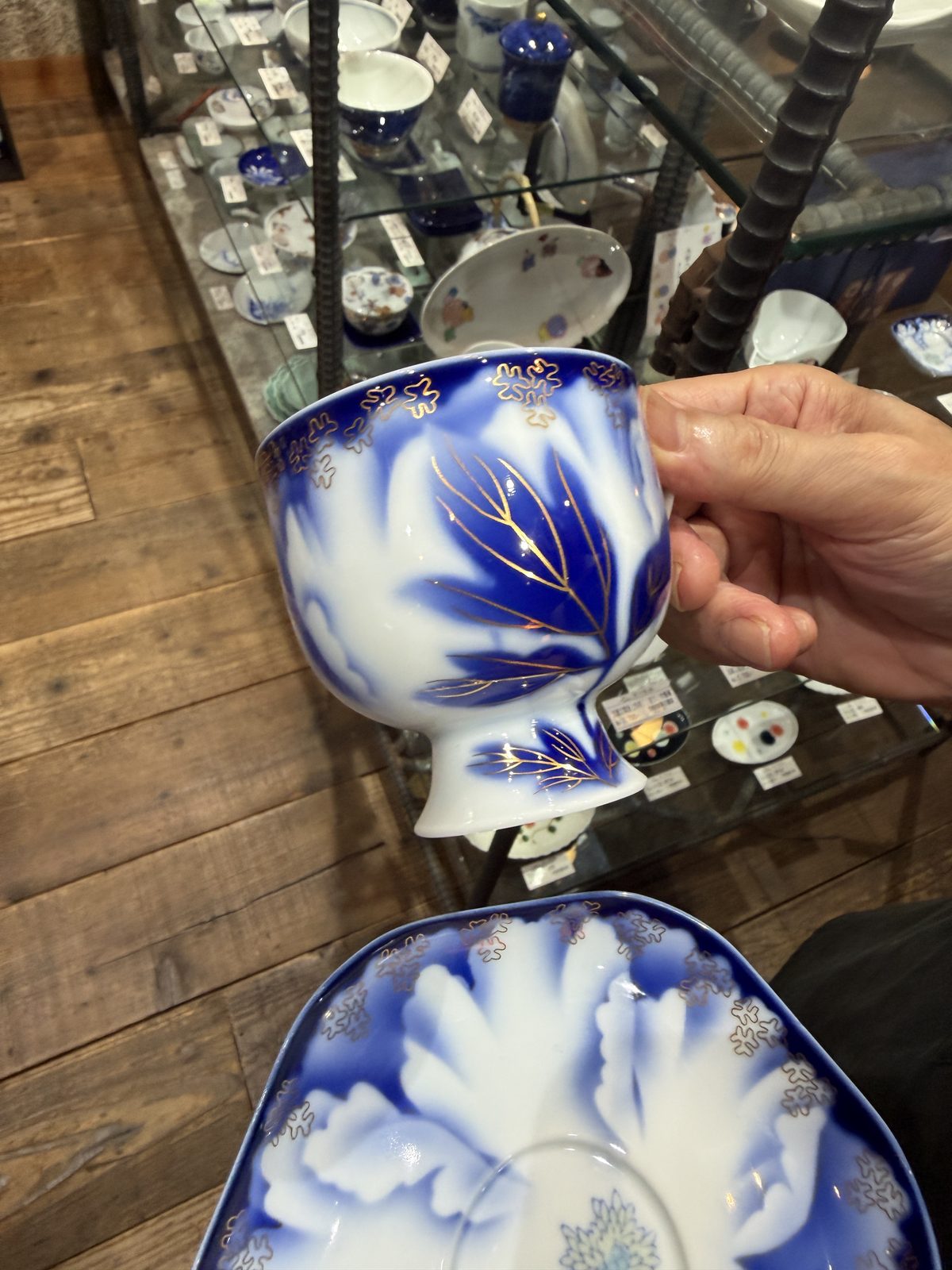
The cup was introduced to me at the store as a Botan Kinmiru guinomi.
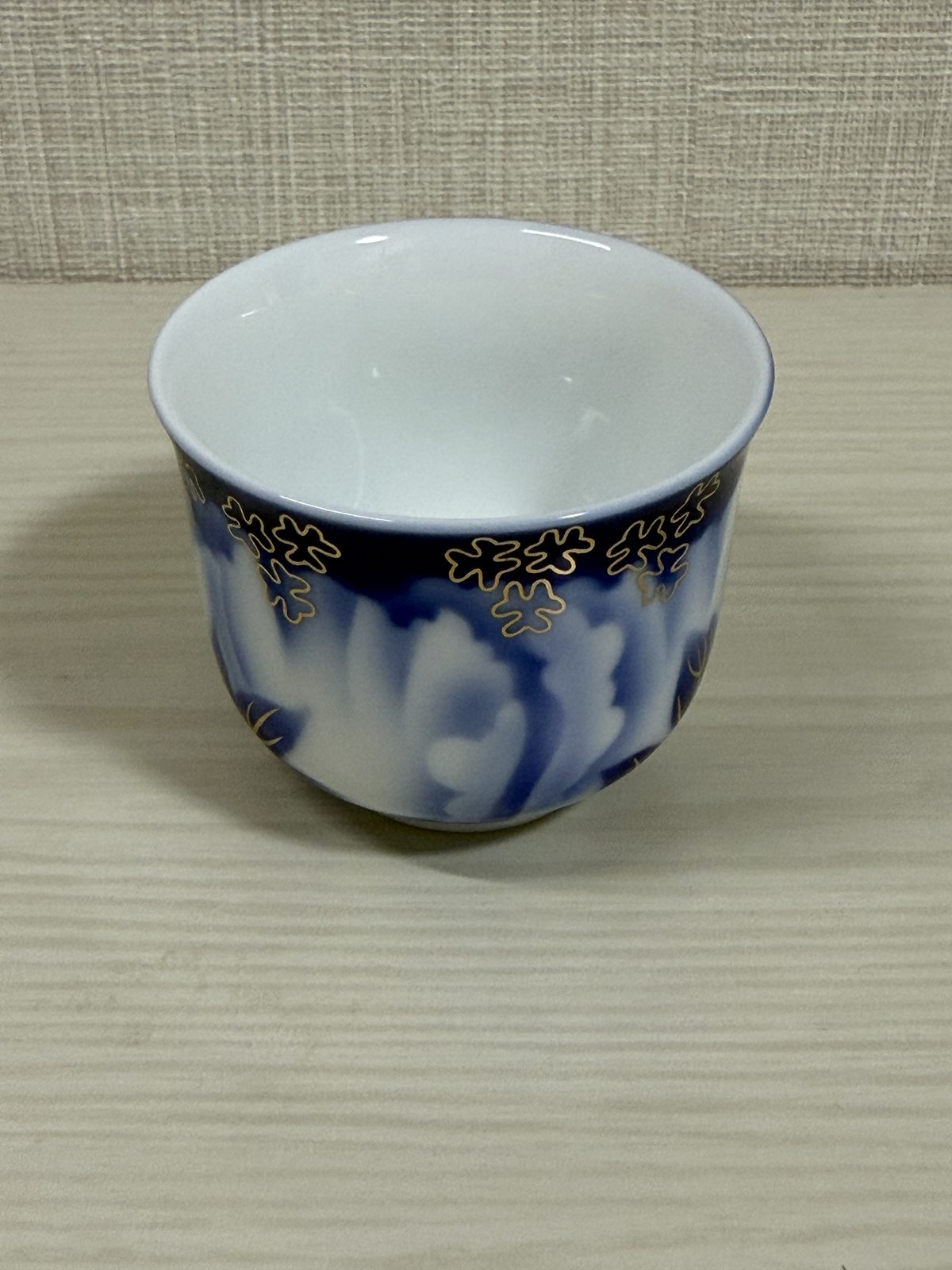
Its deep cobalt blue immediately caught my attention. White areas seemed to emerge softly through the blue, while fine gold lines traced plants and repeating motifs around the cup.
It looked refined without feeling overly formal.
The guinomi was also small enough to imagine using at home—not merely displaying behind glass.
| Detail | Information |
|---|---|
| Maker | Fukagawa Seiji |
| Item | Botan Kinmiru guinomi |
| Material | Arita porcelain |
| Purchased at | Fukagawa Seiji Hakata |
| Purchase date | July 19, 2026 |
| Price | ¥5,544 including tax |
| Sakes used | Nabeshima Junmai Ginjo Yamadanishiki; Kaze no Mori Akitsuho 657 |
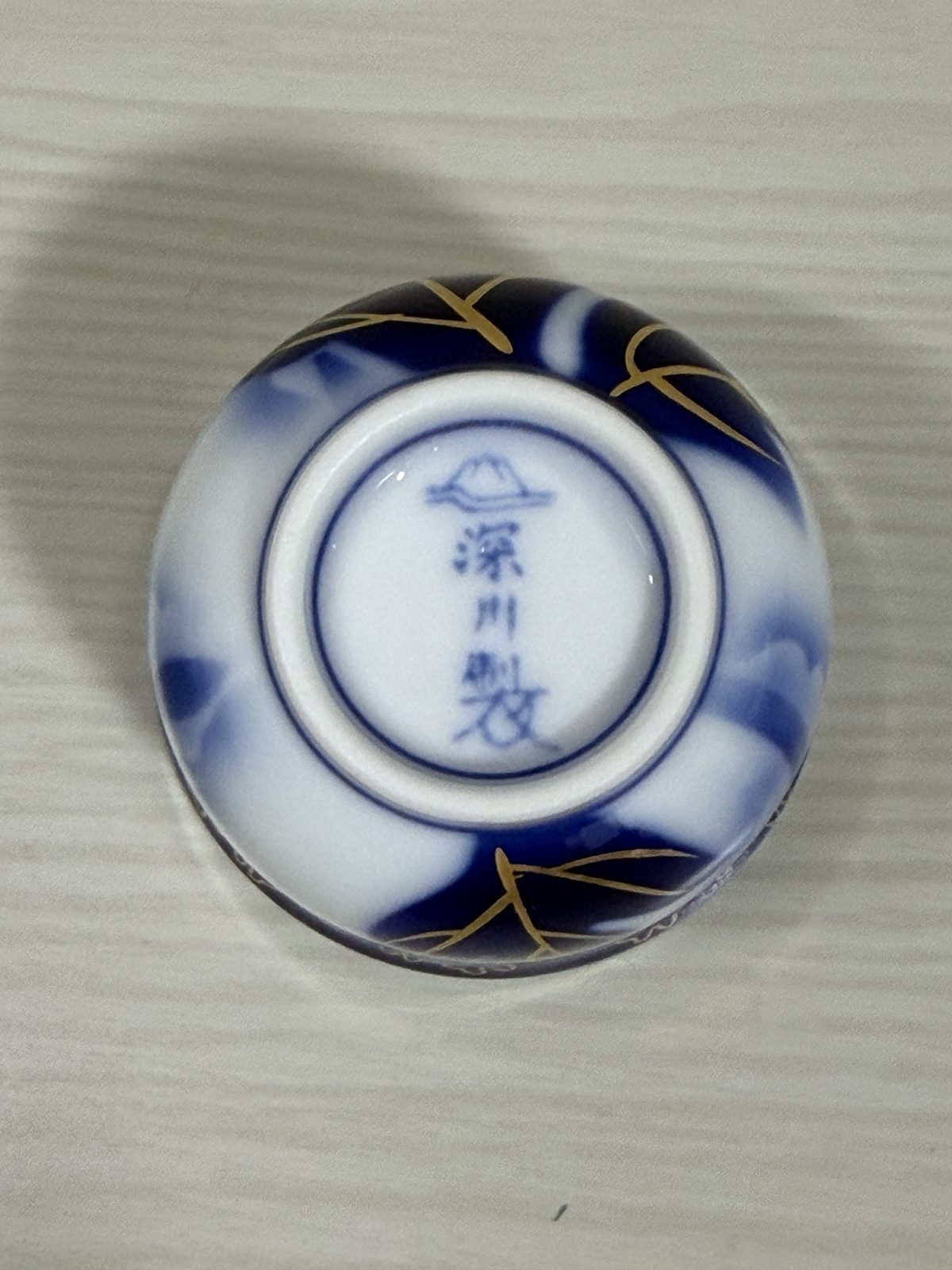
The Maker’s Mark on the Base
Turning the cup over, the base carries a blue underglaze mark identifying it as Fukagawa Seiji porcelain.
It is a small detail, but it is the kind of mark worth checking when you want to confirm a piece is genuinely from the maker rather than a similar-looking design from elsewhere.
Where in Japan
This guinomi connects to two places in Japan.
The first is Hakata, Fukuoka, where I found and purchased the cup at the Fukagawa Seiji Hakata store.
The second is Arita, Saga Prefecture, where Fukagawa Seiji was founded and where its porcelain tradition is rooted.
For international readers, this means the cup was an encounter in northern Kyushu, but it belongs to a ceramic tradition centered in Arita, one of Japan’s most important porcelain towns.
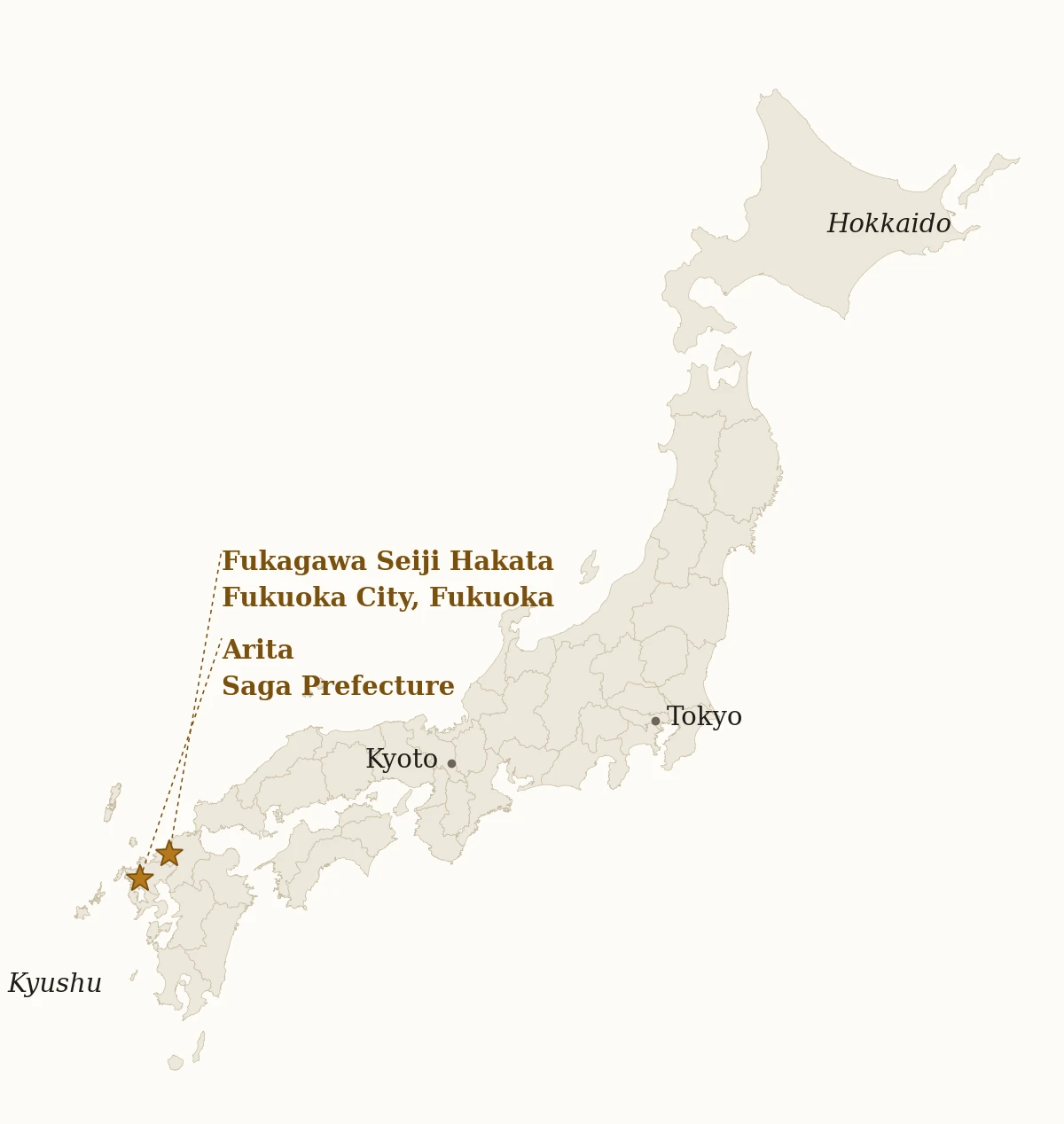
Where in Japan: I bought this guinomi in Hakata, Fukuoka, while Fukagawa Seiji’s porcelain tradition comes from Arita in Saga Prefecture, both in Kyushu.
What Is Fukagawa Seiji?
Fukagawa Seiji is a porcelain maker founded in Arita, Saga Prefecture, by Fukagawa Chuji in 1894.
Fukagawa Chuji traveled overseas and observed leading European porcelain makers, including Meissen. Based on the information I could confirm, I would not describe Fukagawa Seiji and Meissen as having a formal partnership. Rather, Fukagawa Seiji’s official history presents Meissen and other European porcelain centers as part of the world Fukagawa Chuji studied while developing his own vision for Japanese porcelain.
In 1900, Fukagawa Seiji exhibited a monumental decorated vase at the Paris Exposition and received a gold medal. The company later expanded its presence in Europe and was appointed a supplier to the Imperial Household in 1910.
Fukagawa Seiji still produces porcelain in Arita, carrying out its processes from the preparation of the porcelain body through decoration and firing.
The company explains that its porcelain is fired at approximately 1,350°C—around 50 to 100°C higher than typical porcelain. This demanding firing process helps create its translucent white body, vivid blue decoration, light weight, and strength.
That balance was visible in the cup I bought.
It looked delicate, yet it did not feel fragile in the hand.
What Does Botan Kinmiru Mean?
The cup combines several visual elements.
Botan means peony, a flower traditionally associated with beauty, prosperity, and auspicious occasions.
The staff member who introduced the guinomi explained that the design was intended to evoke a peony opening into bloom.
They also told me that a kanna-trimming technique had been used to create the softly faceted shape of the cup. According to the explanation I received, spraying was used to create part of the cobalt gradation, with details finished by hand.
I have not independently verified every production step for this particular guinomi, so I treat these as details shared with me at the store rather than general claims about every piece in the collection.
Kinmiru and the Idea of Continuity
Fukagawa Seiji’s official online store uses the fuller name Unmon Botan Kinmiru for a related cup-and-saucer design.
In that collection, the peony is combined with auspicious cloud motifs and a repeating gold decoration called Kinmiru. Fukagawa Seiji explains that the uninterrupted gold pattern represents something without an ending—an idea of continuity or eternity.
That interpretation fits the cup well.
The gold motifs continue around its rim, appearing almost like a fine border connecting one section of the design to the next.
Cobalt Blue, White Porcelain, and Gold
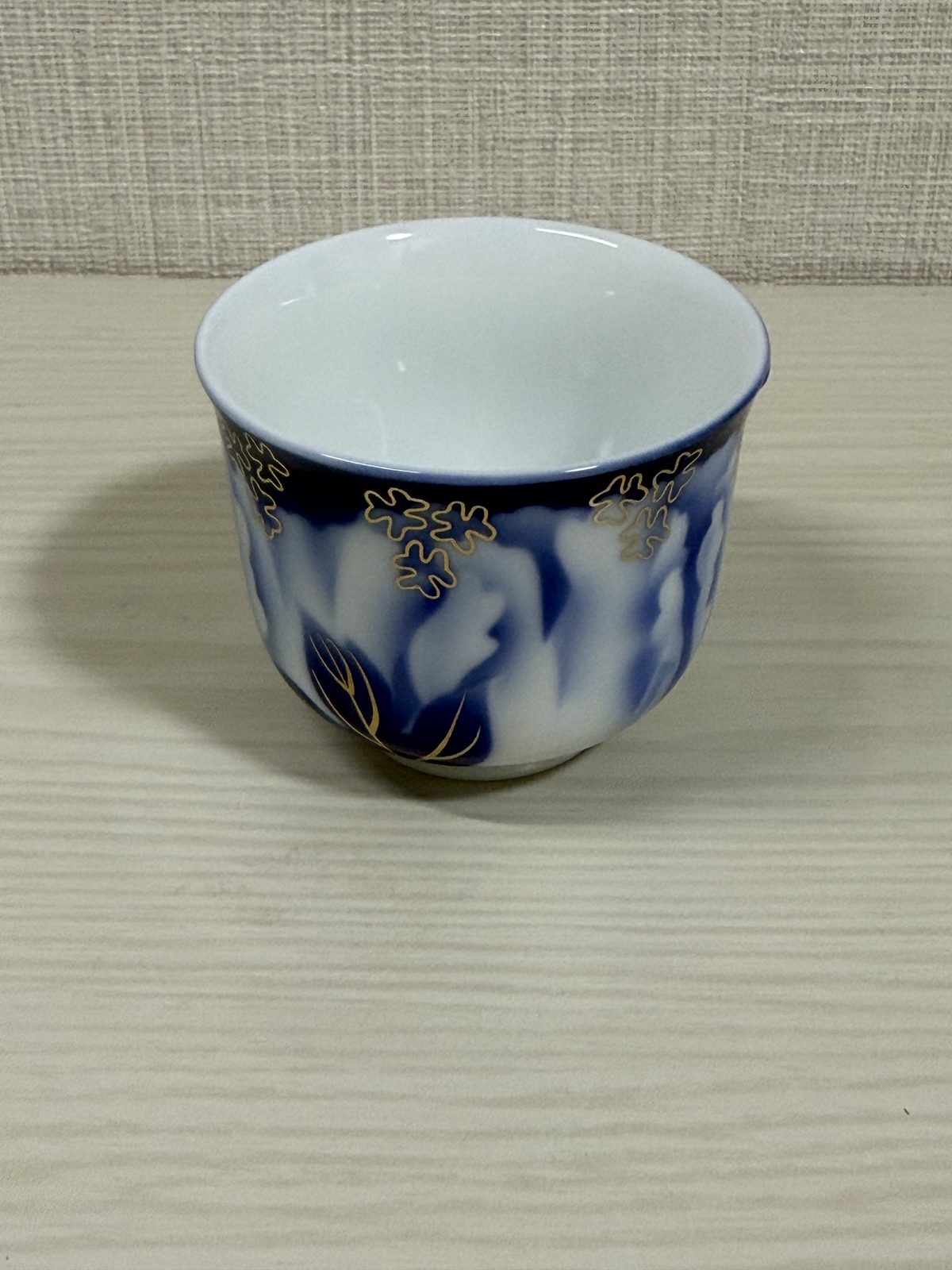
The strongest impression comes from the contrast among three colors:
- deep cobalt blue
- translucent white porcelain
- fine gold decoration
The blue is not flat or uniform.
It flows into the white in soft gradations, suggesting petals, shadows, and movement rather than a sharply outlined illustration. The gold lines then add precision to the otherwise fluid composition.
Fukagawa Seiji is particularly known for its vivid blue decoration and highly translucent white porcelain. The company attributes these qualities to its own color preparation, skilled decoration, and unusually high firing temperature.
The gold does not cover a large portion of the cup, but it changes the atmosphere of the piece.
Without it, the guinomi might feel cool and restrained.
With it, the cup feels suited to a celebration.
How the Guinomi Feels in the Hand
The guinomi is relatively small.
It fits easily in the palm and encourages smaller pours rather than filling a large cup and leaving the sake to warm.
Its surface is not perfectly cylindrical. The softly faceted form gives the fingers natural places to rest, while the porcelain remains smooth.
The cup feels light, but not insubstantial.
That is one of the most attractive qualities of the piece: it creates a refined impression without making me nervous every time I pick it up.
The Thin Rim and Clean Mouthfeel
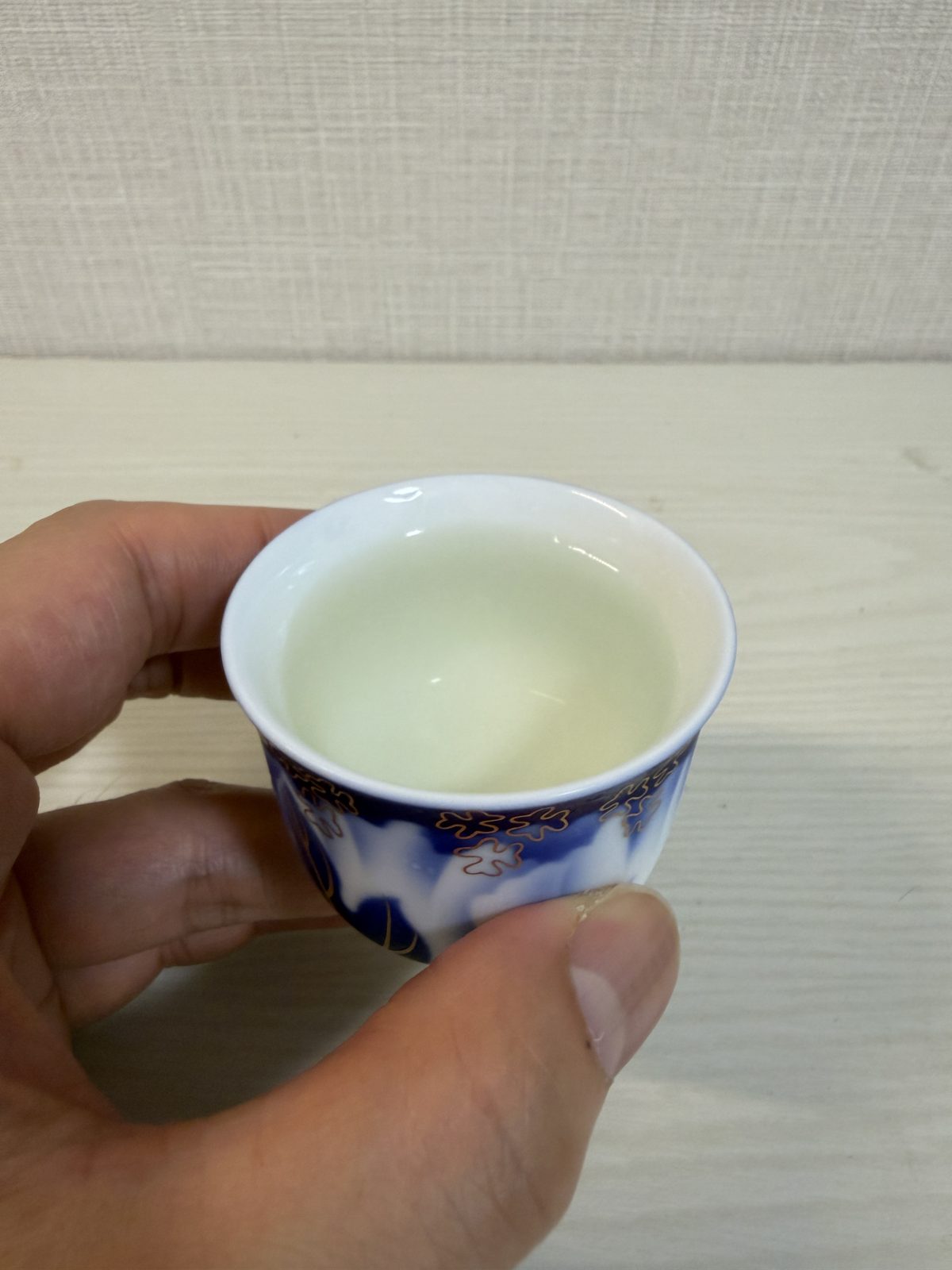
The rim is relatively thin.
When the cup touches the lips, the first impression is clean and precise. The porcelain does not create the thick, rounded sensation that I associate with some heavier pottery cups.
I would describe the mouthfeel of the vessel itself as:
- clean
- light
- precise
- unobtrusive
The cup does not make the sake feel heavier than it is.
That makes it feel naturally suited to elegant or aromatic styles, including junmai ginjo, junmai daiginjo, and fresh nama sake.
The small size also encourages modest pours. That can be useful with chilled sake, because each serving is less likely to sit in the cup long enough to become too warm.
The White Interior Makes the Sake Easier to See
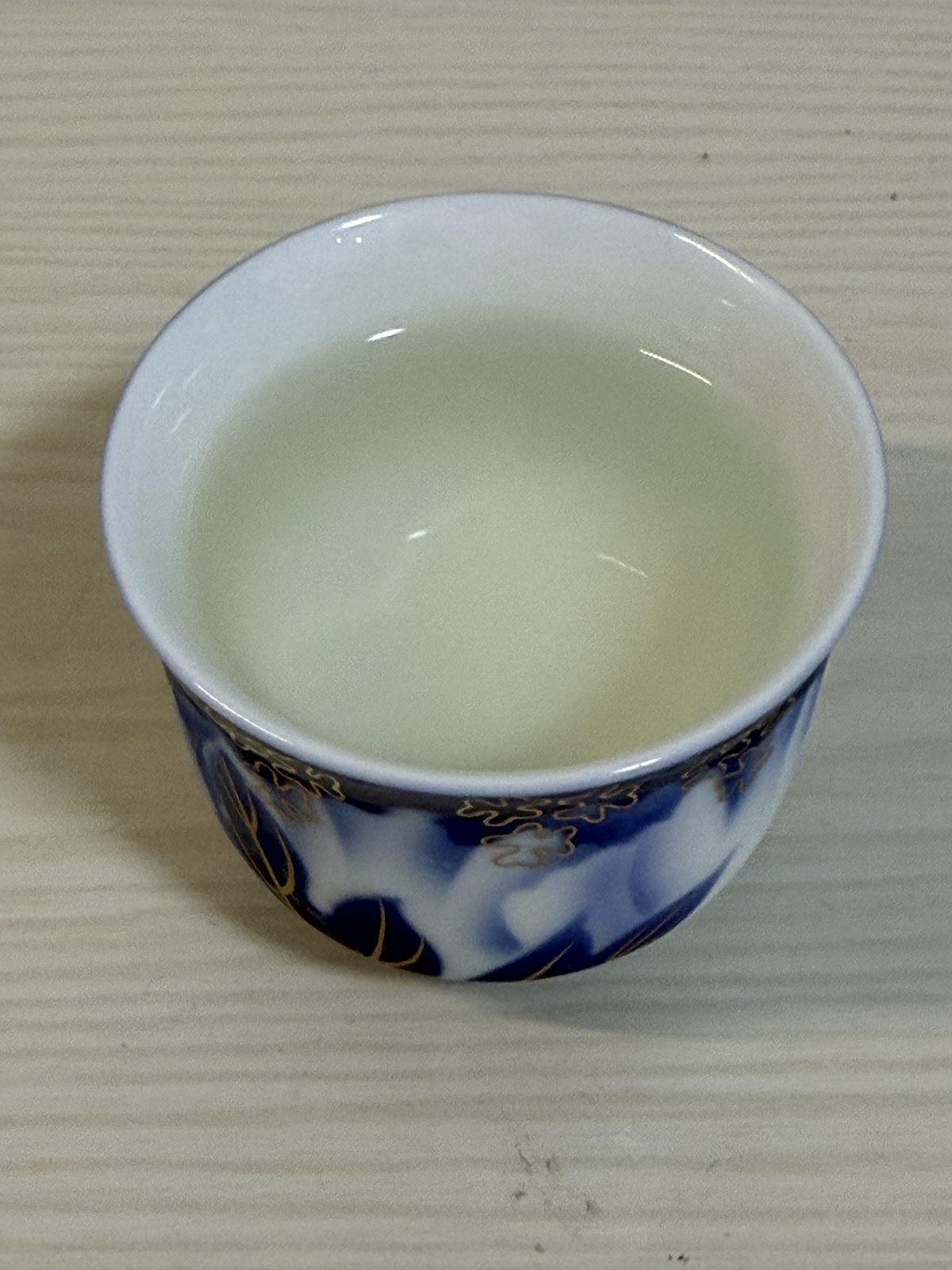
The interior is almost entirely white.
This is practical as well as beautiful.
A white background makes it easier to observe:
- clarity
- pale yellow or green tones
- cloudiness
- small bubbles
- reflections on the surface
When I poured Nabeshima Junmai Ginjo Yamadanishiki into the cup, the pale color of the sake was easy to see against the white porcelain.
With Kaze no Mori Akitsuho 657, the white interior was also useful because the bottle was labelled muroka, or unfiltered, yet the sake itself was not cloudy.
A dark interior can create a dramatic presentation, but it hides much of the liquid’s appearance. This Fukagawa cup provides decoration on the outside while keeping the inside visually neutral.
Does the Cup Change the Taste of Sake?
I would be cautious about claiming that the cup transforms the flavor of a sake by itself.
To make that argument properly, I would need to compare the same sake, at the same temperature and in the same quantity, across several vessels under controlled conditions.
What I can say is that the guinomi changes the experience of drinking sake.
It changes:
- how the liquid looks
- how the rim meets the lips
- how much I pour at once
- how quickly the sake warms
- how formal or celebratory the moment feels
The cup does not turn one sake into another.
But it changes the pace, presentation, and sense of occasion surrounding the sake.
Drinking Nabeshima Junmai Ginjo Yamadanishiki from It
One of the first sakes I used with the cup was Nabeshima Junmai Ginjo Yamadanishiki.
The cobalt blue and gold felt visually suited to the refined image I associated with the sake. The pale tone of the sake was easy to see against the cup’s white interior, and the small size made it natural to pour modest amounts and return to the bottle as the temperature and aroma changed.
I did not conduct a controlled comparison with another vessel, so I would not claim that the cup objectively improved its flavor.
Nevertheless, the combination felt coherent.
The porcelain, gold detail, clean rim, and white interior seemed more naturally suited to an elegant junmai ginjo than to a rustic or heavily aged style.
Read my Nabeshima Omachi vs Yamadanishiki comparison →
Drinking Kaze no Mori Akitsuho 657 from It
I also used the guinomi with Kaze no Mori Akitsuho 657, an unfiltered, undiluted nama sake from Nara.
The cup worked well with it.
Its white interior made the sake’s transparency easy to observe, and its small capacity helped keep each pour cold.
However, Kaze no Mori had more rice-driven weight, umami, and fermentative energy than I had initially expected.
When I paired it with salted yakitori, I found myself preferring a more grounded Satsuma ware guinomi.
The Fukagawa cup emphasized elegance and visual clarity.
The Satsuma cup felt more connected to the sake’s weight, the grilled food, and the relaxed atmosphere of the meal.
Neither vessel was wrong.
They simply drew my attention to different parts of the same encounter.
Read my full Kaze no Mori Akitsuho 657 review →
Fukagawa Porcelain vs My Satsuma Ware Guinomi
The contrast between the two cups helped me understand why I do not believe there is one ideal sake cup for every bottle.
| Feature | Fukagawa Seiji guinomi | Satsuma ware guinomi |
|---|---|---|
| Material | Porcelain | Pottery |
| Rim | Thin and precise | Thicker and rounder |
| Interior | White and easy to inspect | Less focused on visual clarity |
| Visual mood | Elegant and celebratory | Grounded and relaxed |
| Best context | Refined sake, special bottle, formal presentation | Richer sake, grilled food, casual drinking |
| Drinking pace | Small, controlled pours | Broader, more relaxed experience |
The Fukagawa cup seems to suit sake that I want to examine and present carefully.
The Satsuma cup feels better suited to sake that I want to drink alongside warm, savory food.
This distinction is personal rather than universal, but it has made choosing a cup part of the pleasure of opening a bottle.
What Kind of Sake Suits This Cup?
Based on its design and the way it feels to use, I would first reach for this guinomi with:
- junmai daiginjo
- daiginjo
- elegant junmai ginjo
- aromatic, fruity sake
- fresh nama sake
- a bottle opened for a celebration
- seasonal sake served in small chilled pours
Its cobalt blue, gold details, and peony motif feel particularly appropriate for a gift or an auspicious occasion.
I would be interested in using it with Mii no Kotobuki Junmai Daiginjo Fuku.
The name Fuku means good fortune or happiness, making it a natural candidate for a cup decorated with peonies and a gold pattern symbolizing continuity.
That tasting may become a future addition to this article.
Price and Accessibility
I paid ¥5,544 including tax at the Fukagawa Seiji Hakata store on July 19, 2026.
Fukagawa Seiji produces a wide range of porcelain.
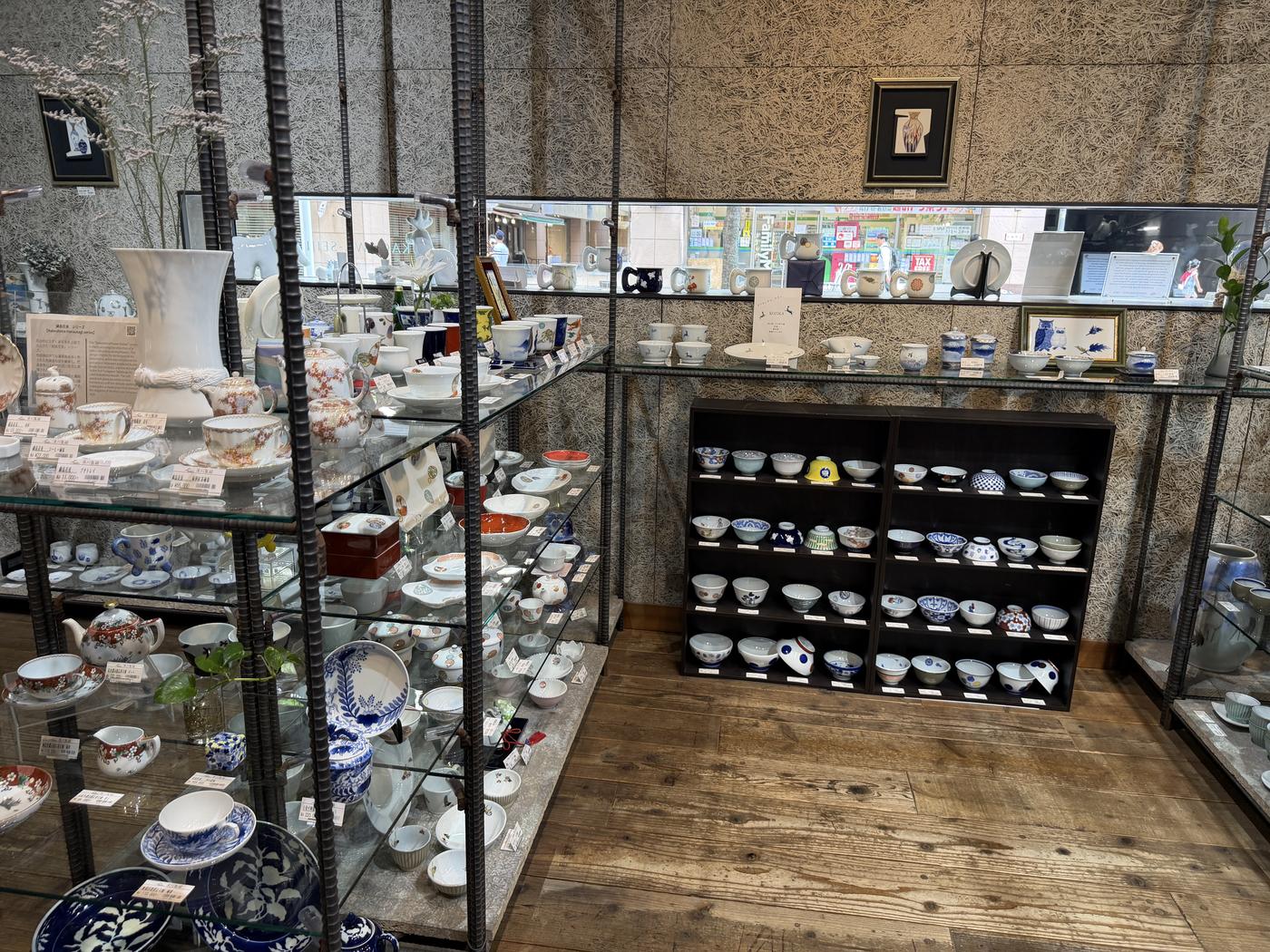
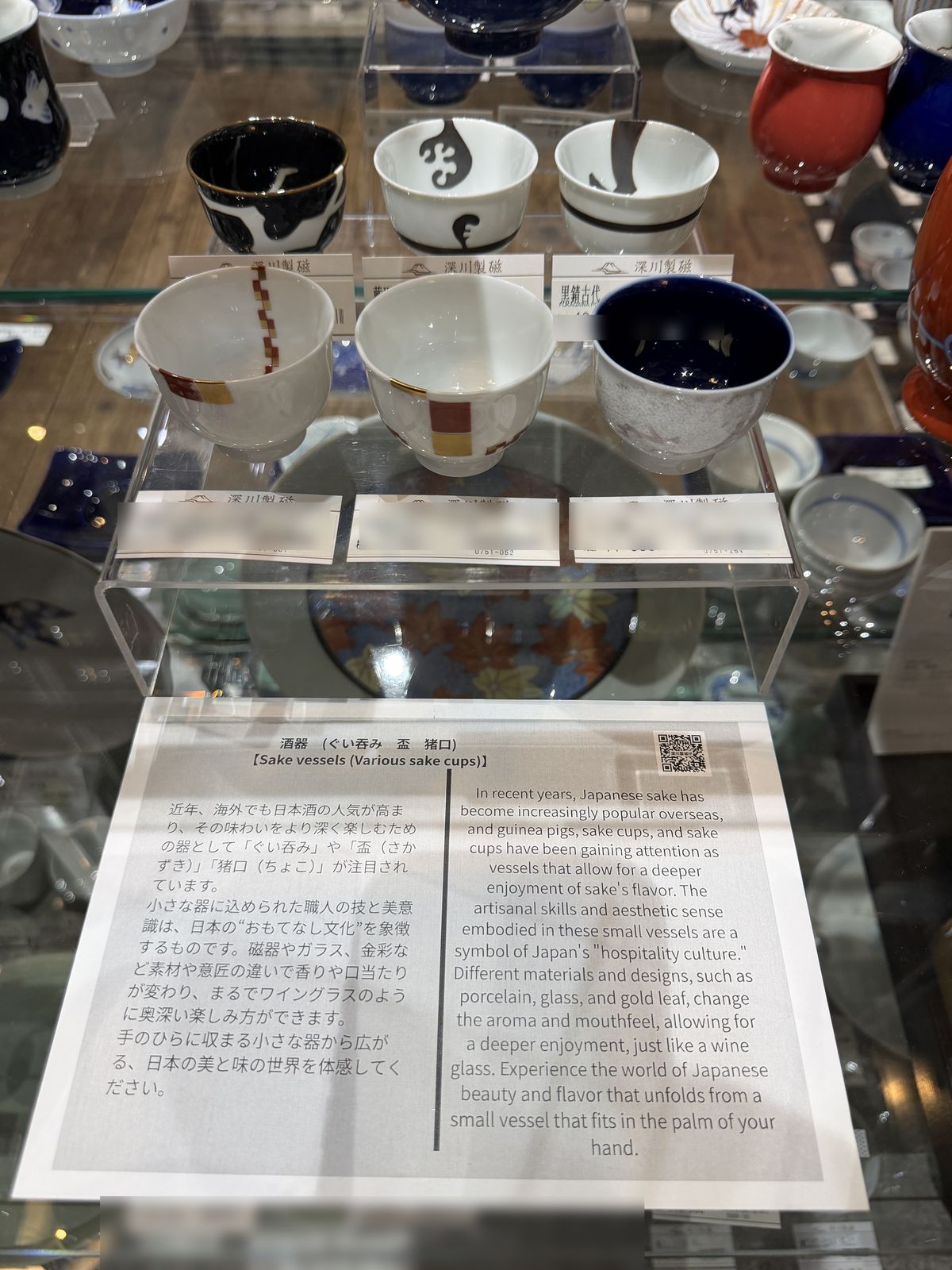
Some of the pieces displayed in the store were museum-like works priced far beyond my everyday tableware budget. Others, including small cups and sake vessels, were much more approachable.
That range matters.
A visitor does not need to purchase a large decorative work or a complete tableware set to experience Fukagawa Seiji.
One small cup can be enough.
However, when buying a specific piece of Japanese porcelain, I would not assume that the exact same shape and decoration will always be available.
Availability and Finding the Same Cup
The cup I bought was one I encountered at the Fukagawa Seiji Hakata store on that particular day.
Japanese ceramic makers often produce many shapes, sizes, and variations within the same design family. For that reason, I would not assume that the exact same guinomi is always available.
At the same time, I would also avoid saying that the broader Botan Kinmiru or Unmon Botan Kinmiru design has ended. Fukagawa Seiji’s official online store lists related pieces using the same visual vocabulary: cobalt blue, white porcelain, peony motifs, cloud-like forms, and gold decoration.
For that reason, I think it is best to distinguish between two things:
- this exact guinomi shape
- the wider Botan Kinmiru design family
If you want the exact same cup, the safest approach is to contact Fukagawa Seiji or visit one of its stores directly.
But even if the same shape is not available, the broader design language may still be found in other cups or tableware.
Caring for the Gold Decoration
Because the cup includes gold decoration, I treat it carefully.
I wash it by hand with a soft sponge and avoid using it in a microwave or dishwasher.
The care requirements of individual Fukagawa Seiji products may differ, so it is best to confirm the instructions provided with the product or ask the store before use.
For me, this is not an everyday cup that I use without thinking.
But neither is it too precious to use.
The purpose of buying it was to drink sake from it—not to leave it permanently on a shelf.
Visiting Fukagawa Seiji Hakata
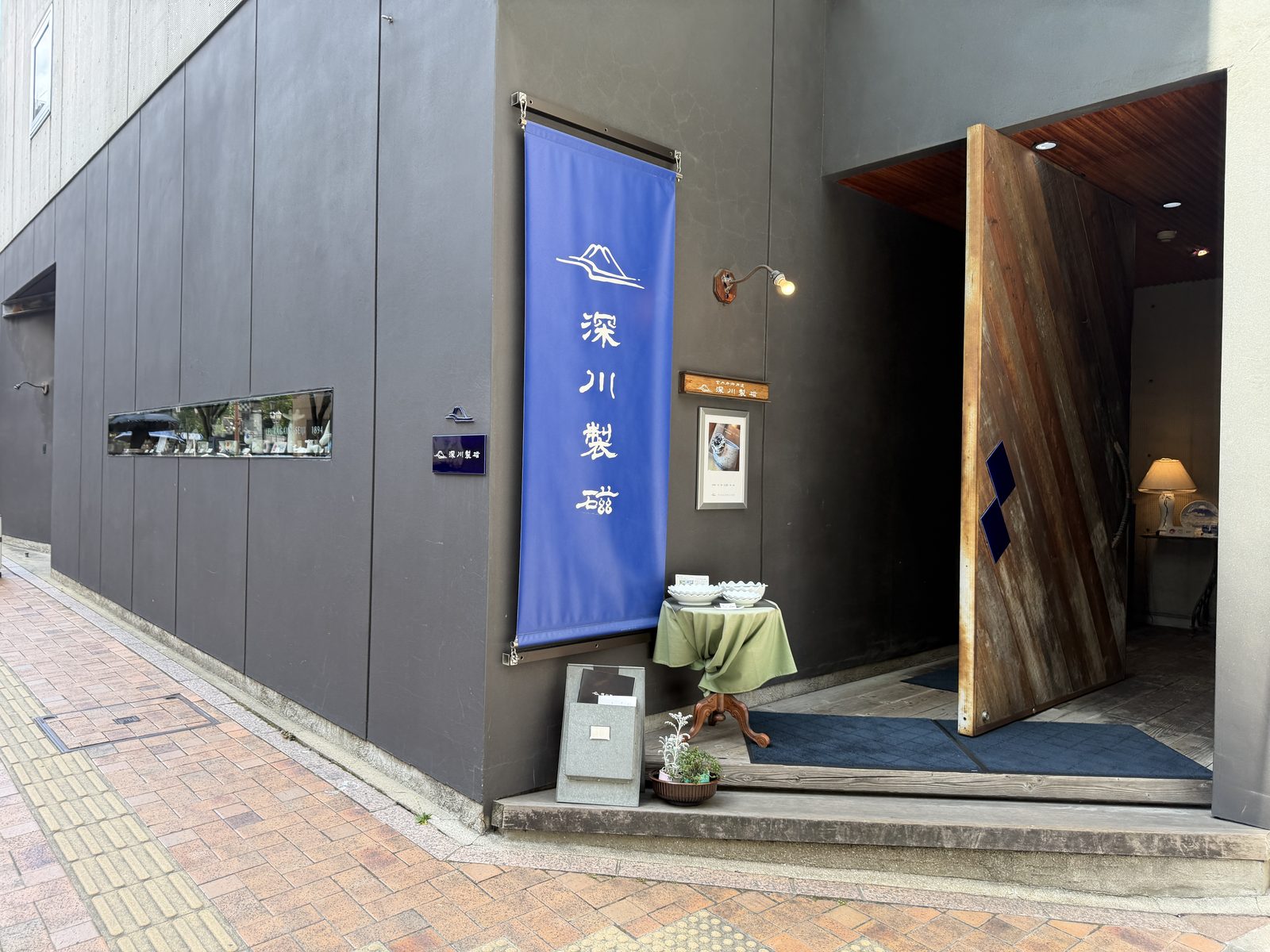
The Fukagawa Seiji Hakata store is an official directly operated shop in the Nakasu-Kawabata area of Fukuoka.
The store carries sake vessels, cups, plates, teaware, decorative pieces, and higher-end works. The range made it possible to see how the same blue-and-white vocabulary changes across different shapes and uses.
The staff gave me permission to photograph the interior and introduce the store on my blog and social media.
For visitors interested in sake ware or Arita porcelain, it is a useful stop near Hakata Riverain and Hotel Okura Fukuoka.
I particularly appreciated that the store did not present every piece as something that had to be understood through technical knowledge.
Sometimes it was enough to hold a cup and see whether it felt right.
Is a Fukagawa Seiji Guinomi a Good Souvenir?
For a visitor to Japan, a small porcelain sake cup has several advantages.
It is:
- easier to carry than a large plate or vase
- useful rather than purely decorative
- connected to Japanese food and drink culture
- available across a wide range of prices
- suitable as a personal souvenir or gift
The main practical concern is safe transportation.
I would keep the original box and protective wrapping, place it inside clothing or another padded area, and avoid putting it near the outside edge of a suitcase.
A small guinomi may not carry the visual impact of a monumental Fukagawa vase.
But it is something that can return to the table repeatedly.
Final Thoughts
Fukagawa Seiji produces extraordinary works that can cost far beyond an everyday tableware budget.
It also produces smaller pieces that allow someone to encounter the same ideas—translucent white porcelain, vivid cobalt blue, skilled decoration, and a sense of Japanese elegance—on a more approachable scale.
This guinomi cost ¥5,544.
It is small, light, and practical, yet its cobalt blue, white porcelain, and gold details make even a single pour of sake feel more deliberate.
I do not think one cup suits every sake.
Kaze no Mori felt more natural to me in a grounded Satsuma ware guinomi, particularly when paired with salted yakitori.
This Fukagawa cup feels especially suited to elegant junmai ginjo, junmai daiginjo, fresh nama sake, and bottles opened for a celebration.
A sake cup does not need to be the most expensive object on the table to change the atmosphere around it.
Sometimes, one small encounter with a beautiful piece of porcelain is enough.
Perhaps your next sake encounter will begin not with a bottle, but with the cup you choose for it.
Sake is an alcoholic beverage. This article is intended for readers of legal drinking age in their country — please drink responsibly.