Nabeshima Omachi vs Yamadanishiki: A Side-by-Side Sake Tasting
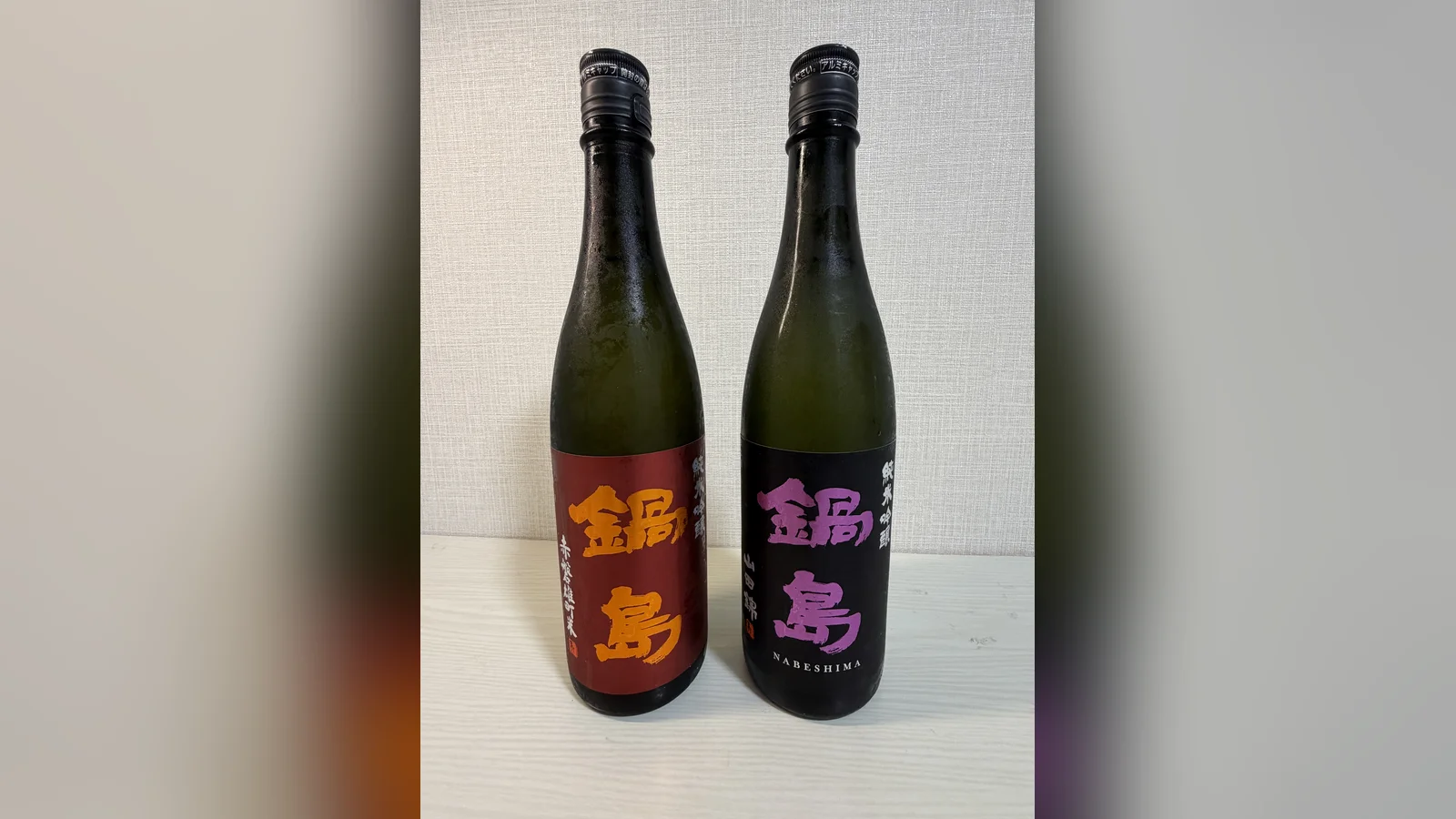
Table of Contents
This article contains affiliate links. If you buy through my Palate Project link or use my discount code, you may receive a discount, and I may earn a small commission at no extra cost to you — it never changes what I recommend. Full disclosure.
If you have spent any time reading about sake, you have probably seen it: “Omachi is rich and earthy; Yamadanishiki is elegant and balanced.”
It sounds definitive — until you wonder whether anyone actually tasted the two side by side, from the same brewery, at the same grade and polishing ratio, in matching glasses, on the same evening.
I wanted to find out. So I did exactly that.
How I compared the two bottles
I opened two bottles of Nabeshima Junmai Ginjo from Fukuchiyo Shuzo in Kashima, Saga — the brewery behind my very first sake encounter.
Both were Junmai Ginjo, polished to 50%, with a stated alcohol content of 16%. One was labeled Akaiwa Omachi and made with 100% Omachi rice. The other was made with 100% Yamadanishiki.
The production months were not identical: the Omachi bottle was marked March 2026, while the Yamadanishiki bottle was marked May 2026. Neither bottle was labeled namazake.
The glasses were a matching pair of clear glass cups decorated with a rabbit-and-moon motif. My mother-in-law bought them on a trip to Nagasaki around thirty years ago. Using the same style of vessel allowed me to compare the two sakes under similar conditions while also seeing their color from the side.
Both bottles had been stored in the same ordinary household refrigerator and were served directly from it. I did not measure the exact temperature.
I opened both at the same time, poured them into the matching glasses, tasted them in one order, drank water, and then tasted them again in reverse order. I deliberately avoided reading tasting notes beforehand. I wanted my palate to answer before the textbooks could.
This was an informal, non-blind tasting of one bottle of each sake. Rice was the main difference stated on the labels, but production date, brewing decisions, maturation, bottling lot, pasteurization, transportation, and storage may also influence the result. These notes describe these two bottles on this particular evening — not every sake made from Omachi or Yamadanishiki.
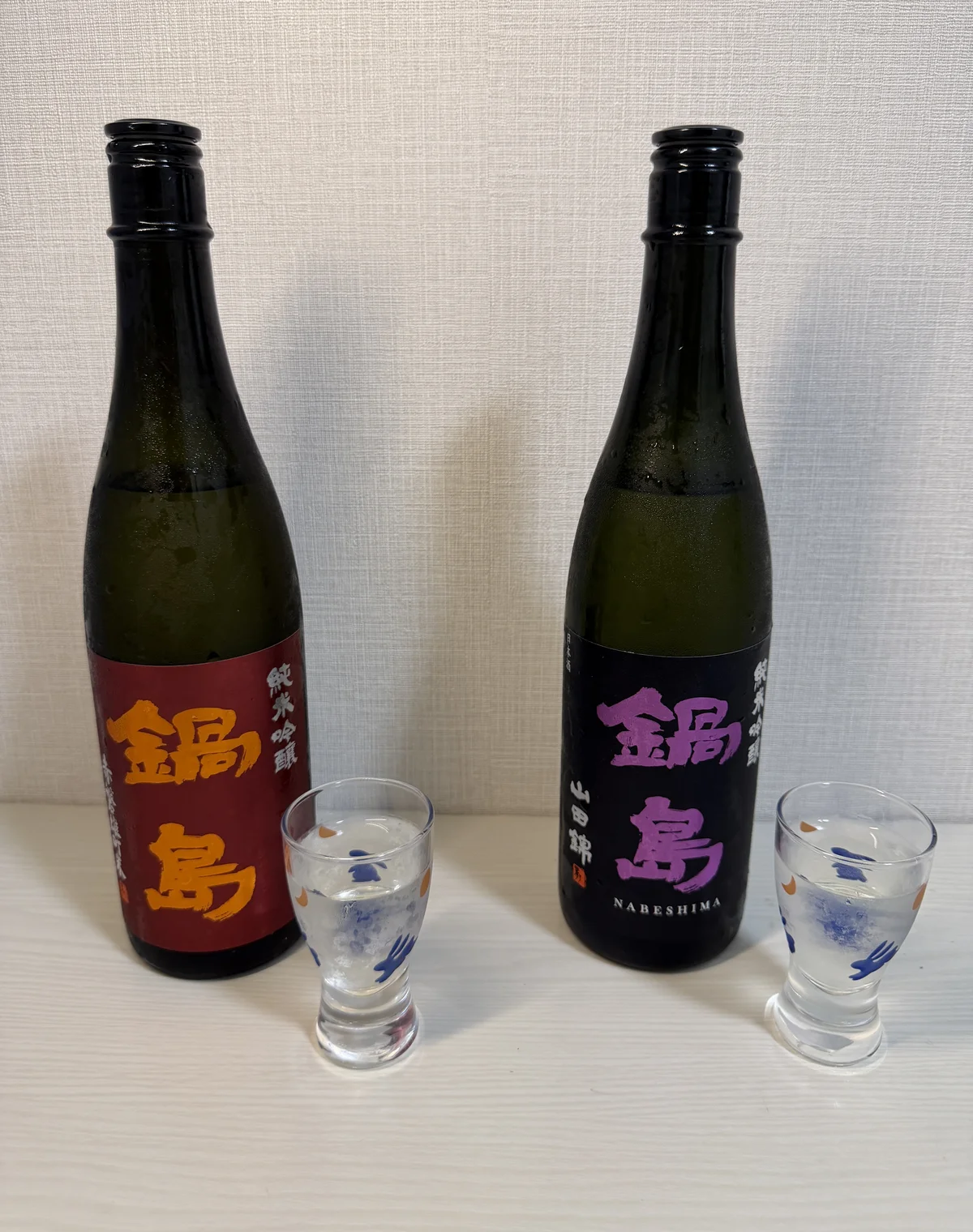
The full lineup: Akaiwa Omachi on the left and Yamadanishiki on the right, with the rabbit-and-moon glasses ready between them.
What the glass looked like
I will start with what I expected to see and did not.
Poured side by side, the two sakes were nearly indistinguishable in color. Both appeared essentially clear, with perhaps the faintest suggestion of straw.
If there was a visible difference, it was too subtle for my eyes or my camera to capture with confidence.
Tiny bubbles clung to the inside of both glasses, but neither showed the steady, champagne-like stream of bubbles that you sometimes find in a lively nama sake. These were visually quiet, still sakes.
The nose
Both opened with a soft, gentle aroma — nothing aggressive and nothing shouting from the glass.
Omachi leaned toward muscat grape, with a sharper, fresher edge around the aroma.
Yamadanishiki showed a similar muscat quality but folded in something rounder — melon, perhaps — giving it a slightly broader and more perfumed impression.
If Omachi’s aroma was a single clear note, Yamadanishiki’s was a chord.
The first sip
This was where the two began to part ways, and the difference felt more tactile than I had expected.
Omachi entered the mouth with a slight silkiness and then moved straight through. Sweetness, acidity, umami, and a touch of bitterness seemed to arrive together, already integrated.
Then the sake left.
Cleanly. Decisively.
The best comparison I can make is an unexpected one: it reminded me of the crisp, dry finish of an Asahi Super Dry — not in flavor, but in the way it cuts through and clears the palate.
That may sound backwards if you know Omachi’s reputation. It is often described as a rice that gives sake richness, weight, and deep umami. That richness was present here, but it did not sit heavily. It left the stage cleanly rather than lingering.
There was also a faint tingle on the tongue, though it was barely perceptible.
Yamadanishiki took a different path.
The first impression was sweetness and acidity arriving together, followed almost immediately by bitterness. Then a wave of umami spread sideways across the mouth.
Where Omachi drove forward in a straight line, Yamadanishiki opened laterally — wider, more layered, and more expressive.
The same faint tingle was present, but the overall sensation was rounder and more expansive.
If I had to reduce the difference to a single image:
Omachi was an arrow. Yamadanishiki was a fan unfolding.
What changed as the sake warmed
Both sakes had been served directly from a household refrigerator. I did not measure the exact temperature, but I returned to them as they gradually warmed in the glasses.
As Omachi moved toward room temperature, something shifted.
The bitterness receded, and a firm, savory umami emerged — possibly joined by a quiet sweetness. The sake developed a stronger backbone, as though a single axis were running through its center.
It felt more confident and more grounded.
Yet it never lost the fruitiness I associate with Nabeshima. The fruit simply seemed less exposed on the surface and more tightly woven into the structure.
Yamadanishiki moved in the opposite direction: it bloomed.
Its sweetness became clearer, the aroma lifted, and the whole sake felt more three-dimensional — not only wider, but taller and more vivid.
If the chilled pour was a fan unfolding, the warmer pour was a flower opening.
The fruitiness, already present when cold, became the star.
With processed cheese
I paired both sakes with a piece of processed cheese.
This was partly out of curiosity and partly to see how each would respond to a rich, fatty companion.
For my palate, Omachi was the better match.
Its integrated umami met the cheese’s richness directly, and the two seemed to reinforce each other without either one taking control. Omachi’s clean finish then cleared the palate for the next bite.
Yamadanishiki was not a bad pairing. Its broader sweetness and fragrance, however, competed slightly with the cheese rather than fitting into it as naturally.
This was only one pairing with one kind of processed cheese. A lighter dish, a fruit-based accompaniment, or something with gentle sweetness could easily produce a different result.
The comparison at a glance
| Akaiwa Omachi | Yamadanishiki | |
|---|---|---|
| Aroma | Muscat, restrained, fresh edge | Muscat, melon, more perfumed |
| Structure | Linear and integrated | Broad and layered |
| Finish | Clean and decisive | Rounder and more expansive |
| As it warmed | Savory umami and structure emerged | Sweetness and aroma bloomed |
| With processed cheese | More cohesive pairing | Slightly more competitive |
| For my palate | Food and slow exploration | An expressive first encounter |
Akaiwa Omachi Approachability
Akaiwa Omachi — Approachability: 3.5 / 5
A low score reflects difficulty for a newcomer, not quality. How I score this →
I found the Junmai Daiginjo easier to drink than this one. Someone not yet used to sake may register a certain dryness here.
Yamadanishiki Approachability
Yamadanishiki — Approachability: 3.5 / 5
A low score reflects difficulty for a newcomer, not quality. How I score this →
Fruity, but with a dryness that someone not yet used to sake may notice. The Junmai Daiginjo remains the easier of the two for a first bottle.
So which one wins?
Neither.
That is the honest answer, not a diplomatic escape.
These felt like two expressions of the same brewing philosophy — Fukuchiyo Shuzo’s character filtered through two different rice varieties.
For my palate, Omachi offered integration, directness, and a clean, dry arc.
Yamadanishiki offered expansion, fragrance, and a more immediately vivid, layered experience.
Neither was better. They were genuinely different personalities wearing the same family name.
For my palate, Yamadanishiki was the easier first encounter — more aromatic, immediately expressive, and obviously beautiful.
Omachi was the one that grew on me — quieter at first, but especially rewarding with food and as the temperature rose.
And I should confess something here.
The Nabeshima that originally made me fall in love with sake — the bottle I wrote about in my first article on this blog — was a Junmai Daiginjo made with Yamadanishiki.
That aromatic, blooming quality was what stopped me in my tracks at a welcome party years ago.
Coming back to it now, side by side with its Omachi sibling, I can see why Yamadanishiki was the bottle that opened the door.
And I can see why Omachi is the one that keeps me exploring the room.
A note on the rice
For readers new to sake rice, Yamadanishiki is often called the “king of sake rice.” It remains Japan’s leading sake-rice variety by production volume and is prized by brewers for its versatility and its tendency to produce balanced, flavorful sake.
Omachi is one of Japan’s oldest surviving sake-rice varieties. Its history is traced to two rice ears found in 1859 by a farmer returning from a pilgrimage near Mount Daisen. It later became an ancestor of several important sake-rice varieties, including Yamadanishiki and Gohyakumangoku.
The name Akaiwa Omachi refers to Omachi associated with the Akaiwa area of Okayama Prefecture, one of the prefecture’s principal Omachi-growing regions.
Omachi is commonly associated with texture, richness, and umami, while Yamadanishiki is often associated with balance and elegance. These are useful tendencies, but they are not rules.
What I tasted here was Omachi with richness, yes — but also a quick, clean finish.
My impression is that Fukuchiyo Shuzo’s bright acidity and clean kire shaped both bottles, even while the rice appeared to pull them in different directions.
The rice may establish the raw material. The brewery still decides what to do with it.
Where in Japan
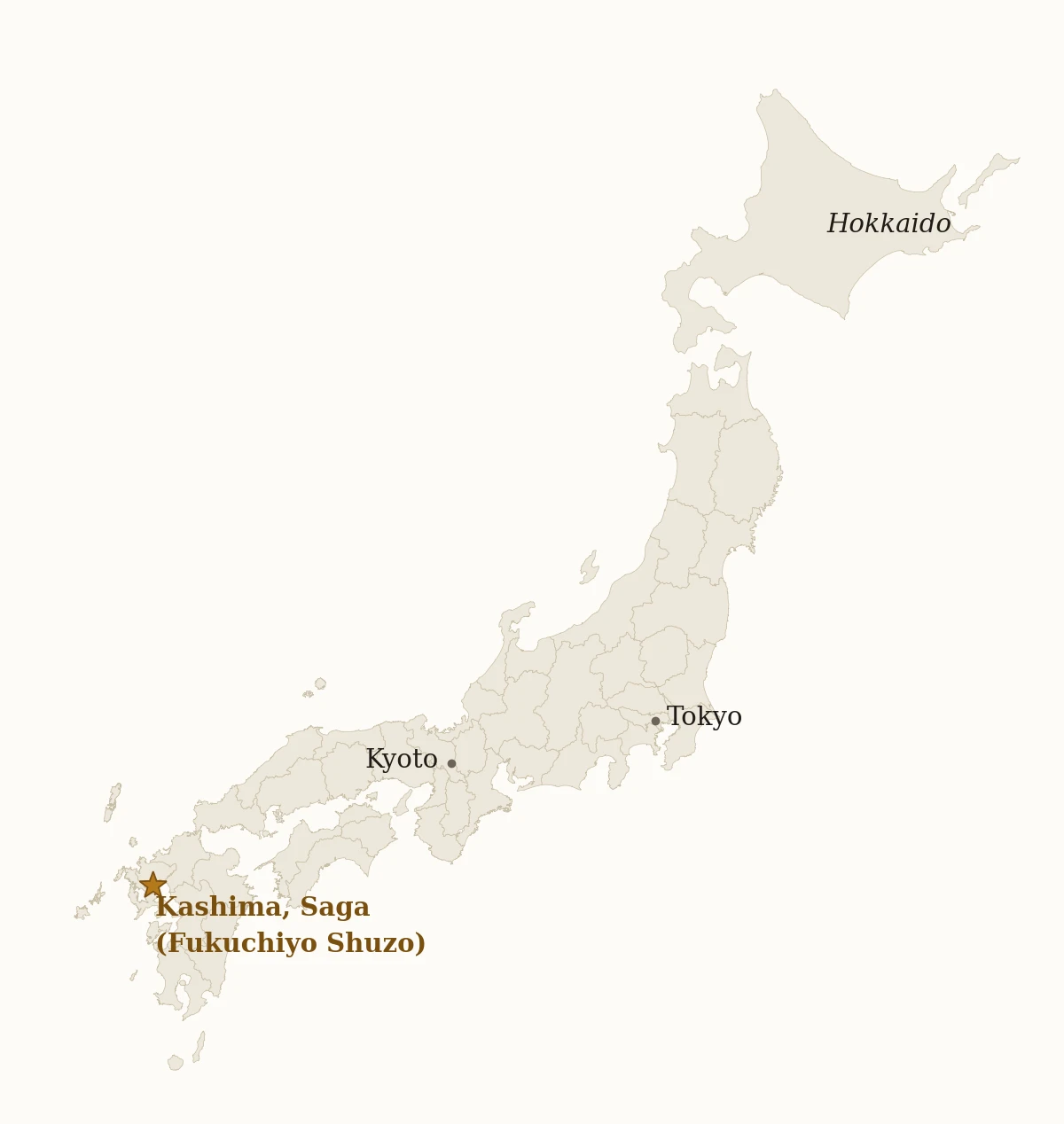
Kashima sits in Saga Prefecture, on the island of Kyushu — about five hours from Tokyo by train, and roughly two from Kyoto.
Finding these bottles outside Japan
At the time of writing, Palate Project (formerly Tippsy) lists selected Nabeshima releases in the United States, including Junmai Daiginjo expressions made with Aiyama and Tankan Wataribune rice.
However, I could not confirm these exact Akaiwa Omachi and Yamadanishiki Junmai Ginjo bottlings in its current selection.
Availability changes frequently, especially for limited and seasonal releases. It is worth checking specialist sake retailers and well-stocked Japanese bottle shops, while confirming the exact rice variety and grade rather than relying on the Nabeshima name alone.
Outside Japan, availability varies widely by country and importer.
These are the kind of bottles you may need to wait for, search for, or simply encounter by chance — which, if you read my first article, is exactly how my own Nabeshima story began.
Kanpai — to the bottles that teach you something new about a name you thought you already knew.
If you’re curious to explore Nabeshima or other Saga sake for yourself and you are in the United States, you can browse Japanese sake through Palate Project. My referral link may give you a 10% discount, and I may earn a commission if you make a purchase.
You can also use the discount code FRIEND-BZXDMXW for 10% off.
Please enjoy sake responsibly and follow the drinking laws in your country or region.
This article contains affiliate links. If you buy through one, I may earn a small commission at no extra cost to you. It never changes what I honestly think.Full disclosure here.
Sake is an alcoholic beverage. This article is intended for readers of legal drinking age in their country — please drink responsibly.