Kaze no Mori Akitsuho 657 Review: Fruity, Rice-Driven, and Full of Nama Sake Energy
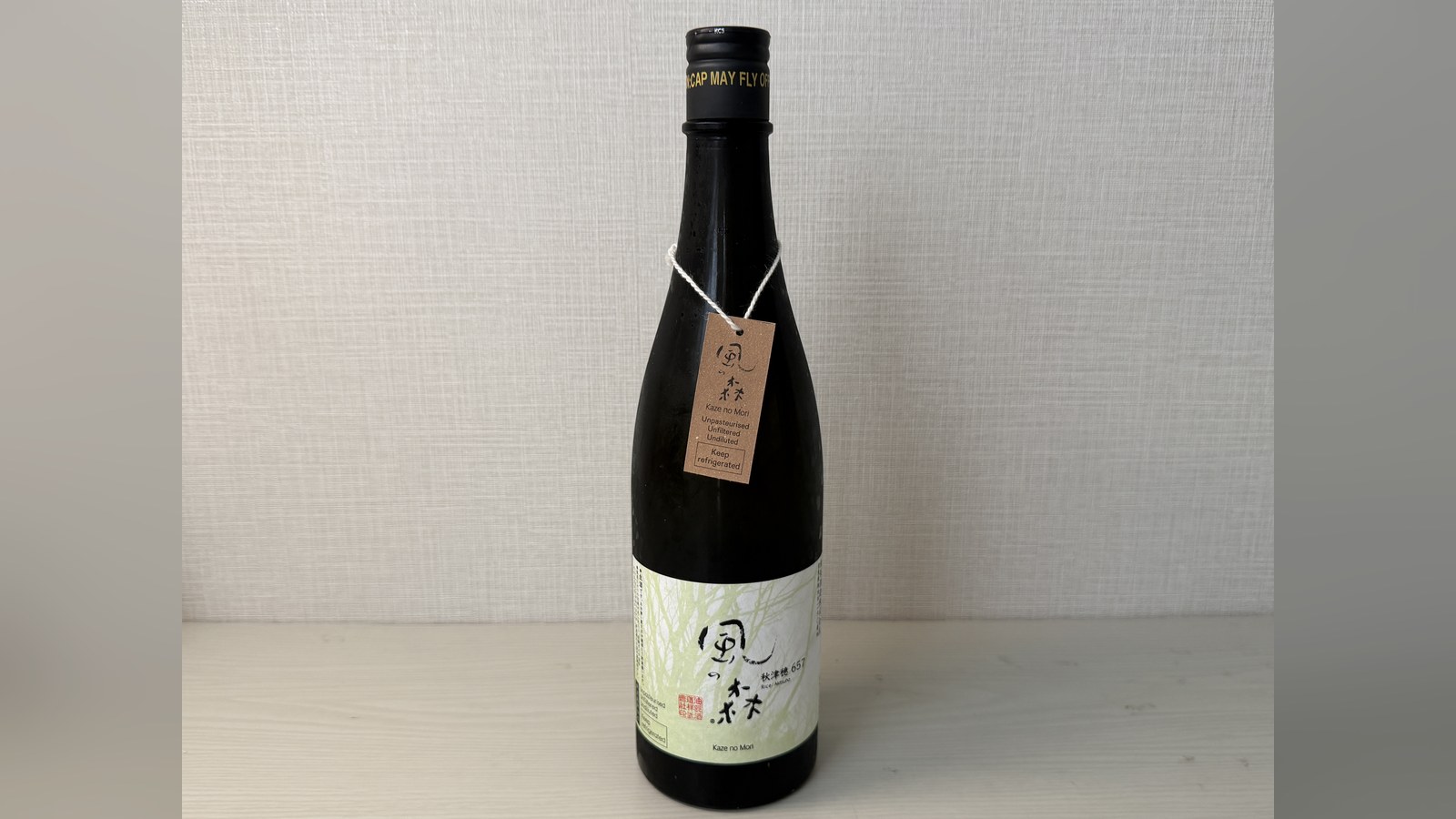
Table of Contents
- What Is Kaze no Mori Akitsuho 657?
- Why I Bought This Bottle
- Opening the Bottle
- Day 1: Fruity, but Also Rice-Driven and Forceful
- How Fruity Did It Feel?
- A Sense of Nama Sake Energy
- Day 2: Rounder, With Salted Yakitori
- Glass or Guinomi?
- One Week Later: Rounder, Broader, and Less Fizzy
- One Week Later: Pairing With Seseri and Yagen Nankotsu
- Best Serving Temperature
- Best Food Pairings
- Who Would Enjoy Kaze no Mori Akitsuho 657?
- Is It Better on Day 1 or Later?
- Approachability
- Final Thoughts
This article contains affiliate links. If you buy through my Palate Project link or use my discount code, you may receive a discount, and I may earn a small commission at no extra cost to you — it never changes what I recommend. Full disclosure.
When people describe modern nama sake, words such as fresh, fruity, and lively often appear.
Those words also apply to Kaze no Mori Akitsuho 657.
I noticed a sweet aroma, hints that reminded me of pear and pale fruit, and a fine natural fizz immediately after opening.
But fruitiness was not the strongest part of the experience for me.
What stayed with me more was the sake’s rice-driven weight, umami, substantial texture, and sense of fermentative vitality.
Compared with Kagura Ruri and the nama Nabeshima bottles I have returned to over the years, those other bottles felt relatively more focused on polished fruitiness and freshness. Kaze no Mori Akitsuho 657 felt broader and more forceful, with fruit sitting alongside a firmer expression of rice and fermentation. This comparison is a personal impression built up over repeated tastings, not a formal side-by-side.
The first sensory image that came to mind was:
It reminded me slightly of strained amazake—but it was not cloudy.
I opened the bottle on July 25, 2026, then returned to it the following day and again about one week later. This review follows how its fruit, fizz, rice character, and structure changed over that time.
What Is Kaze no Mori Akitsuho 657?
Kaze no Mori Akitsuho 657 is a junmai sake brewed by Yucho Shuzo in Nara Prefecture.
According to the brewery’s official Kaze no Mori product page, this bottle is the long-running representative release of the Kaze no Mori range, made with locally contract-grown Akitsuho rice, carrying melon- and pear-like aromas alongside sweetness and complexity.
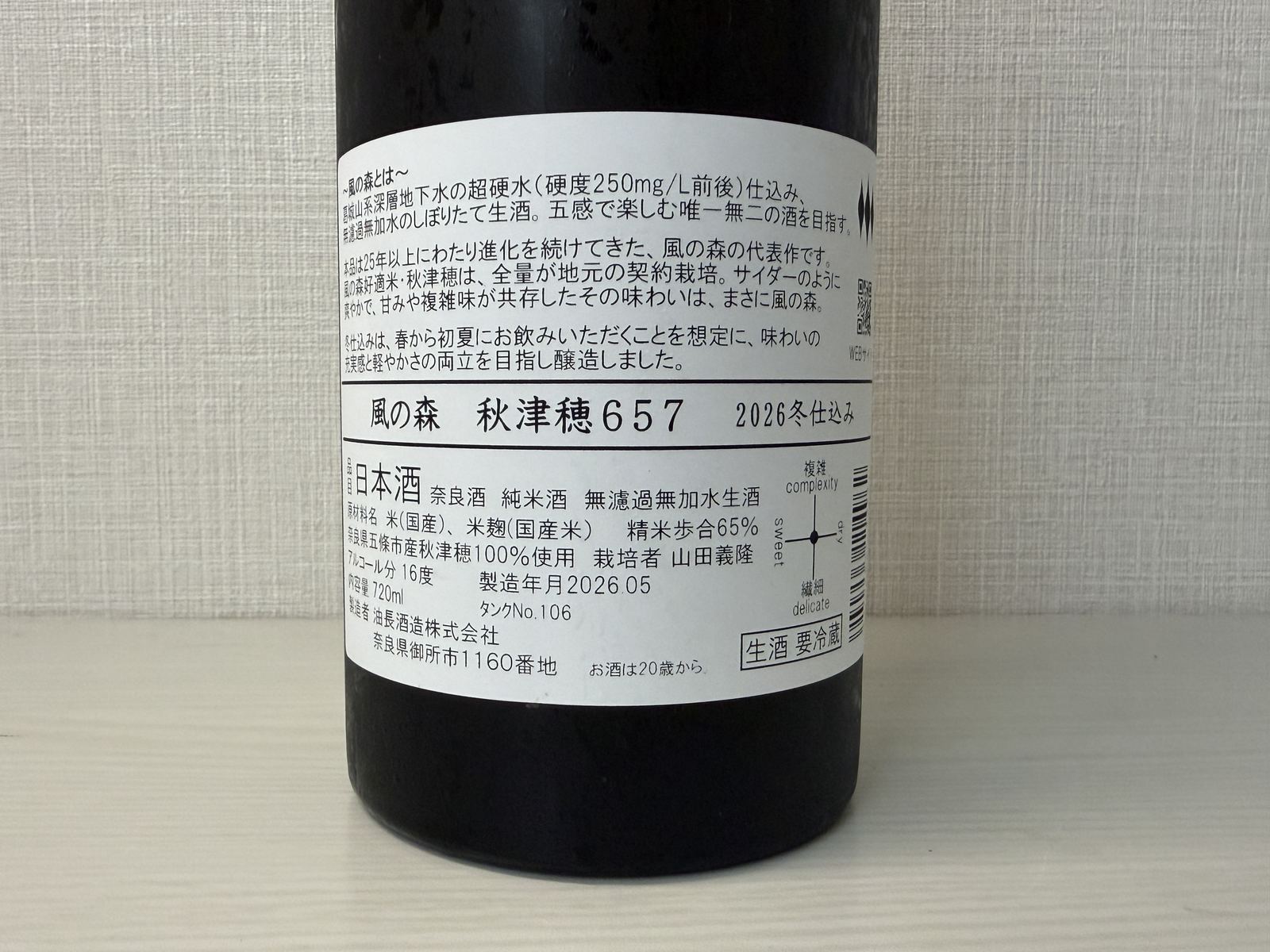
The bottle I tasted was labelled:
| Detail | Kaze no Mori Akitsuho 657 |
|---|---|
| Classification | Junmai sake |
| Rice | Akitsuho |
| Rice origin | Gose, Nara |
| Polishing ratio | 65% |
| Alcohol | 16% |
| Treatment | Unpasteurized, unfiltered, undiluted |
| Brewing | 2026 winter brewing |
| Storage | Keep refrigerated |
| Volume | 720 ml |
In Japanese, the rear label describes it as muroka, mukasui, namazake: unfiltered, made without dilution water, and unpasteurized. Muroka doesn’t mean the liquid is cloudy—it just means a later finishing-filtration step was skipped. This bottle was clear, not hazy, despite being unfiltered.
I explain these terms more fully in my guide to muroka, nama, and genshu.
Why I Bought This Bottle
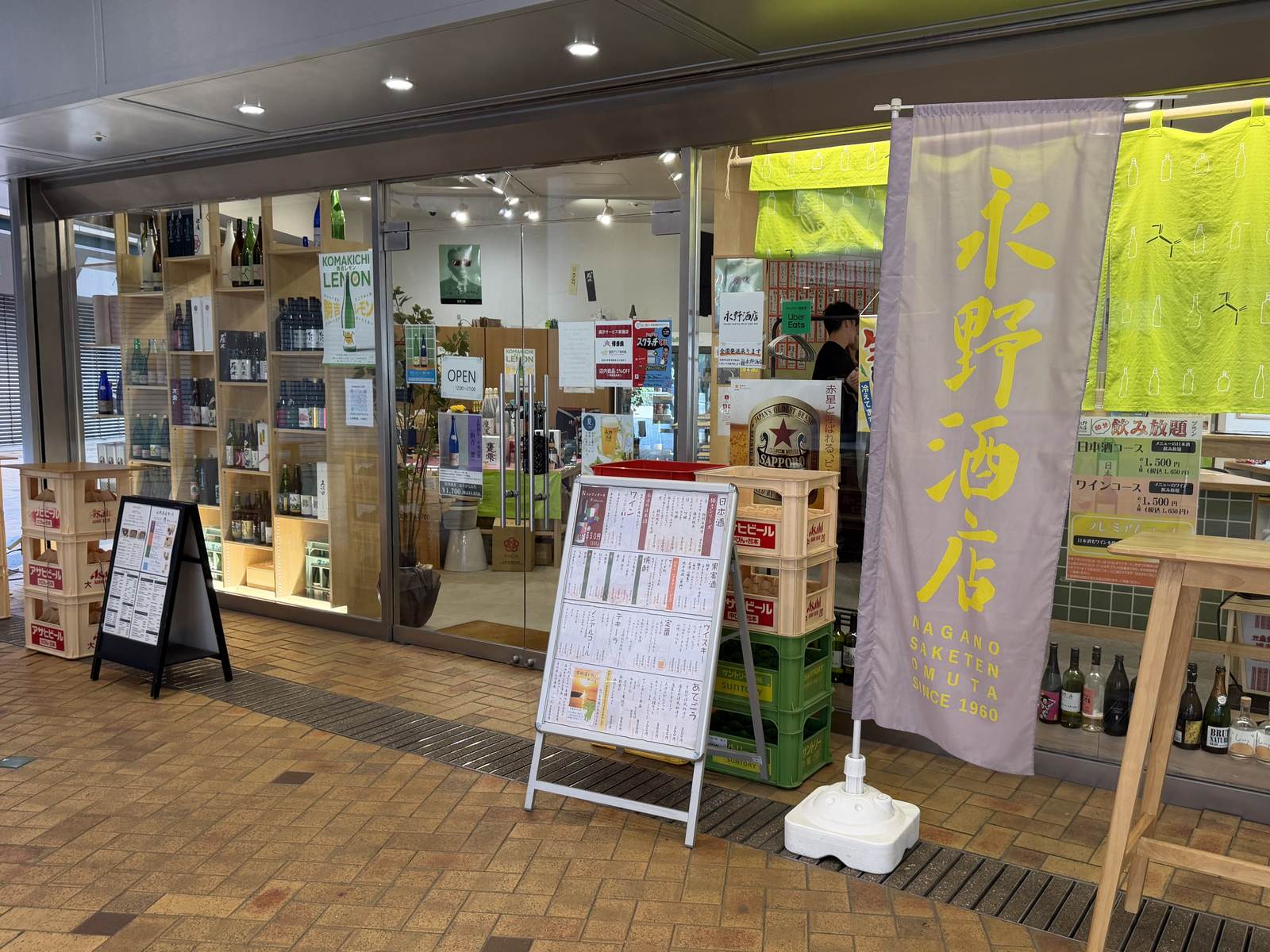
I found this bottle at Nagano Saketen, a sake shop near Hakata Riverain in Fukuoka.
Kaze no Mori was a name I wanted to explore more closely, partly because it is often associated with fresh aroma, natural gas, and a modern nama-sake experience. Those elements were present—but the bottle also showed me another side of that style: fruitiness supported by rice-derived weight, umami, and a firm texture. It was not merely a light, aromatic sake made to resemble white wine.
Where in Japan
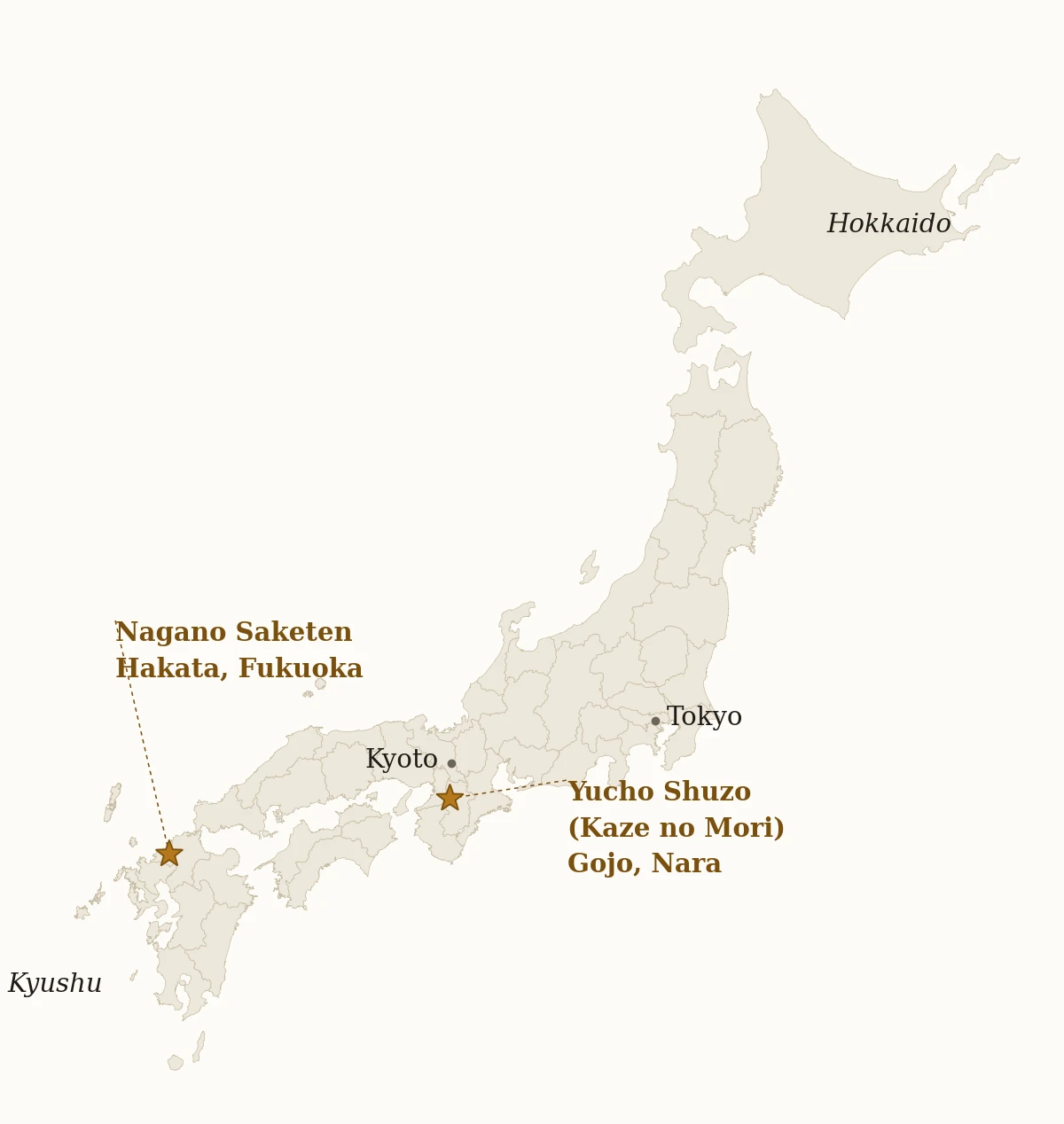
Yucho Shuzo, the brewery behind Kaze no Mori, is in Gojo, Nara — about an hour south of Kyoto. Nagano Saketen, where I bought this bottle, is over on Kyushu, near Hakata Station in Fukuoka.
Opening the Bottle
I kept the bottle in a regular household refrigerator before opening it.
When poured, there was a fine prickling sensation on the tongue—not strongly sparkling, but enough residual gas to give the sake an energetic texture. In Japanese, I’d describe it as chiri-chiri: a delicate tingle rather than large, persistent bubbles. That fizz contributed to the freshness, but underneath it was a substantial body that kept the bottle from feeling thin.

Day 1: Fruity, but Also Rice-Driven and Forceful
The aroma was sweet, with a fruit-like quality that could suggest pear or other pale fruit—so I wouldn’t say this sake lacked fruitiness. But once I tasted it, the impression expanded beyond the aroma.
The mouthfeel was firm and slightly creamy. Its rice character, sweetness, umami, and body felt at least as important as its fruit. My first impression was:
It reminded me of strained amazake—but the liquid itself was clear.
My Day 1 impressions
- sweet, gently fruity aroma with a pear-like or pale-fruit suggestion
- clear rice character, fine natural fizz
- noticeable sweetness and umami, substantial body
- slightly creamy texture, firm mouthfeel
- fresh, but not merely light or delicate
At one point I also thought of makgeolli—but made clearer, sharper, and unmistakably sake. That’s not a technical comparison, just the closest sensory image that came to mind.

How Fruity Did It Feel?
Kaze no Mori Akitsuho 657 did have fruit-like aroma and sweetness. The brewery itself refers to melon- and pear-like aromas, while retailers frequently describe white grape, young melon, pear, or other pale-fruit impressions, along with sweetness, umami, acidity, bitterness, complexity, and a rich texture.
My own tasting emphasized a different cluster of qualities: rice-derived body, umami, sweetness with weight, a slightly creamy texture, fine natural gas, fermentation-like vitality, and a firm overall presence.
Kagura Ruri felt intricate, composed, and led by layered sweetness and fruit. The nama Nabeshima bottles I have returned to over the years give a cleaner, more immediately fresh and aromatic impression. Kaze no Mori wasn’t necessarily less fruity in absolute terms—its fruitiness just occupied a different position within the whole experience, sharing the stage with rice, umami, texture, and energy. Again, this reflects my own palate and repeated personal tastings, not a controlled comparison.
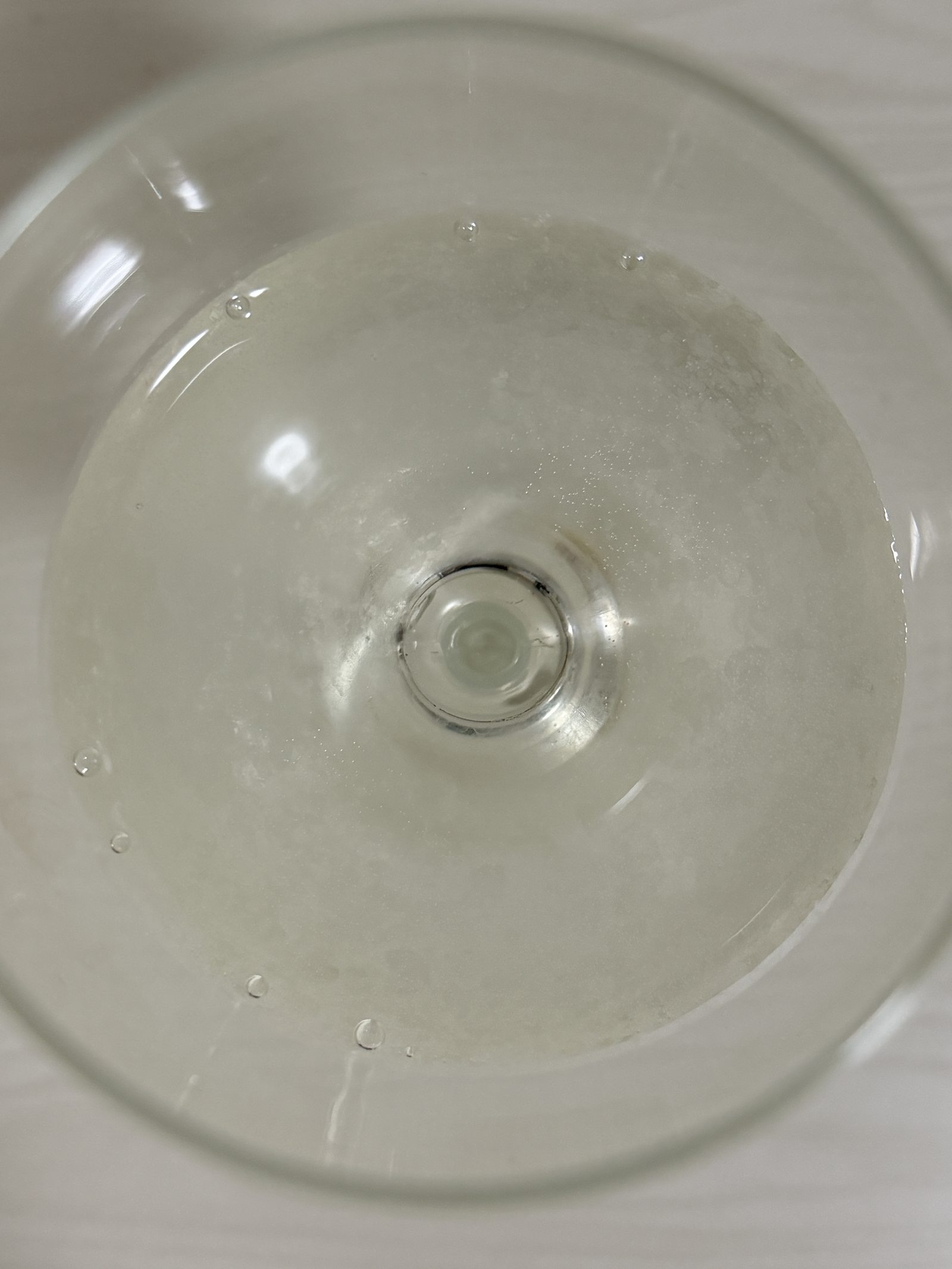
A Sense of Nama Sake Energy
I’d avoid claiming literally that I tasted “living yeast”—a finished sake’s technical condition can’t be determined from sensory impressions alone. Still, the bottle gave me a strong sense of active fermentation and nama-sake energy, from the combination of fine residual gas, sweet aroma, firm texture, rice-driven weight, and the way the sake changed after opening.
Day 2: Rounder, With Salted Yakitori
The following day I tasted it again with salted yakitori. The fine carbonation was still present. The main change was in the overall shape of the sake: the initial alcohol impression had softened, the mouthfeel felt rounder and easier to drink, and the sweetness felt slightly more noticeable. As the temperature rose in the cup, the rice aroma became clearer.
| Element | Day 1 | Day 2 |
|---|---|---|
| Fizz | Fine and lively | Still clearly present |
| Alcohol impression | Firm | Softer |
| Sweetness | Noticeable | Slightly more apparent and rounded |
| Mouthfeel | Strong and substantial | Rounder |
| Rice aroma | Present | More noticeable as it warmed |
For overall balance, Day 2 may have been my favorite point.
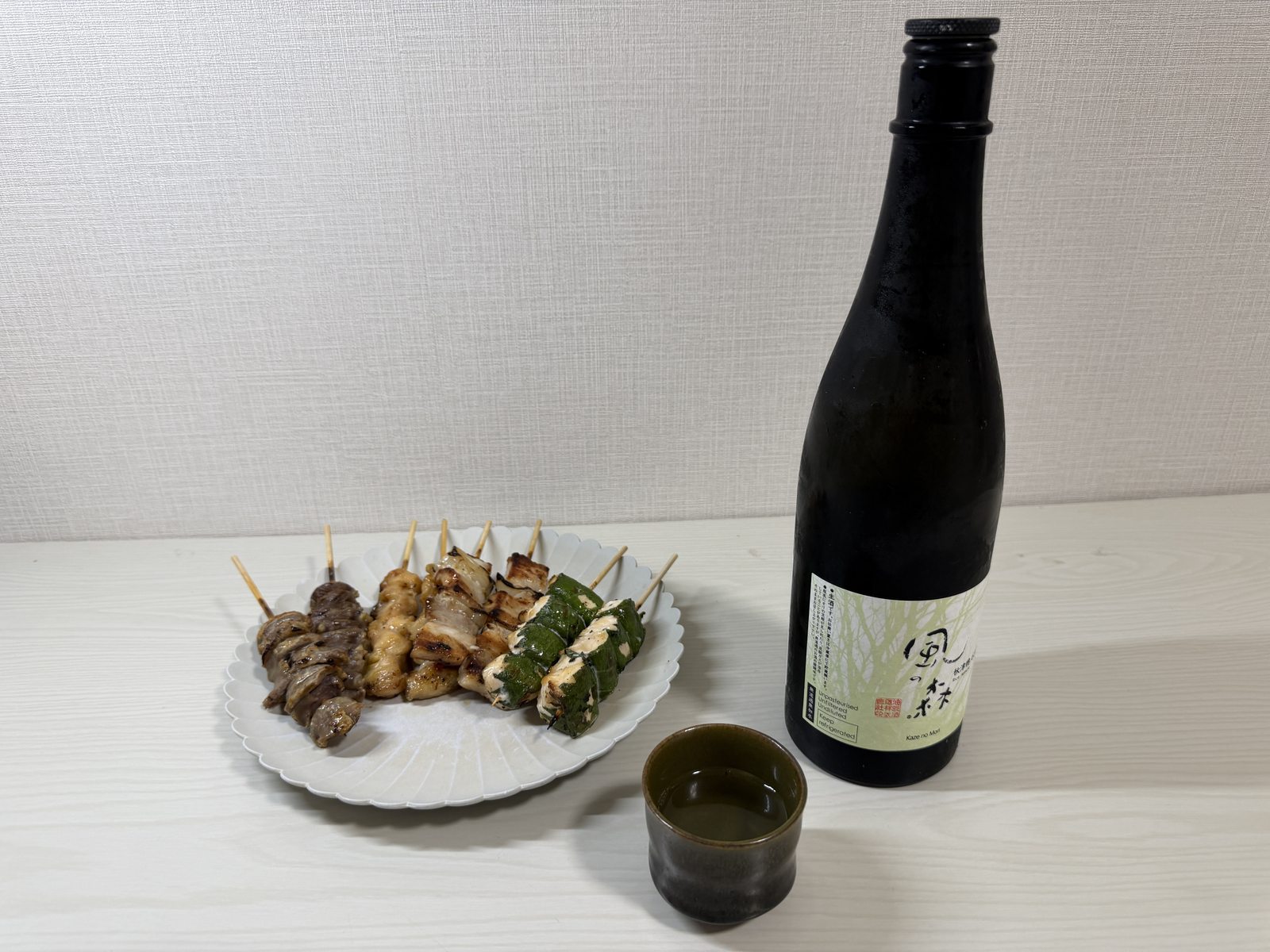
I paired it with salt-seasoned yakitori—I normally prefer yakitori with salt, except for liver. The best combinations were the fattier skewers, including bonjiri (chicken tail) and pork belly. The oil and salt settled naturally into the sake’s substantial body, while the remaining fizz kept the pairing from feeling heavy.
Glass or Guinomi?
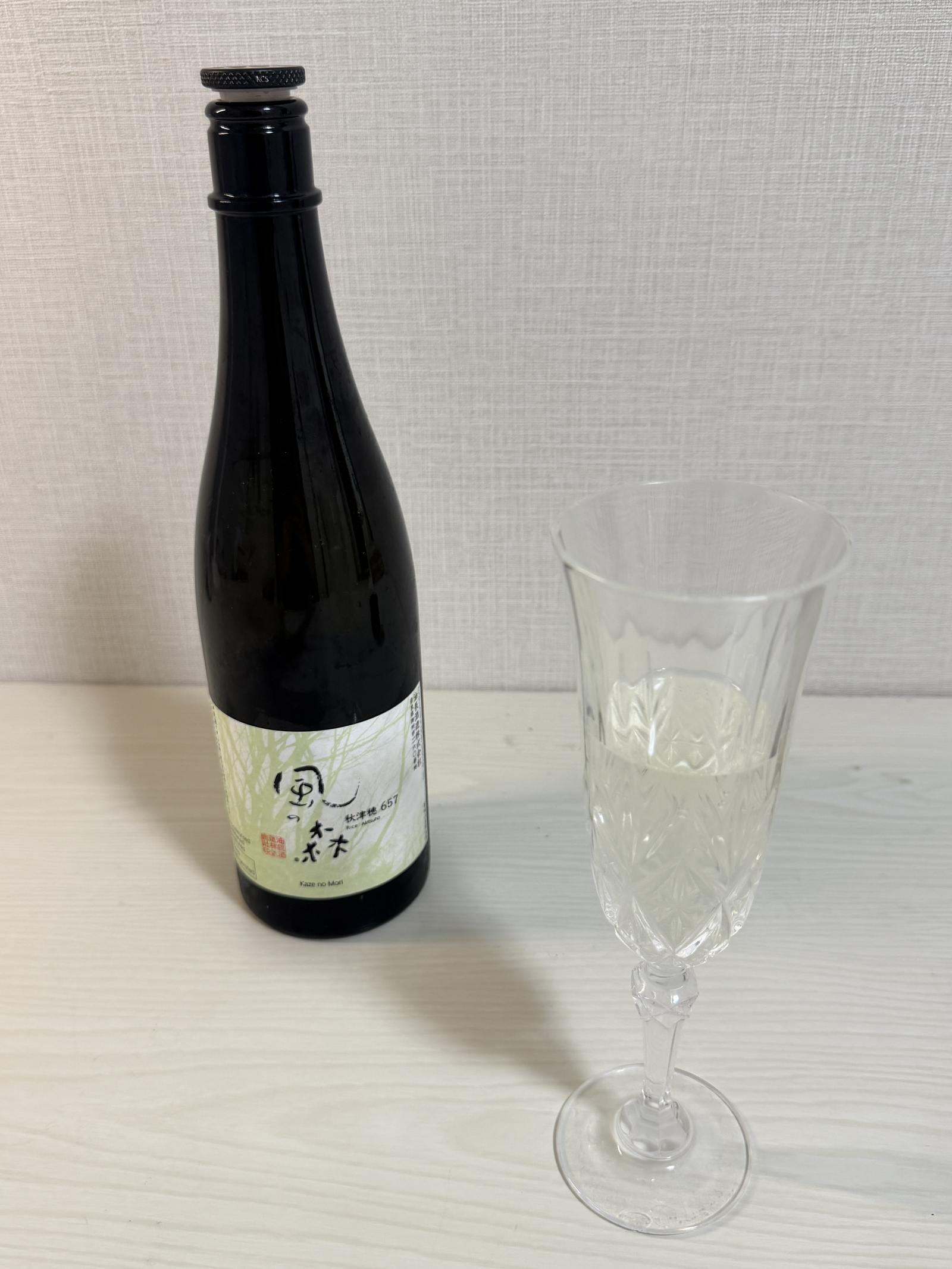
On the first day, I approached the sake through a clear glass and an expectation of something aromatic and wine-like. After tasting it, I reconsidered—its fruitiness was real, but so were its rice character, umami, texture, and weight.
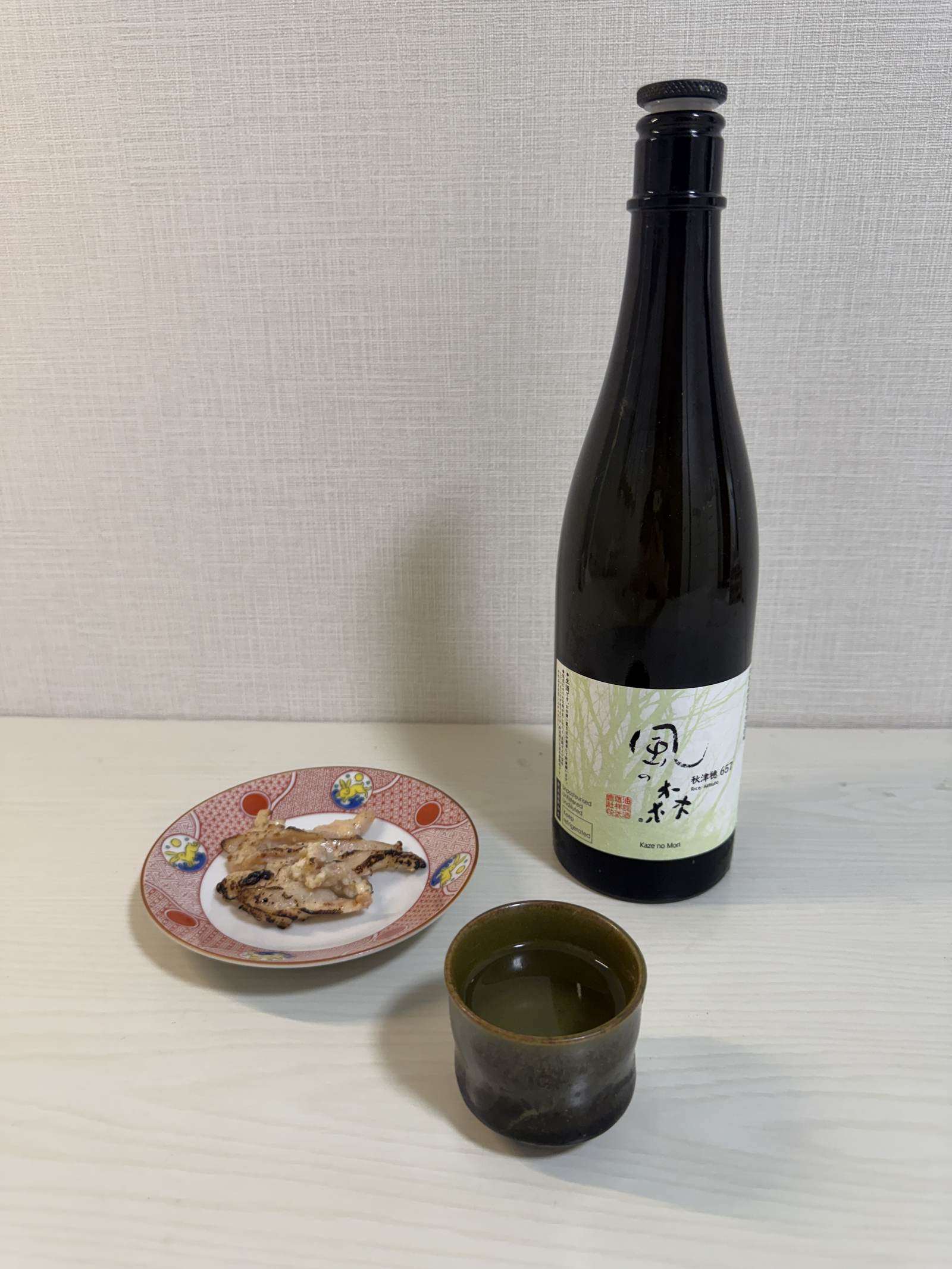
On Day 2, I switched to a Satsuma ware guinomi instead (kiln unknown). Its more grounded character suited the firm mouthfeel, rice aroma, sweetness, umami, and the grilled-food pairing.
Neither vessel was wrong. In a glass, the aroma and clarity were easy to observe and the presentation felt clean and modern—useful for tasting and photography, especially for showing that the sake is unfiltered but not cloudy. In the guinomi, the sake felt more grounded and paired naturally with grilled food. My preference for this bottle was the guinomi, especially when drinking it with food.
One Week Later: Rounder, Broader, and Less Fizzy
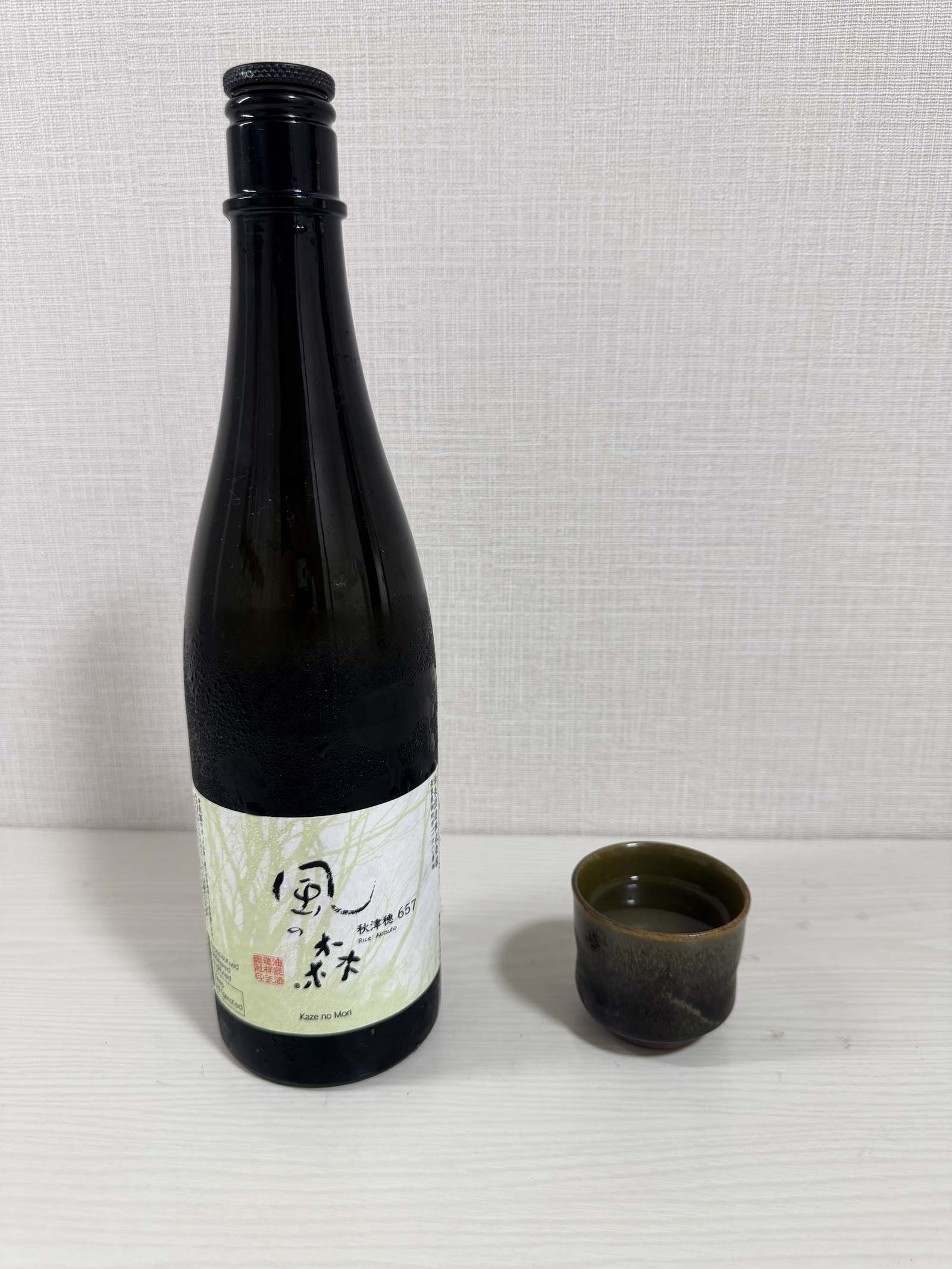
About one week after opening, I returned to the bottle again. It had remained in a regular household refrigerator throughout that period.
Aroma: The sweet, gently fruity aroma was still present. The rice aroma hadn’t increased noticeably, and the aroma as a whole seemed calmer, though it retained some of the fermentative, nama-like impression from the beginning.
Flavor and mouthfeel: The sweetness felt rounder, and the alcohol impression had softened further—easier to drink than on Day 1. Temperature mattered more at this stage: when poured cold, it stayed well balanced, but as it moved toward room temperature, acidity became more noticeable and the finish showed more bitterness and astringency. I preferred to drink it soon after pouring, while still properly chilled.
Gas: The natural fizz had decreased considerably—little of the earlier chiri-chiri sensation remained. This made the sake feel calmer and broader, but it also meant some of its first-day vitality had faded.
Day 1, Day 2, and One Week Later
| Timing | Main impression |
|---|---|
| Day 1 | Fruity, forceful, rice-driven, gently fizzy, rich in sweetness and umami |
| Day 2 | Rounder, slightly sweeter, softer alcohol, still gently fizzy |
| About one week | Broader and easier to drink, with much less fizz; acidity, bitterness, and astringency more noticeable as it warmed |
I don’t think the sake had deteriorated after one week—it was still enjoyable and worked well with food. But I wouldn’t expect indefinite improvement from keeping it open longer; over a longer period, the flavor might blur while acidity, bitterness, or astringency become more prominent. For this bottle, one week was long enough to enjoy meaningful change without losing its overall balance.
One Week Later: Pairing With Seseri and Yagen Nankotsu
For the one-week tasting, I paired the sake with salted seseri (chicken neck meat), salted yagen nankotsu (chicken breast cartilage), and mixed nuts.
Seseri had enough fat and juiciness to meet the sake’s weight—the salt and grilled aroma worked naturally with its rice character, sweetness, and umami. Even after one week, the sake remained a convincing food companion. Yagen nankotsu offered less fat but more texture, and its lighter quality made the pairing feel cleaner. Mixed nuts were a useful casual pairing, but the grilled chicken pairings expressed the sake’s strengths more clearly. It seemed particularly comfortable when it had both salt and a warm, savory grilled flavor to work with.
Best Serving Temperature
Based on the one-week tasting, I preferred this sake properly chilled: directly from the refrigerator, poured in a relatively small amount, and consumed before it warmed too far toward room temperature. A small rise in temperature could reveal more aroma and rice character, but after one week, letting it warm too much also brought forward more acidity, bitterness, and astringency. I’d serve a small amount at a time rather than filling a large cup and letting it sit.
Best Food Pairings
Based on the foods I actually tried, my preferred pairings were: salted fatty yakitori, salted seseri, pork belly, salted yagen nankotsu, and mixed nuts. Other pairings that may work include grilled squid, chicken skin, grilled pork, salted fried food, and chicken zosui. The shared themes are salt, oil, char, and savory depth. Lighter food may still work, but this sake had enough fruit, sweetness, umami, and body to dominate very delicate flavors.
Who Would Enjoy Kaze no Mori Akitsuho 657?
This bottle may suit someone who enjoys fruit aroma supported by clear rice character, unpasteurized sake with a strong sense of vitality, fine natural carbonation, sweetness and umami with substantial texture, a firm or slightly creamy mouthfeel, sake that changes noticeably after opening, and food pairings with salt, oil, and grilled flavors.
It may be less suitable for someone specifically looking for an extremely light aperitif, fruitiness without much rice weight or umami, a highly neutral finish, or a sake intended mainly for very delicate food.
Is It Better on Day 1 or Later?
Each stage had something different to offer.
Day 1 was best for the clearest fruit aroma, natural fizz, fermentative energy, and rice-driven weight—the bottle’s most vivid personality. Day 2 offered the best overall balance for me: fizz still present, alcohol softer, sweetness slightly rounder, fruit, rice, and umami more integrated, and the food pairing particularly successful. One week later was best for a calmer and broader flavor, easier drinking, and observing how nama sake changes—though I preferred it cold, and the original freshness and energy had begun to fade.
If I opened another bottle, I’d probably aim to drink most of it within the first several days, while still leaving enough to observe the second-day change.
Approachability
Approachability: 3 / 5
A low score reflects difficulty for a newcomer, not quality. How I score this →
Lightly sparkling and unpasteurised. The energy of the living yeast comes through more forcefully here than in KAGURA Ruri.
Final Thoughts
Kaze no Mori Akitsuho 657 was fruity and fresh—but those qualities were only part of what I experienced. The aroma suggested pear and pale fruit, and the fine natural gas gave it a lively beginning. Yet what stayed with me most was its rice-derived thickness, sweetness, umami, substantial mouthfeel, and fermentative vitality.
Compared with Kagura Ruri and the nama Nabeshima bottles I have returned to over the years, those other bottles felt relatively more centered on polished fruitiness and freshness. Kaze no Mori felt broader and more forceful—not necessarily less fruity in an absolute sense, but sharing the stage with rice, umami, texture, and energy.
On the first day, it was at its most vivid. On the second day, it became rounder and more integrated while retaining its gentle fizz. After about one week, the fizz had mostly faded and the flavor had broadened—still enjoyable with food, though acidity, bitterness, and astringency became more noticeable as it warmed.
The bottle also changed how I thought about serving it. A modern glass worked well and showed the aroma clearly, but a Satsuma ware guinomi felt naturally suited to its weight and to the salted, grilled foods that brought out its strengths. For me, the best pairing was salted yakitori.
Kaze no Mori Akitsuho 657 was memorable not because it was simply fruity, and not because it lacked fruit. It was memorable because fruit, rice, umami, gas, and fermentation all felt present at once.
If you’d like to try Kaze no Mori or explore other nama sake for yourself and you are in the United States, you can browse Japanese sake through Palate Project. My referral link may give you a 10% discount, and I may earn a commission if you make a purchase.
You can also use the discount code FRIEND-BZXDMXW for 10% off.
This article contains affiliate links. If you buy through one, I may earn a small commission at no extra cost to you. It never changes what I honestly think.Full disclosure here.
Sake is an alcoholic beverage. This article is intended for readers of legal drinking age in their country — please drink responsibly.