
Ryukyu Glass Sake Cups Review | Deigo & Gajumaru from Okinawa
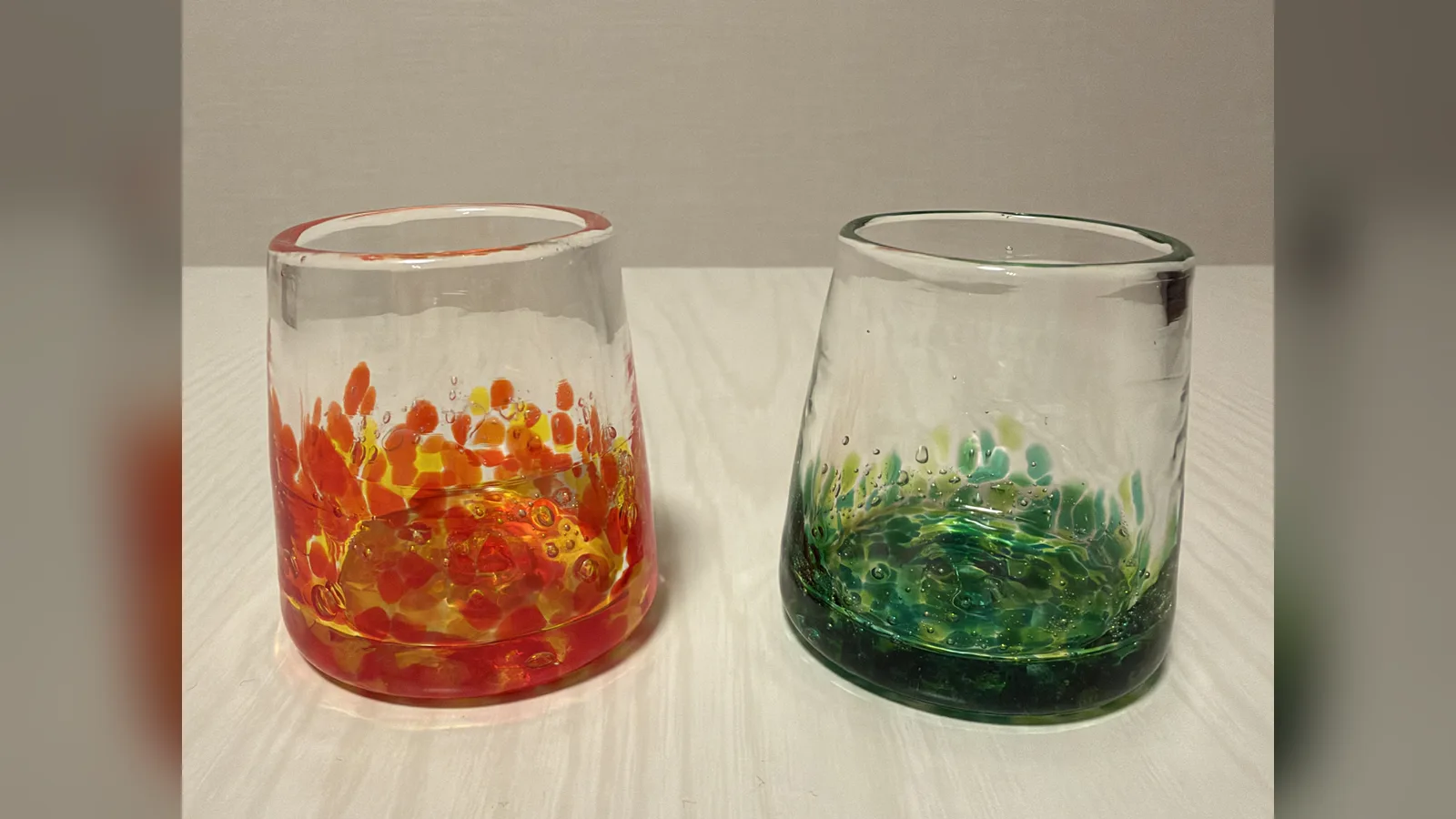
Table of Contents
- At a Glance
- Ryukyu Glass and Mori no Glass-kan in Brief
- The Cups: Deigo and Gajumaru
- Finding Them at Mori no Glass-kan
- Drinking Azumaichi Junmai Ginjo from Them
- What Kind of Sake Suits These Cups?
- Practical Notes and Care
- Where to Buy Ryukyu Glass Sake Cups
- Visiting Mori no Glass-kan
- Downsides
- Final Thoughts: Were They Worth ¥2,530 Each?
- Related Reading
This article contains affiliate links. I may earn a small commission at no extra cost to you. Full disclosure.
In November 2026, I bought two small sake cups at Mori no Glass-kan, a Ryukyu glass shop and workshop in Nago, Okinawa. One is from the shop’s Deigo series, splashed with orange and yellow. The other is from the Gajumaru series, in shades of green.
Both are hand-blown, both cost ¥2,530, and the price tags said “Made in Okinawa.” Back home, they looked cool and summery on the table, and I poured Azumaichi Junmai Ginjo from Saga into them.
At a Glance
- What: Two Ryukyu glass guinomi (small sake cups) from the Deigo and Gajumaru series
- Where: Mori no Glass-kan, Nago City, Okinawa
- Price: ¥2,530 each, tax included (November 2026)
- Origin: “Made in Okinawa” on the price tags; the shop’s sign names its factory in Nago
- Colors: Deigo is orange with yellow; Gajumaru is green
- Capacity: About 50 ml each, by my own rough measurement
- First sake: Azumaichi Junmai Ginjo Yamadanishiki from Saga (Yamadanishiki 100%, 49% polishing ratio, 15% alcohol)
- Care: Ryukyu glass is not heat resistant (see the care notes below)
Ryukyu Glass and Mori no Glass-kan in Brief
Ryukyu glass is the hand-blown glass of Okinawa. It is known for bright colors and, often, small bubbles trapped in the glass, which give it a soft, handmade look.
Mori no Glass-kan sells its glass in a large shop with a glass workshop next to it. A sign in the shop explains where its products are made:
- RGC Factory, Nago City, Okinawa. According to the sign, the RGC Factory and the Ryukyu Glass Village group have produced five gendai no meiko (Japan’s officially recognized master craftspeople) and seventeen Okinawa Prefecture craftspeople, more than any other group in the prefecture. The sign also says the artisans make each piece by hand in the heat of a 1,300°C furnace.
- VGCP Factory, Vietnam. The same sign explains that since 1995, glassblowers from the RGC group have trained artisans in Vietnam, who also make Ryukyu-style glass for the shop.
Pieces carry different stickers depending on where they were made, and the sign ends with a short note: “Ryukyu glass is not heat resistant.”
So if Okinawa-made glass matters to you, check the price tag and sticker before you buy. The tags for the two guinomi I bought said “Made in Okinawa,” and the cups on the shelf carried “Made in NAGO, Handmade” stickers.
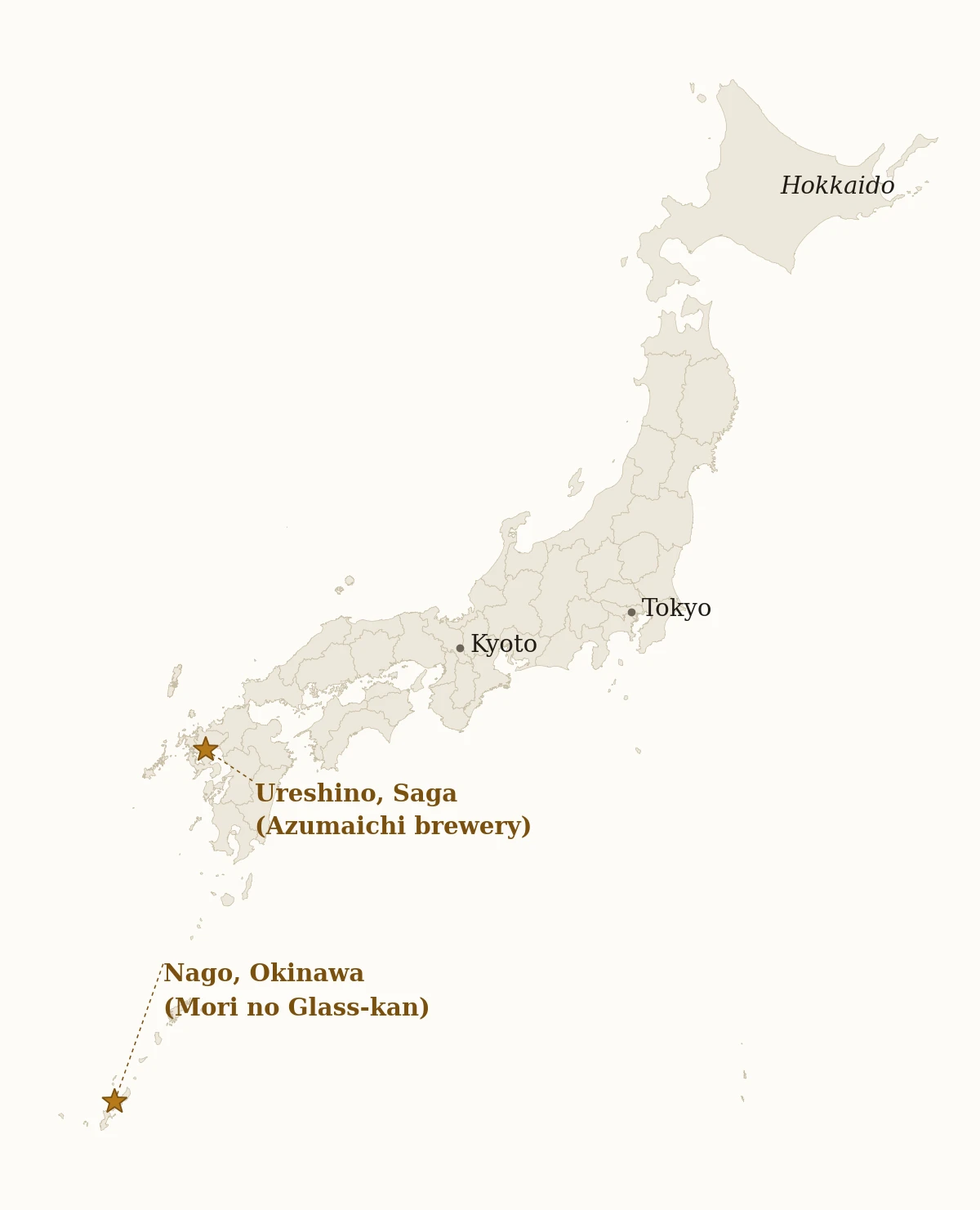
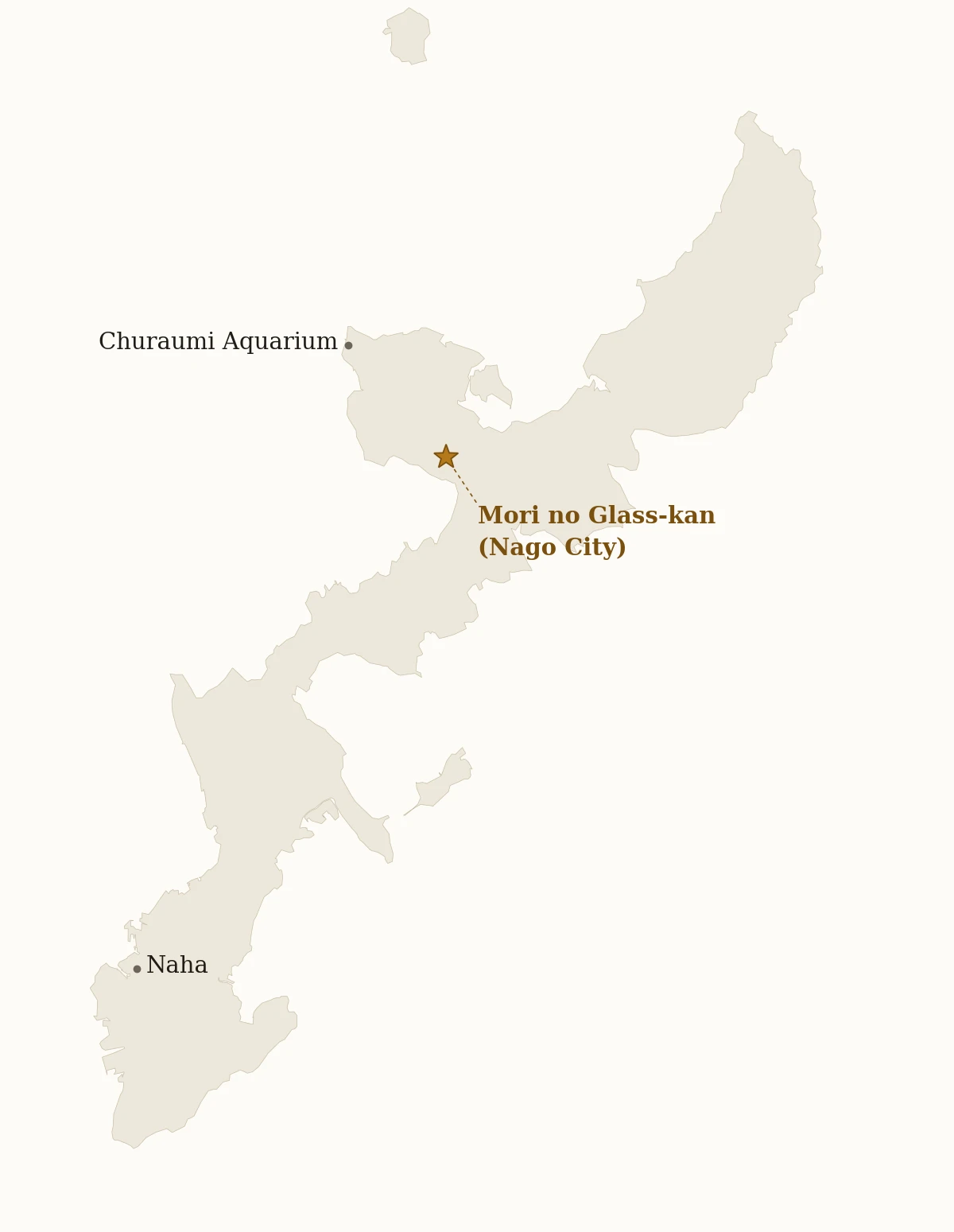
Where in Japan: Mori no Glass-kan is in Nago City, in the northern part of Okinawa Island. Azumaichi, the sake I poured, comes from Ureshino in Saga Prefecture, Kyushu.
The Cups: Deigo and Gajumaru
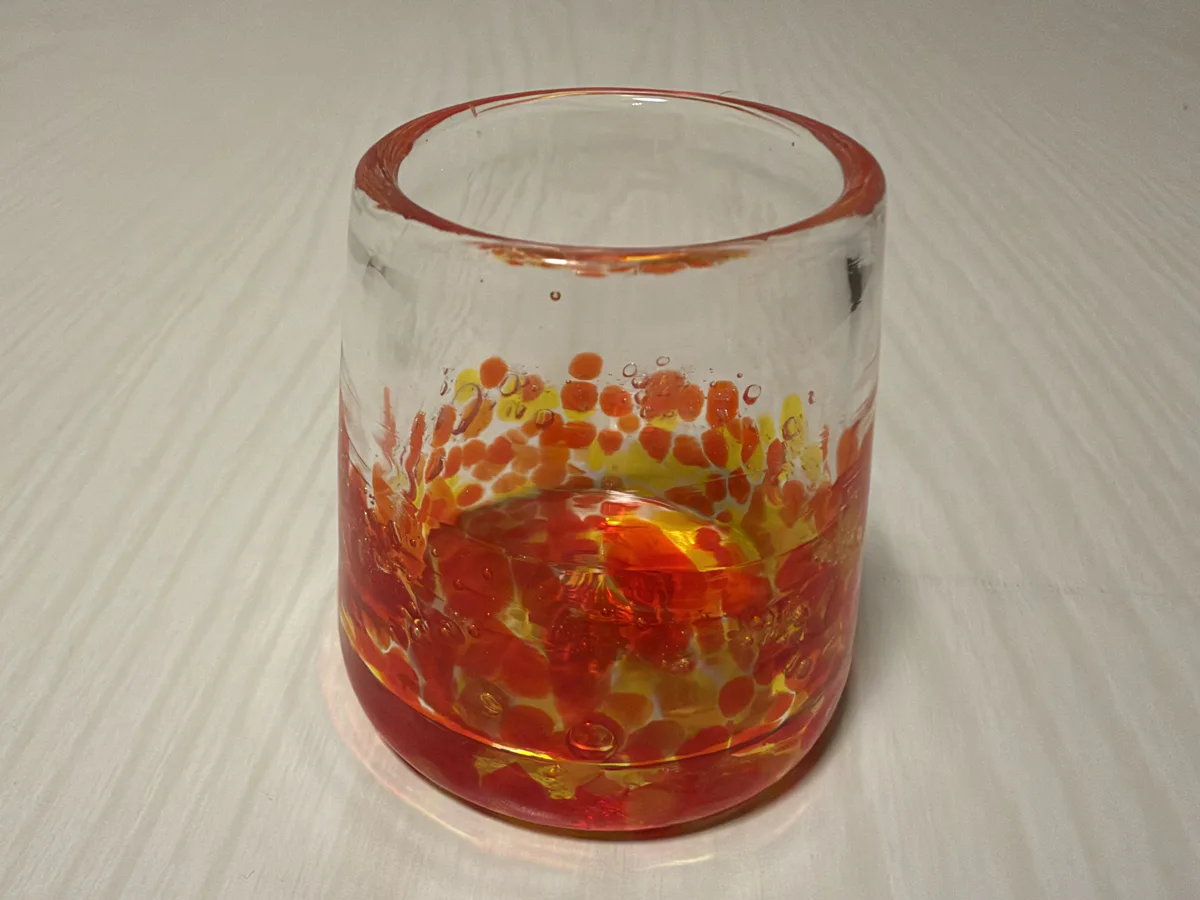
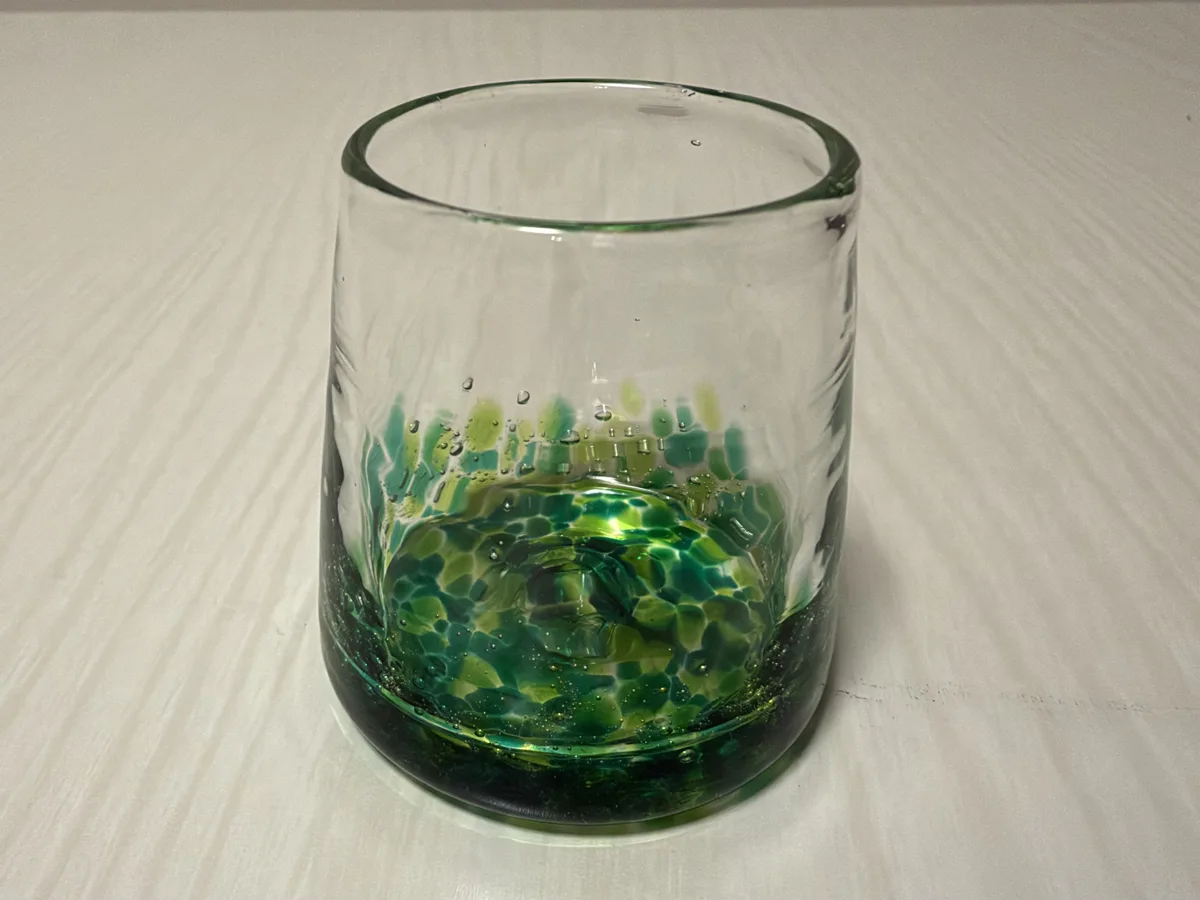
The two cups share the same shape: a wide, heavy base that narrows slightly toward a thick, rounded rim. The color sits in the lower half, in small patches of glass, and the top half is clear. Each has small bubbles scattered through the glass.
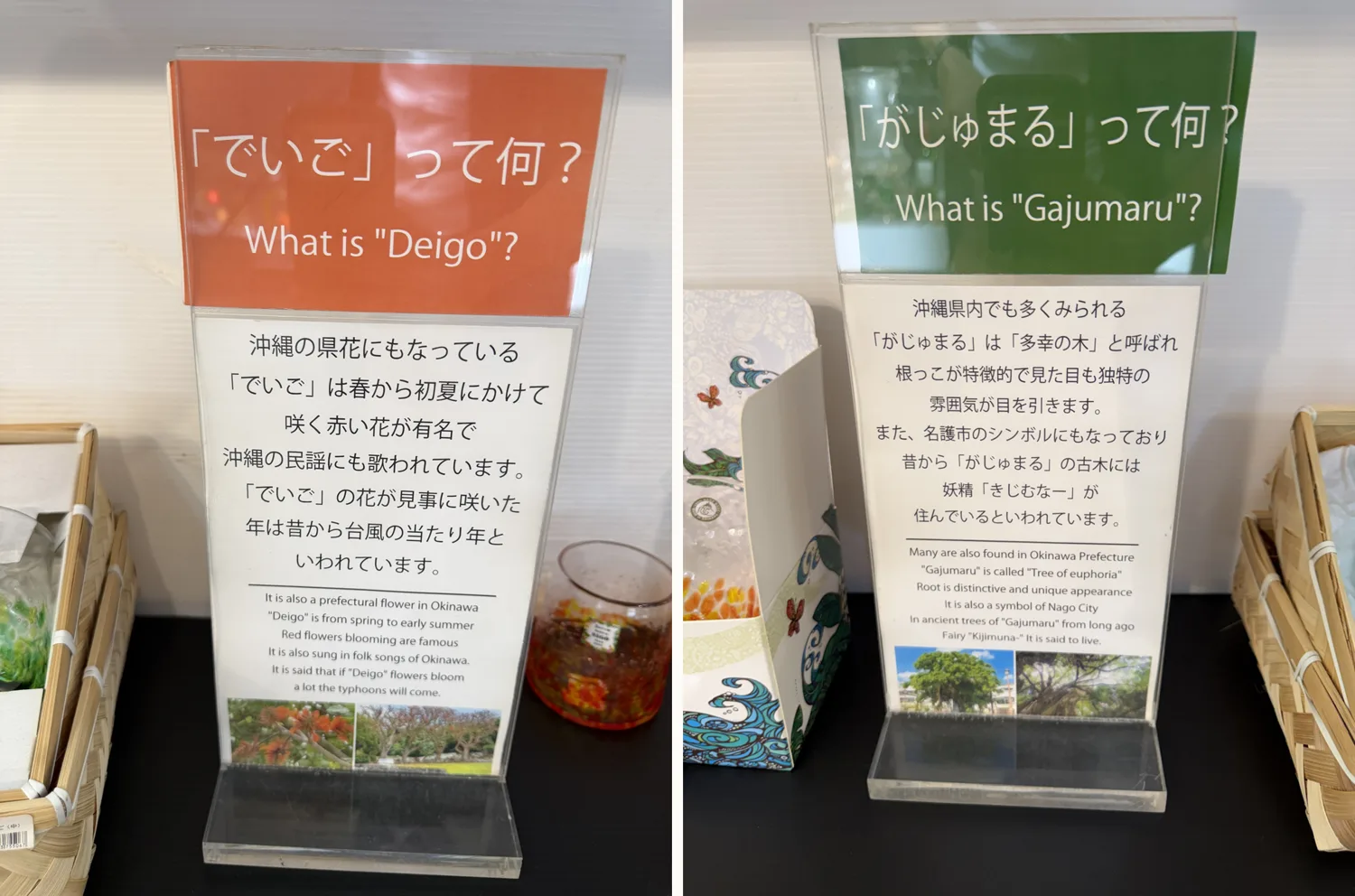
The names come from two plants that are part of everyday life in Okinawa. The shop had a sign for each series:
- Deigo is Okinawa’s prefectural flower, famous for its red blossoms from spring to early summer. It appears in Okinawan folk songs, and according to the sign, it has long been said that a year when the deigo blooms beautifully will be a year with many typhoons.
- Gajumaru (banyan tree) is common across Okinawa and is called the “tree of many blessings.” It is known for its distinctive roots, and the sign notes that it is also a symbol of Nago City. Old gajumaru trees are said to be home to kijimunaa, a forest spirit from Okinawan folklore.
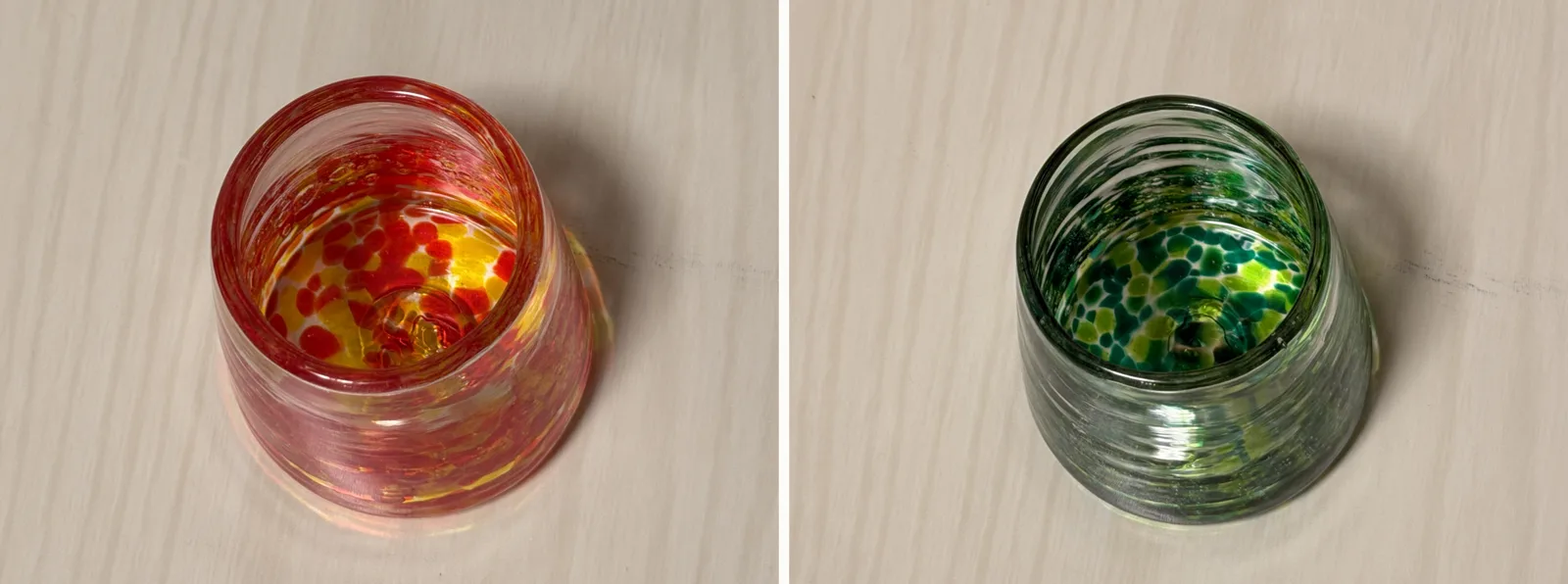
From above. The colored glass shows through the base like a small pool of light.
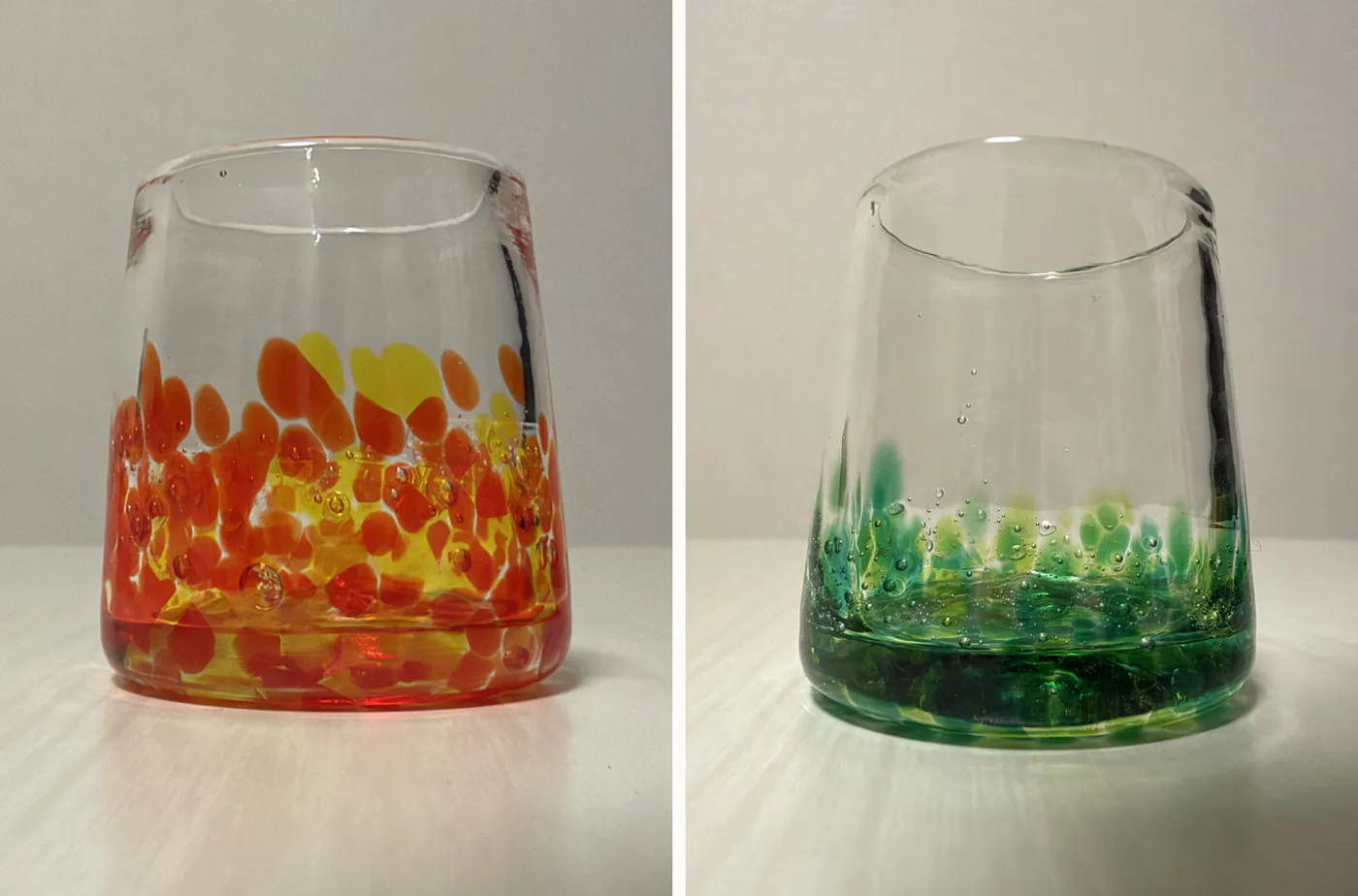
Close up, you can see the bubbles and the uneven patches of color. No two cups in the shop looked exactly the same.
Finding Them at Mori no Glass-kan
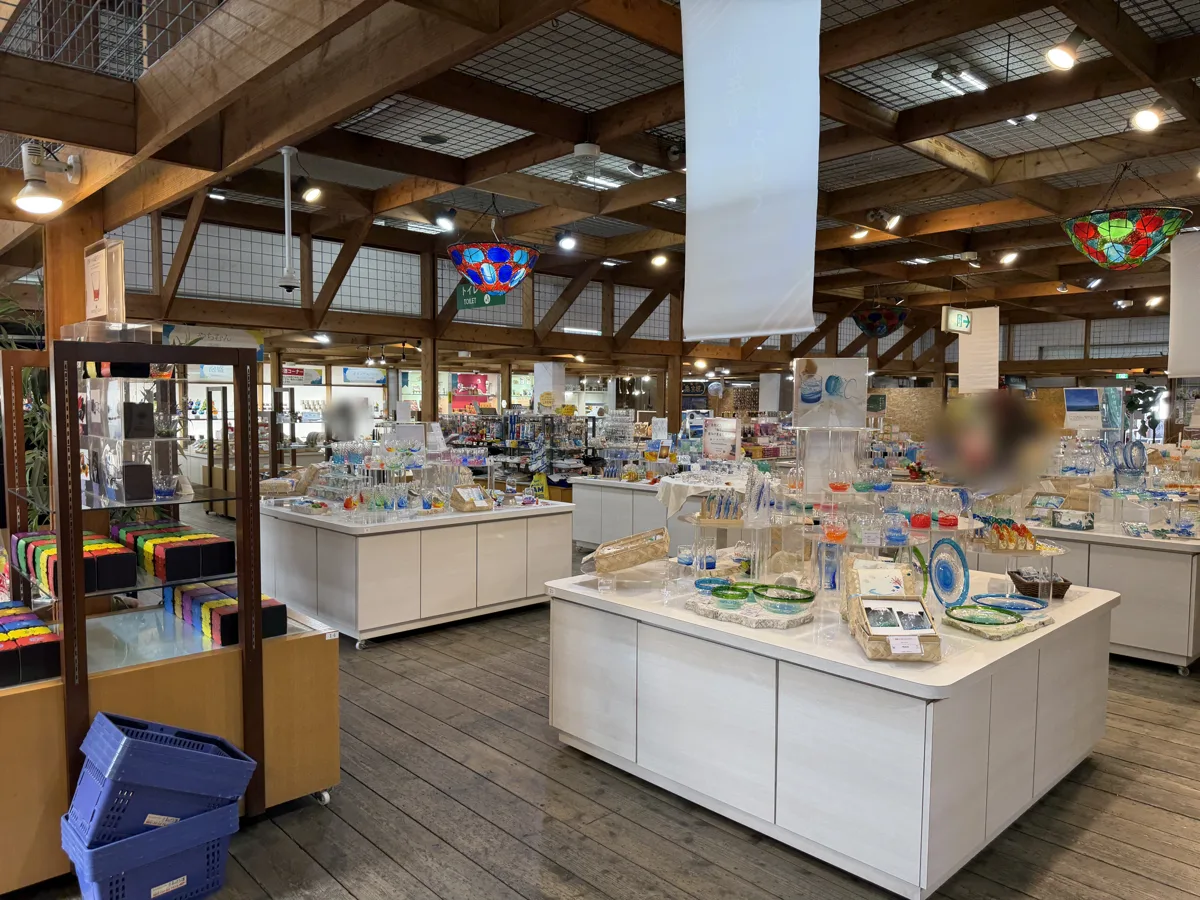
The shop is a large, wood-beamed hall filled with glass: tumblers, plates, vases, lamps, and small cups. The glass is grouped by series, so it was easy to find the Deigo and Gajumaru shelves and compare the guinomi side by side.
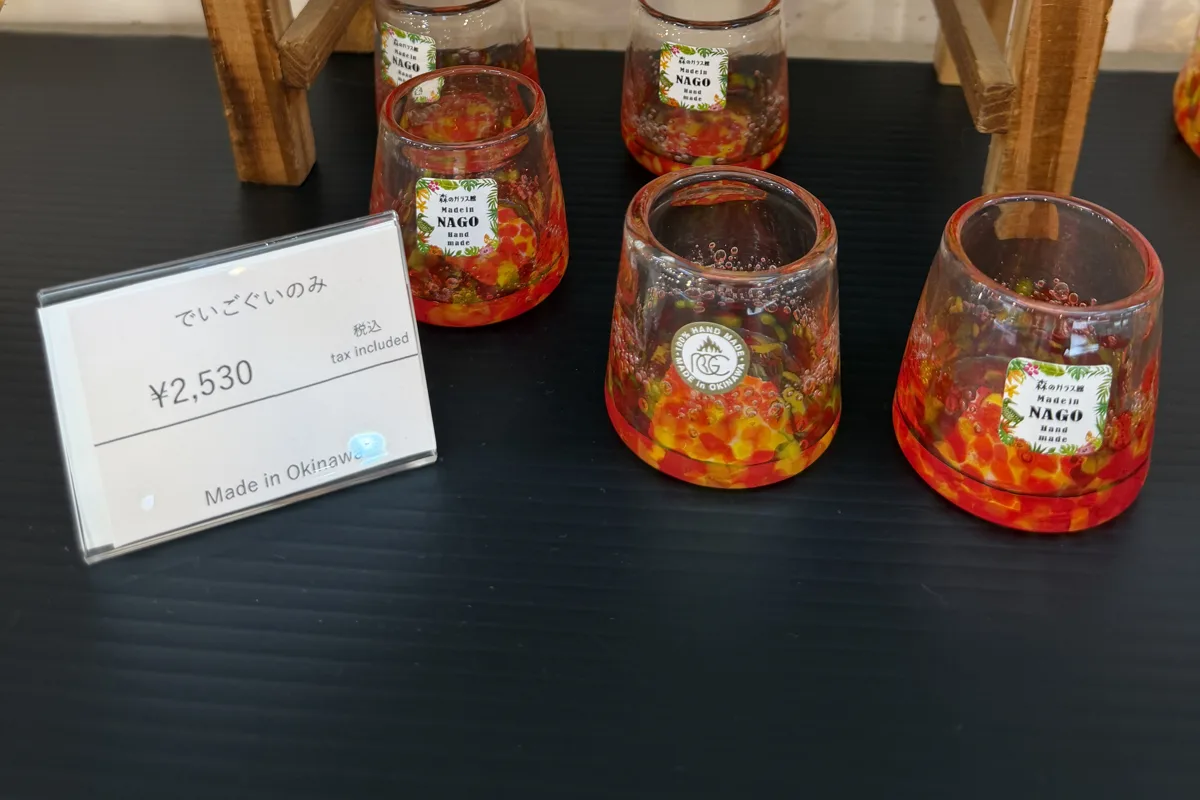
The Deigo guinomi on the shelf: ¥2,530, marked “Made in Okinawa.” A matching tokkuri (sake flask) sat on the shelf above.
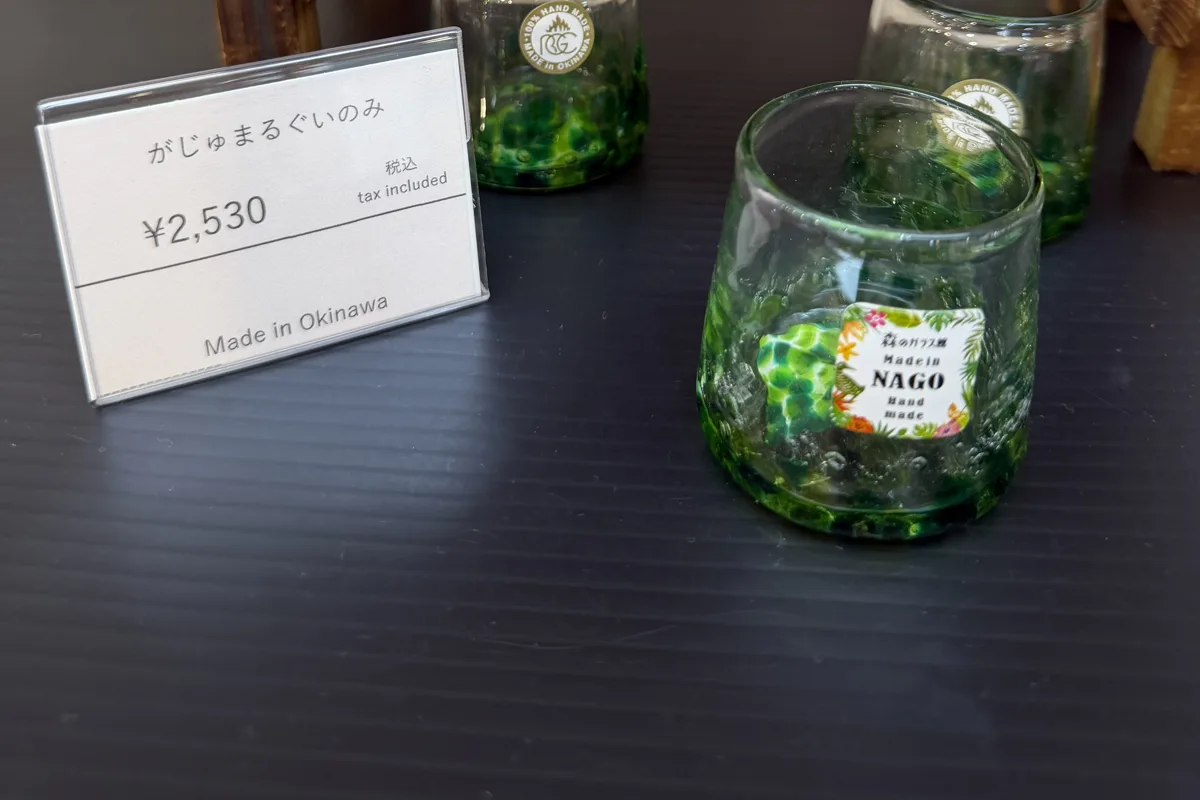
The Gajumaru guinomi, also ¥2,530. This series has a matching tokkuri, too.
Because every cup is hand-blown, the color pattern, the bubbles, and even the tilt of the rim vary from piece to piece. I picked the two I liked best from the shelf.
Drinking Azumaichi Junmai Ginjo from Them
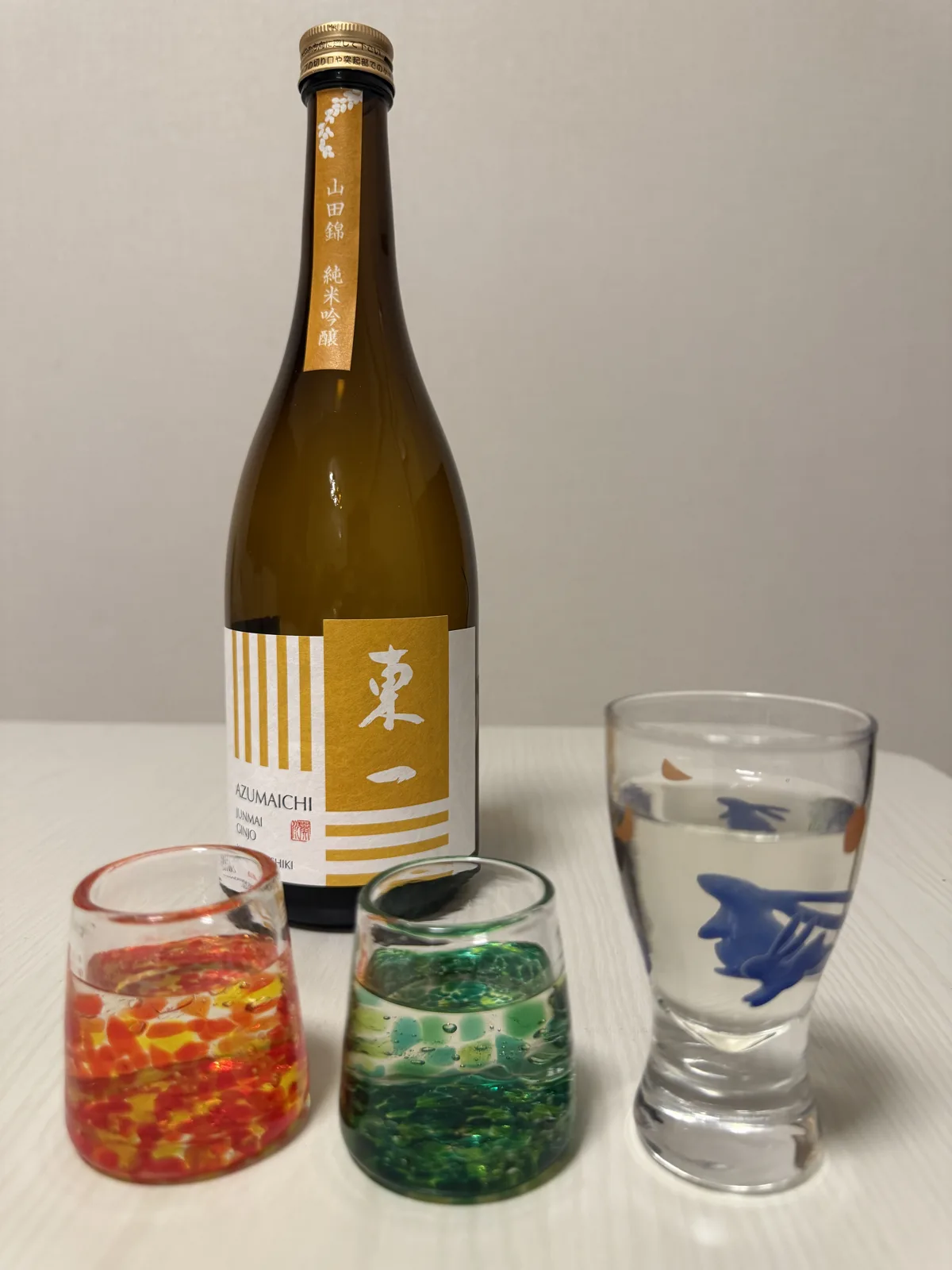
The first sake I poured into them was Azumaichi Junmai Ginjo from Gochoda Shuzo, a brewery in Ureshino, Saga Prefecture. The back label lists Yamadanishiki rice (100%), a 49% polishing ratio, and 15% alcohol, and says to keep the bottle refrigerated. The brewery’s website lists it as Azumaichi Yamadanishiki Junmai Ginjo.
To me, the Azumaichi opened with sweetness and acidity, followed by bitterness and a slight astringency in the finish. The fruity aroma was fairly strong, but it was not only fruity: bitterness, astringency, and umami came through as well, and the whole thing held together with good balance.
In these cups, the sake takes on the color of the glass. Through the Deigo cup, it looked warm orange; through the Gajumaru cup, a fresh green. That is part of the fun, but it also means you cannot judge the sake’s own color in them.
How They Feel to Use
I compared them with my usual rabbit-patterned glass guinomi:
- The rim. The thick, rounded rim did not feel very different from my rabbit cup.
- The grip. The small, low, bottom-heavy shape was not especially easy to hold, and to me it was not easier to drink from than the rabbit cup. Visually, though, I think it works.
- Stability. The base is wider than the rim, so the cups sit firmly on the table. They felt more stable than the rabbit cup.
- The taste. Like the rabbit cup, these are glass. Compared with my Bizen ware guinomi, which made sake feel rounder and mellower, the glass let me feel the sake’s features more directly: the sweetness and acidity, and the bitterness and astringency.
- The size. The cups are smaller than the rabbit cup. I measured about 50 ml each, so they hold a few sips at a time.
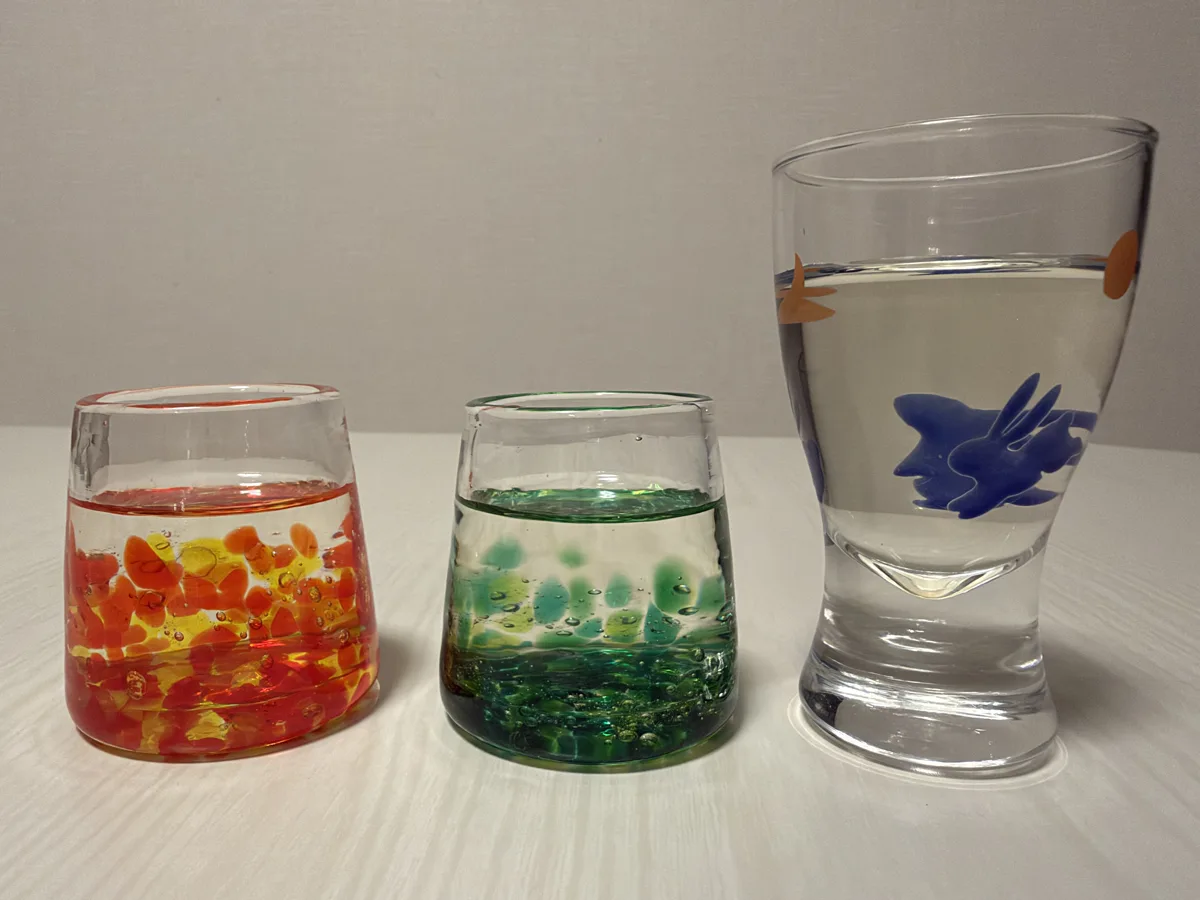
Left to right: Deigo, Gajumaru, and my usual rabbit-patterned glass cup.
Want to try Azumaichi in the U.S.? Palate Project lists Azumaichi Junmai Ginjo (720 ml) from Gochoda Brewing Company, made with Yamadanishiki rice polished to 49%. Palate Project lists the alcohol as 16%, while my bottle’s label says 15%, so I can’t confirm that it is exactly the same bottling as mine. Check the details on the product page.
If you buy through my Palate Project link, first-time customers can use the discount code FRIEND-8V4N8XZ for 10% off one-time purchases (not subscriptions). The code can be used once per customer and can’t be combined with other discount codes.
What Kind of Sake Suits These Cups?
This is my own impression rather than a rule. The glass feels cool and summery, so I would reach for these cups with:
- Chilled sake. These cups are not made for warm sake anyway (see the care notes below), and they look their best with something cold.
- Nama (unpasteurized) sake. Fresh, lively nama sake seems a natural match for the bright colors.
- Lightly sparkling sake. I have not tried it yet, but sake with a gentle fizz should look lovely with the bubbles in the glass.
Practical Notes and Care
The shop’s sign states plainly: Ryukyu glass is not heat resistant. The care notes for these cups say:
- No microwave.
- No boiling water.
- No sudden cooling. Don’t put them in the freezer.
- No dishwasher.
In other words, these cups are for chilled or room-temperature sake, washed by hand. Care requirements can vary between pieces and makers, so follow the instructions that come with the glass you buy.
Where to Buy Ryukyu Glass Sake Cups
I bought both cups at Mori no Glass-kan in Nago, Okinawa, where I could compare the colors, bubbles, and small differences between individual pieces.
I haven’t confirmed whether these exact Deigo and Gajumaru guinomi are available for shipping to the United States. If you’re visiting Okinawa, choosing a cup in person is part of the experience.
For online purchases, check the maker, production origin, size, and shipping conditions before ordering.
Visiting Mori no Glass-kan
- Address: 478 Bimata, Nago City, Okinawa
- Hours: Travel guides list 9:00–17:30 or 9:00–18:00, with no regular closing days. Hours may change, so check before visiting.
- Getting there: It is easiest by car. According to a travel guide, it is about a 30-minute drive from the Churaumi Aquarium.
- Workshop: The shop has a glass workshop next to it. Travel guides also mention glassblowing experiences that require a reservation.
Downsides
- They are small. At about 50 ml, they need frequent refills, and they hold less than my usual cups.
- Not for warm sake, and not for the dishwasher. No microwave, no boiling water, no freezer, and no dishwasher.
- You can’t see the sake’s true color. The colored glass tints the sake, so these are not the cups for judging appearance.
- Check where each piece was made. The shop sells glass made both in Okinawa and in Vietnam, so read the tag and sticker if that matters to you.
Final Thoughts: Were They Worth ¥2,530 Each?
Yes. For ¥2,530 each, I came home with two cups that feel like Okinawa: one in the orange of the deigo flower, one in the green of the gajumaru tree. They are small, not suitable for hot sake, and need hand washing. But on the table, they make even a quiet glass of sake feel like summer.
Related Reading
This article contains affiliate links. If you buy through one, I may earn a small commission at no extra cost to you. It never changes what I honestly think.Full disclosure here.
Sake is an alcoholic beverage. This article is intended for readers of legal drinking age in their country — please drink responsibly.