
Yachimun Guinomi from Kitagama, Okinawa: A Persian Blue Sake Cup from Yomitan
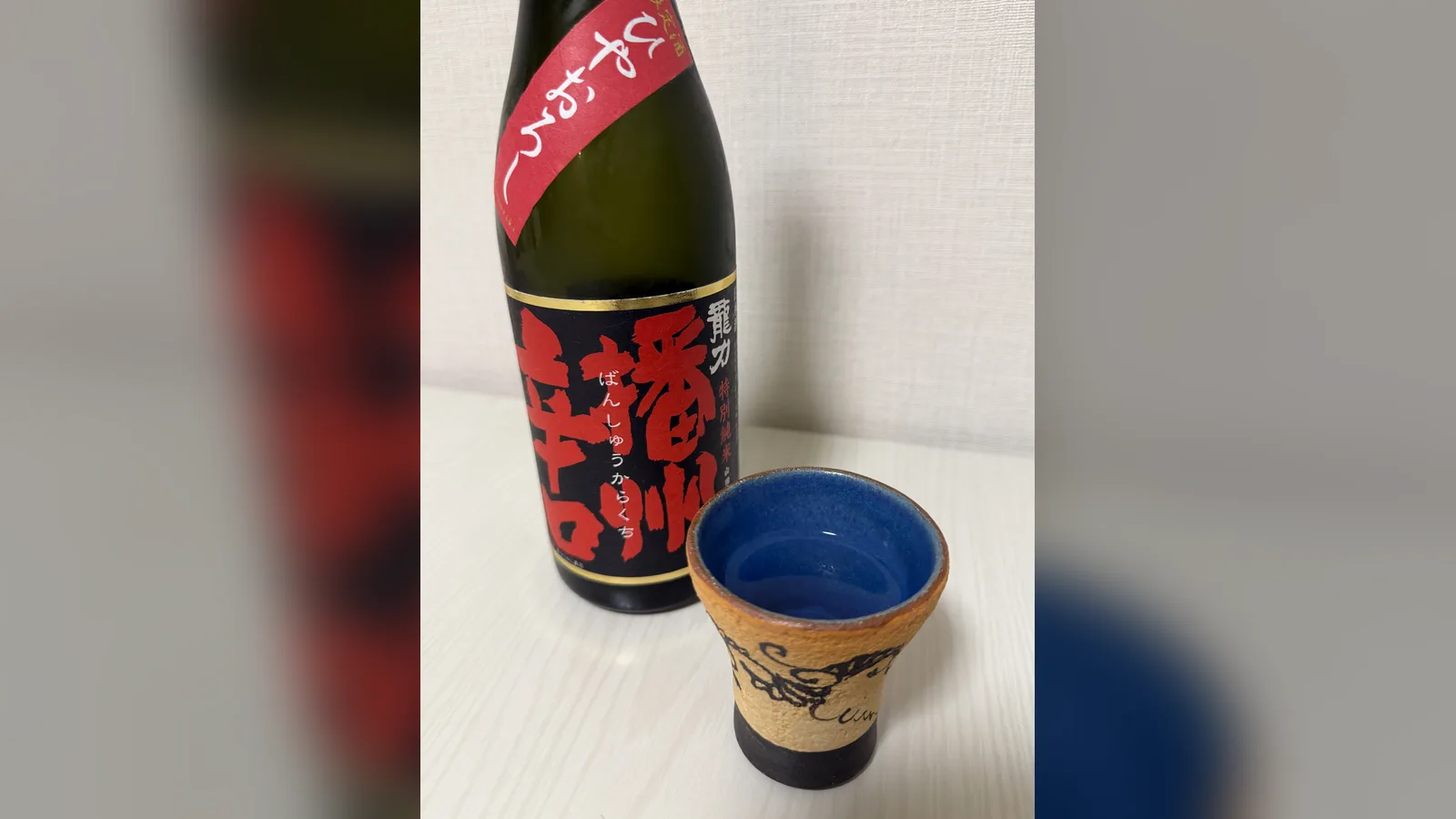
Table of Contents
In November 2026, I bought one small sake cup at the Kitagama shop in Yomitan, Okinawa. The label on the shelf simply said “Persian blue.”
Inside, the cup is glazed a deep, saturated blue. Outside, it barely feels glazed at all: the surface is dry and slightly rough, and it reminded me of holding a Bizen cup. Back home, I poured Tatsuriki Hiyaoroshi into it, and to me, the sake felt slightly softer than I expected.
At a Glance
- What: A yachimun (Okinawan pottery) guinomi from Kitagama, Yomitan
- Maker: An apprentice at the workshop of potter Masamori Yonahara (according to the shop staff)
- Color: Persian blue glaze inside; a dry, textured exterior with a hand-drawn vine pattern
- Price: ¥2,400 at the Kitagama shop (November 2026)
- Capacity: About 80 ml when filled right to the rim (my own measurement)
- First sake: Tatsuriki Banshu Karakuchi Hiyaoroshi, an autumn sake from Hyogo
- Payment: Cards and e-money were accepted; I paid with QUICPay
Yachimun and Yomitan-zan Ware in Brief
Yachimun is the Okinawan word for pottery. The Kitagama leaflet I picked up at the shop explains that Ryukyu pottery developed over roughly 600 years under the influence of China, Korea, Japan, and Southeast Asia, while growing into something distinctly Okinawan in color, form, and technique.
Kitagama makes Yomitan-zan ware (Yomitan-zan-yaki). According to the leaflet, Kitagama opened in 1992, and four potters fire their work together in a large climbing kiln with thirteen chambers. The kiln is fired with wood, at around 1,200 to 1,300°C.
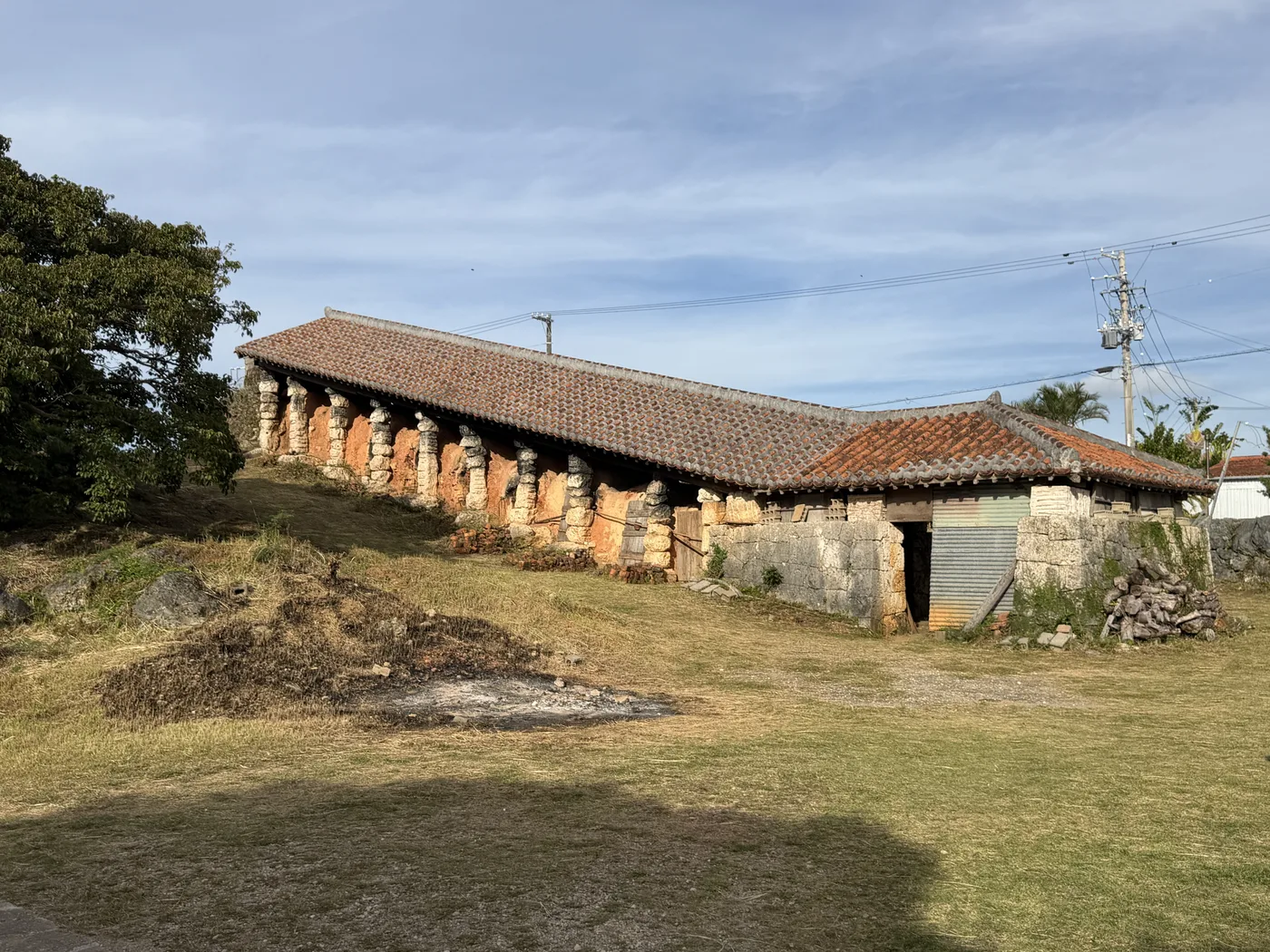
A climbing kiln at Yachimun no Sato. Each piece is fired by wood, so small warps and color shifts are part of the result.
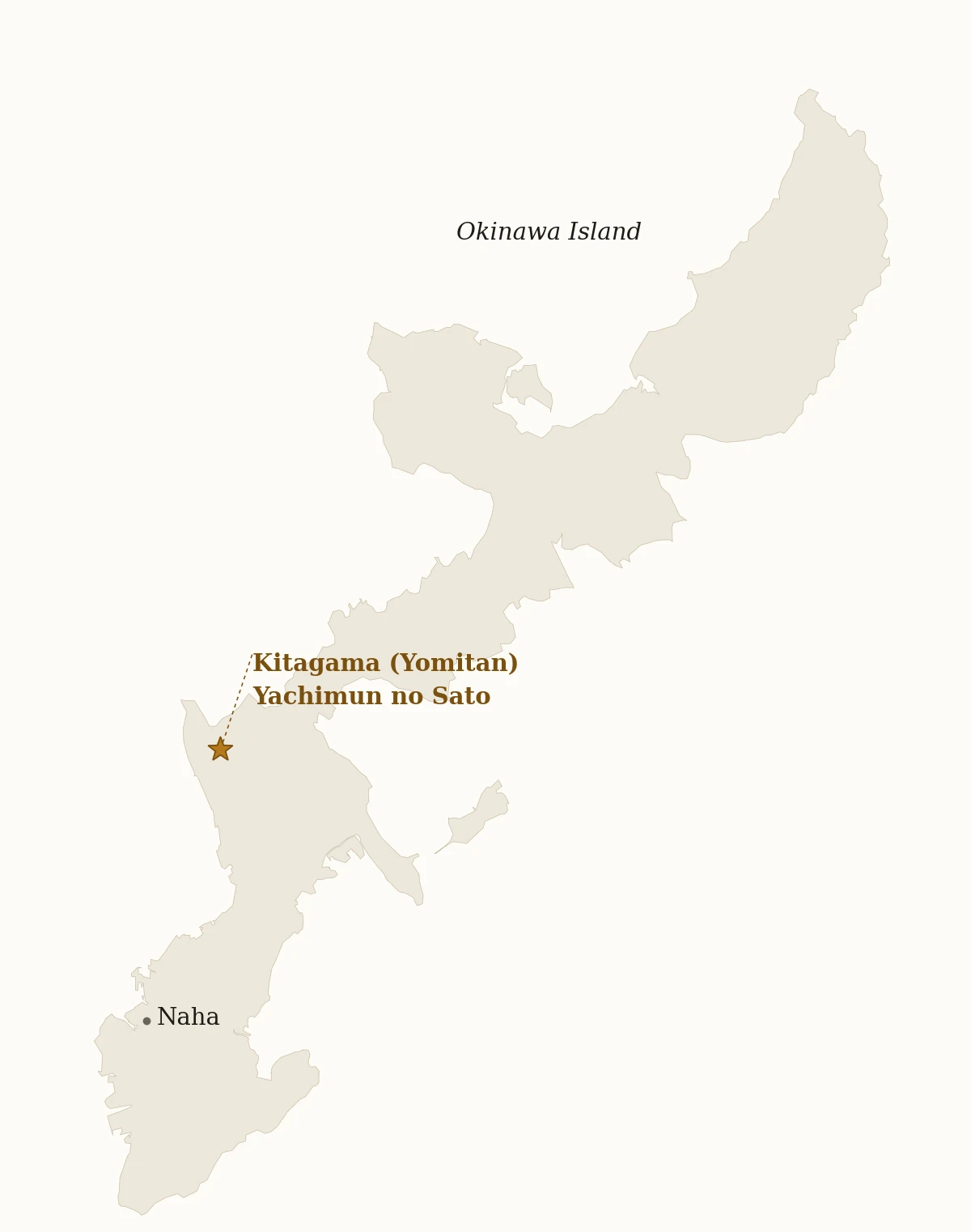
Where in Japan: Kitagama is in Yomitan Village, in central Okinawa Island, north of Naha.
The Cup: Persian Blue Inside, Vines Outside
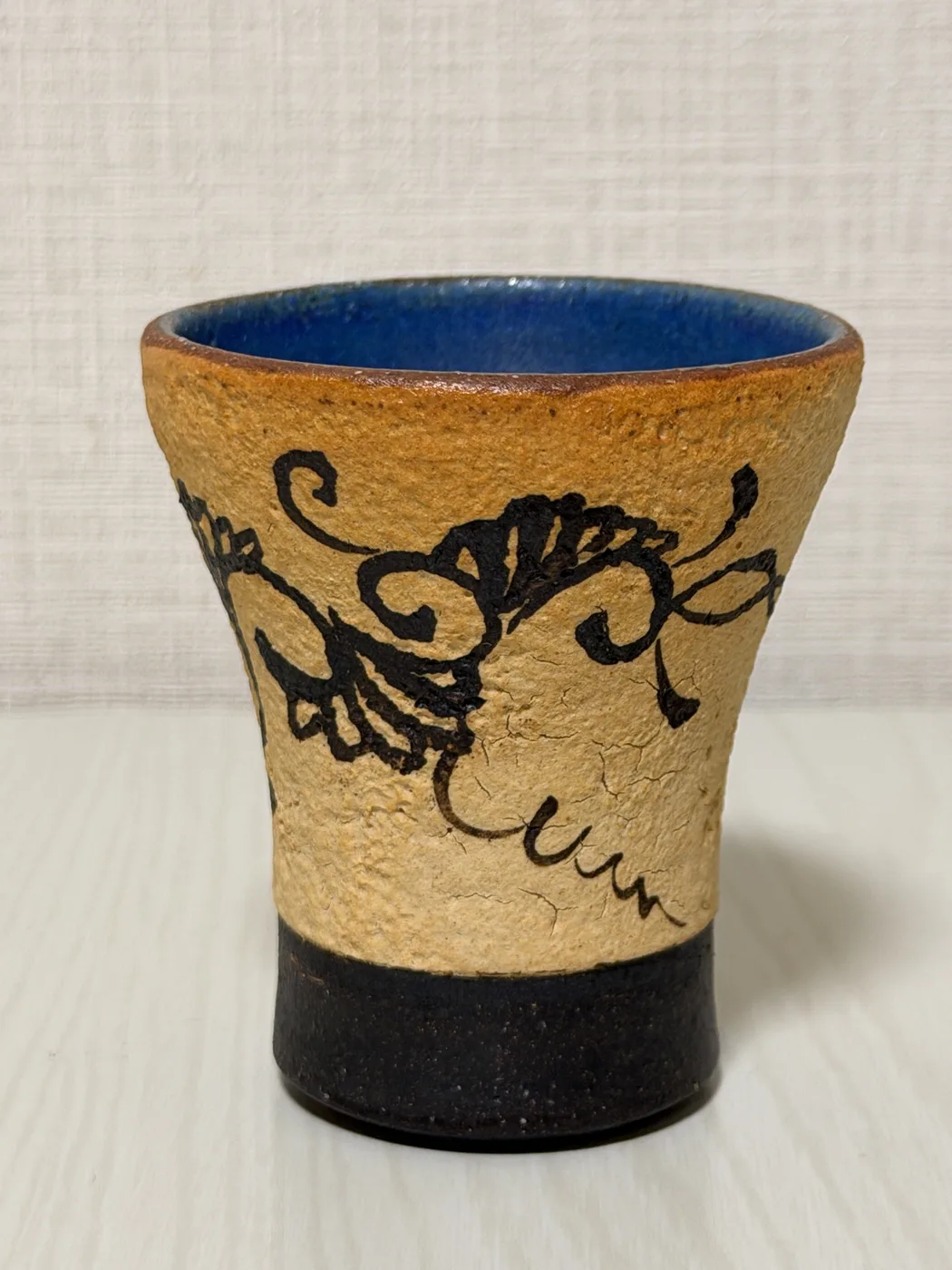
The shape is simple: a flared rim, a straight body, and a dark band around the foot. The outside has a bold, hand-drawn pattern. When I asked, the shop staff told me it is a karakusa design, the classic scrolling vine motif.
What makes the cup feel different from most glazed sake cups is the contrast between inside and outside. The interior is covered in a glossy, deep blue. The exterior has a sandy, matte texture that grips your fingers a little. It does not feel like the smooth porcelain of my Arita or Kutani cups. It feels closer to unglazed Bizen ware.
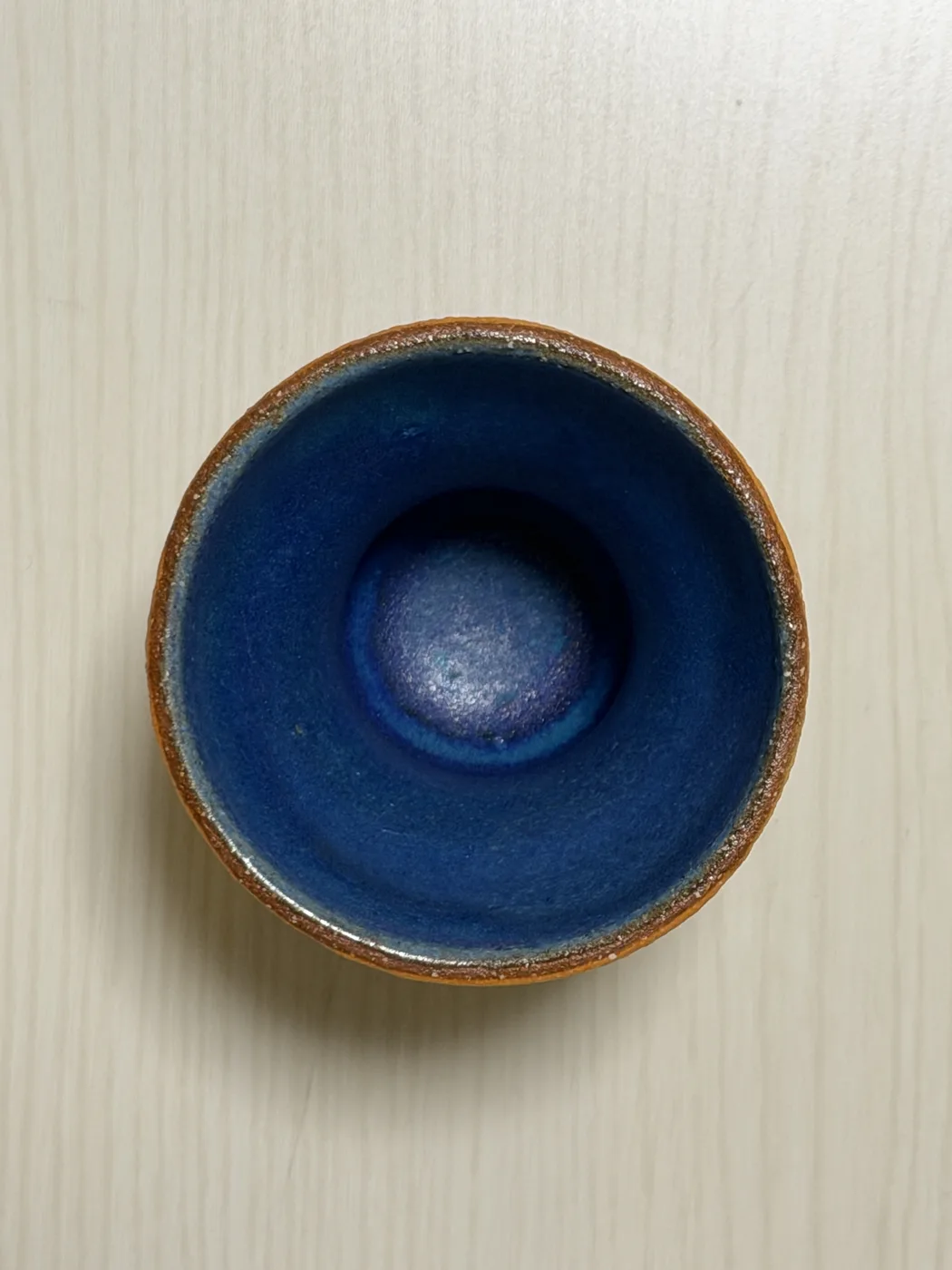
From above, the cup is all blue. The color is strong enough to change how clear sake looks in the cup.
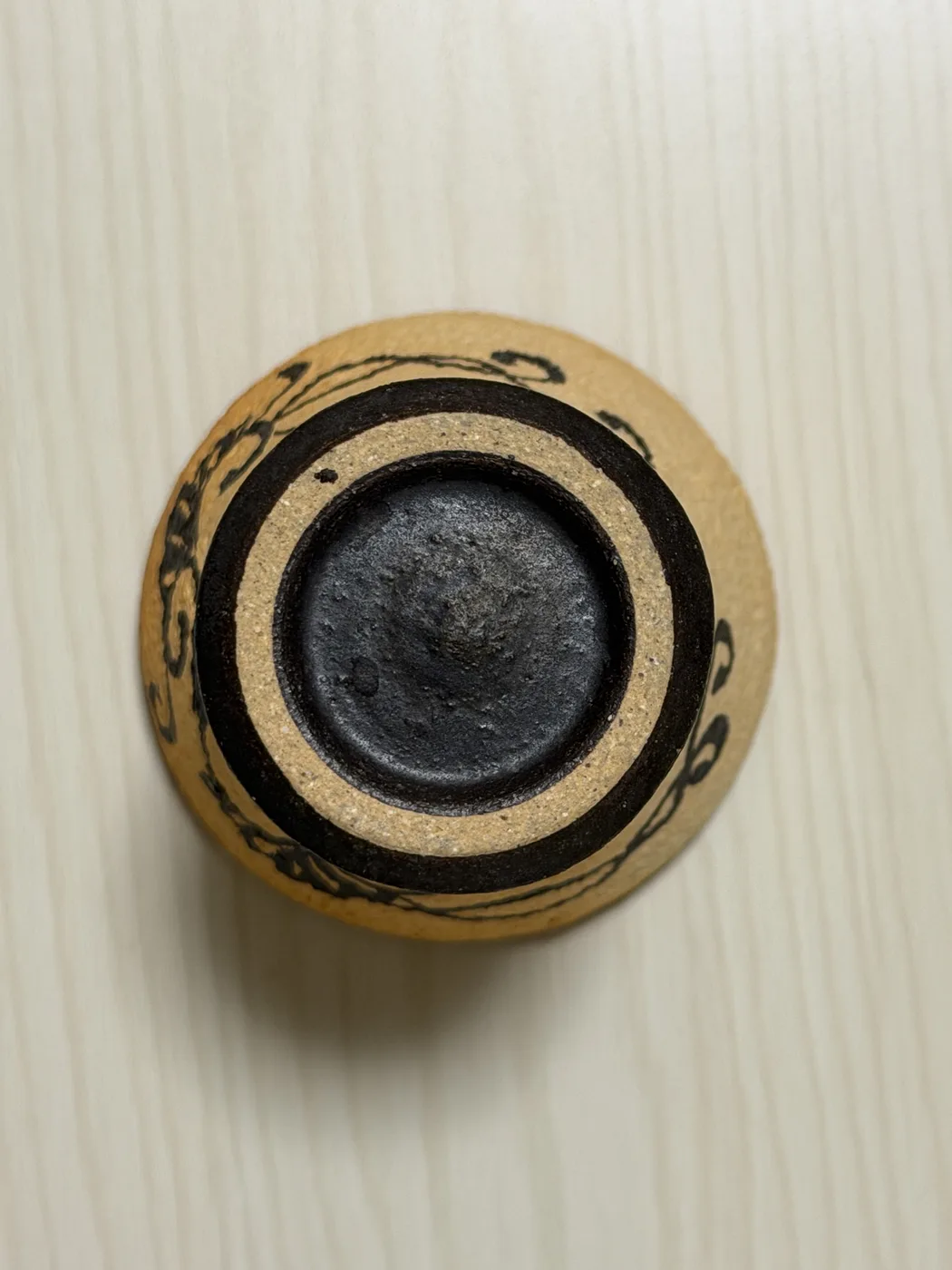
Who Made It?
The shelf label said “Persian blue,” but did not name the potter. In the Kitagama leaflet, Persian blue is mentioned in the profile of potter Masamori Yonahara, alongside inlay work and motifs drawn from Okinawa, Africa, and Asia.
So I asked the shop staff. They told me the cup comes from the workshop of Masamori Yonahara, whom they called oyakata (the master), but that it was made by one of his apprentices rather than by Yonahara himself. According to the staff, his own pieces are mostly plates with finely detailed designs, displayed toward the back of the shop. There were no guinomi by Yonahara himself when I visited, so what I bought is an apprentice’s piece from his workshop.
I like knowing that. The Persian blue and the bold vine pattern carry the workshop’s style, and the price stays easy to say yes to.
Finding It at the Kitagama Shop
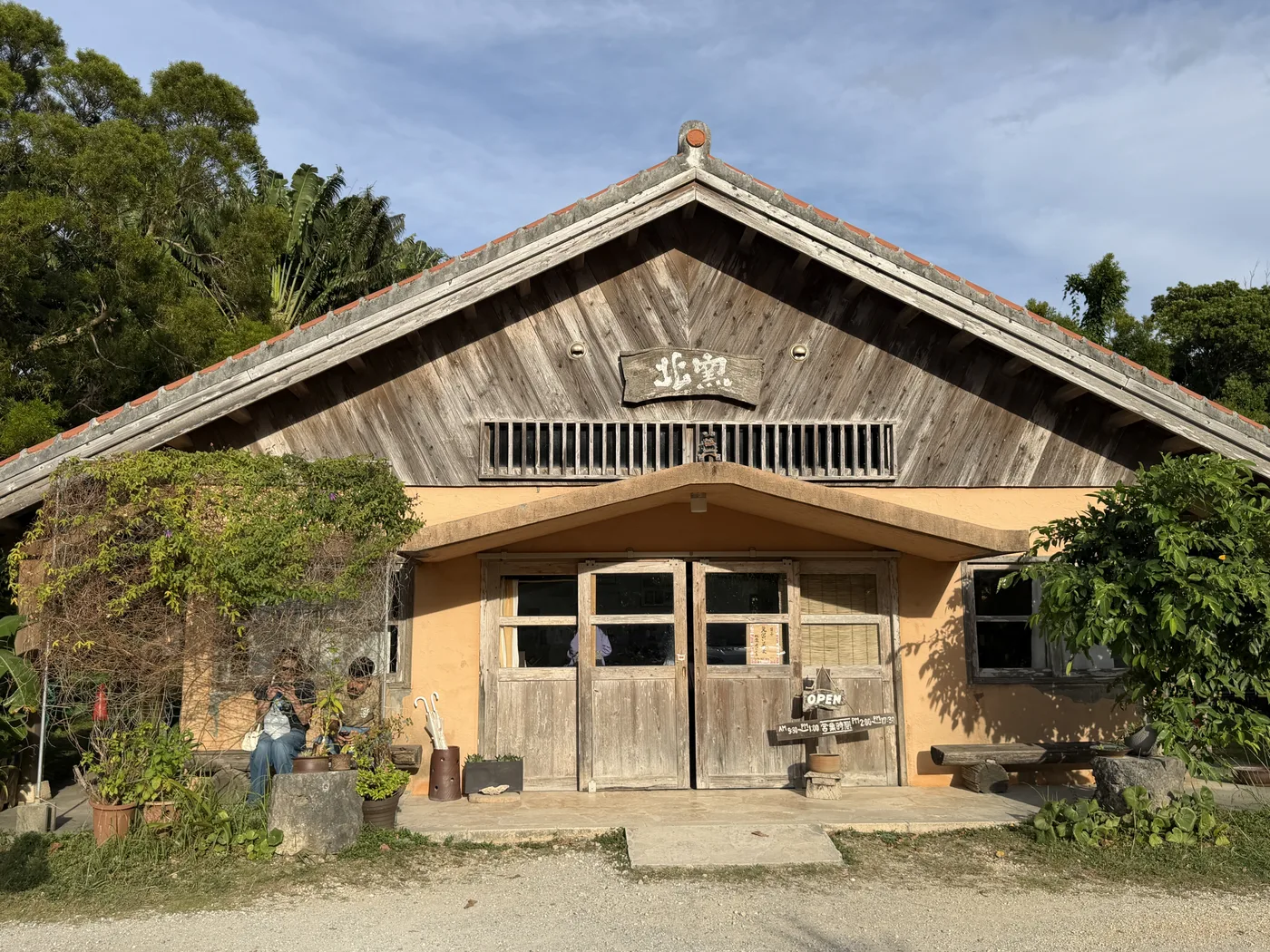
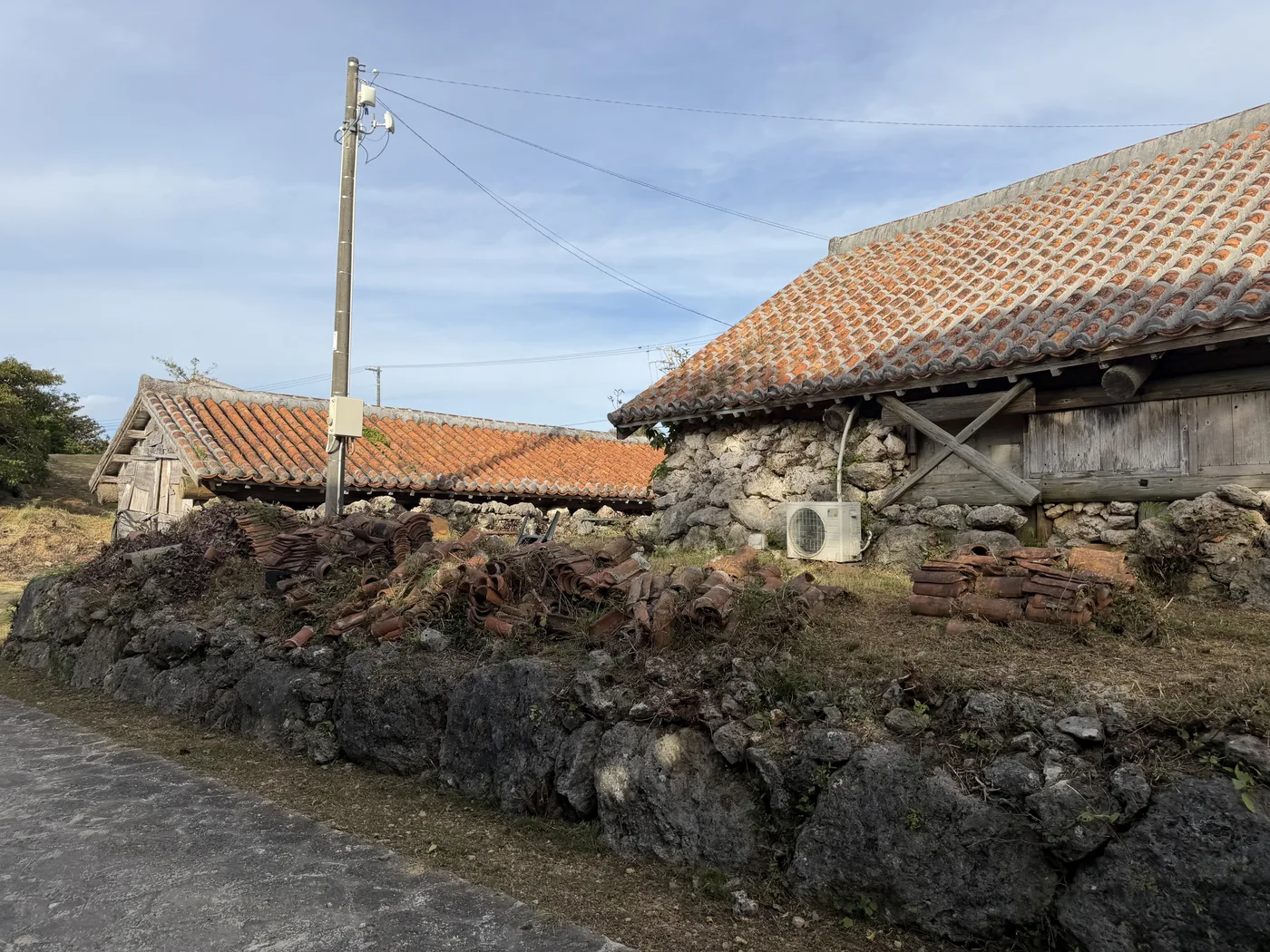
The Kitagama shop sits inside Yachimun no Sato, a pottery village in Yomitan. The area is fairly spacious, and parking was not a problem when I visited on a weekday. Around the shop, there are a few traditional Okinawan buildings with slightly bright, red-brown tiled roofs, and an impressive climbing kiln.
Inside, the shelves are full of plates, bowls, and cups. The sake cups were grouped together, so it was easy to compare colors and shapes. Every piece is slightly different.
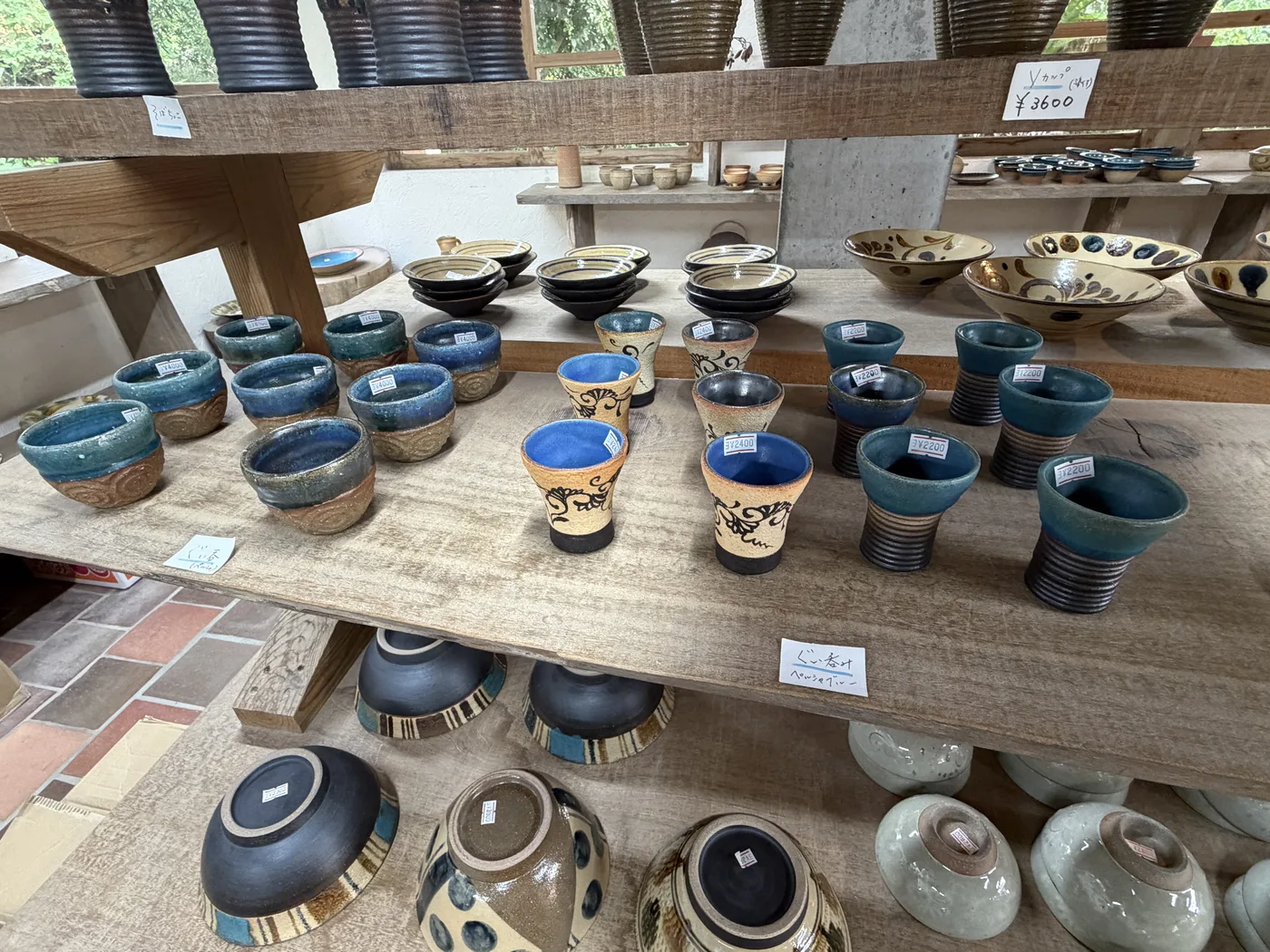
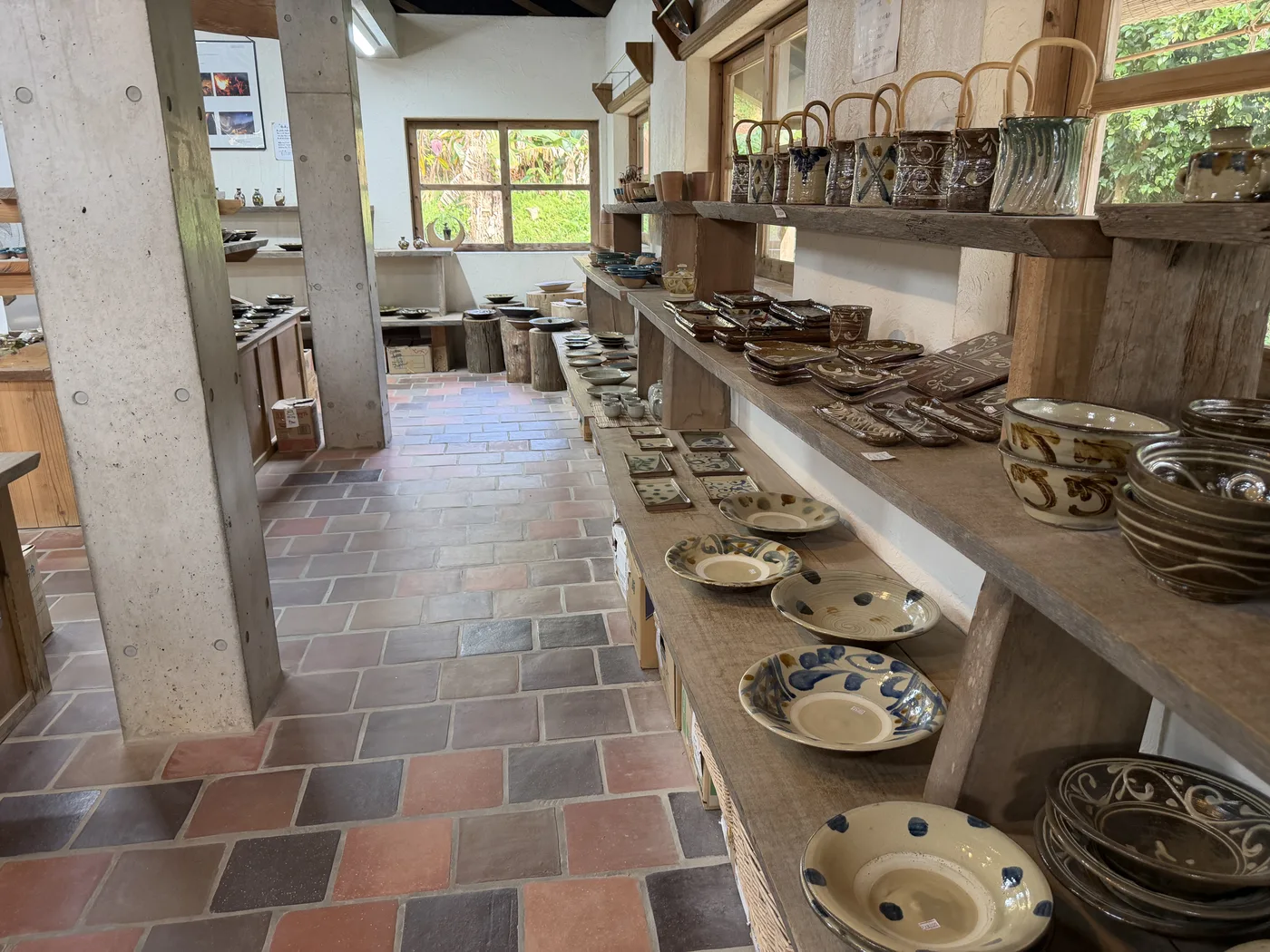
Even on a weekday, there were other visitors, including quite a few travelers from overseas who were carefully choosing pieces to take home.
Drinking Tatsuriki Hiyaoroshi from It
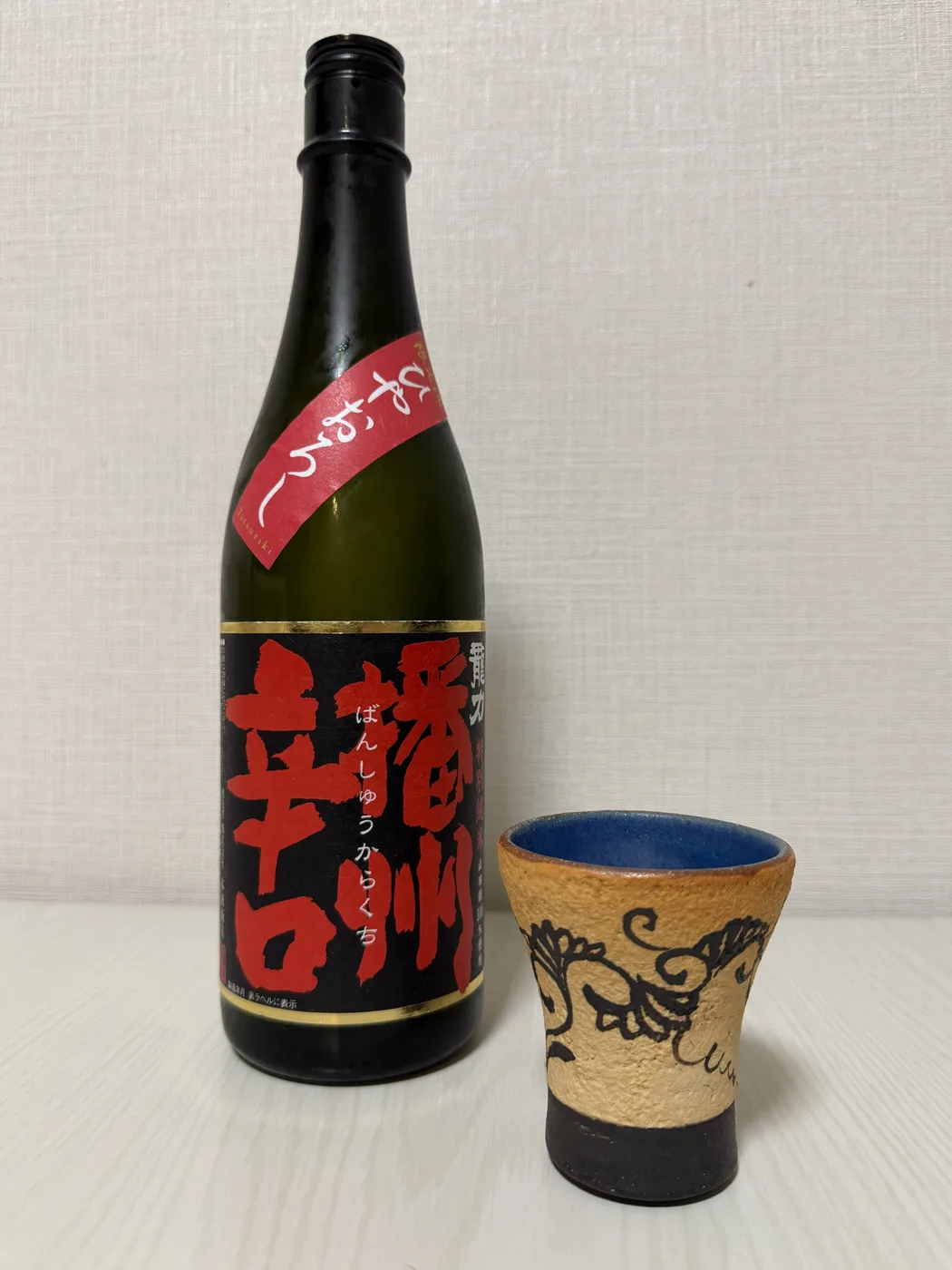
The first sake I poured into it was Tatsuriki Banshu Karakuchi Hiyaoroshi, a dry, umami-driven autumn release from Hyogo.
Compared with my rabbit-patterned glass guinomi, I found that the Tatsuriki felt slightly mellower and softer when drinking from this yachimun cup.
The relatively thick rim may have contributed to that impression, although I cannot say whether the difference came from the rim, the shape, or other factors.
Interestingly, the drinking experience reminded me more of my Bizen ware guinomi than of my thinner glass cup.
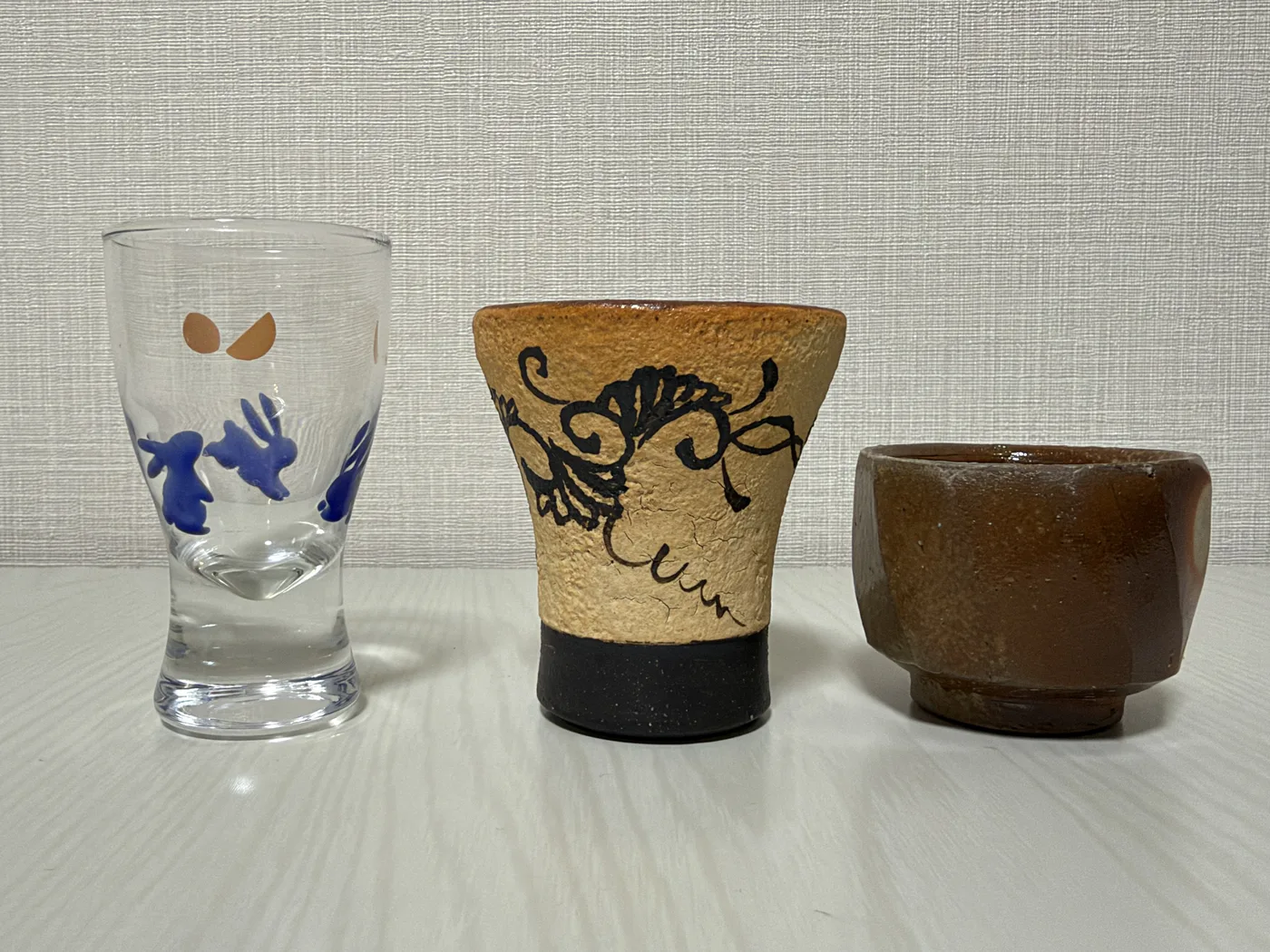
Left to right: a rabbit-patterned glass cup, the Kitagama yachimun guinomi, and my Bizen guinomi by Ryohei Sakai.
I also liked how it looked on the table. The red label of Tatsuriki and the Persian blue of the cup made a striking contrast.
What Kind of Sake Suits This Cup?
This is my own impression rather than a rule, but the strong, clear blue seems to call for sake with some presence:
- Bold or dry sake. A sharp karakuchi sake like Tatsuriki felt at home in it.
- Nigori sake. I have not tried it yet, but cloudy white sake against the deep blue interior should make a beautiful white-and-blue contrast.
Because the design is so distinctive, it is also a cup you can pick depending on your mood, rather than an everyday default.
Practical Notes and Care
The Kitagama shop posts care notes, and the same points appear in its leaflet:
- No direct flame, and avoid the oven. The Kitagama shop’s materials state that microwave use is fine for its pieces. This applies to what Kitagama says about its own pottery, not to yachimun in general, so check with the workshop or seller for other pieces.
- Care for unglazed surfaces. The shop’s leaflet explains that unglazed areas may absorb moisture and develop stains over time. Traditional Okinawan pottery is sometimes prepared with a process called medome, which uses starchy water, such as rice-rinsing water, to help reduce absorption.
- Every piece is a little different. The shop notes that hand-made, wood-fired pieces can warp slightly, and asks you to see that as character.
- That bare ring inside some bowls is intentional. It is called jame (“snake’s eye”): a ring of glaze is scraped away so pieces can be stacked in the kiln without sticking together. The piece on top of a stack does not need one.
Care requirements vary between individual pieces, so it is best to follow the instructions provided by the workshop or seller.
After use, I wash the cup gently and allow it to dry thoroughly before storing it.
Visiting Kitagama
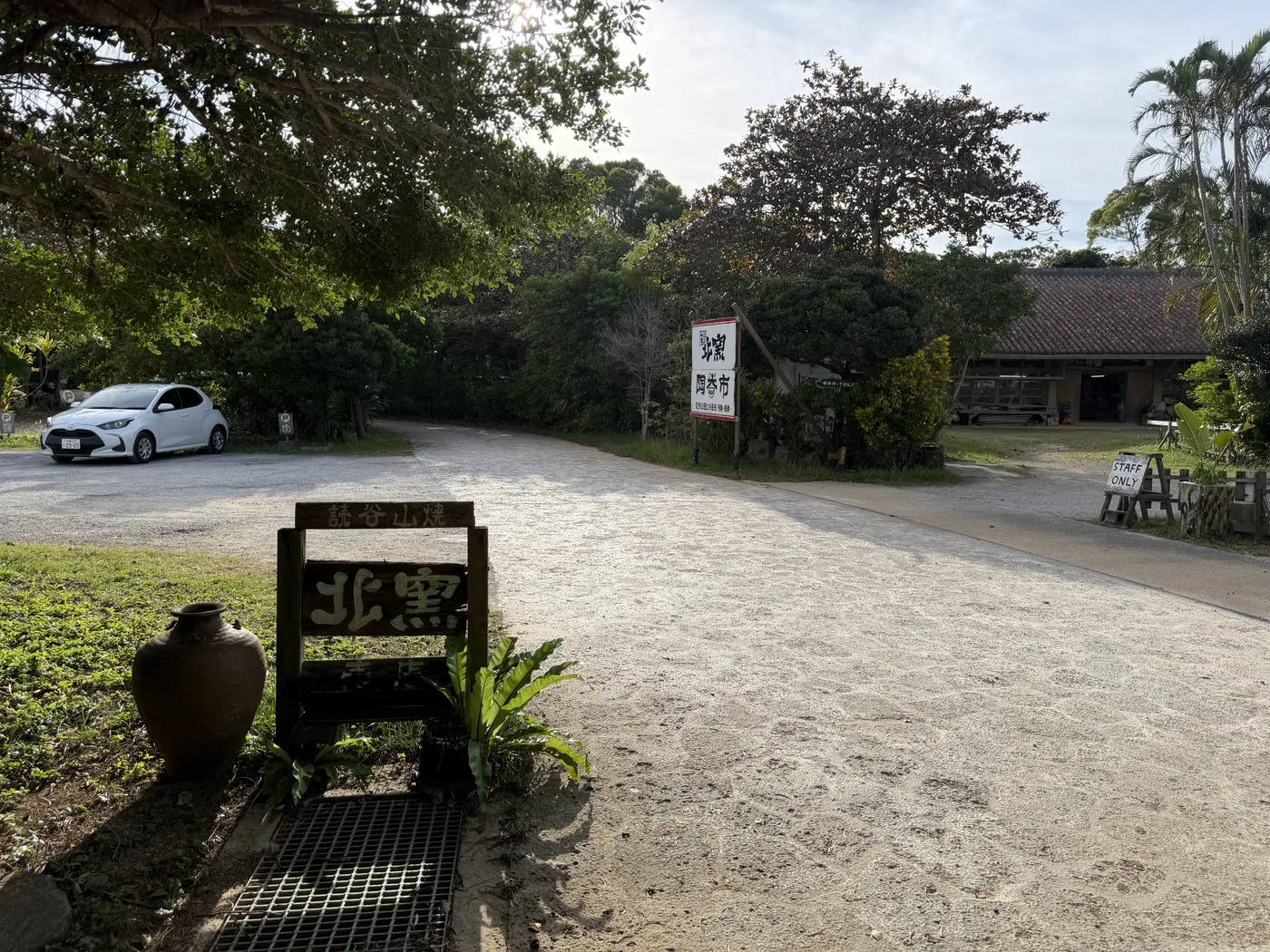
- Shop: Kitagama shop (Kitagama Baiten), 2653-1 Zakimi, Yomitan Village, Okinawa
- Hours: 9:30–17:30, closed irregularly (from the shop leaflet). Opening hours may change, and some visitor guides mention a midday break. Check the latest hours before visiting.
- Getting there: It is hard to reach without a car.
- Payment: Cards and e-money were accepted (I paid with QUICPay). In my experience, cash-only shops are fairly common in rural Okinawa, so it is worth carrying some cash anyway.
- Pottery market: When I visited in November 2026, a sign announced a Kitagama pottery market on December 12–13, 2026. Dates may differ in other years.
Downsides
- You need a car. Kitagama is in a rural part of Yomitan, and it is not an easy stop without one.
- The rough exterior is not for everyone. If you prefer the smooth feel of porcelain, the sandy texture may feel unusual at first.
- Finding an identical replacement may be difficult. Handmade pieces vary in shape, glaze, and firing results, so if you see one you like, it may be worth buying it on the spot.
Final Thoughts: Was It Worth ¥2,400?
Yes. For ¥2,400, I came home with a cup that feels completely different from my porcelain and glass cups: a vivid Persian blue inside, a dry, earthy exterior, and a drinking experience that, for me, felt closer to Bizen ware than to glass. Choosing it at the shop, surrounded by the work of the potters who fire the kiln together, made it feel like more than a souvenir. It was a good buy.
Related Reading
Sake is an alcoholic beverage. This article is intended for readers of legal drinking age in their country — please drink responsibly.