Amabuki Junmai Omachi Hiyaoroshi Review|A Drier Side of Omachi
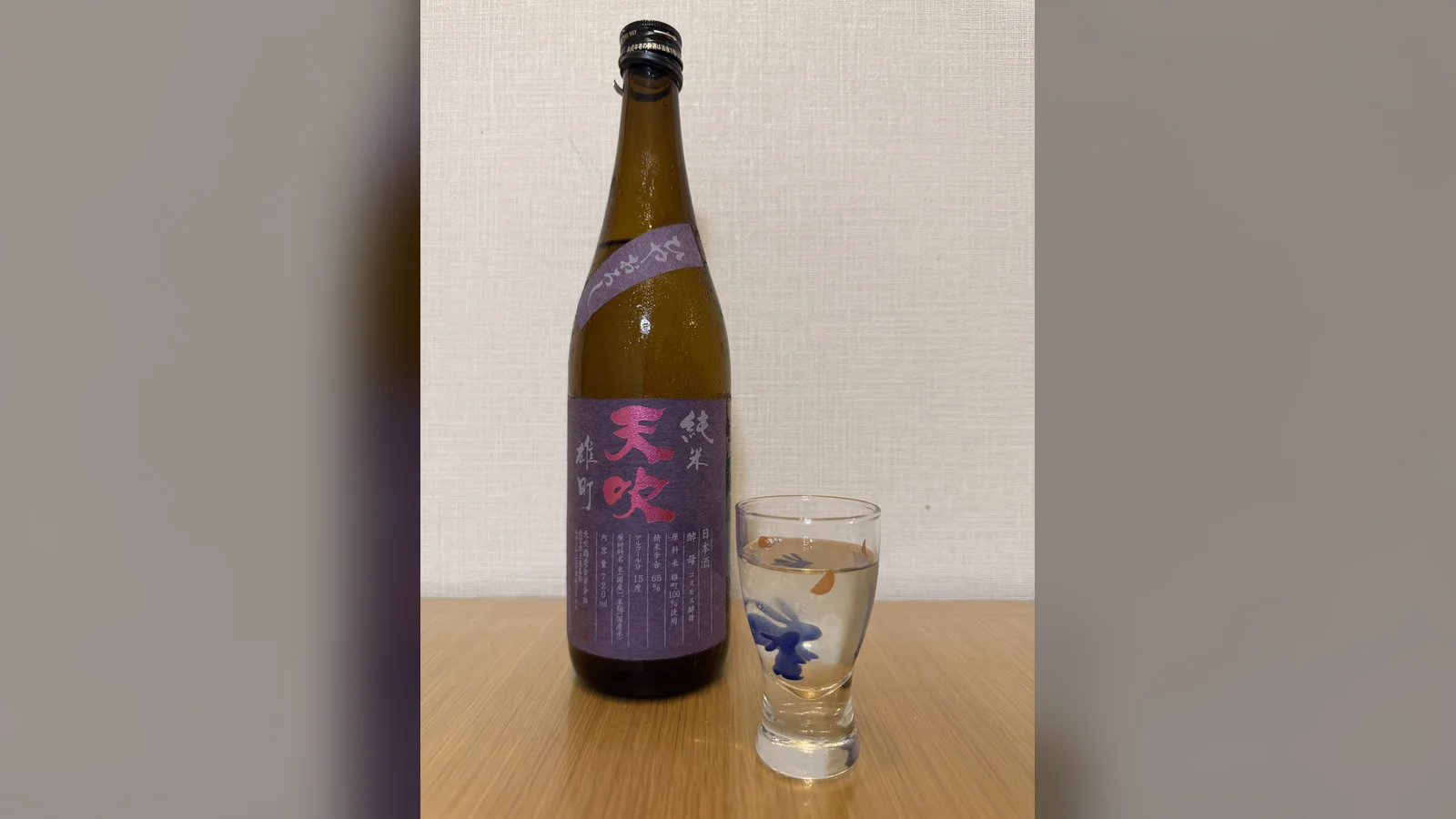
Table of Contents
- What Is Amabuki Junmai Omachi Hiyaoroshi?
- Where I Bought It
- Where in Japan
- How I Tasted It
- First Impression
- Tasting Notes
- How Temperature Changed the Sake
- And the Next Day
- Food Pairing: What Did Not Work
- Side by Side with Shichida
- Who Is This For?
- Approachability: 2.5 / 5
- A Note on Availability
- Final Thoughts
- Related Reading
Three days after opening Shichida Junmai Omachi Hiyaoroshi, I opened another bottle that, on paper, looked like a close relative.
Amabuki Junmai Omachi Hiyaoroshi is also a junmai, also made entirely from Omachi rice, also an autumn hiyaoroshi, and also from Saga Prefecture. It even cost about the same.
It tasted very different.
Where Shichida opened with banana-like fruit and noticeable sweetness, Amabuki was quiet on the nose and noticeably drier on the palate. Of everything I have reviewed on this site, my first sip reminded me most of Mii no Kotobuki +14.
That contrast — same rice variety, same season, same prefecture, different result — is what this review is really about.
What Is Amabuki Junmai Omachi Hiyaoroshi?
Amabuki is brewed by Amabuki Shuzo in Miyaki Town, Saga Prefecture.
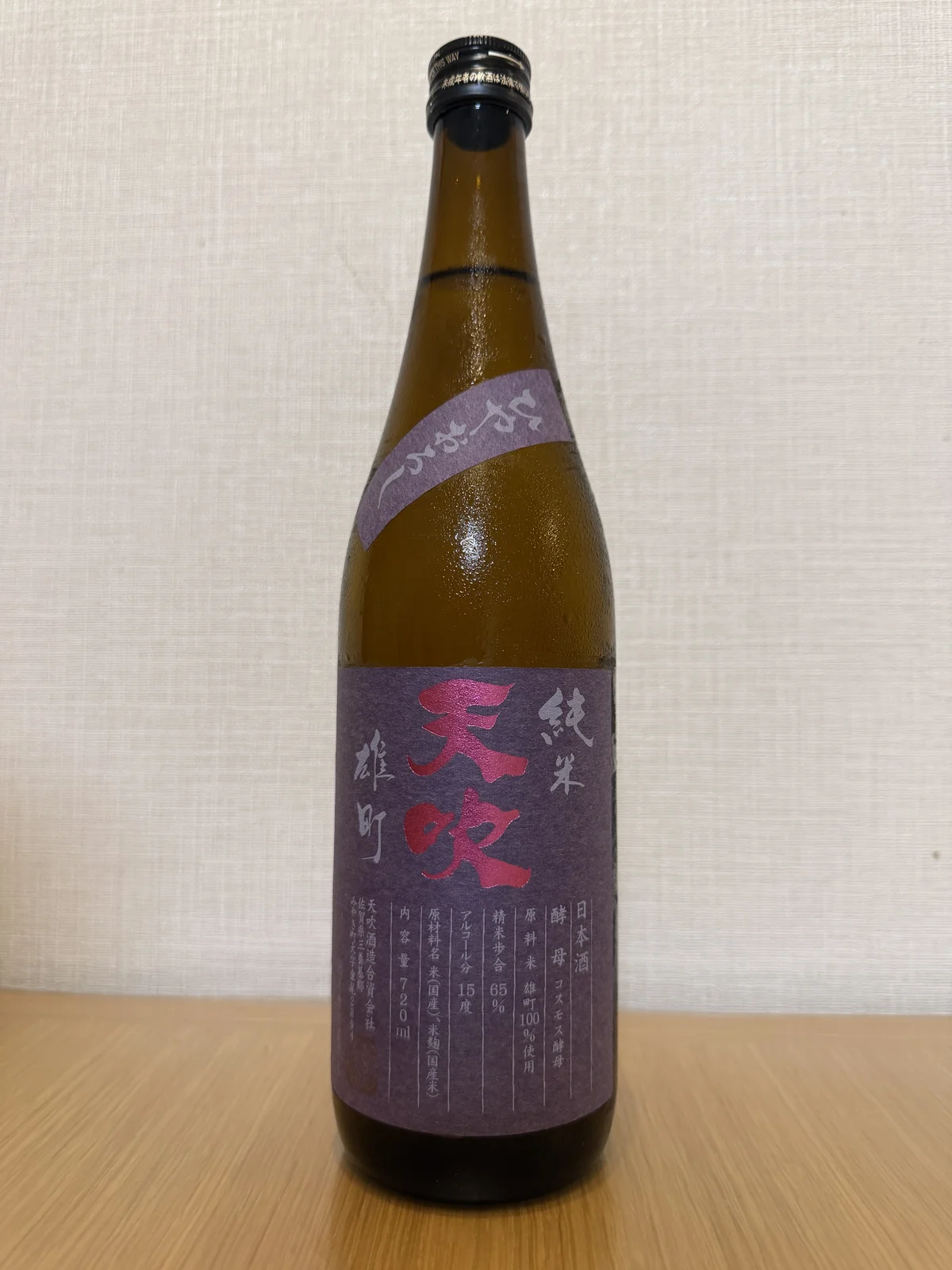
This bottle is a junmai made from 100% Omachi rice, polished to 65%, fermented with a cosmos flower yeast, and released as a hiyaoroshi for the autumn season.
| Item | Detail |
|---|---|
| Brewery | Amabuki Shuzo |
| Prefecture | Saga |
| Brand | Amabuki |
| Classification | Junmai |
| Rice | Omachi 100% |
| Polishing ratio | 65% |
| Yeast | Cosmos yeast |
| Alcohol | 15% |
| Filtration | Kept to a minimum (per the label) |
| Volume | 720ml |
| Production date | September 2026 |
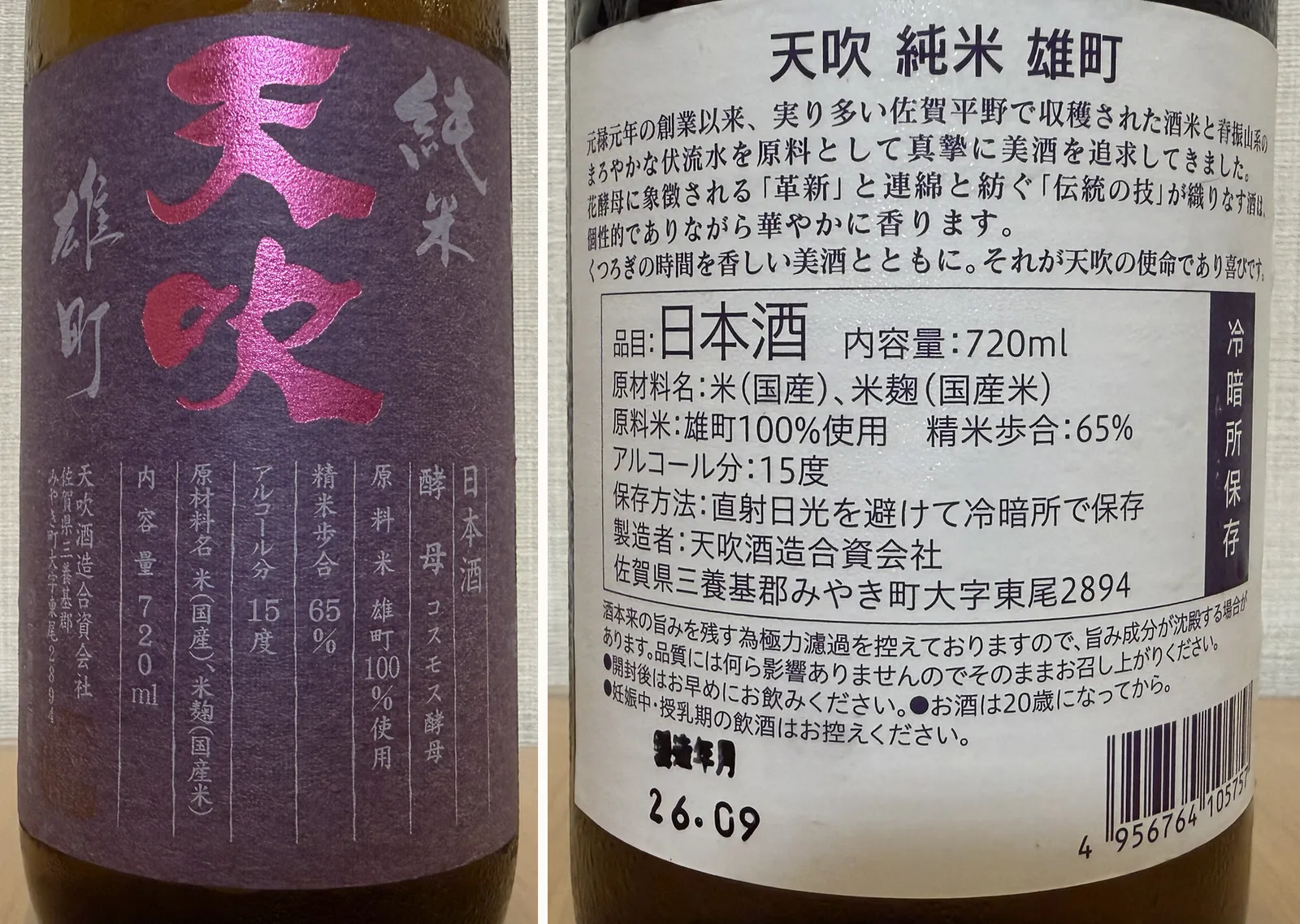
The ingredients list reads simply: rice and rice koji. No brewer’s alcohol.
The back label adds that filtration has been kept to a minimum in order to preserve the sake’s natural umami, and that some of those components may settle in the bottle.
The Flower Yeast
The most distinctive line on the front label is the yeast: cosmos yeast.
Amabuki is a brewery closely associated with yeasts isolated from flowers. Its back label describes flower yeast as a symbol of the brewery’s spirit of innovation, set alongside techniques passed down since its founding in 1688.
For a hiyaoroshi, the choice of cosmos feels apt. Cosmos bloom in autumn — the same season this sake is released.
Yeast is one of many factors that can shape how a sake smells and tastes. That makes the named cosmos yeast particularly interesting here, although it would be too simple to attribute the contrast with Shichida to yeast alone. Shichida’s label does not name its yeast, and the two bottles also differ in polishing ratio, alcohol, and brewing approach.
The same back label also says the brewery’s flower-yeast sakes are distinctive and aromatic. In this bottle — a hiyaoroshi, tasted cold — I found the aroma much quieter than that description suggests. I will come back to that.
What Does Hiyaoroshi Mean?
Traditionally, hiyaoroshi is sake brewed during the cold months, pasteurized once before summer storage, and then released in autumn without the usual second pasteurization before shipment. Modern usage can vary somewhat by brewery.
I covered the style in more detail in my Shichida review.
Where I Bought It
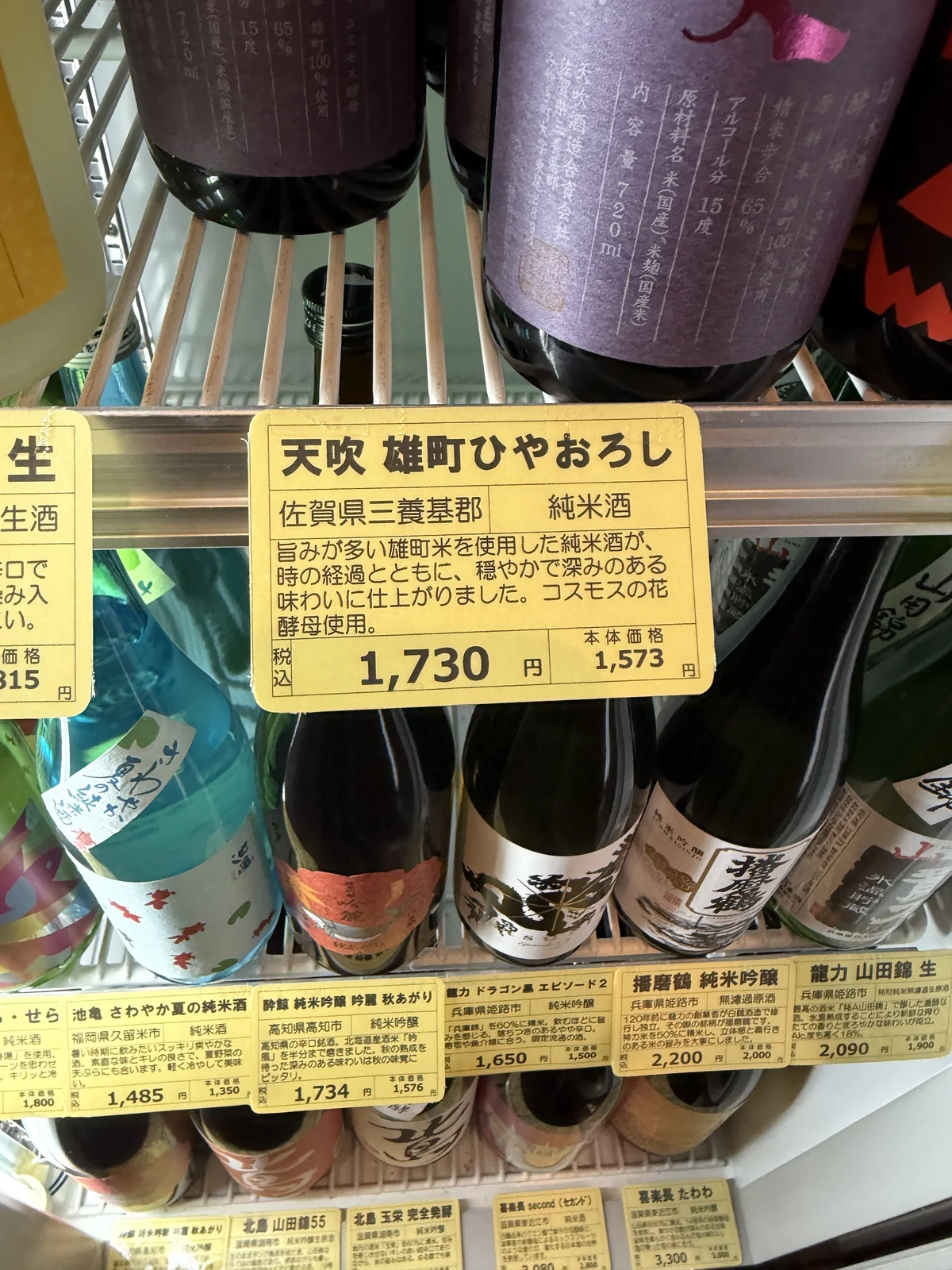
I bought this bottle on September 26, 2026, at Tobu Shuhan, a sake shop in Higashi Ward, Kumamoto City, for ¥1,730 including tax.
The shop describes itself as a retailer of sake chosen for being good rather than for being famous.
The shop’s printed shelf tag described it as an Omachi junmai that had matured over time into a calm, deep flavor, and noted the cosmos flower yeast.
Where in Japan
This sake is tied to one place on its label — and I found it across the prefectural border.
Amabuki Shuzo is in Miyaki Town, Saga Prefecture, in the eastern part of the prefecture. The back label describes the brewery’s long tradition of working with rice from the Saga Plain and soft subterranean water from the Sefuri Mountains. It does not state where the Omachi in this particular bottle was grown.
That puts Amabuki in the same prefecture as two breweries I have already written about: Tenzan Shuzo in Ogi, which makes Shichida, and Fukuchiyo Shuzo in Kashima, which makes Nabeshima. Saga is a small prefecture, but its sake is anything but uniform.
I bought the bottle at Tobu Shuhan in Kumamoto City, Kumamoto Prefecture.
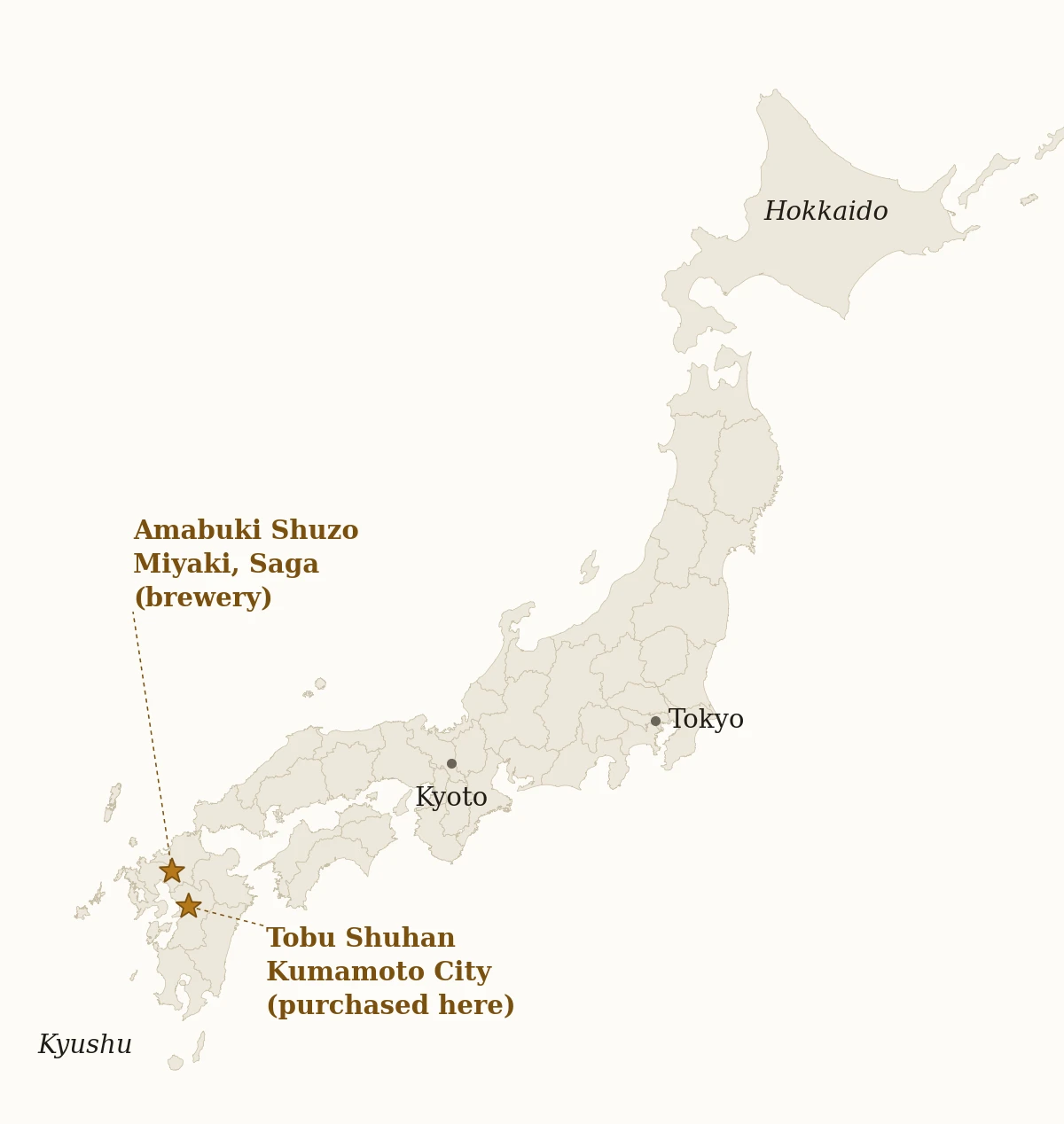
Where in Japan: Amabuki is brewed in Miyaki, Saga Prefecture. I bought this bottle at Tobu Shuhan in Kumamoto City.
How I Tasted It
I opened the bottle at home on September 29, 2026.
It had been kept in the refrigerator and was opened immediately after taking it out. My tasting notes come from a small clear-glass sake cup.
I tasted it straight from the refrigerator, again after ten to fifteen minutes, again as it warmed further, with a few snacks, and once more the following day.
Three More Cups
I also poured it into three ceramic cups from my own collection: an Oribe ware guinomi, a Bizen ware guinomi, and a Fukagawa Seiji porcelain guinomi.
The differences were small but consistent.
Bizen gave the softest impression. In the unglazed stoneware cup, the mouthfeel felt rounder and mellower.
Fukagawa Seiji brought the dryness forward. In the porcelain cup, the sharper, drier side of the sake was easier to notice. That matched what I found with Mii no Kotobuki +14, where the relatively thin rim of the same cup seemed to emphasize its dry attack.
Oribe sat somewhere between the two: less soft than Bizen, but without emphasizing the dry edge as clearly as the Fukagawa porcelain.
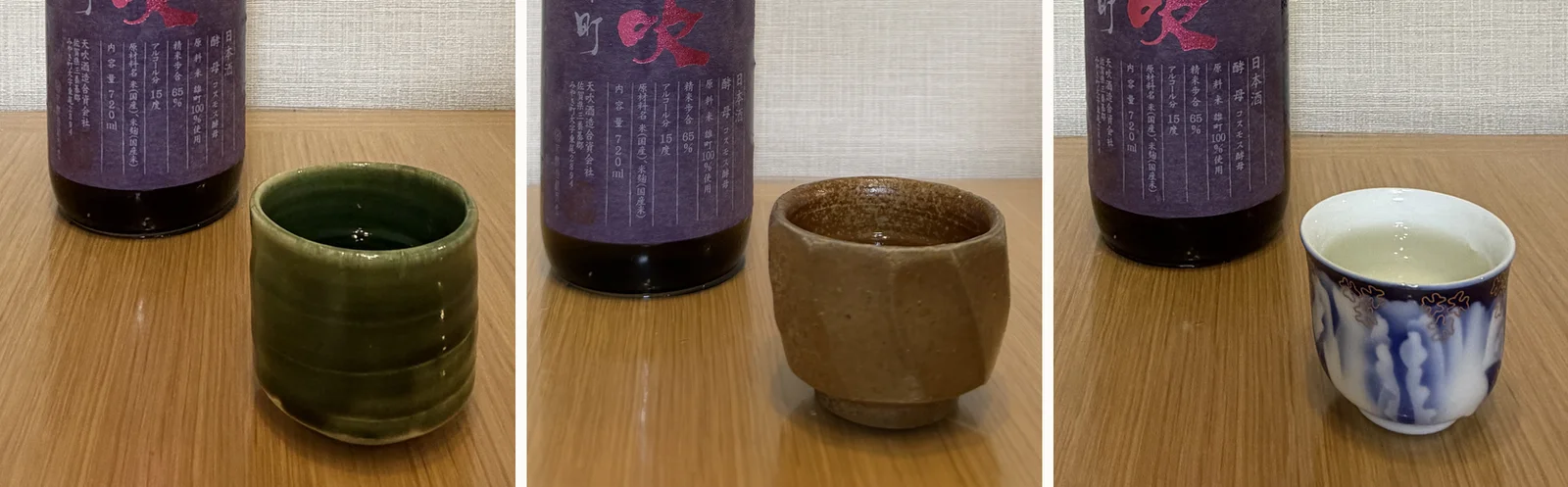
I cannot say for certain why each cup behaved the way it did. The cup does not change the sake itself, but its material, shape, and rim seem to change which side of the sake I notice first. For a dry, firm sake like this one, that difference was easier to feel than usual.
I have written about two of these cups separately: my Bizen ware guinomi and my Fukagawa Seiji guinomi.
First Impression
Drier than I expected.
On paper — Omachi rice, a hiyaoroshi, a flower yeast — this bottle suggests something soft and fragrant. My first sip went in a different direction. Of all the sake I have reviewed here, the one it reminded me of most was Mii no Kotobuki +14 — not because the two taste the same, but because both lead with dryness rather than sweetness or fruit.
Read my Mii no Kotobuki Fuku vs +14 comparison →
Tasting Notes
Appearance
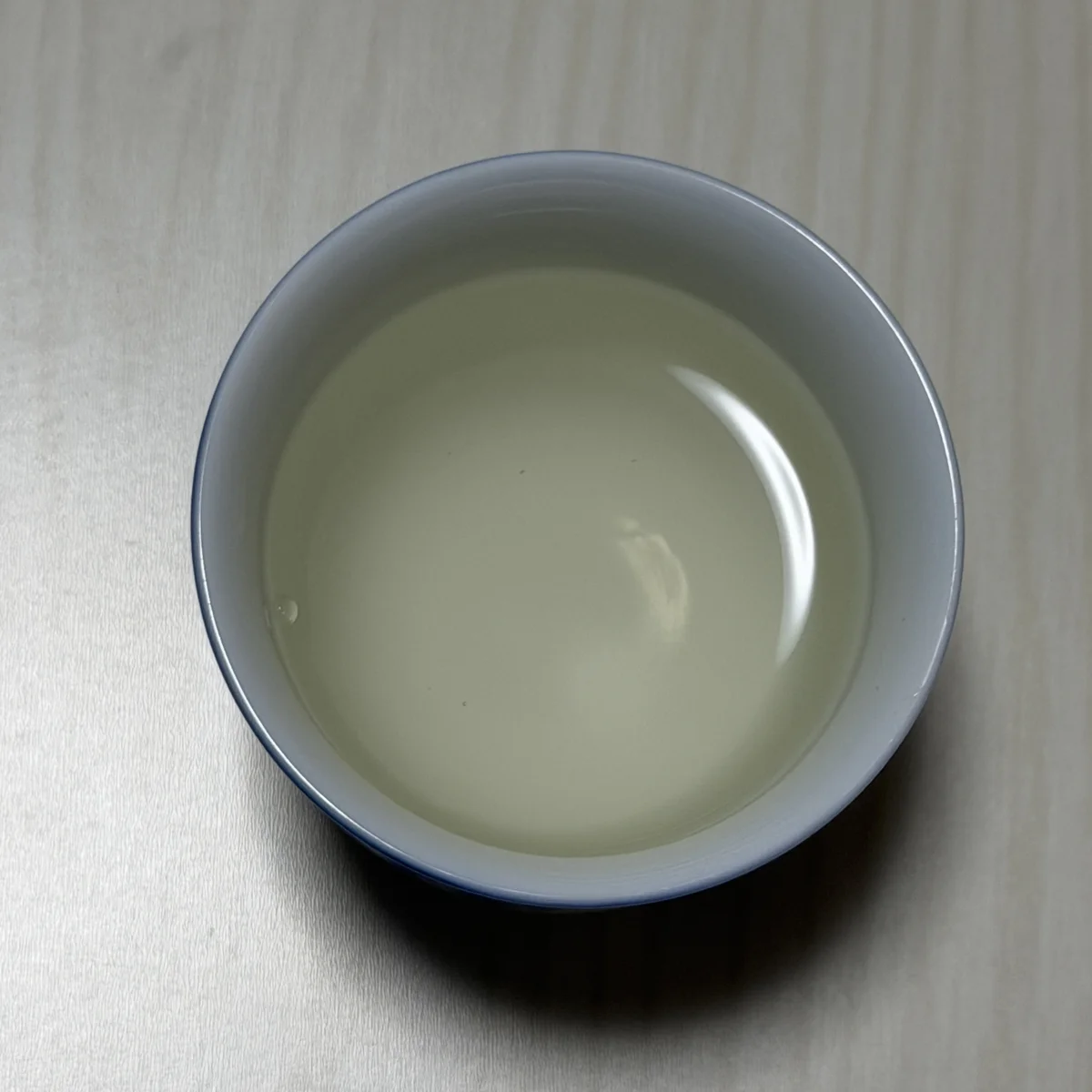
Clear, with a very faint pale yellow tint — close to colorless. Light in viscosity.
The tint is easier to see against the white interior of a porcelain cup than in clear glass.
Aroma
Quiet. There was no clear fruit — just rice, and a low to moderate note of alcohol.
This was one of the sharpest differences from Shichida, which had a distinct banana-like aroma. It was also quieter than I expected from a brewery that describes its flower-yeast sakes as aromatic. Serving temperature may have played a part; I tasted it cold.
Sweetness
Low. Sweetness stays in the background, at least when the sake is cold.
Acidity
Medium to moderately pronounced. The acidity gives the sake its shape.
Umami
Medium. Present and steady, without dominating.
Bitterness
Medium to moderately pronounced. A firm bitterness runs through the palate and into the finish.
Body
Medium.
Texture
Essentially still, with almost no perceptible gas. The perceived alcohol warmth is moderate to moderately pronounced, and contributes to the dry impression.
Interestingly, the perceived alcohol warmth was stronger here than in Shichida, even though Amabuki is labelled at 15% ABV and Shichida at 17%. It is another reminder that the numbers on a label and the impression in the glass do not always line up.
Read my guide to the Sake Meter Value →
Finish
Medium in length. Acidity, bitterness, and alcohol warmth remain. It does not drop away abruptly, but it does not drag either — it settles rather than lingers.
How Temperature Changed the Sake
Unlike Shichida, which barely changed with temperature, Amabuki opened up noticeably as it warmed.
Straight from the refrigerator, it was at its driest. Sweetness was low, the aroma quiet, and acidity and bitterness led.
After ten to fifteen minutes, sweetness and umami both came forward a little, and the aroma opened slightly.
As it warmed further, sweetness rose again and umami held at its higher level. The acidity stayed constant throughout.
The overall impression stayed similar across all three stages, but the balance shifted. Colder, it leaned dry and firm. Warmer, it felt more rounded. If you find it too austere straight from the fridge, it is worth letting it sit in the glass.
Warmed: Nurukan
The staff at Tobu Shuhan had recommended drinking it warm, as nurukan — gently heated sake — so I tried that too.
Warming brought the sweetness forward more clearly than any of the cooler stages. But it also sharpened other things. The dry, peppery sensation rising through the nose after each sip became more pronounced, and so did the alcohol warmth.
So nurukan did not make this sake gentler. It made it fuller and more vivid in both directions — sweeter, but also warmer and drier on the finish. I could imagine it working well next to a hot pot on a cold evening, but it did not make the sake easier for a newcomer.
At a Glance
| Temperature | Impression |
|---|---|
| Cold, straight from the fridge | Driest, quiet aroma, firmer bitterness |
| Slightly warmer in the glass | More sweetness and umami, more rounded |
| Nurukan (gently heated) | Fuller and sweeter, but more alcohol warmth |
And the Next Day
The following day, there was no major change — but the edges felt slightly rounder. Acidity eased a little, umami moved forward, and the aroma opened slightly.
Food Pairing: What Did Not Work
This was the least successful pairing I have recorded on this site so far.
I drank Amabuki alongside cheese, almond-and-small-fish snacks, and pistachios. None of them did much for the sake, or the sake for them.
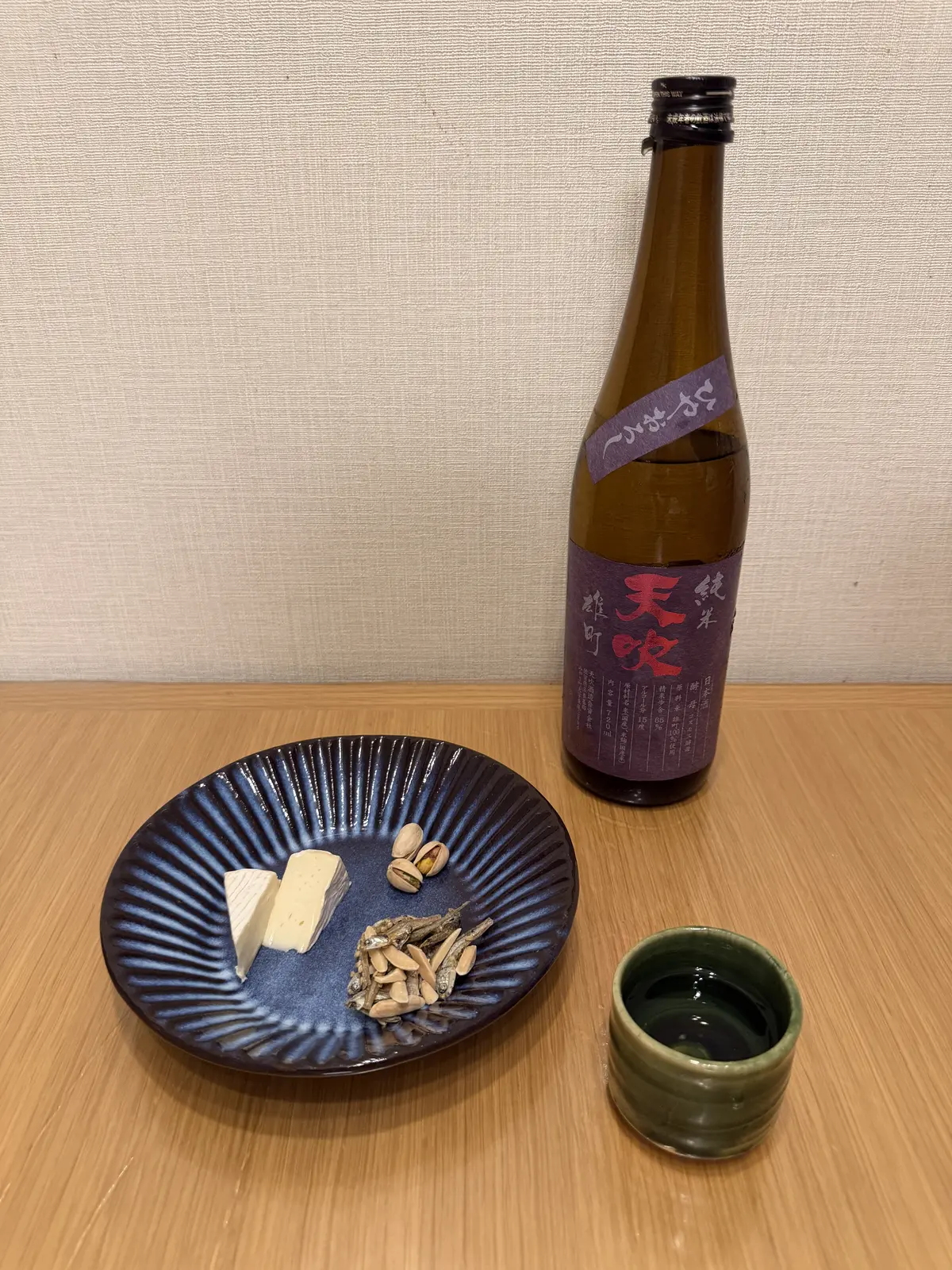
I suspect these were simply the wrong kind of food for a sake this dry and firm. With its acidity and bitterness, it seems better suited to dishes with more weight.
I would rather report a mismatch honestly than skip it. A pairing that does not work is still useful information.
Next time, I would try it with grilled fish, simmered dishes, hot pot, or something with more fat and umami.
Side by Side with Shichida
I tasted these two bottles three days apart. The comparison was hard to resist.
| Shichida | Amabuki | |
|---|---|---|
| Rice | Omachi 100% | Omachi 100% |
| Polishing ratio | 75% | 65% |
| Alcohol (label) | 17% | 15% |
| Yeast (label) | Not stated | Cosmos yeast |
| Aroma | Banana-like, sweet-leaning | Quiet, rice-led, no clear fruit |
| Sweetness | Noticeable | Lower |
| Acidity | Similar | Similar |
| Umami | Similar | Similar |
| Body | Similar | Similar |
| Finish | Shorter, clean exit | Longer, settles smoothly |
| Approachability | 3 / 5 | 2.5 / 5 |
On paper, the two bottles look close. In the glass, the difference is mostly in aroma and sweetness. Shichida offers more up front. Amabuki holds back and leans dry.
The numbers do not explain it neatly, either. Amabuki is the more polished of the two and has the lower ABV on its label, yet it tasted the drier and firmer of the pair. Rice variety alone cannot explain the difference. Yeast, fermentation, polishing, brewing choices, maturation, and other factors all contribute to what ends up in the glass.
What surprised me most was the finish. Amabuki’s finish lasts longer, yet it feels more composed. Shichida had everything arriving at once; Amabuki lands more quietly.
Same rice variety, same style, same prefecture — two very different ideas of what Omachi can become.
Who Is This For?
Try this if you enjoy dry, structured sake and want to see a less fruity side of Omachi.
If you prefer soft sweetness and expressive fruit, Shichida’s Omachi Hiyaoroshi may be the easier starting point.
Approachability: 2.5 / 5
I rate Amabuki Junmai Omachi Hiyaoroshi 2.5 out of 5 on my approachability scale.
A low score on this scale reflects difficulty for a newcomer, not quality.
What makes it easier: the body is moderate rather than heavy, and the sake becomes rounder as it warms slightly in the glass and again on the second day. In my Bizen cup, it also felt noticeably mellower.
What holds it back: the acidity, perceived alcohol warmth, and bitterness all stand out, and there is a firm, dry grip on the first sip. The quiet aroma also gives a newcomer little to hold on to before tasting.
The brewery describes this sake as mellow and gently enveloping. Cold, in a glass, I found it firmer than that. In my Bizen cup, and as it warmed slightly in the glass, it moved closer to the brewery’s description.
Heating it fully was a different story. As nurukan, it gained sweetness but also more noticeable alcohol warmth, so it did not become any easier to approach. The cup and a little time in the glass helped more than heat did.
That places it between Mii no Kotobuki +14 at 2 / 5 and Shichida at 3 / 5. It shares the dry direction of +14 but is less extreme, and it lacks the fruit and sweetness that make Shichida easier to approach.
See what Approachability means on this site for the full method behind this score.
A Note on Availability
Hiyaoroshi is a seasonal release, and bottles like this one appear in autumn and are usually gone by winter.
As of September 2026, I could not confirm a regular U.S. retail listing for this particular bottle. For readers outside Japan, availability will depend on specialist importers and retailers.
Final Thoughts
What interested me most about Amabuki Junmai Omachi Hiyaoroshi was not whether it was better or worse than Shichida, but how differently the same rice and the same seasonal idea could be expressed.
Shichida was fruitier and more immediately inviting. Amabuki was quieter, drier, and firmer, becoming more rounded with time and temperature.
It is not the sake I would choose as someone’s first introduction to sake. But as a second bottle beside another Omachi hiyaoroshi, it became far more interesting.
I would like to drink it again — warm, and with the kind of food it seems to be waiting for.
Related Reading
- Shichida Junmai Omachi Hiyaoroshi — the same rice and season, a sweeter and fruitier result
- Mii no Kotobuki Fuku vs +14 — the bottle Amabuki’s first sip reminded me of
- What Does +14 Mean on a Sake Label? — why the numbers on a label do not always match the glass
- Bizen Ware Guinomi — one of the cups I poured this into
Sake is an alcoholic beverage. This article is intended for readers of legal drinking age in their country — please drink responsibly.