Shichida Junmai Omachi Hiyaoroshi Review|75% Polished, Full-Flavored Yet Clean
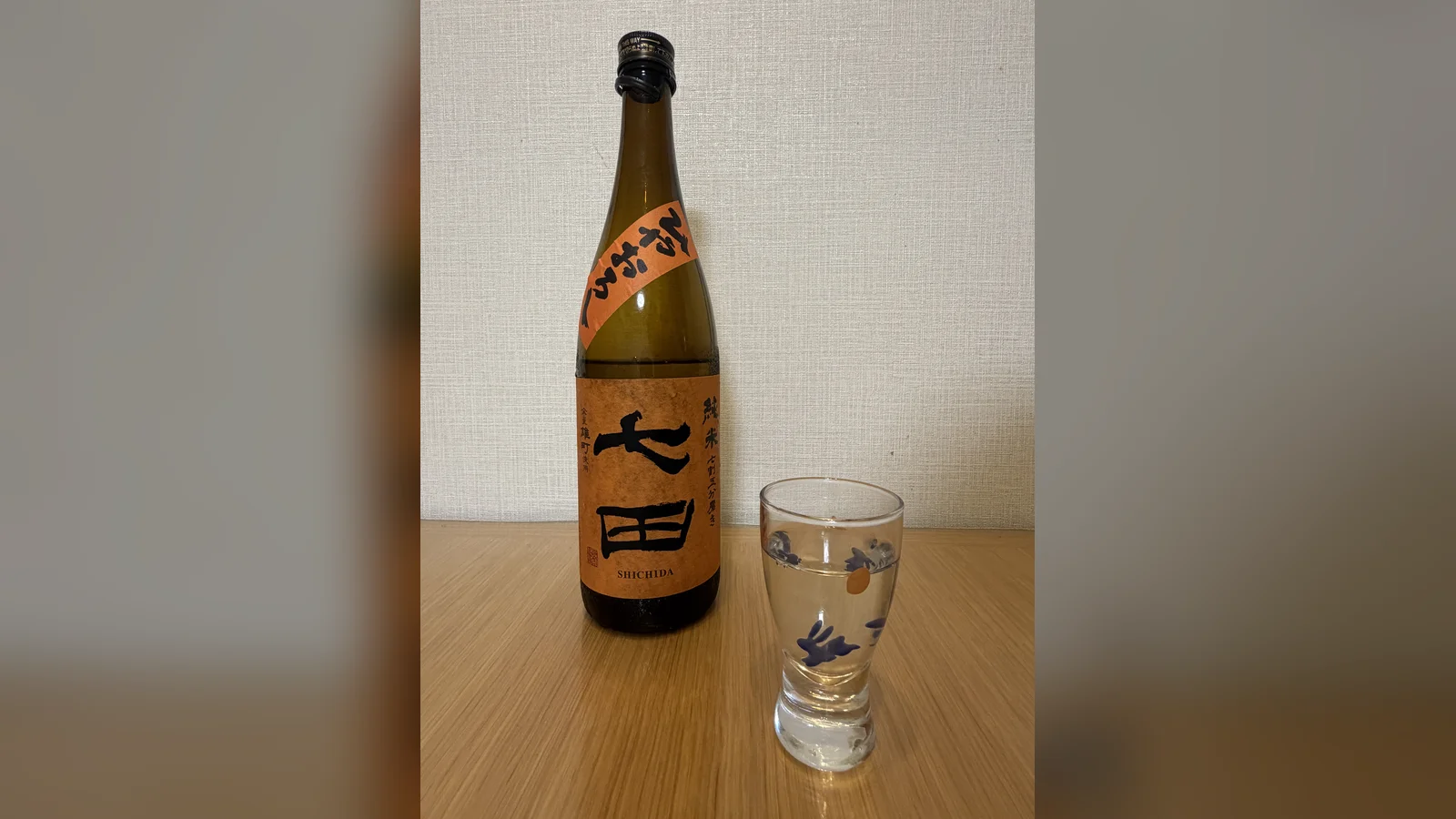
Table of Contents
This article contains affiliate links. If you buy through my Palate Project link or use my discount code, you may receive a discount, and I may earn a small commission at no extra cost to you — it never changes what I recommend. Full disclosure.
When I saw the polishing ratio on this bottle, I expected something heavy.
Shichida Junmai Omachi Hiyaoroshi is made from Omachi rice polished only to 75% — meaning a quarter of each grain was removed, far less than the 50% or 60% common in the ginjo-style bottles I have been reviewing here. Less polishing leaves more of the grain intact, which can contribute to a fuller, more rice-driven profile — although polishing ratio alone does not determine how a sake will taste.
It did have more flavor. Sweetness, umami, acidity, and a thread of bitterness all arrived at once.
But it was not heavy, and it was not rough. Everything came together, and then it left cleanly.
That combination — a lot of flavor, very little drag — is what made this bottle worth writing about.
What Is Shichida Junmai Omachi Hiyaoroshi?
Shichida is a brand from Tenzan Shuzo, a sake brewery in Ogi City, Saga Prefecture.
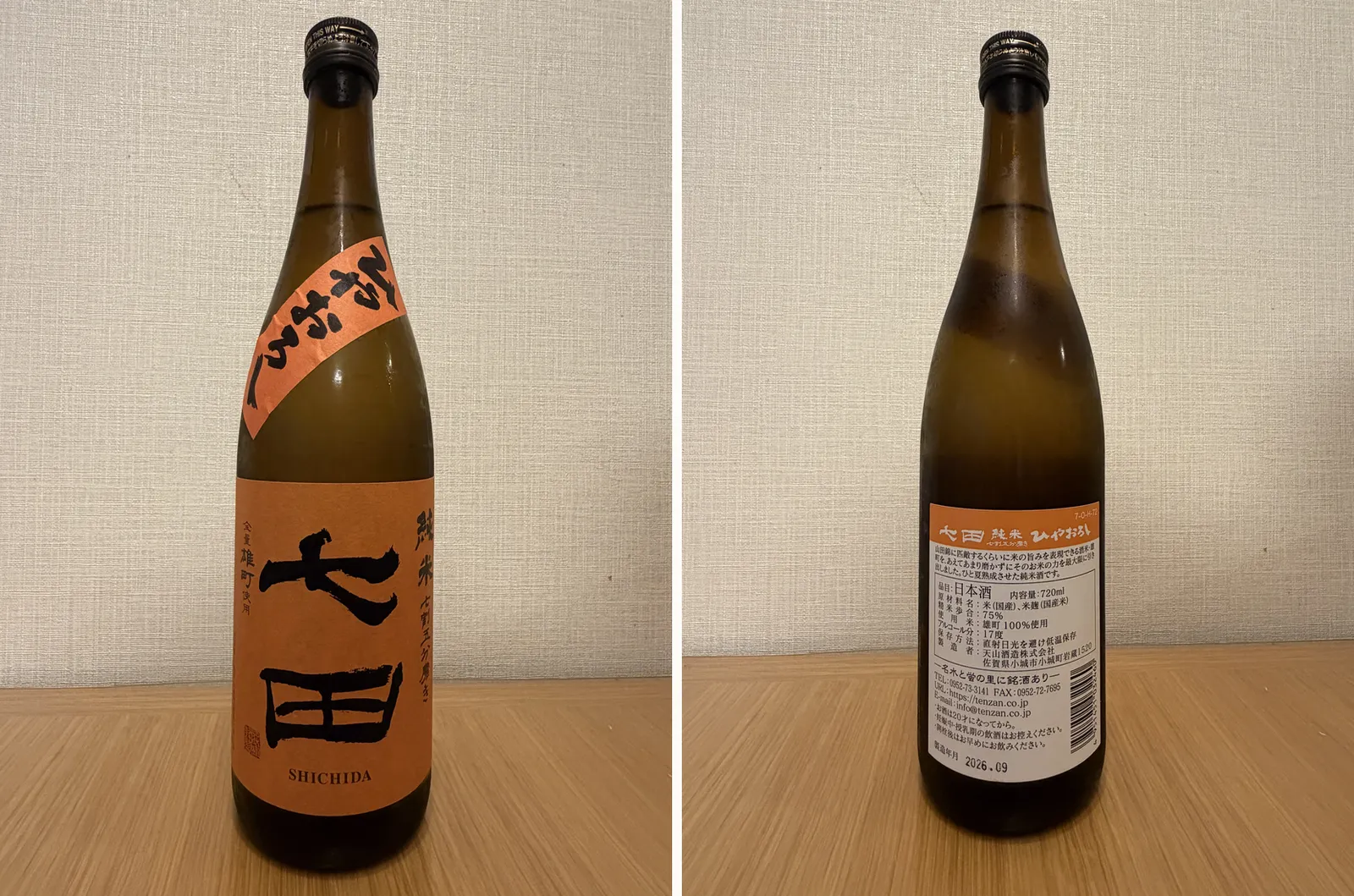
This bottle is a junmai made entirely from Omachi rice, polished to 75%, at 17% alcohol, released as a hiyaoroshi for the autumn season.
| Item | Detail |
|---|---|
| Brewery | Tenzan Shuzo |
| Prefecture | Saga |
| Brand | Shichida |
| Classification | Junmai |
| Rice | Omachi 100% |
| Rice origin | Okayama Prefecture (per the brewery’s product page) |
| Polishing ratio | 75% |
| Alcohol | 17% (per the bottle’s label) |
| Filtration | Unfiltered (per the brewery’s product page) |
| Volume | 720ml |
| Production date | September 2026 |
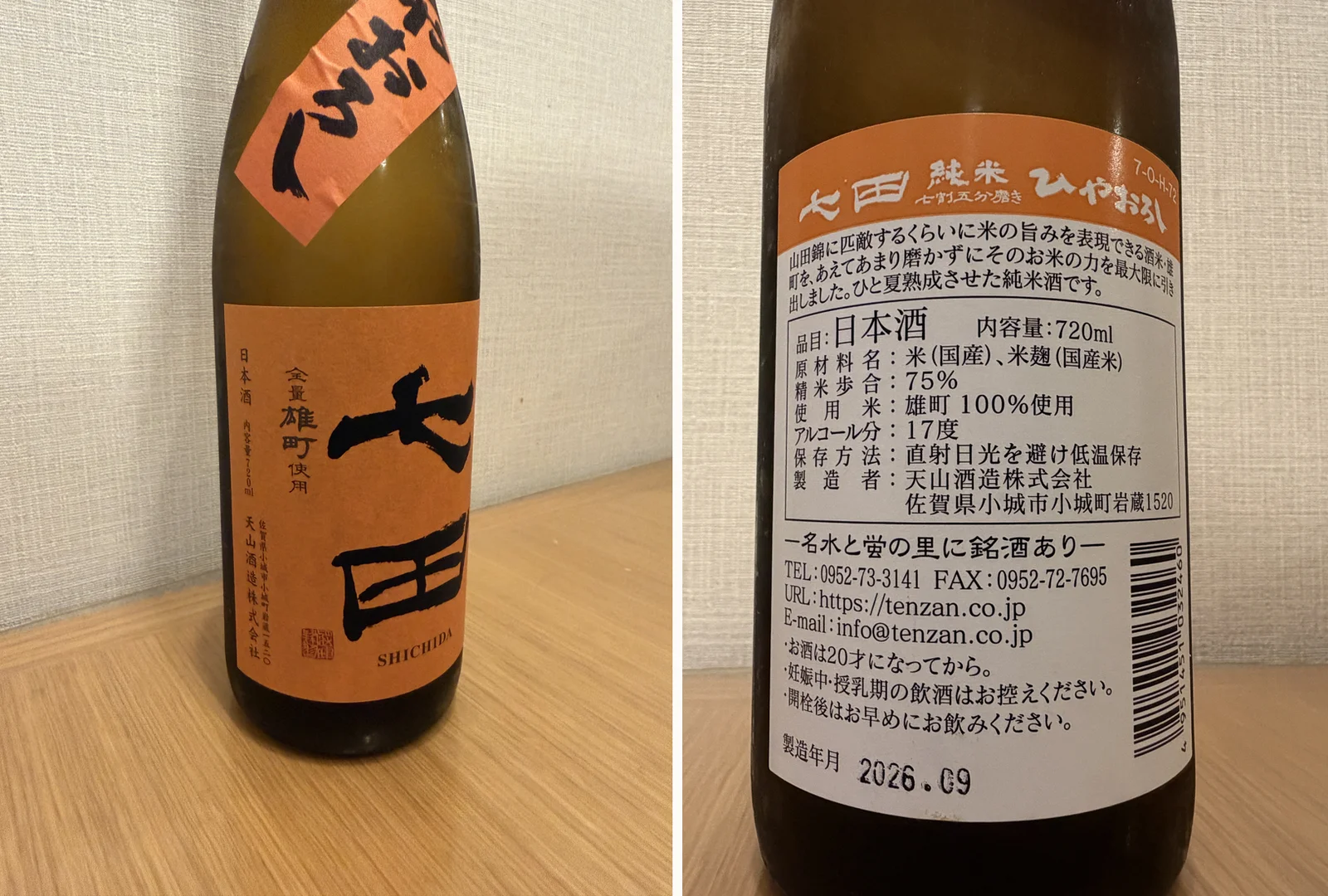
The ingredients list reads simply: rice and rice koji. No brewer’s alcohol.
The label itself states only “100% Omachi.” Tenzan Shuzo’s own product page (in Japanese) for this sake adds two details the label does not: the Omachi is grown in Okayama Prefecture, and the sake is entirely unfiltered. The same page lists the alcohol content as 16%; the back label on my bottle states 17%, and I have followed the label here.
Why Polish Omachi Only to 75%?
The answer is on the back label, and it is the brewery’s own.
Paraphrased, Tenzan Shuzo describes Omachi as a rice that can express umami on a level comparable to Yamadanishiki — the variety often regarded as the benchmark for sake rice. Because of that, the brewery chose not to polish it much, aiming instead to bring out as much of the rice’s own strength as possible.
In other words, the 75% figure is the point of this bottle, not a compromise: the brewery’s stated aim is to let the rice itself come through.
That idea runs through the whole series. In a 2021 press release (in Japanese), Tenzan Shuzo described its 75%-polished Shichida line as spanning five rice varieties — Yamadanishiki, Omachi, Aiyama, Yamadaho, and Shunyo — each made with the same yeast and the same production process, so that the differences between them come down to the rice.
For context, Omachi is one of Japan’s oldest surviving sake rice varieties, and is often associated with rich, broad, rice-forward styles. This bottle leans into that reputation rather than away from it.
I have tasted Omachi before, in a very different form: the Nabeshima Omachi I compared side by side with its Yamadanishiki counterpart. That bottle was a polished, aromatic junmai ginjo. This one takes the same rice in the opposite direction.
Read my Nabeshima Omachi vs Yamadanishiki comparison →
What Does Hiyaoroshi Mean?
Hiyaoroshi is a seasonal style released in autumn.
Traditionally, hiyaoroshi is sake brewed during the cold months, pasteurized once before summer storage, and then released in autumn without the usual second pasteurization before shipment. Modern usage can vary somewhat by brewery.
The idea is that a summer of rest softens the sharper edges of young sake and lets the flavors settle into one another.
The back label of this bottle describes it as a junmai sake matured over one summer.
For readers outside Japan, hiyaoroshi is one of the clearest examples of how seasonal the Japanese sake calendar is. These bottles appear in September and October, and by winter they are largely gone.
Where I Bought It
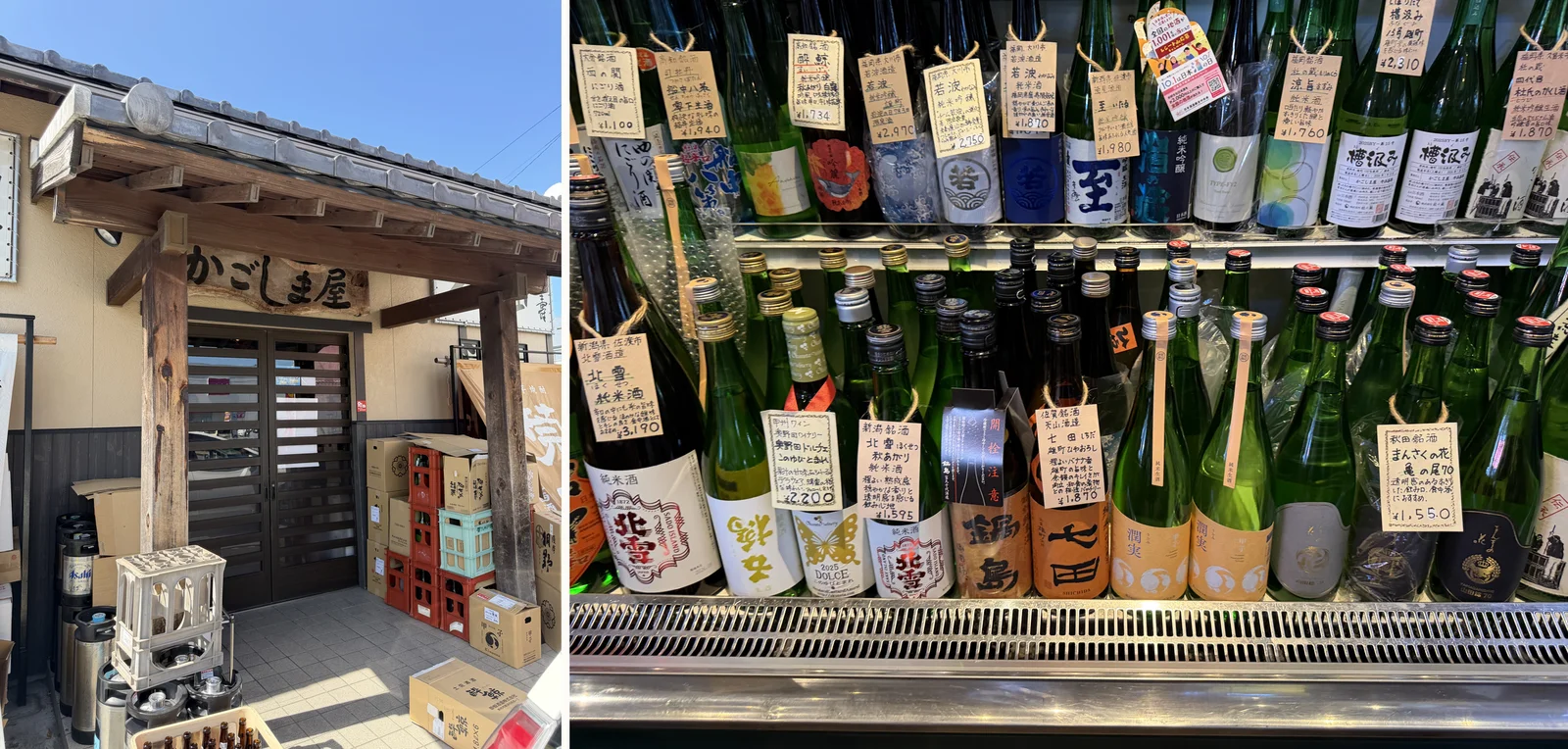
I bought this bottle on September 21, 2026, at Kagoshima-ya, a sake shop in Onga Town, in northern Fukuoka Prefecture.
From the outside, it looks like a traditional neighborhood liquor store, its front covered in brewery banners and a large sign offering nationwide shipping. Inside, the refrigerated cases hold a wide range of regional sake from across Japan, each bottle tagged with a handwritten note.
The shop’s handwritten tag for this bottle mentioned a gentle banana-like aroma and a clean finish. I found both when I opened it.
On the shelf, a bottle of Nabeshima sat right beside it — two Saga breweries side by side in the refrigerator case.
Where in Japan
Tenzan Shuzo is in Ogi City, Saga Prefecture, in the northwestern part of Kyushu.
The rice comes from much farther away. According to the brewery’s product page, the Omachi in this sake is grown in Okayama Prefecture, on Honshu.
The back label carries the line “a fine sake from a land of clear water and fireflies” — a reference to the brewery’s surroundings.
Ogi is in the same prefecture as Kashima, where Fukuchiyo Shuzo brews Nabeshima.
I bought the bottle across the prefectural border at Kagoshima-ya in Onga Town, Fukuoka Prefecture.
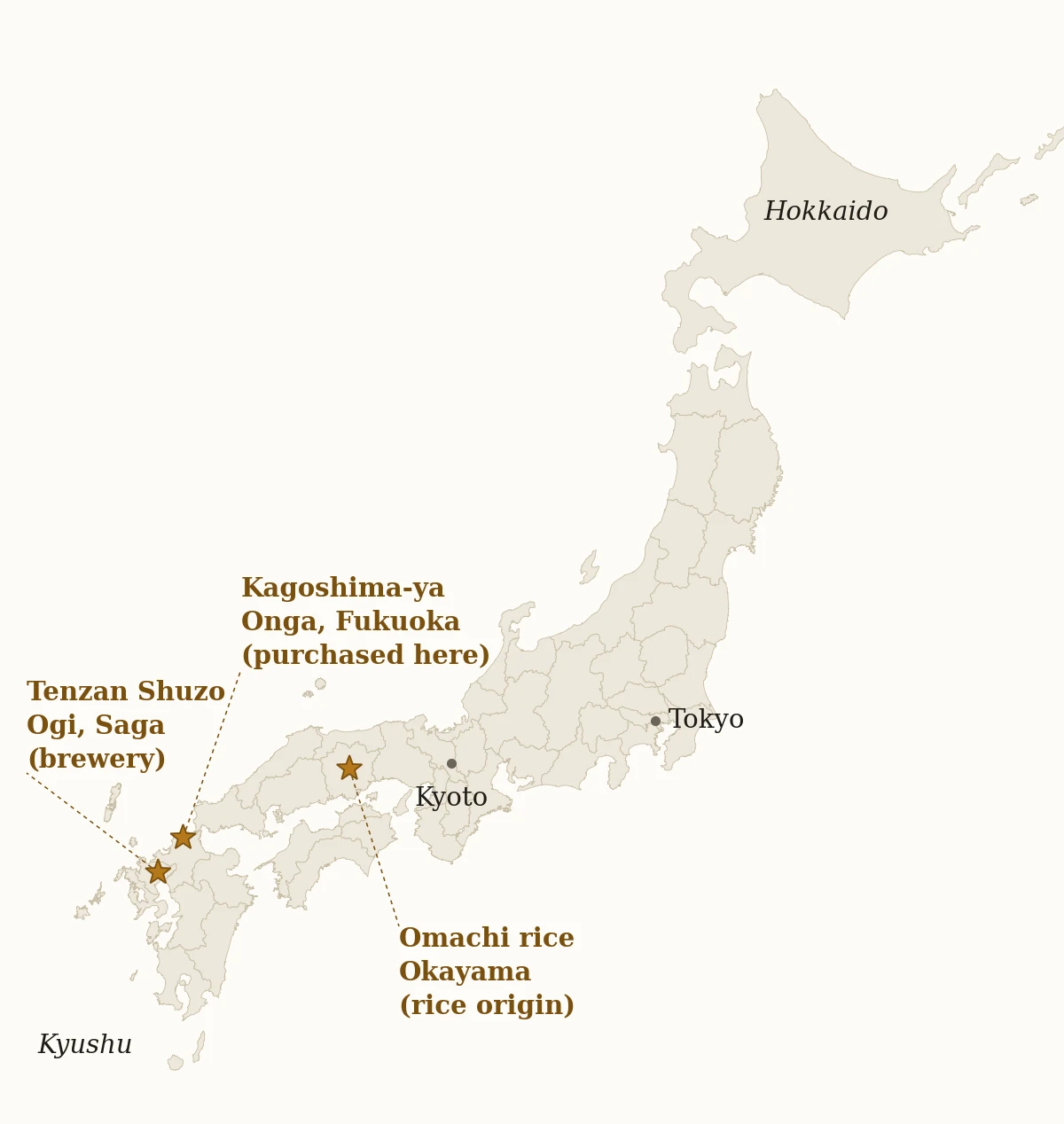
Where in Japan: Shichida is brewed by Tenzan Shuzo in Ogi, Saga Prefecture, using Omachi rice from Okayama. I bought this bottle at Kagoshima-ya in Onga, Fukuoka Prefecture.
How I Tasted It
I opened the bottle at home on September 26, 2026.
It had been kept in the refrigerator and was opened immediately after taking it out, so it was well chilled at the first pour.
I drank it mainly from my Bizen ware guinomi — unglazed, wood-fired stoneware — and also poured some into a clear glass cup to see the color, which the earthy interior of the Bizen cup hides.
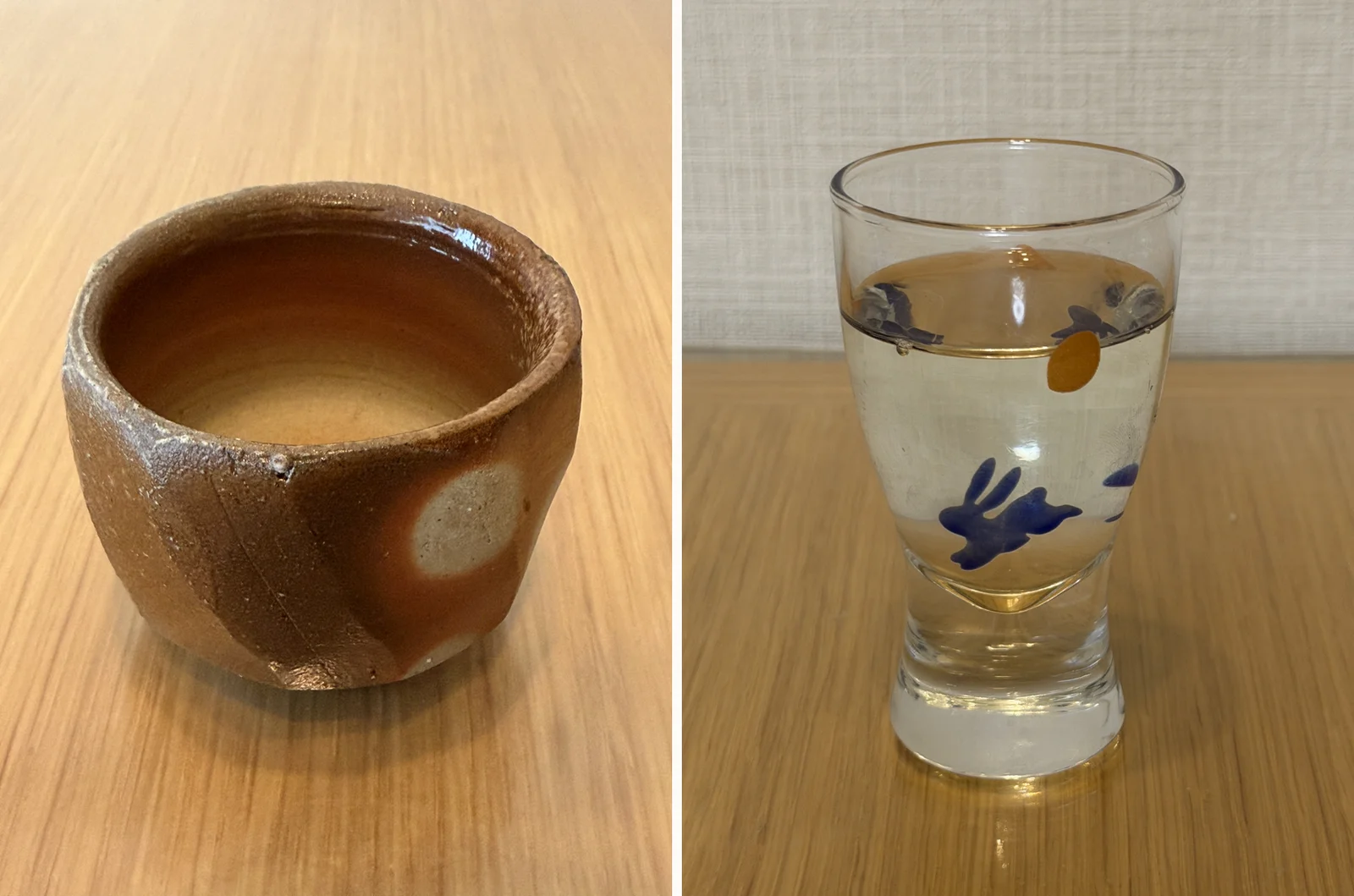
There was also an accidental geographical connection. The sake is from Saga, but according to the brewery’s product page, its Omachi rice was grown in Okayama — the same prefecture as Bizen ware. I had not planned it, but a Saga sake made from Okayama rice, poured into an Okayama cup, felt like a fitting way to open it.
You can read more about the cup itself in my Bizen ware guinomi review.
I tasted it straight from the refrigerator, again after ten to fifteen minutes, again as it warmed further, alongside sashimi, and once more the following day.
First Impression
Given the 75% polishing ratio, I expected something more rustic.
Instead, it was easy to drink and simply good. The aroma leaned sweet, but on the palate umami and acidity were present from the start. There was sweetness, but nothing cloying.
Tasting Notes
Appearance
Clear, with a very faint pale yellow tint — close to colorless, but not quite. Light in viscosity.
The brewery describes this sake as entirely unfiltered, which may account for the faint color.
Aroma
Moderate in intensity. Tropical and banana-like fruit, a general sweetness, and rice underneath. Alcohol on the nose was low to moderate.
Sweetness
Medium to moderately pronounced. Noticeable, but always balanced by acidity and umami.
Looking back, I think part of that impression came from the aroma. The banana-like, sweet-leaning nose primes the palate to expect sweetness, and some retailers describe this sake as slightly dry. The sweetness I noticed may have been as much aromatic as it was actual.
Acidity
Medium to moderately pronounced. Present throughout, but never harsh.
Umami
Medium to moderately pronounced. The rice character is clear — consistent with the brewery’s decision to polish the Omachi only lightly.
Bitterness
Medium. A thread of bitterness appears toward the end. For me, it added depth.
Body
Medium.
Going in, the 75% polishing ratio had me expecting something heavy. My first sip, straight from the refrigerator, felt lighter than that — and the clean, decisive finish probably reinforced the impression, since nothing lingered long enough to weigh the palate down.
On reflection, I think the body sits closer to the middle than that first sip suggested. Retailers often describe this sake as rich and full, and it may show more weight at the warmer temperatures the brewery recommends.
Texture
Essentially still, with almost no perceptible gas. The alcohol presence is moderate — at 17%, it is noticeable, though never aggressive.
Finish
Short to medium. Acidity, umami, bitterness, some fruit, and a touch of alcohol remain together briefly, and then fade relatively cleanly. The elements leave as one rather than one by one.
How Temperature Changed the Sake
This sake changed less with temperature than most I have tasted recently.
Straight from the refrigerator, acidity and umami led, with sweetness slightly held back and the aroma relatively quiet.
After ten to fifteen minutes, sweetness and aroma both opened up a little. Acidity and umami stayed where they were.
As it warmed further, the profile held steady. Nothing tipped out of balance.
The overall impression stayed the same across all three stages. This is a consistent bottle rather than one that transforms in the glass.
One caveat: I did not try it warm. The brewery’s product page recommends serving it lightly chilled at around 15–20°C, or warmed to around 38–42°C. My tasting started well below that range, straight from the refrigerator, so I have only seen the cooler side of this sake.
And the Next Day
The following day, there was no major change — but the acidity, umami, and sweetness felt even more unified than on the first night. If anything, the sake had settled further into itself.
With Food: Sashimi
I drank Shichida alongside sashimi, and it paired well.
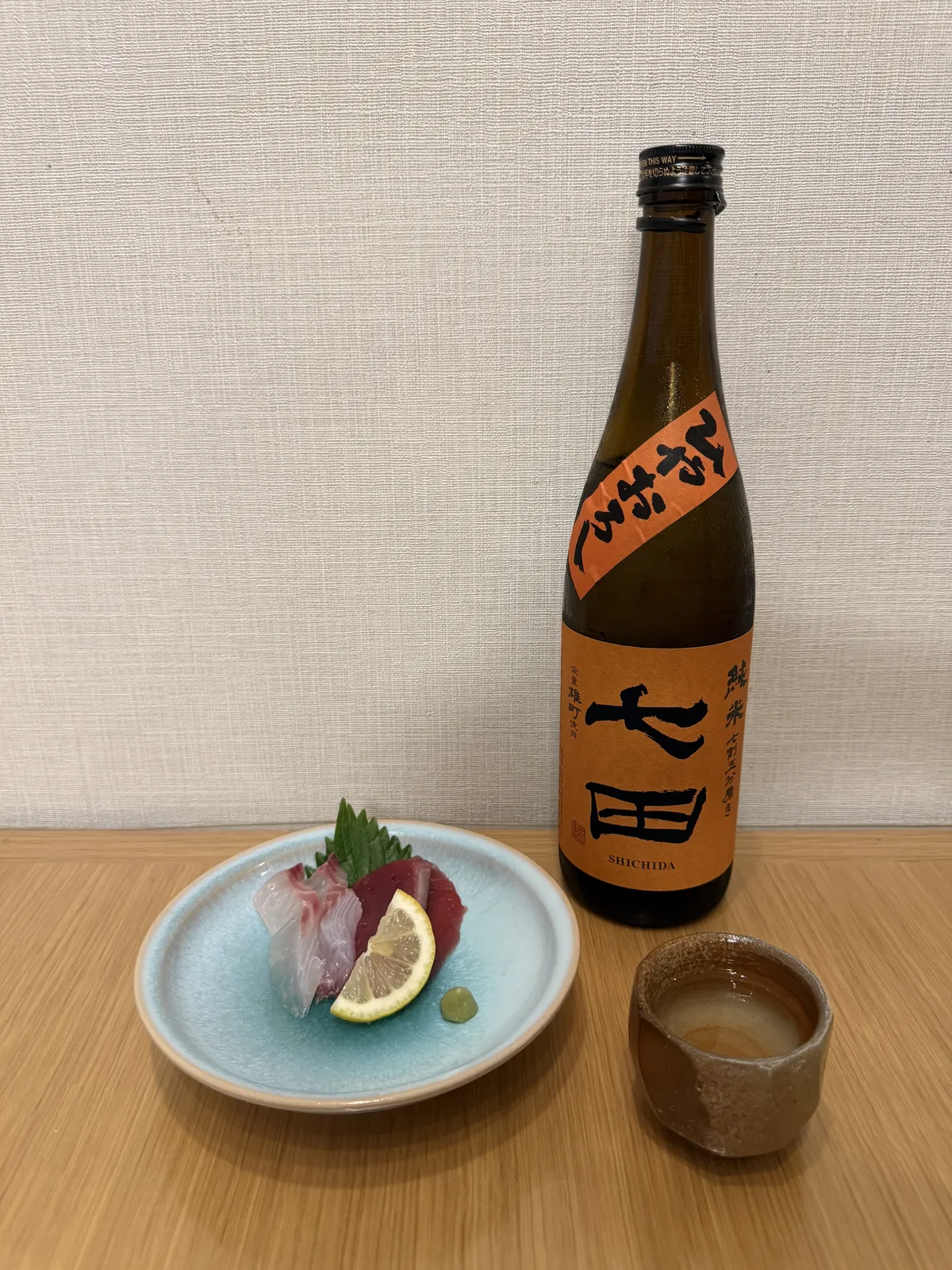
The sake’s umami and acidity met the fish without overwhelming it, and the clean finish kept each bite distinct. It sat easily at the table — a sake that seems built to be drunk with a meal rather than analyzed on its own, though it works on its own too.
Approachability: 3 / 5
I rate Shichida Junmai Omachi Hiyaoroshi 3 out of 5 on my approachability scale.
A low score on this scale reflects difficulty for a newcomer, not quality.
What makes it easy: the body feels lighter than its 75% polishing ratio might suggest, the acidity is not sharp, there is noticeable sweetness, and it is very easy to pair with food.
What holds it back: after the sweetness, umami, and acidity comes a thread of bitterness, and at 17% the alcohol is perceptible. Neither is harsh, but both may stand out more to someone who is still getting used to sake.
Personally, I enjoy that bitterness — it gives the sake depth and keeps it from feeling simple. But I can see why someone new to sake might notice it before they notice anything else.
It lands at the same 3 / 5 as Nabeshima Summer Moon, another Saga sake. The reasons differ. Summer Moon held back with a quiet aroma and restrained sweetness. Shichida offers more aroma and sweetness, but asks a little more of the drinker through bitterness and alcohol.
See what Approachability means on this site for the full method behind this score.
A Note on Availability
Hiyaoroshi is a seasonal release. Bottles like this one appear in autumn and are usually gone by winter, so timing matters.
As of September 2026, I could not confirm a regular U.S. retail listing for this particular bottle.
Tenzan Shuzo produces other Shichida bottles through the year, and the brand is sometimes available through specialist importers outside Japan. For this specific seasonal release, however, availability outside Japan will be limited.
What you are more likely to find is a different bottle from the same brewery. At the time of writing, Palate Project (formerly Tippsy) lists several year-round Shichida bottles in the United States, including a junmai, a yamahai junmai, a junmai ginjo, and a junmai daiginjo. None of them is this Omachi hiyaoroshi, but they are a realistic way to get to know the brewery’s style.
If you’d like to explore Shichida or other Saga sake for yourself and you are in the United States, you can browse Japanese sake through Palate Project. My referral link may give you a 10% discount, and I may earn a commission if you make a purchase.
You can also use the discount code FRIEND-BZXDMXW for 10% off.
Final Thoughts
I expected a 75%-polished sake to feel heavy. It did not.
Shichida Junmai Omachi Hiyaoroshi carries a lot — sweetness, umami, acidity, a touch of bitterness, and 17% alcohol — and yet none of it lingers longer than it should. The flavors arrive together, stay together, and leave together.
That is what I will remember about this bottle: not how much flavor it has, but how cleanly it lets go.
A full-flavored sake with a decisive finish. Exactly what an autumn table needs.
Related Reading
- Bizen Ware Guinomi — the unglazed cup I drank this sake from
- Nabeshima Summer Moon — another Saga sake, also rated 3 / 5 for approachability
- Nabeshima Omachi vs Yamadanishiki — the same rice variety in a very different style
This article contains affiliate links. If you buy through one, I may earn a small commission at no extra cost to you. It never changes what I honestly think.Full disclosure here.
Sake is an alcoholic beverage. This article is intended for readers of legal drinking age in their country — please drink responsibly.