
Hyaku Moku Junmai Daiginjo Review | Apple-Like Aroma and Rich Umami from Kiku-Masamune in Kobe
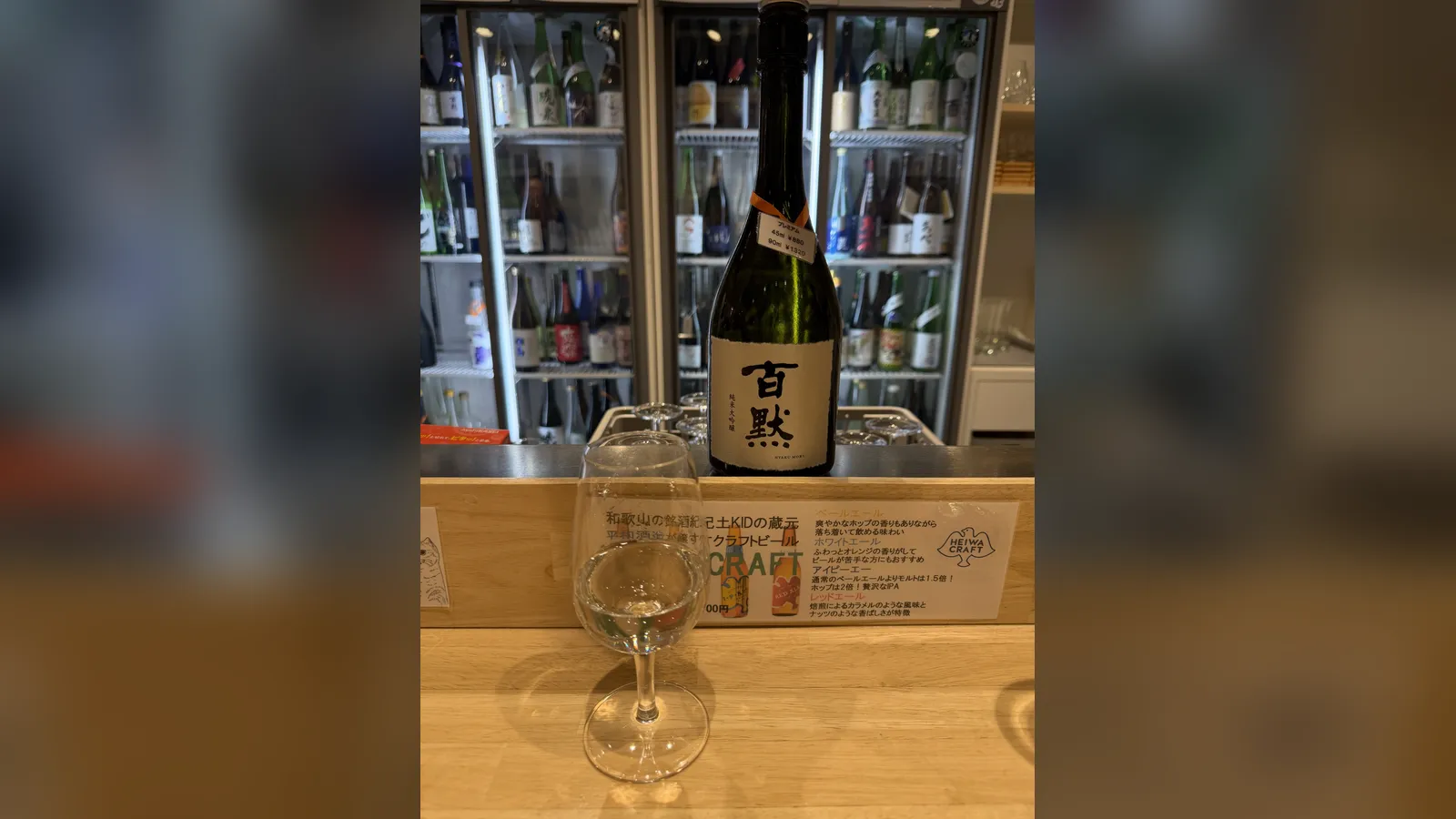
Table of Contents
This article contains affiliate links. If you buy through my Palate Project link or use my discount code, you may get 10% off as a first-time customer, and I may earn a small commission at no extra cost to you — it never changes what I recommend. Full disclosure.
Some sakes win you over with their aroma. Others win you over with their flavor. Hyaku Moku Junmai Daiginjo (百黙 純米大吟醸) did both—and neither one overshadowed the other.
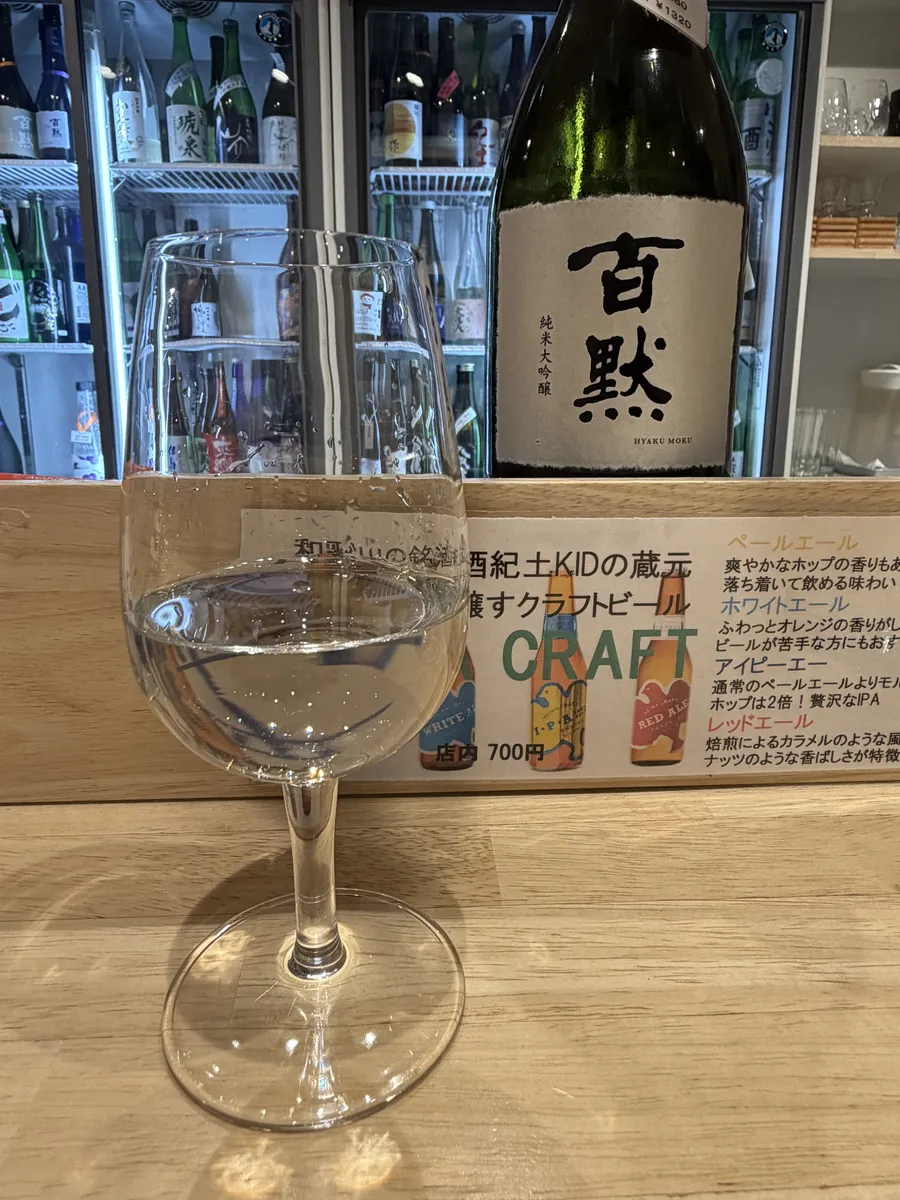
I tasted it by the glass at a sake bar in Sannomiya during a visit to Kobe. It comes from Kiku-Masamune, one of the historic breweries of Nada, but Hyaku Moku shows a very different side of this long-established producer: an apple-like fragrance, a rounded mix of sweetness and umami, and a finish that stays rich while ending with a gentle dry edge.
At a Glance
| Detail | Information |
|---|---|
| Name | Hyaku Moku Junmai Daiginjo (百黙 純米大吟醸) |
| Brewery | Kiku-Masamune Sake Brewing Co., Mikage, Higashinada, Kobe (Nada), Hyogo Prefecture |
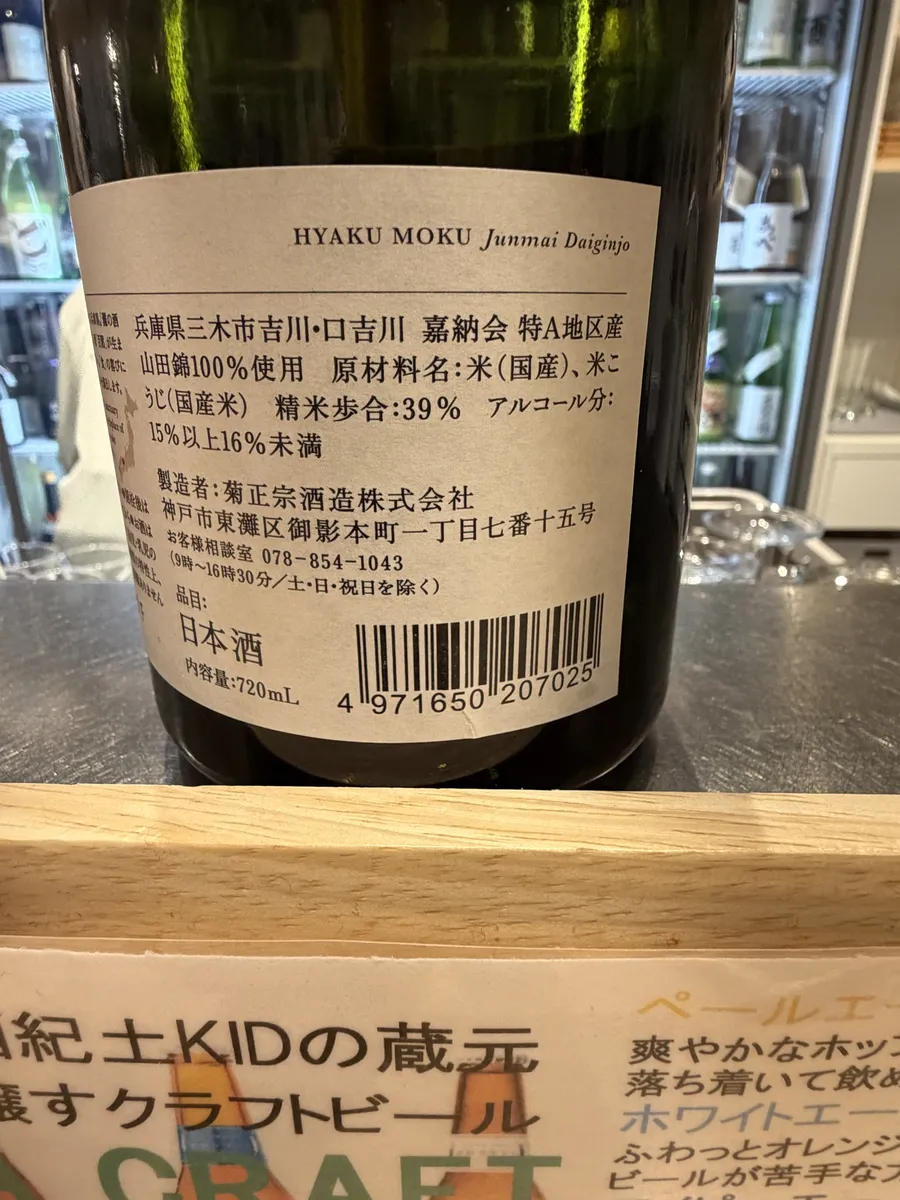
| Rice | 100% Yamadanishiki from the Toku-A (Special A) district of Yokawa and Kuchiyokawa, Miki City, Hyogo, grown by the Kanokai contract growers |
| Ingredients | Rice and rice koji |
| Rice polishing ratio | 39% |
| Alcohol | 15% to under 16% |
| Bottle size | 720 ml |
| How I tried it | By the glass in a stemmed glass, chilled, at a sake bar in Sannomiya, Kobe |
| Approachability | 4 / 5 |
Rice, ingredients, polishing ratio, and alcohol are from the bottle’s back label.
A 39% polishing ratio means more than 60% of each rice grain was polished away before brewing—comfortably beyond the 50% or less required for junmai daiginjo. For what these categories mean, see my Junmai vs Ginjo vs Daiginjo guide.
What Is Hyaku Moku?
Hyaku Moku is a premium brand from Kiku-Masamune, a Nada brewery with more than 360 years of history. According to the brewery, it was launched in April 2016 as Kiku-Masamune’s first new brand in about 130 years.
The brewery explains the difference this way: its main Kiku-Masamune label is a dry sake that brings out the flavor of food, while Hyaku Moku was developed to pair naturally with a wide range of cuisines—Japanese, French, Italian, and more.
In November 2026, Kiku-Masamune celebrated Hyaku Moku’s 10th anniversary with a special event in Kobe, featuring sake-and-food pairings and an early tasting of new Hyaku Moku sake ahead of its general release (official announcement). It was a timely reminder of how the brewery continues to develop Hyaku Moku beyond its traditional roots.
What the Name Means
The name combines the characters for “hundred” (百) and “silence” (黙). According to the brewery, it comes from the idea that a single remark from a person of few words is sharp, to the point, and leaves a lasting impression.
The Rice: Toku-A Yamadanishiki from Miki City
Hyaku Moku uses only Yamadanishiki from the Toku-A district of Yokawa and Kuchiyokawa in Miki City, Hyogo—one of the most highly regarded growing areas for Japan’s best-known sake rice. The rice is grown by the Kanokai, a group of contract farmers.
The relationship goes back a long way. On its official online shop, the brewery says its contract-growing arrangement with Yokawa began in 1891. The water is Miyamizu, the famous spring water of Nada that rises from the Rokko mountains.
The junmai daiginjo is the face of the brand. The same online shop also lists a junmai ginjo, a blended sake called Alt.3, a sparkling sake, and a premium bottling called FUTURE, while an unfiltered (muroka) version of the junmai daiginjo is sold only in stores in Hyogo.
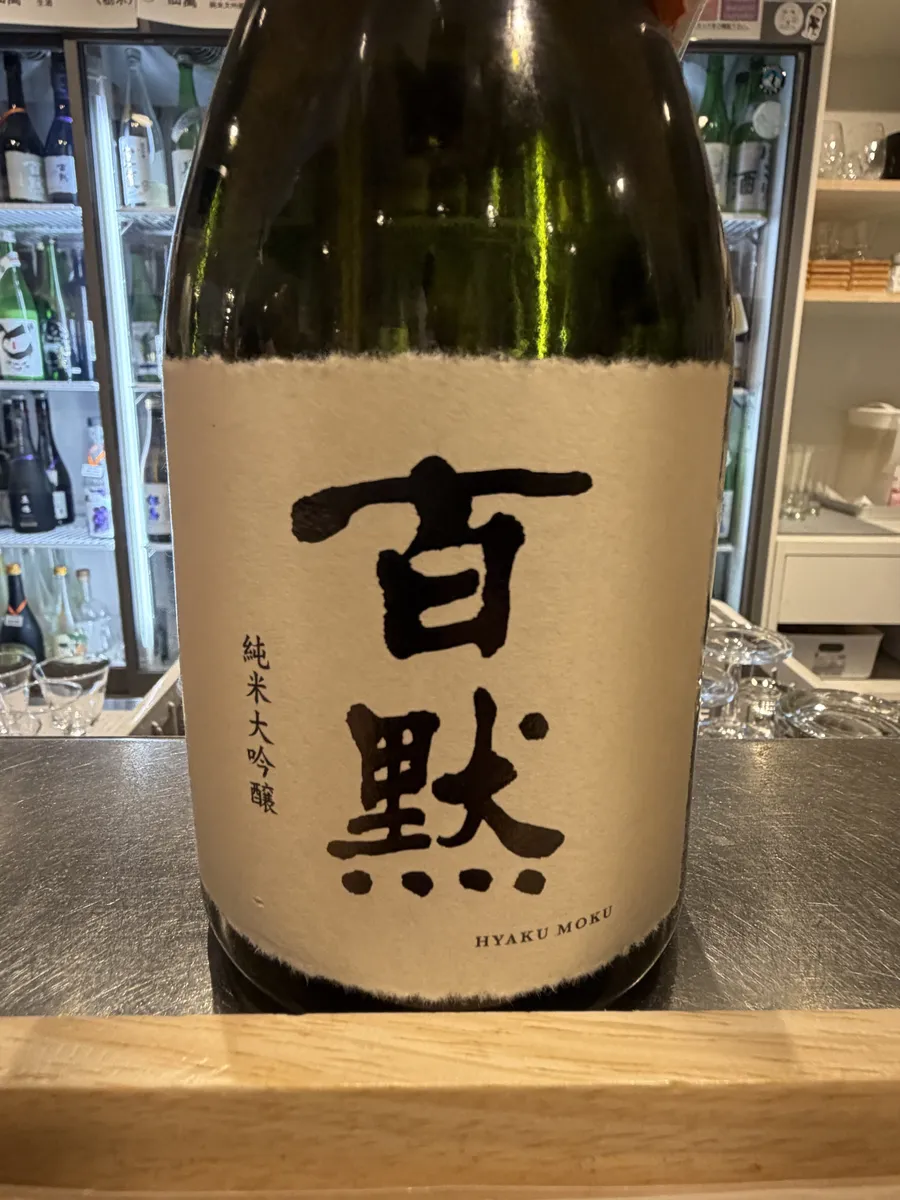
The bottle design is understated: two large brushstroke characters on a textured, cream-colored label. Striking without being elaborate, it stood out behind the bar.
Tasting Notes
I tasted it on its own, without food, to focus on the sake itself. I didn’t measure the serving temperature, so the notes about warming below describe what I noticed in the glass rather than a controlled comparison.
Appearance
Clear and nearly colorless.
Aroma — Apple and Rice That Open Up as It Warms
The aroma was expressive and clearly fruity. Apple came to mind first, with a fresh, slightly tart impression and a gentle rice-like sweetness underneath.
As the sake warmed naturally in the glass, the whole aroma became richer and more pronounced. It didn’t shift from one fruit to another; instead, the apple and the rice notes opened up together and stayed in harmony.
Palate — Sweetness and Umami Together
Sweetness was there from the first sip, arriving together with umami. It was noticeable but never too sweet.
The umami was one of the most distinctive things about this sake. It built alongside the sweetness and carried through the middle of the palate, giving the sake real depth. Acidity was also present—not standing apart, but woven into the flavor, adding freshness and keeping the richness in balance.
Body and Texture
Smooth, rounded, and relatively full-bodied. Junmai daiginjo is often associated with a light, delicate style, but this one had a satisfying sense of weight. Alcohol warmth was restrained, and nothing about it felt harsh or sharp.
Finish — Rich, Then Gently Dry
The finish was one of my favorite parts. Sweetness and umami lingered together with a little acidity and a faint bitterness, then faded gradually rather than stopping abruptly. At the very end, a gentle alcohol warmth and a restrained dry edge gave the sake definition—without making it aggressively dry.
My impressions lined up well with the brewery’s own description of this sake: a fruity aroma, refined sweetness that moves into lively acidity, and a pleasant bitterness that tightens the finish.
More Than an Aromatic Daiginjo
Before tasting, I expected a 39%-polished junmai daiginjo to be elegant and fairly light, with a refined fruity aroma. Hyaku Moku delivered that aroma, but the palate had far more depth and roundness than I expected. It is not just a sake with a beautiful nose—the flavor has an equally strong presence.
Approachability: 4 / 5
What makes it approachable:
- An apple-like aroma that is inviting and easy to recognize
- Rounded sweetness and a smooth texture
- Restrained alcohol warmth
- Acidity that keeps the richness fresh
What to keep in mind:
- It is fairly full-bodied and umami-rich. If you are looking for a light, crisp, delicate junmai daiginjo, it may feel richer than you expect.
- The faint bitterness and dry edge on the finish add complexity, but drinkers who want only soft sweetness may notice them.
I’d recommend it to newcomers who enjoy aromatic drinks with some depth, rather than to someone who wants only a crisp, refreshing style.
This score reflects how approachable the sake may be for beginners, not its overall quality. How I Score Approachability
Availability
In Japan, Kiku-Masamune’s official online shop lists Hyaku Moku Junmai Daiginjo at ¥3,643 including tax (720 ml, gift box). The brewery’s tasting suggestion is to serve it with delicate starters—such as a sea bream carpaccio with herbs and shiso—or as a toast.
Looking for it in the U.S.? Palate Project lists Hyakumoku Junmai Daiginjo (720 ml, $68), described as made with “Designation A” Yamadanishiki polished to 39%—the same specifications as the bottle I tasted. However, it was out of stock when I checked; the product page lets you sign up to be notified when it’s back. Palate Project also lists the brand’s junmai ginjo, which was also out of stock.
When shopping elsewhere, check that the label says Junmai Daiginjo and 39%, so you don’t confuse it with the junmai ginjo (59%) or the unfiltered version.
First-time Palate Project customers can use the discount code FRIEND-8V4N8XZ for 10% off one-time purchases (not subscriptions). The code can be used once per customer and can’t be combined with other discount codes.
This is an affiliate link. If you buy through it, I may earn a commission at no extra cost to you.
Where in Japan
- Kiku-Masamune Sake Brewing Co., Mikage, Kobe — The brewery behind Hyaku Moku, in Nada’s Mikage district. Hyaku Moku website
- Yokawa and Kuchiyokawa, Miki City, Hyogo — Where the Yamadanishiki is grown.
- Asano Nihonshuten Sannomiya, Kobe — Where I tried it.
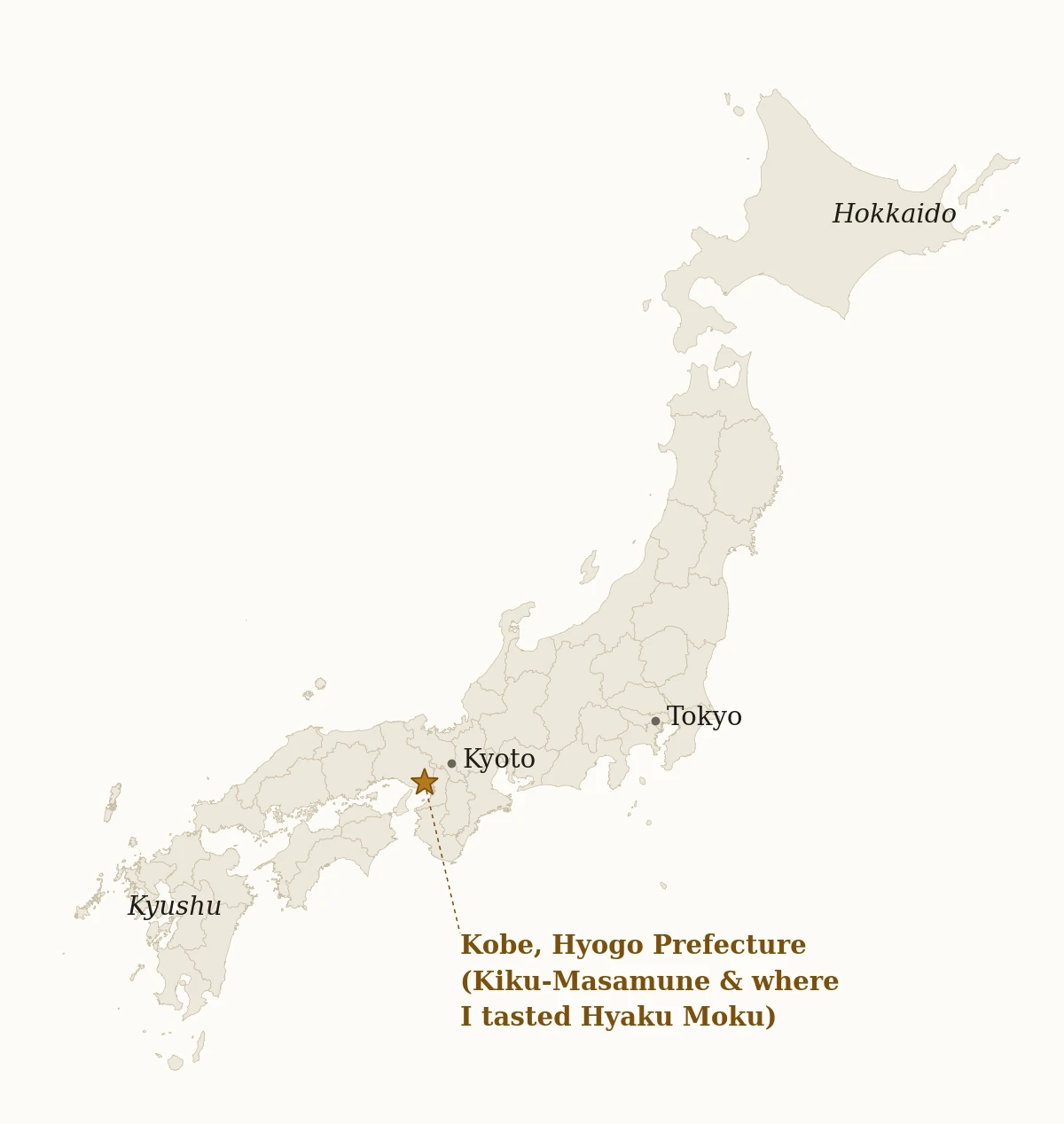
Kobe is in Hyogo Prefecture, in the Kansai region of western Japan. The map below zooms in on Hyogo.
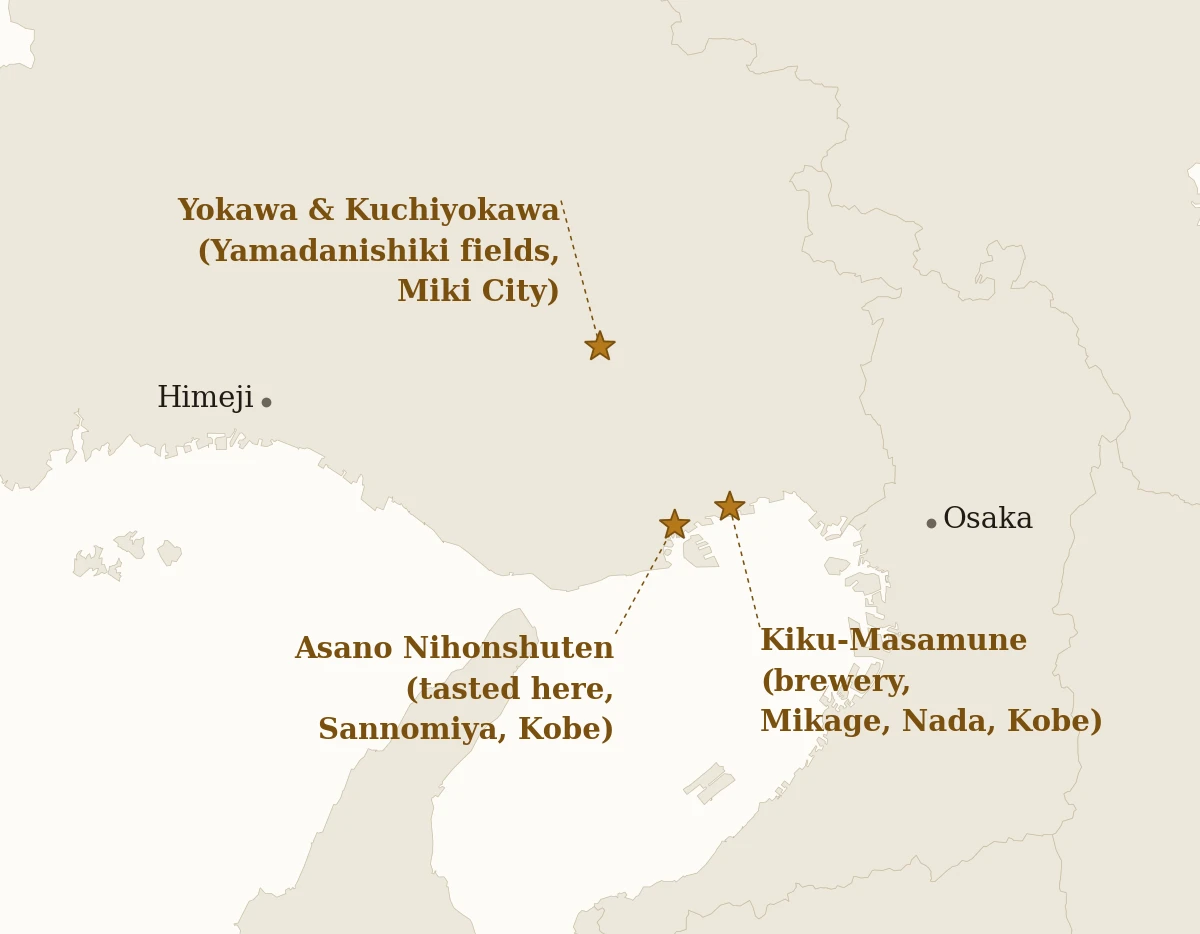
Where in Japan: Kobe, Hyogo Prefecture, in the Kansai region. Brewed by Kiku-Masamune in Kobe’s Nada district with Yamadanishiki grown in Miki City, Hyogo.
Nada, along the Kobe coast, is one of Japan’s most famous sake-brewing areas, known for its brewing tradition and its Miyamizu water. Kobe is an easy train ride from Osaka, which makes it a convenient base for exploring Hyogo sake.
Where I Tried It
I tasted Hyaku Moku at Asano Nihonshuten Sannomiya, the same standing bar and bottle shop where I tried Tatsuriki Junmai Daiginjo Komenosasayaki. Rows of refrigerated cases line the walls, and you can order sake by the glass at the counter. (The shop’s address and hours are in that article.)
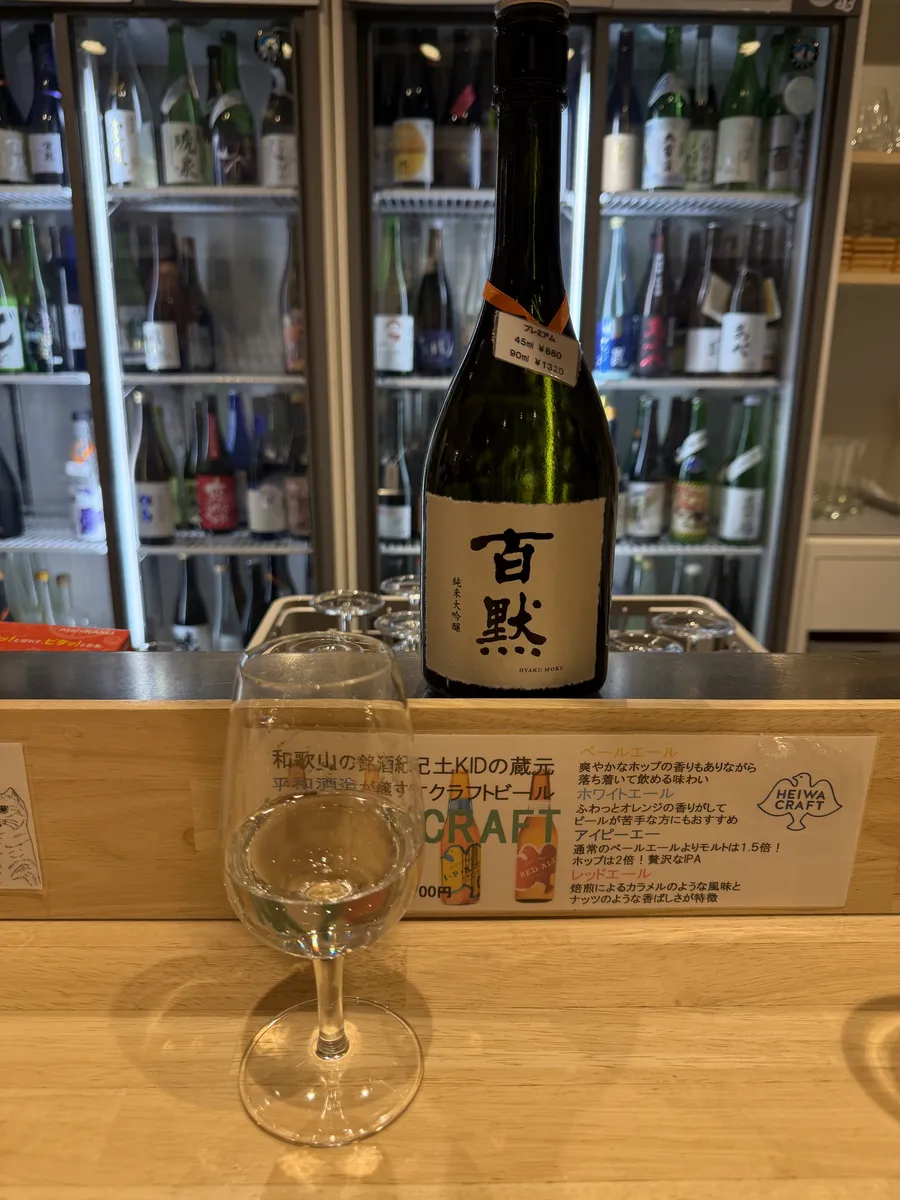
At the time of my visit, Hyaku Moku was offered as a “premium” pour in two sizes:
- 45 ml — ¥880
- 90 ml — ¥1,320
Ordering a glass instead of a full bottle was a great way to try another Kobe sake during the same trip. Selections and prices change, so check before visiting.
Final Thoughts
What I enjoyed most about Hyaku Moku Junmai Daiginjo was the balance between its expressive, apple-like aroma and its rich, rounded palate. The sweetness and umami built together, the aroma grew as the sake warmed, and the finish combined lingering richness with a subtle bitterness and a gentle dry edge.
For a brand from one of Kobe’s most historic breweries, it offered an interesting mix of tradition and contemporary elegance—and, fittingly for its name, it made its point without needing to be loud.
My verdict: An apple-scented junmai daiginjo with more umami and body than its 39% polishing ratio might suggest—aromatic and satisfying in equal measure.
Approachability: 4 / 5
It’s a bottle I’d happily return to whenever I want a junmai daiginjo that offers both aromatic expression and real depth of flavor.
This review is based on one glass served at a bar. Flavor impressions are personal, and other bottles may differ. Please enjoy sake responsibly.
Related Reading
- Tatsuriki Junmai Daiginjo Komenosasayaki Review — another Toku-A Yamadanishiki junmai daiginjo, tasted at the same bar in Kobe
- Junmai vs Ginjo vs Daiginjo — understanding sake classifications and rice polishing
- Senkin Modern Review|Kumamoto Homashi Rice and the Story of Tabimai — a sake with an interesting rice story and a different balance of sweetness, acidity, and umami
This article contains affiliate links. If you buy through one, I may earn a small commission at no extra cost to you. It never changes what I honestly think.Full disclosure here.
Sake is an alcoholic beverage. This article is intended for readers of legal drinking age in their country — please drink responsibly.