
Senkin Modern Review|Kumamoto Homashi Rice and the Story of Tabimai
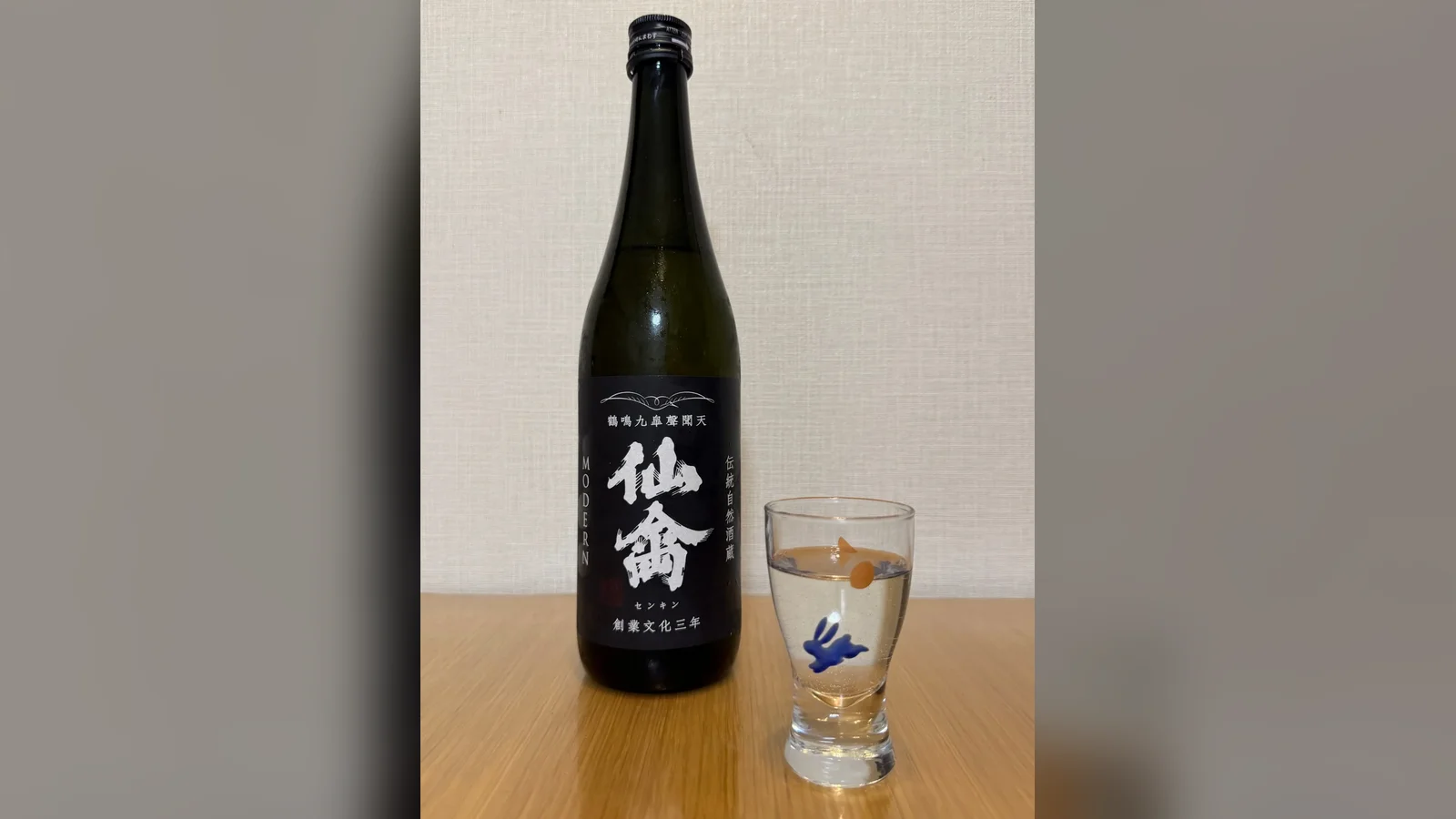
Table of Contents
- What Is Senkin Modern?
- The Story Behind Tabimai: Rice That Has Traveled
- Where I Bought It
- How I Tasted It
- Tasting Notes
- How Temperature Changed the Sake
- A Different Cup: Kutani Ware Sakazuki
- Food Pairing: Yakitori
- How Does It Compare?
- Approachability: 4 / 5
- Can You Buy Senkin Modern in the United States?
- Final Thoughts
- Related Reading
This article contains affiliate links. If you buy through my Palate Project link or use my discount code, you may receive a discount, and I may earn a small commission at no extra cost to you — it never changes what I recommend. Full disclosure.
My first sip of Senkin Modern reminded me of Senkin Senko-Hanabi.
It was light in texture and gently sweet, with a hint of Japanese pear, a gentle prickle of gas, soft yogurt-like lactic notes, and enough umami to keep it interesting. My first tasting note was simply umai — delicious.
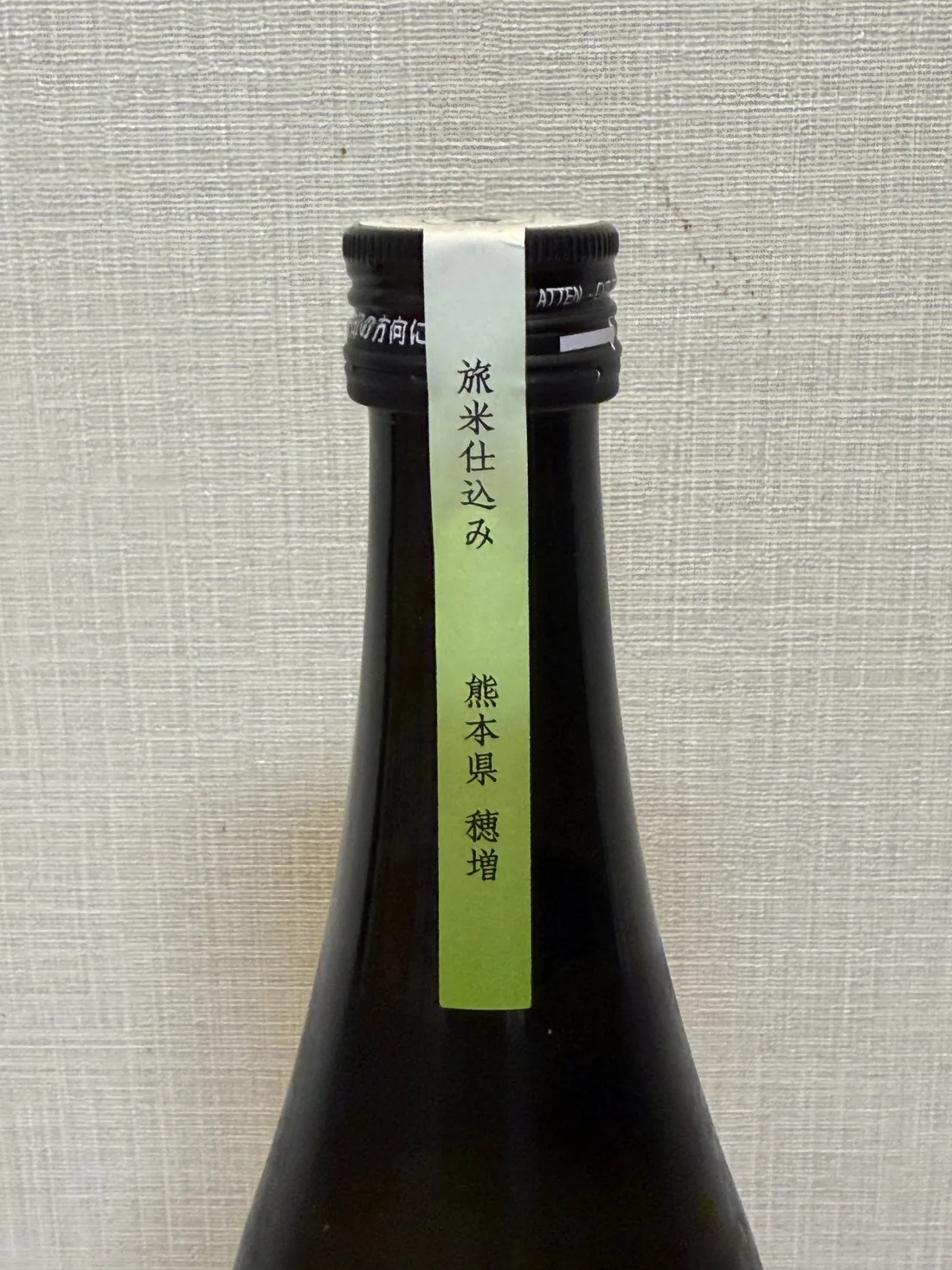
What made this bottle stand out, though, was the rice behind it. The neck label reads Tabimai Shikomi, “brewed with rice that has traveled,” and that rice came from Kumamoto, the prefecture where I live.
What Is Senkin Modern?
Senkin is a sake brewery in Sakura City, Tochigi Prefecture, north of Tokyo.
Its Edo-gaeri, or “Return to Edo,” philosophy looks back at traditional brewing methods and reinterprets them for contemporary sake. I covered that philosophy in more detail in my Senko-Hanabi review.
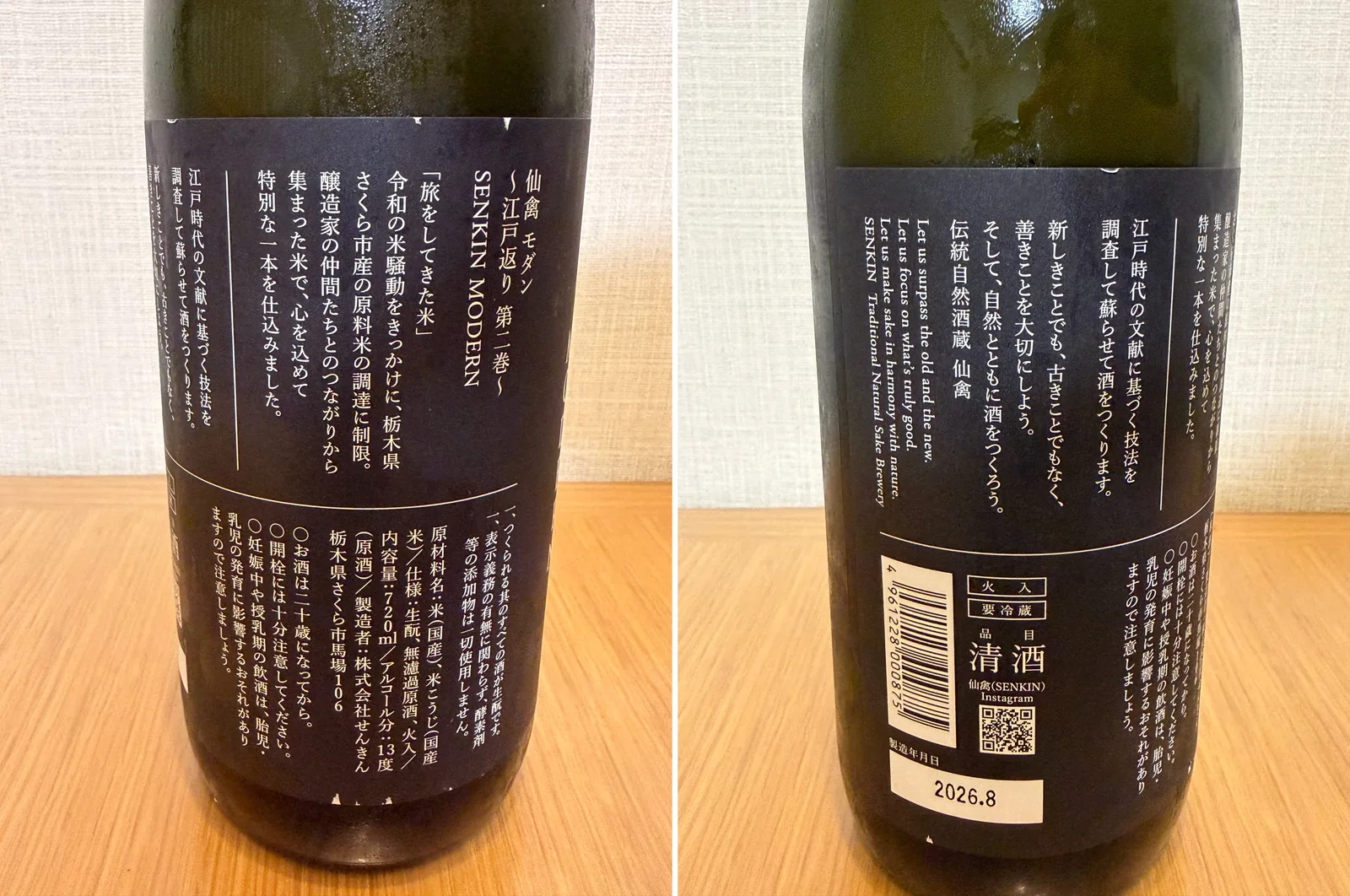
According to the back label, Senkin studies brewing techniques recorded in Edo-period documents. It also states that every sake it makes is kimoto, and that it uses no enzyme agents or other additives, whether or not labeling rules would require them to be listed.
The label on my bottle reads Senkin Modern ~Edo-gaeri Vol. 2~. Japanese retailers, however, sell it as Senkin Tabimai Kumamoto Homashi (仙禽 旅米 熊本県 穂増), the first release in Senkin’s Tabimai series. If you are searching for this bottle, that retail name is the one to look for.
Brewing Details
| Item | Detail |
|---|---|
| Brewery | Senkin Co., Ltd. |
| Location | Sakura City, Tochigi Prefecture |
| Label name | Senkin Modern ~Edo-gaeri Vol. 2~ |
| Retail name | Senkin Tabimai Kumamoto Homashi |
| Rice | Homashi (Kumamoto Prefecture) and Yamadanishiki |
| Ingredients | Rice (domestic), rice koji (domestic rice) |
| Starter | Kimoto |
| Style | Unfiltered (muroka), undiluted (genshu), pasteurized |
| Alcohol | 13% |
| Volume | 720 ml |
| Production date | August 2026 |
| Storage | Keep refrigerated |
| Price | ¥2,500 (tax included) |
The bottle’s labels name only Homashi. Japanese retailers list Yamadanishiki as a second rice, without giving the proportions. The label does not state the polishing ratio or the yeast.
If terms like muroka and genshu are new to you, my guide to Muroka, Nama, and Genshu explains them.
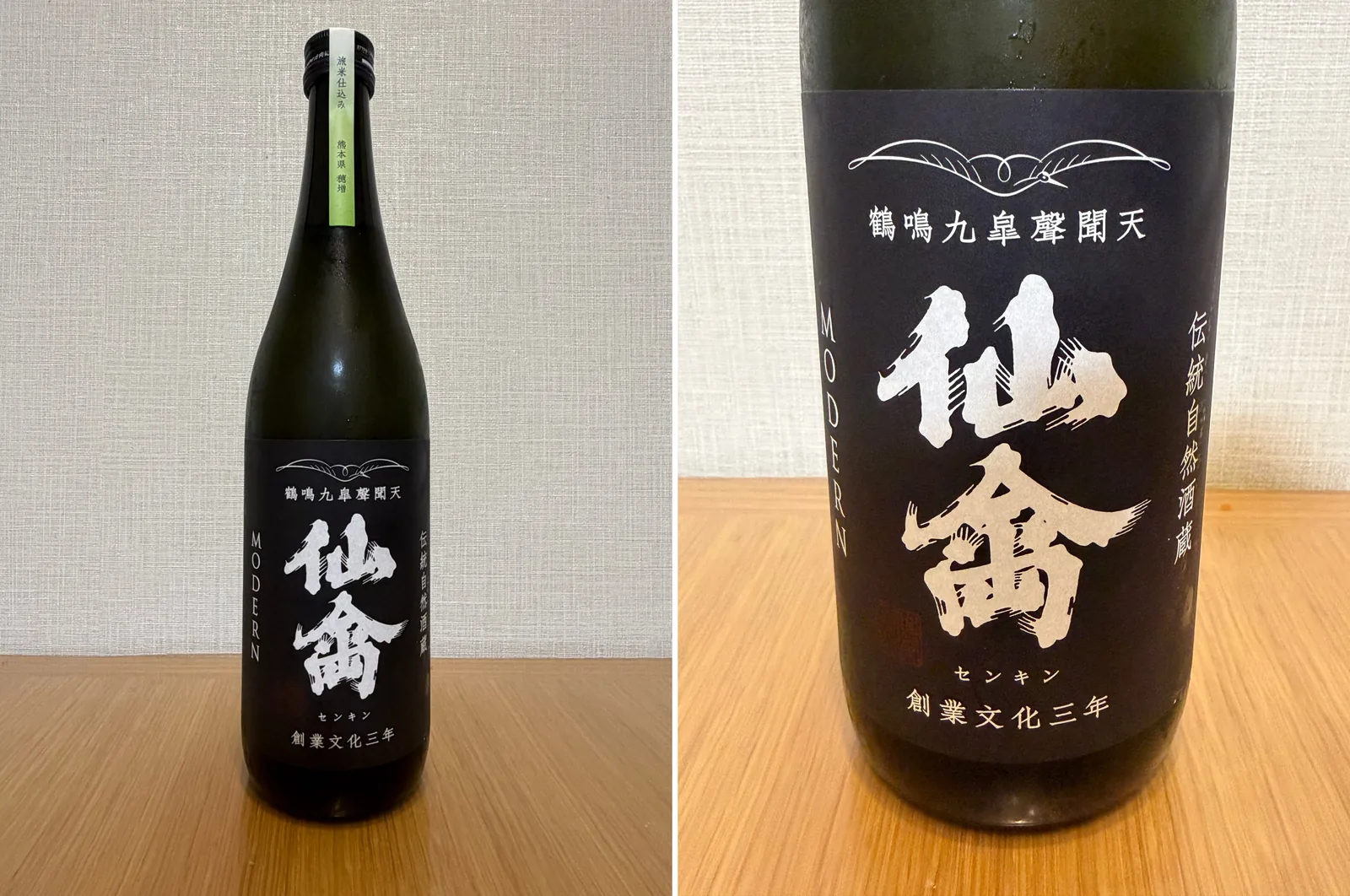
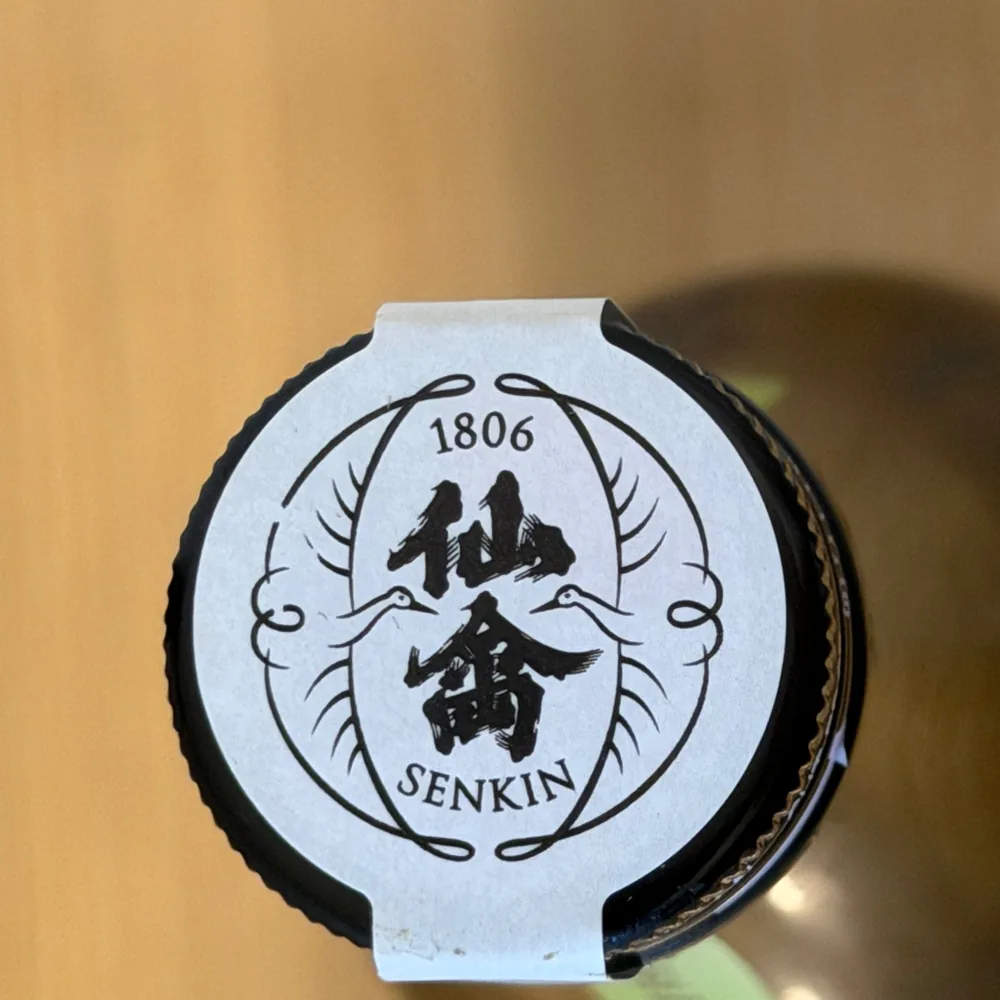
The black label is striking: white brush calligraphy, a thin crane motif across the top, and “MODERN” running vertically down the side. Along the bottom, it gives the brewery’s founding year as Bunka 3, and the cap seal shows the same year in Western form: 1806.
The Story Behind Tabimai: Rice That Has Traveled
The back label opens with the phrase “rice that has traveled.”
It explains that the Reiwa rice shortage restricted Senkin’s ability to source rice grown in Sakura City. Instead, the brewery brewed this bottle with rice gathered through its connections with fellow brewers.
The neck label names the rice for this edition: Homashi, from Kumamoto Prefecture.
According to information shared by Japanese sake retailers, Homashi is an heirloom rice variety historically cultivated in Kumamoto and other parts of Kyushu during the Edo period. It was once prized enough to be presented to the shogunate.
For a brewery whose philosophy looks back to Edo-period brewing, using this historic rice feels particularly fitting.
Retailers also report that Senkin received the rice from Hananoka Shuzo, the Kumamoto brewery behind Ubusuna. Senkin used a seven-stage brewing process (nanadan-jikomi), rather than the more common three-stage process, to bring out the character of Homashi without forcing the rice to dissolve excessively. (Sources: Imanaka Saketen, Hasegawa Saketen, in Japanese)
Seeing my home prefecture on a bottle from Tochigi immediately caught my attention. I like the idea of a brewery answering a shortage through its relationships with other producers, and of one Kumamoto brewery’s rice ending up in a Tochigi bottle. The name Tabimai gives that practical decision a warmer meaning.
Where I Bought It
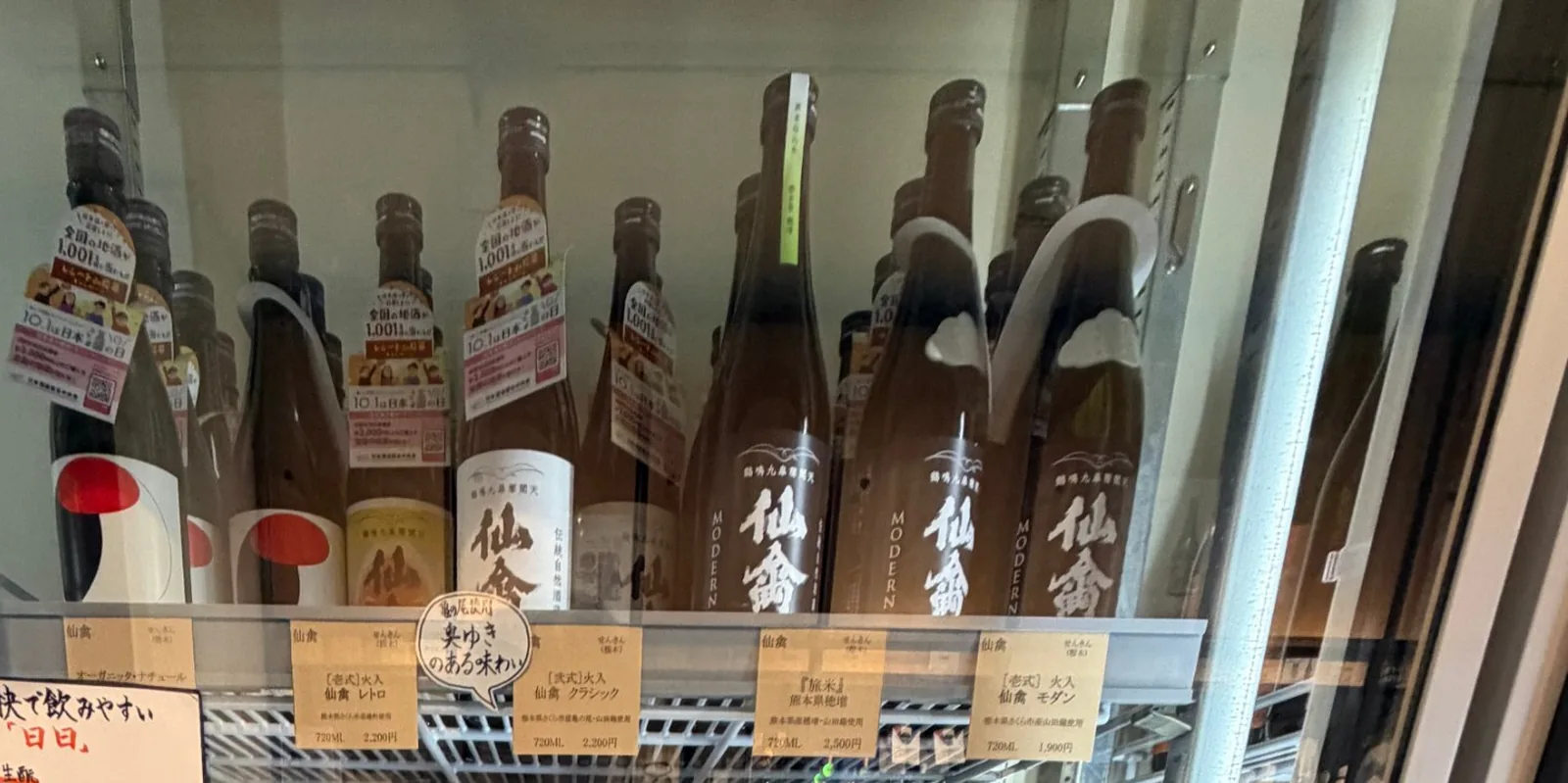
I bought this bottle on September 19, 2026, at Inomoto Saketen in Obiyama, Kumamoto City.
The shop’s refrigerated case had an entire shelf of Senkin, with handwritten tags identifying each bottle.
Where in Japan
This sake connects two places at opposite ends of the country. Senkin brews it in Sakura City, Tochigi Prefecture. The Homashi rice came from Kumamoto Prefecture, which is also where I found the bottle.
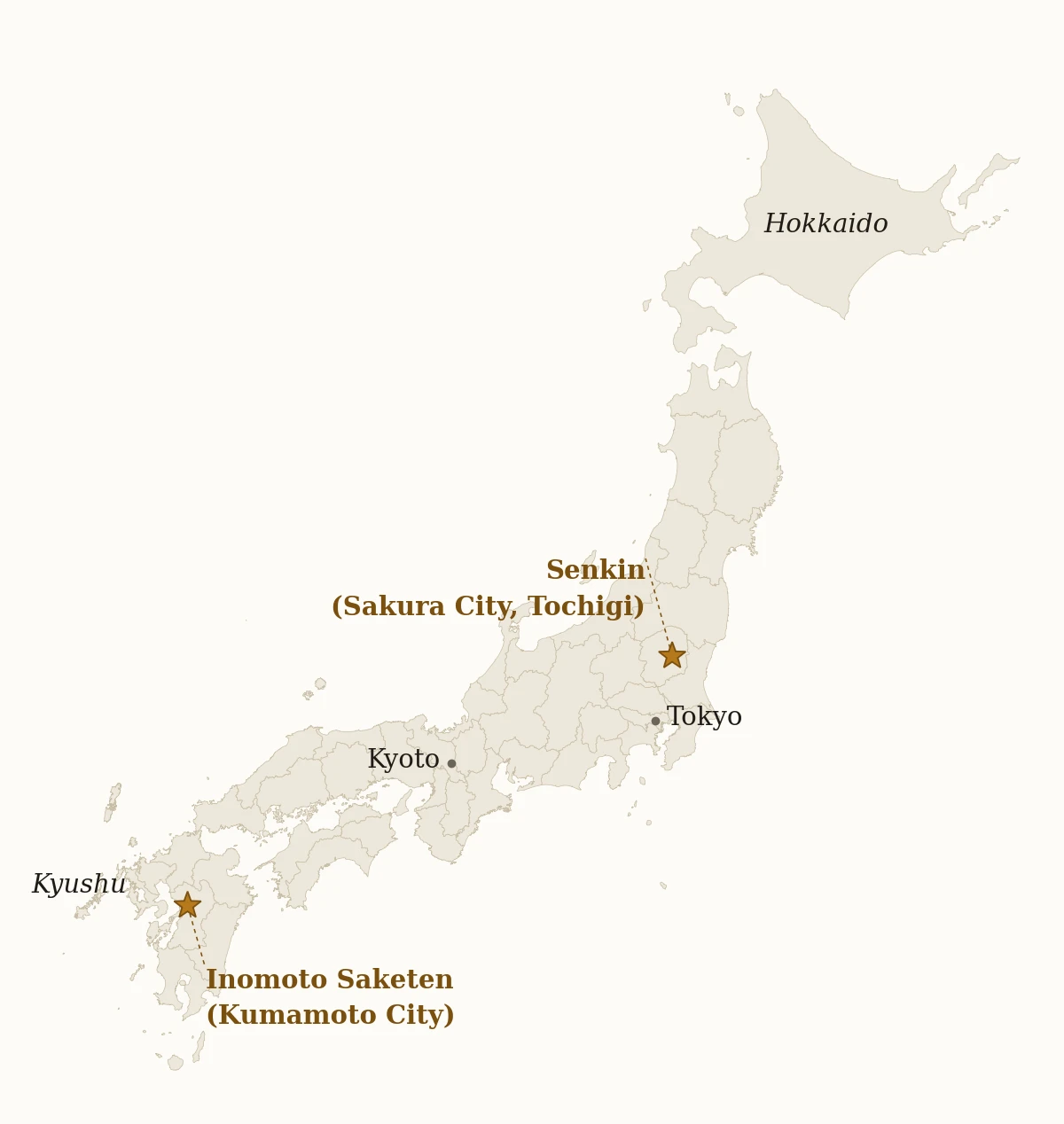
Where in Japan: Senkin brews Modern in Sakura City, Tochigi Prefecture. This edition uses Homashi rice from Kumamoto, and I bought the bottle at Inomoto Saketen in Kumamoto City.
How I Tasted It
I opened the bottle on October 9, 2026, about three weeks after buying it. It had been kept in the refrigerator, and I began tasting right after taking it out.
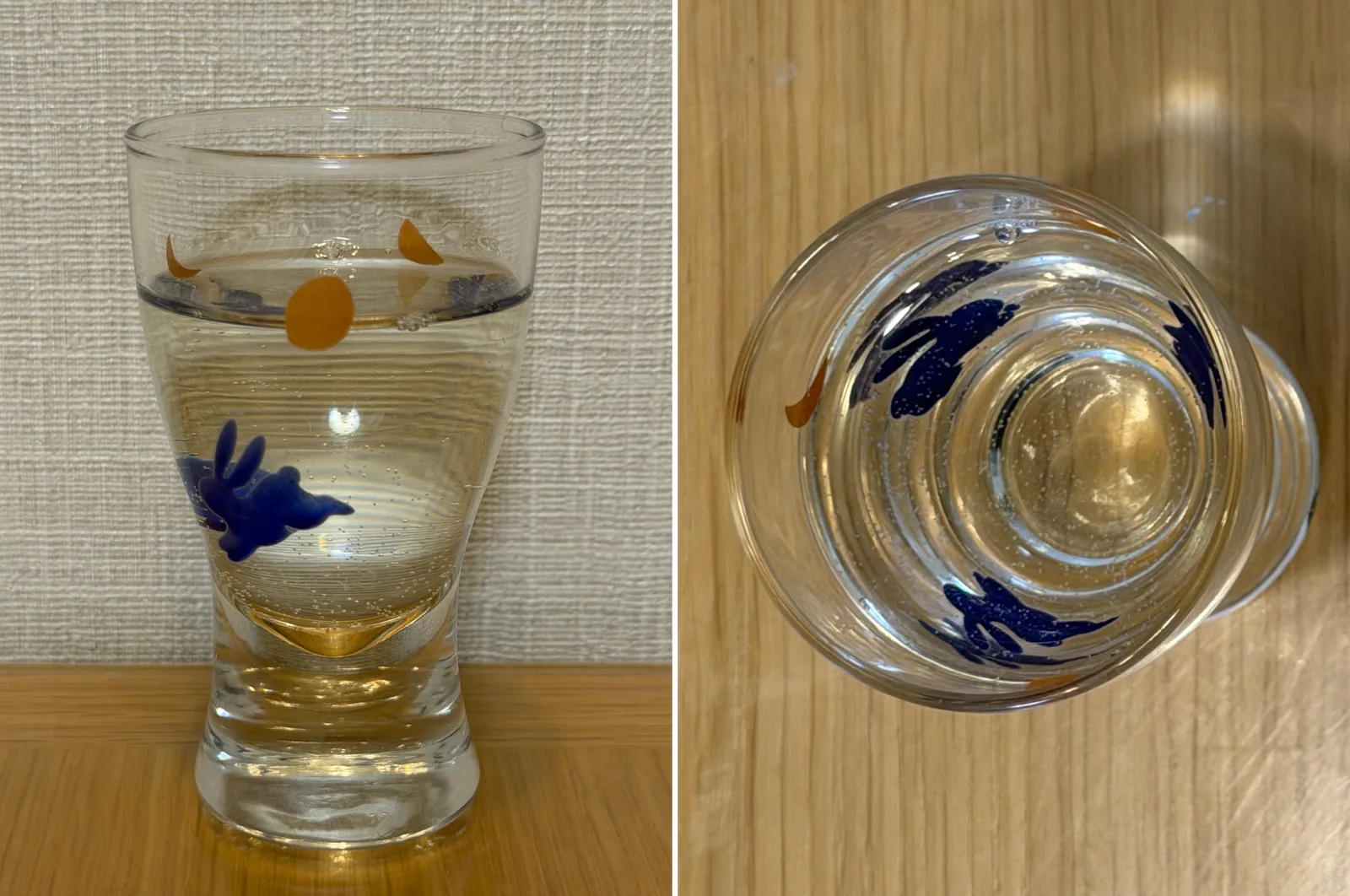
I used a small rabbit-motif glass guinomi, without food, and tasted it straight from the refrigerator, after ten to fifteen minutes, as it warmed further, and again the next day.
Tasting Notes
Appearance
Clear and colorless, with light viscosity.
Aroma
Moderate, with weak to moderate alcohol on the nose.
The fruit it brought to mind was not a Western pear, but a Japanese nashi — crisp, watery, and gently sweet. More specifically, it reminded me of the large nashi grown in Arao, in northwestern Kumamoto. Alongside it sat rice and soft, yogurt-like lactic notes, with neither fruit nor lactic character pushing the other aside.
Japanese retailers’ descriptions of the standard Modern often mention muscat or Western pear. In this Tabimai edition, made with a different rice, the fruit felt quieter and, to me, more Japanese.
Sweetness and Acidity
Sweetness was moderately pronounced and noticeable from the first sip, but never heavy. Acidity was medium to moderately pronounced, balancing the sweetness and keeping the sake fresh.
Umami and Bitterness
Umami was moderately pronounced, giving enough savory depth to keep the sweetness from feeling one-dimensional. Bitterness was low.
Body and Texture
Light to medium body, with little perceived alcohol warmth. The umami kept it from feeling thin, even at 13% alcohol.
A gentle prickle of gas kept the nashi-like fruit fresh, while the lactic character made the texture feel soft and round.
Finish
Medium in length. Acidity and umami lingered, with very little bitterness.
Taken together — fruit, gentle gas, and soft lactic notes, none of them overpowering the others — this was a big part of why the sake felt both delicious and easy to drink.
How Temperature Changed the Sake
Retailers describe this sake as a little closed right after opening, opening up over time. In my bottle, the changes were noticeable but small.
I did not measure the temperature. The stages below are based on time out of the refrigerator and in the glass.
| Stage | What I noticed |
|---|---|
| Straight from the refrigerator | Sweetness slightly restrained; acidity and umami already clear |
| After 10–15 minutes | Sweetness a little more noticeable; rounder mouthfeel |
| Later, as it warmed further | Gentle gas faded; aroma slightly more expressive |
| The next day | No major change |
It did round out a little in the glass, but I did not find a dramatic difference, even the following day. What impressed me more was the consistency: it was already enjoyable straight from the refrigerator, and a little time in the glass made it rounder without changing its character.
A Different Cup: Kutani Ware Sakazuki
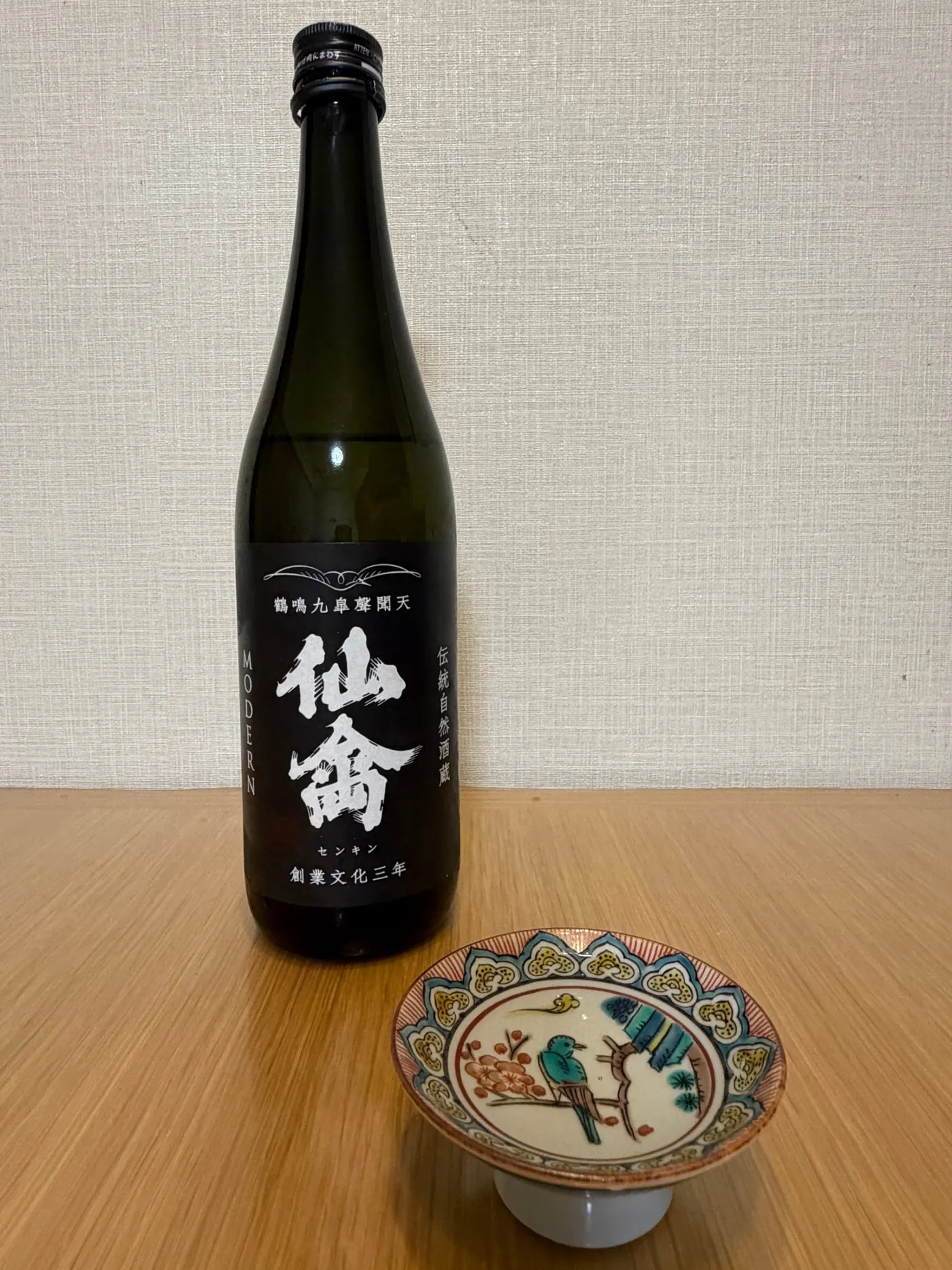
I also drank it from a shallow Kutani ware sakazuki I bought at the West Japan Ceramics Fair.
Compared with the deeper glass guinomi, the wide, relatively thin rim made the sake seem to spread across my tongue more quickly, with several flavor impressions arriving together. This was a subjective impression rather than a controlled comparison, but the difference was interesting.
I wrote more about this cup in my Kutani Ware Sakazuki review.
Food Pairing: Yakitori
I also tried it with yakitori, Japanese grilled chicken skewers.
The pairing was acceptable but unremarkable. The sake did not clash with the food, yet it did little to lift the grilled, savory flavors, and its sweetness felt a little more prominent than I wanted.
For me, this bottle works better on its own, or as a first glass before a meal, when its character can stand out without competition.
How Does It Compare?
The closest comparison is Senko-Hanabi. Both made a similarly positive first impression on me, with accessible sweetness, refreshing acidity, and satisfying umami.
Where they parted ways was with food. Senko-Hanabi turned out to be more versatile than I expected, working with everything from smoked pickles to cured mackerel. Modern, at least with yakitori, felt better on its own.
The circumstances were also different: I drank Senko-Hanabi at an izakaya from an already-opened bottle, while I opened this bottle of Modern at home and followed it over time. These are impressions from separate occasions, not a side-by-side tasting.
Another useful reference is Kagura Ruri. Ruri’s faint natural fizz gives it a freshness that may make it even more immediately appealing to someone completely new to sake. Senkin Modern, by contrast, pairs its gentle gas with nashi-like fruit and a softer lactic character. I enjoyed both, for slightly different reasons.
Approachability: 4 / 5
I rate this Senkin Modern 4 out of 5 on my approachability scale.
A low score on this scale reflects difficulty for a newcomer, not quality.
Its gentle sweetness, refreshing acidity, soft lactic character, and low alcohol warmth make it an inviting sake for beginners. The subtle nashi-like aroma adds interest without becoming overpowering.
What keeps it from scoring higher? Very little. Kagura Ruri, with the freshness of its faint natural fizz, may be an even easier introduction for someone completely new to sake.
That places this bottle alongside Senkin Senko-Hanabi at 4 / 5, just below Kagura Ruri at 4.5 / 5.
I would recommend it to anyone who enjoys gently sweet sake with a soft, refreshing character, particularly when drinking without food.
See what Approachability means on this site for the full method behind this score.
Can You Buy Senkin Modern in the United States?
This bottle is the Tabimai edition made with Kumamoto Homashi rice. As of October 2026, I have not confirmed whether this exact edition is available in the United States.
Senkin makes several styles of sake, so a product listed simply as “Senkin Modern” should not be assumed to be the same release. Please check the product description and edition before buying.
If you’d like to explore Senkin or other Tochigi sake for yourself and you are in the United States, you can browse Japanese sake through Palate Project (formerly Tippsy). My referral link may give you a 10% discount, and I may earn a commission if you make a purchase.
You can also use the discount code FRIEND-BZXDMXW for 10% off.
Final Thoughts
Senkin Modern was a pleasure to drink. Its quiet nashi-like fruit, gentle gas, and soft lactic character made it refreshing yet satisfying, even at a relatively low 13% alcohol.
It was enjoyable straight from the refrigerator and remained pleasantly balanced as it warmed. Yakitori was not its strongest pairing, but on its own, I would happily drink it again.
What stayed with me most was the story of Tabimai Shikomi. Rice from Kumamoto traveled to a brewery in Tochigi, became Senkin Modern, and eventually returned to Kumamoto as a bottle on a local shop shelf.
For me, that journey made an already enjoyable sake a little more memorable.
Related Reading
- Senkin Senko-Hanabi 2026 Review — another approachable Senkin with a memorable finish
- Kutani Ware Sakazuki Review — the shallow ceramic cup I also used with this sake
- Kagura Ruri — a fresh, gently fizzy alternative for sake beginners
- Muroka, Nama, and Genshu Explained — the terms you will see on labels like this one
This article contains affiliate links. If you buy through one, I may earn a small commission at no extra cost to you. It never changes what I honestly think.Full disclosure here.
Sake is an alcoholic beverage. This article is intended for readers of legal drinking age in their country — please drink responsibly.