
Tatsuriki Junmai Daiginjo Komenosasayaki Review | Pear-Like Aroma and Polished Umami in Kobe
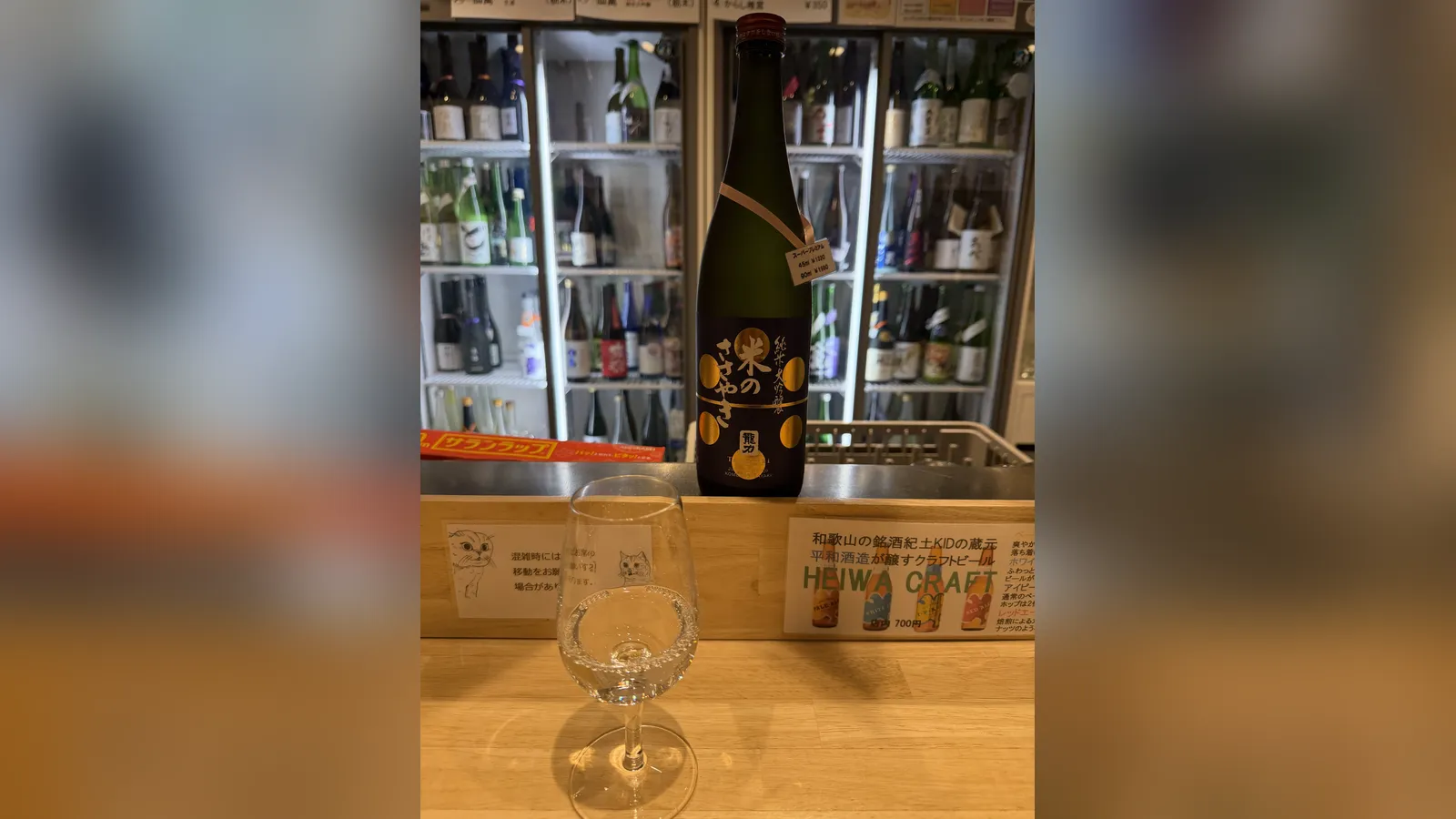
Table of Contents
This article contains affiliate links. If you buy through my Palate Project link or use my discount code, you may get 10% off as a first-time customer, and I may earn a small commission at no extra cost to you — it never changes what I recommend. Full disclosure.
Some premium sakes impress you with a big, perfumed aroma. This one impressed me with balance.
During a visit to Kobe, I stopped by Asano Nihonshuten Sannomiya, a standing bar and bottle shop where you can taste sake by the glass. One bottle caught my eye right away: Tatsuriki Junmai Daiginjo Komenosasayaki, from Honda Shoten in Himeji, Hyogo Prefecture.
It is made with 100% Yamada Nishiki from Hyogo’s Toku-A district—some of the most respected sake rice in Japan. In the glass, it was exactly the kind of sake I hope to find when traveling: refined and memorable, without feeling showy.
At a Glance
| Detail | Information |
|---|---|
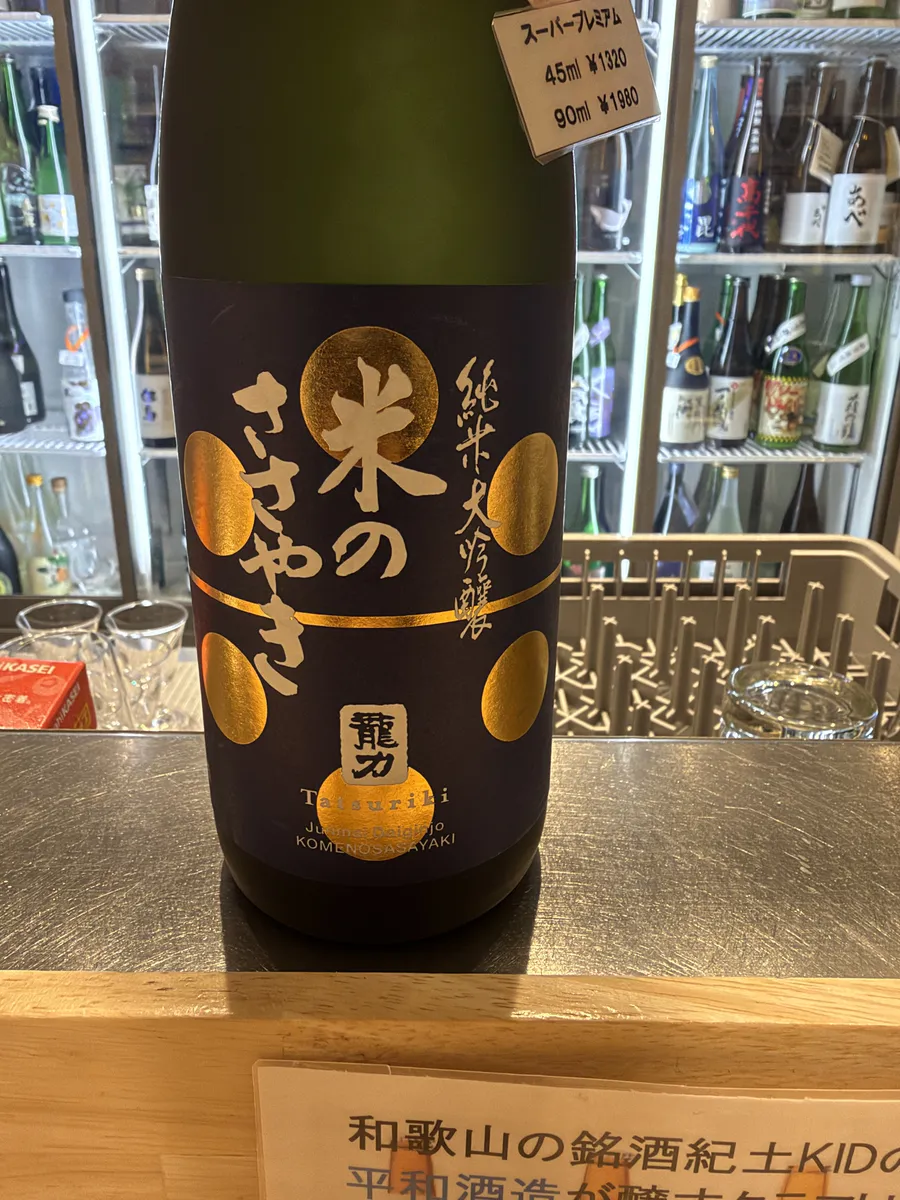
| Name | Tatsuriki Junmai Daiginjo Komenosasayaki (純米大吟醸 龍力 米のささやき) |
| Brewery | Honda Shoten, Himeji, Hyogo Prefecture |
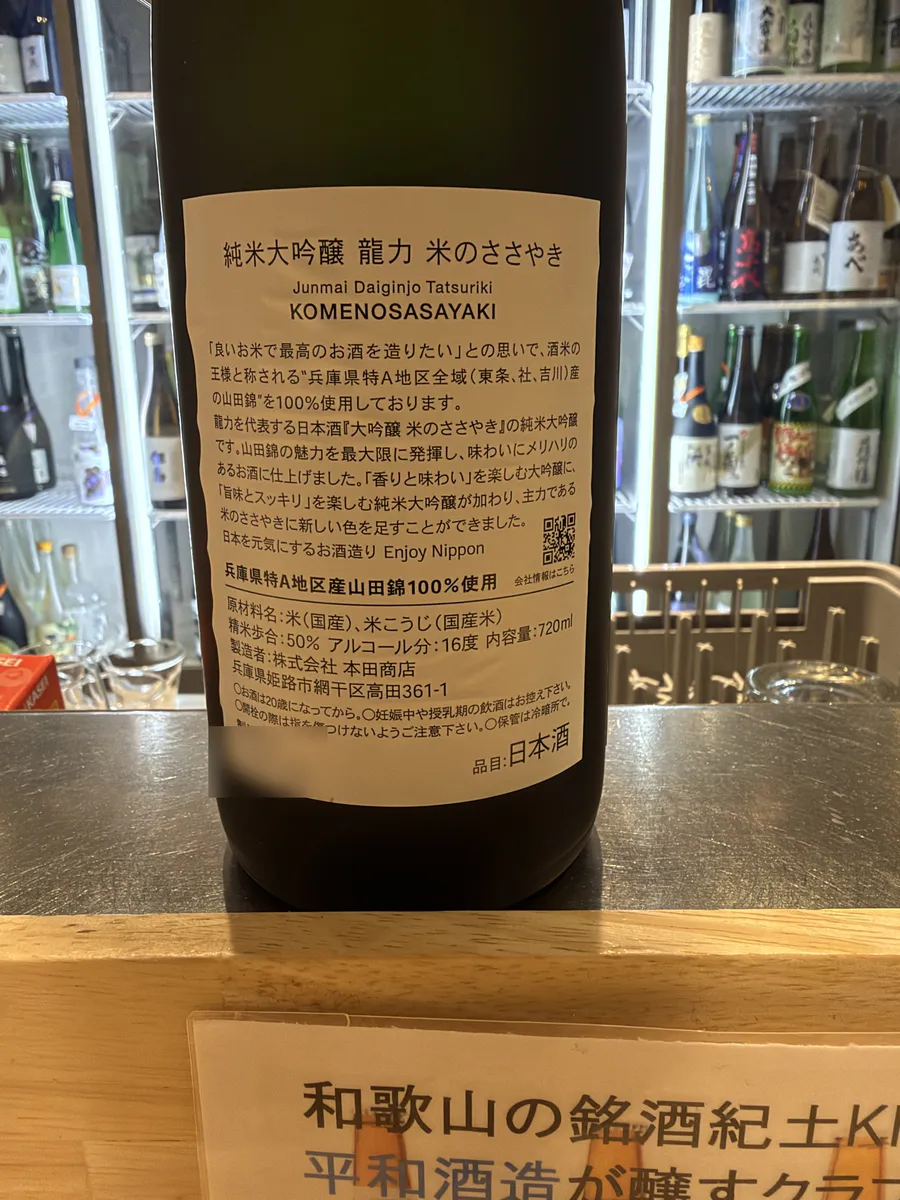
| Rice | 100% Yamada Nishiki from Hyogo’s Toku-A district (Tojo, Yashiro, and Yokawa) |
| Ingredients | Rice and rice koji |
| Rice polishing ratio | 50% |
| Alcohol | 16% |
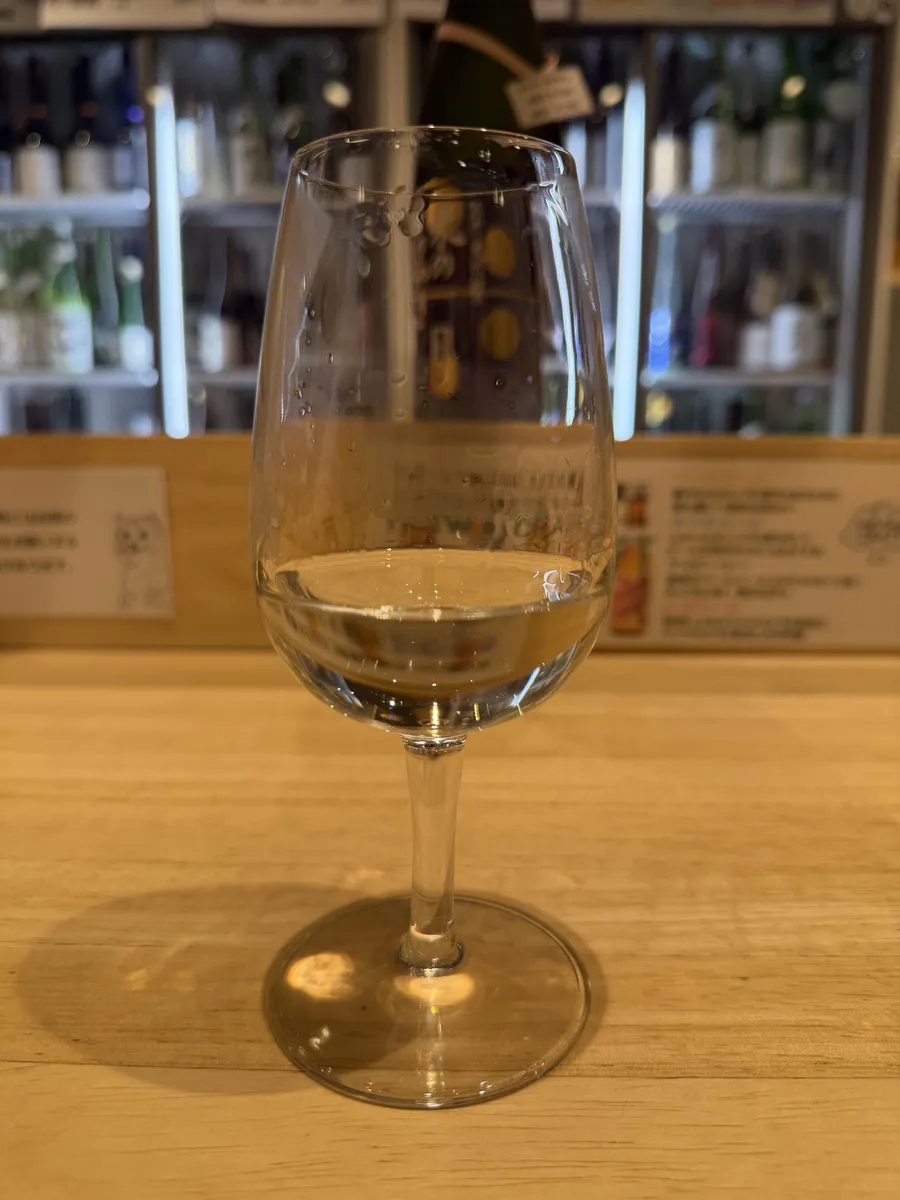
| How I tried it | By the glass, chilled (poured straight from the refrigerator), at a standing bar in Kobe |
| Approachability | 4.5 / 5 |
Rice, ingredients, polishing ratio, and alcohol are from the bottle’s back label. For what “junmai daiginjo” means, see Junmai vs Ginjo vs Daiginjo.
What Is Tatsuriki Komenosasayaki?
Komenosasayaki (米のささやき) means “whisper of the rice.” It is Tatsuriki’s flagship name. The original Daiginjo Komenosasayaki has been made since 1979, and the brewery says it helped create the culture of drinking sake chilled.
The junmai daiginjo I tasted is a newer member of the line, released in 2023. The brewery describes the difference simply: the daiginjo is about “aroma and flavor,” while the junmai daiginjo is about “umami and crispness” (旨味とスッキリ).
Honda Shoten is known for its focus on Hyogo-grown Yamada Nishiki. According to the brewery’s Komenosasayaki page, all of the Yamada Nishiki it uses comes from the Toku-A district, and it works directly with contracted growers there. The back label of this bottle says the rice comes from across the whole Toku-A district—Tojo, Yashiro, and Yokawa.
Tasting Notes
Aroma — Sweet Pear over Rice
The aroma was immediately attractive: a sweet, pear-like fruitiness that felt elegant rather than flashy. Underneath the fruit, there was a clear rice character that gave the nose depth.
It wasn’t fruity in the highly aromatic, modern style. The fruit and the rice seemed to support each other, which gave the whole impression a polished feel.
Palate — Sweetness That Turns into Umami
Sweetness arrived first, followed by a moderate acidity that kept the sake from feeling heavy. What stood out most was the umami: clearly present, but rounded and refined rather than dense or rough.
The body felt light and graceful, yet there was enough texture to make it feel substantial. My favorite part was how the flavor moved: the first sweetness didn’t simply fade—it gradually turned into umami, giving the sake a natural flow.
Finish — Calm, with a Touch of Bitterness
The finish was calm and polished. The umami lingered and faded slowly, leaving a gentle impression rather than a sharp cut. A slight bitterness appeared toward the end, but it was subtle and supportive.
Despite 16% alcohol, I noticed very little alcohol heat and no harsh edge. The sake stayed smooth and composed from start to finish.
As It Warmed in the Glass
As the sake sat in the glass and warmed slightly, I noticed the umami becoming more pronounced. The change made the sake feel richer without losing its light, elegant character.
If you enjoy sake that combines aroma with substance, this bottle has a lot to offer.
Approachability: 4.5 / 5
Although this is a premium sake, I found it very approachable in style.
What makes it approachable:
- A pear-like aroma that is inviting but not overwhelming
- Soft sweetness balanced by moderate acidity
- Very little alcohol heat, despite 16% ABV
- Umami that is clean rather than heavy
What to keep in mind:
- The slight bitterness at the end may not suit drinkers who want only soft sweetness
- If you want a big, perfumed aroma, the brewery positions the original daiginjo as the more aromatic version
Beginners can enjoy it for its fruit and softness, while more experienced drinkers will appreciate the layered umami and the graceful finish.
Availability
In Japan, the brewery lists the junmai daiginjo at 4,950 yen (720 ml, in a carton) and 11,000 yen (1.8 L), tax included, on its Komenosasayaki page.
It is a premium-priced bottle: by the glass at the bar where I tried it, it was listed as a “super premium” pour (see the shop section below for the serving sizes and prices).
Want to try Komenosasayaki in the U.S.? Palate Project doesn’t list the junmai daiginjo I tasted, but it carries Tatsuriki Kome no Sasayaki, the original daiginjo of the same line (17% alcohol). The brewery describes the daiginjo as the more aroma-focused version, so expect a different balance from the bottle I’ve described here. I haven’t tasted the daiginjo myself.
First-time Palate Project customers can use the discount code FRIEND-8V4N8XZ for 10% off one-time purchases (not subscriptions). The code can be used once per customer and can’t be combined with other discount codes.
This is an affiliate link. If you buy through it, I may earn a commission at no extra cost to you.
If you can’t find either, look for a junmai daiginjo made with Hyogo Yamada Nishiki and described as umami-forward rather than highly aromatic.
Where in Japan
- Honda Shoten, Himeji, Hyogo Prefecture — The brewery behind Tatsuriki. Official website
- Asano Nihonshuten Sannomiya, Kobe — Where I tried it.
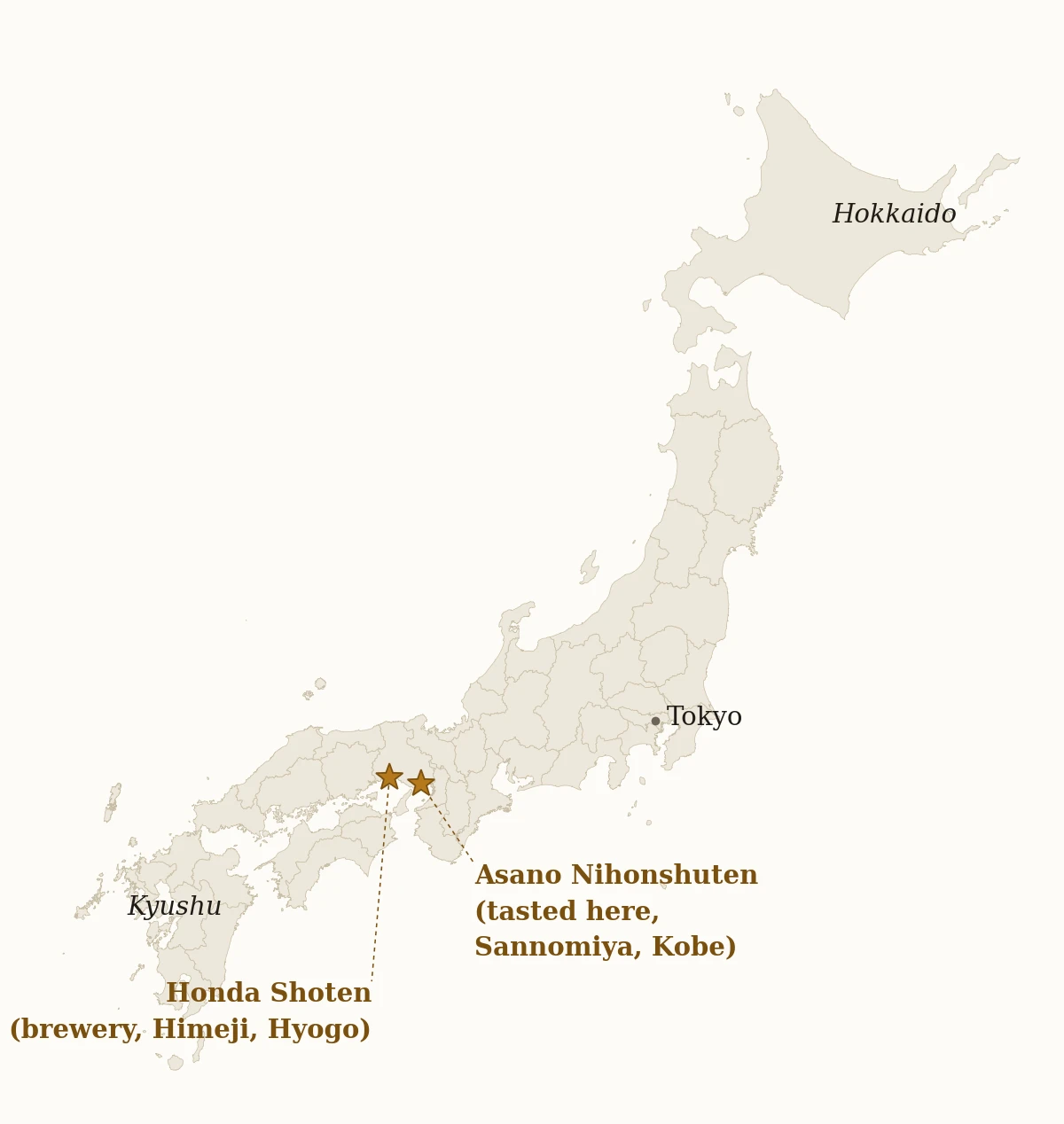
Hyogo is a special place in the sake world: it is home to the Toku-A district, the most famous growing area for Yamada Nishiki. Kobe makes an easy base for exploring Hyogo sake, and Himeji is a short train ride to the west.
Where I Tried It — Asano Nihonshuten Sannomiya
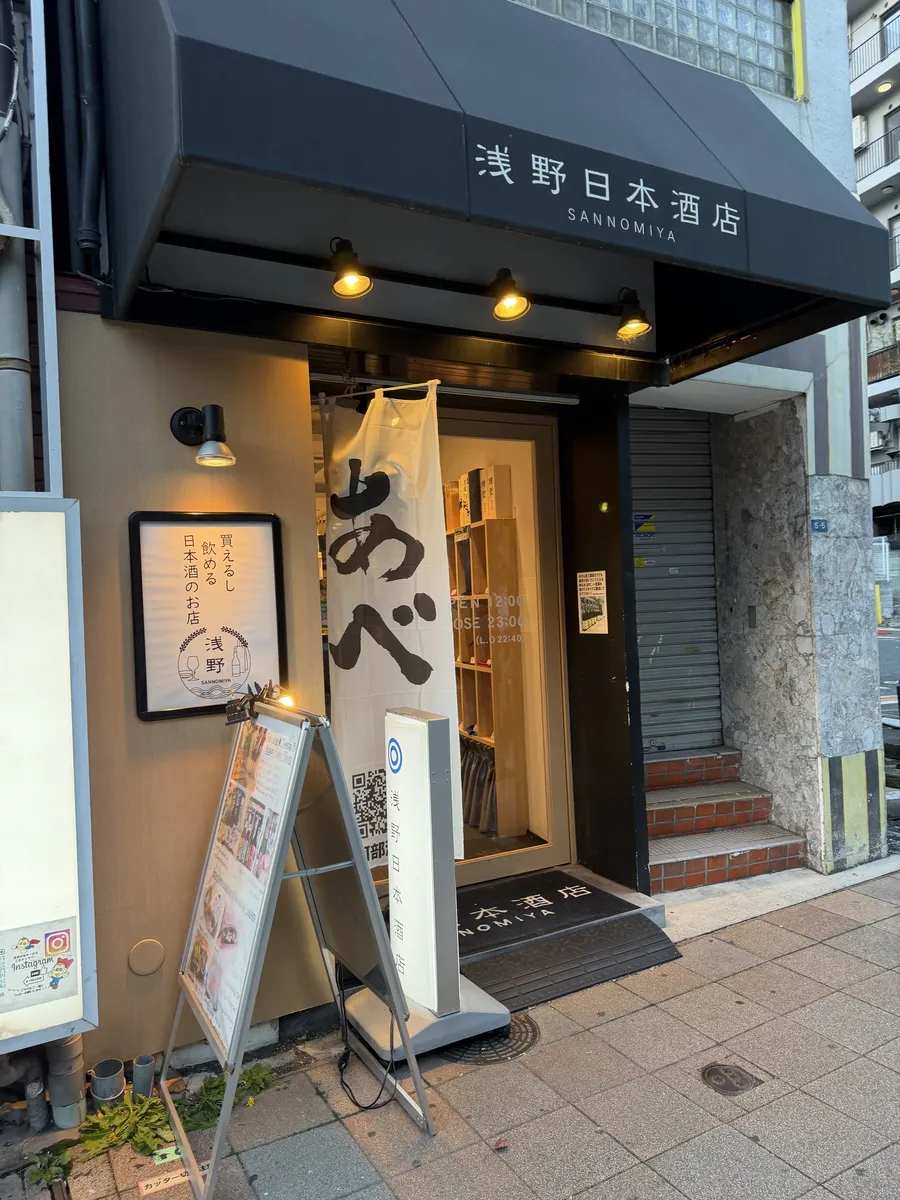
Asano Nihonshuten describes itself on its shop sign as a place where you can both buy and drink sake. Rows of refrigerated cases line the walls, and you can taste by the glass at the standing counter. The Komenosasayaki I tasted was offered in two serving sizes: 45 ml for ¥1,320 and 90 ml for ¥1,980 at the time of my visit.
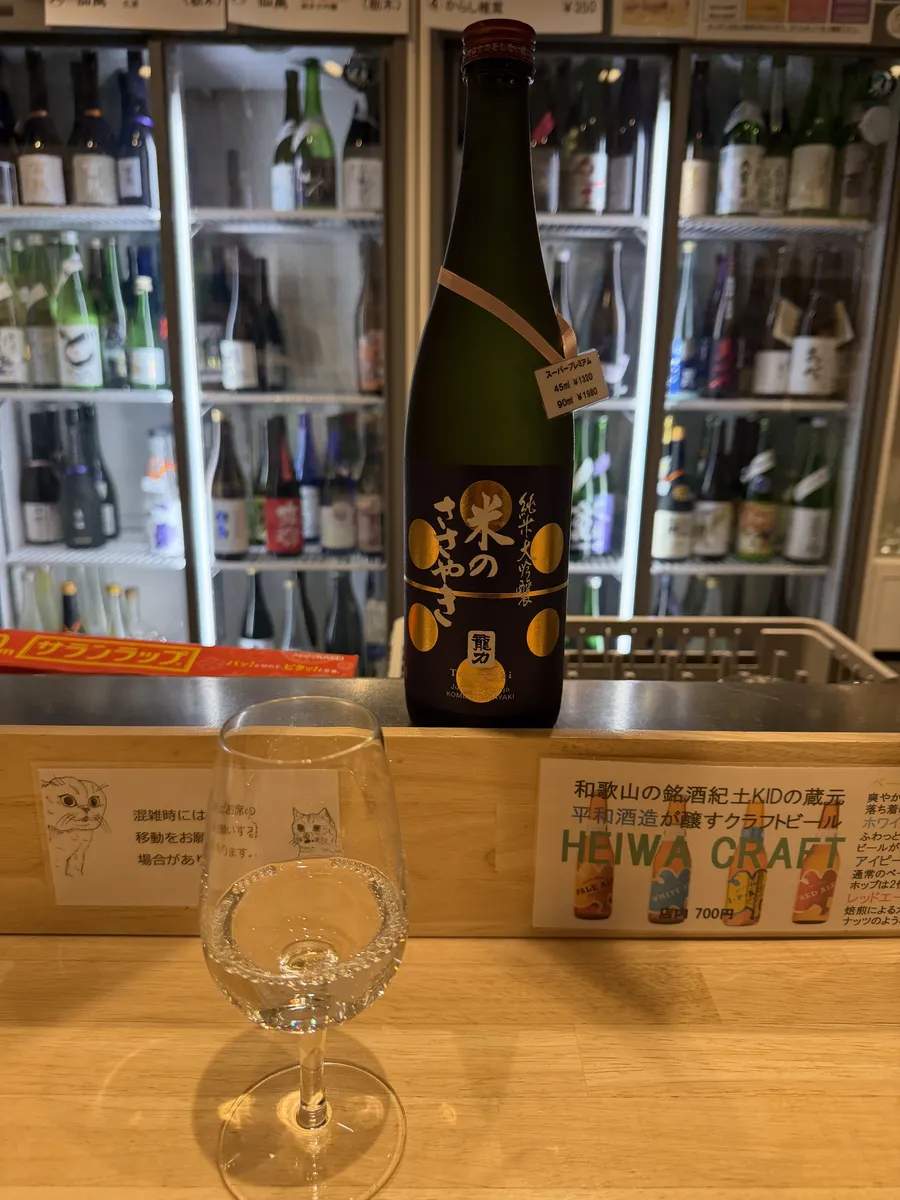
- Shop: Asano Nihonshuten SANNOMIYA (浅野日本酒店 SANNOMIYA)
- Address: 2-5-5 Kitanagasa-dori, Chuo-ku, Kobe
- Hours: 12:00–23:00 (last order 22:40); closed December 31–January 3
Hours are from restaurant listings; the shop’s official website was being renewed when I wrote this. Sake selections, prices, and hours may change, so check before visiting.
Final Thoughts
Tatsuriki Junmai Daiginjo Komenosasayaki impressed me with its pear-like aroma, soft sweetness, and smooth, umami-driven structure. It felt premium, but never distant or difficult.
What I liked most was the balance: enough fruit to be inviting, enough umami to stay interesting, and enough elegance to feel special. It makes a strong case for Hyogo’s reputation—not only because of the famous rice, but because of how carefully the sake expresses it.
My verdict: An elegant, umami-driven junmai daiginjo with a pear-like aroma and a calm finish—refined without being loud.
Approachability: 4.5 / 5
This was a single glass at a bar rather than a full bottle review, but it was a memorable one—and a reminder that a refined sake doesn’t have to be loud to leave a lasting impression.
This review is based on one glass served at a bar. Flavor impressions are personal, and other bottles may differ. Please enjoy sake responsibly.
Related Reading
- Tatsuriki Banshu Karakuchi Hiyaoroshi Review — a dry, food-friendly sake from the same brewery
- Nichi Nichi Yamadanishiki Review — another sake made with Yamada Nishiki
- Junmai vs Ginjo vs Daiginjo
- What Does Sake Taste Like?
This article contains affiliate links. If you buy through one, I may earn a small commission at no extra cost to you. It never changes what I honestly think.Full disclosure here.
Sake is an alcoholic beverage. This article is intended for readers of legal drinking age in their country — please drink responsibly.