Nichi Nichi Yamadanishiki Review|An 11% Kyoto Sake Built for the Whole Dinner
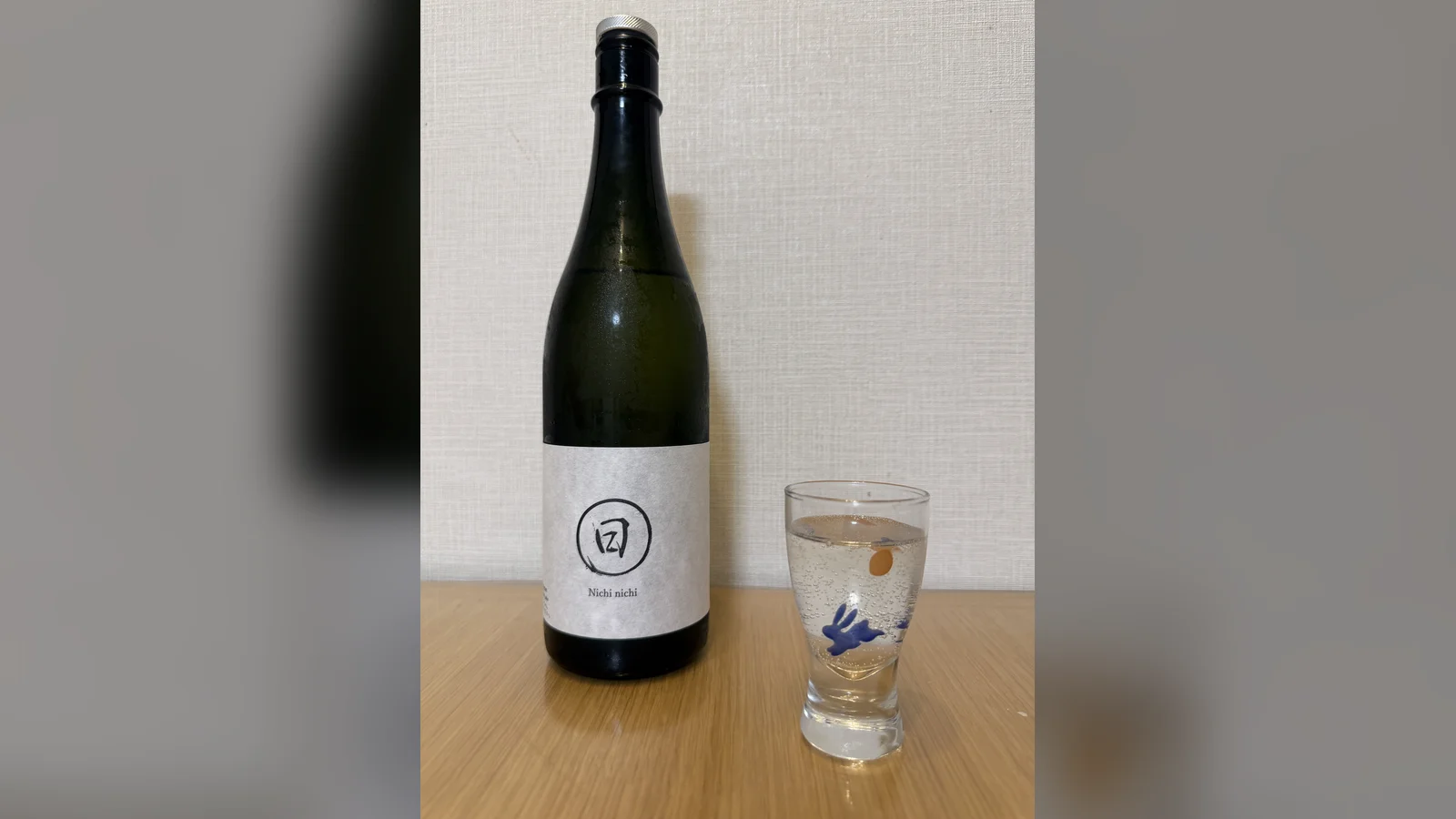
Table of Contents
Some sake announces itself. This one did not.
Nichi Nichi Yamadanishiki opened with a louder pop than I expected, filled the glass with fine bubbles, and then simply tasted good — sweetness, umami, a soft lactic note, and a lightness that made the next sip feel obvious.
At 11% alcohol, it is the lowest-strength sake I have reviewed here. That number could suggest something thin or watered down. It was neither.
What interested me most was the gap between how little effort it asked of me and how much flavor it actually carried. I kept pouring, and the bottle kept making sense.
What Is Nichi Nichi Yamadanishiki?
Nichi Nichi is the only sake brand made by Nichinichi Brewery, a small producer in the Fushimi district of Kyoto.
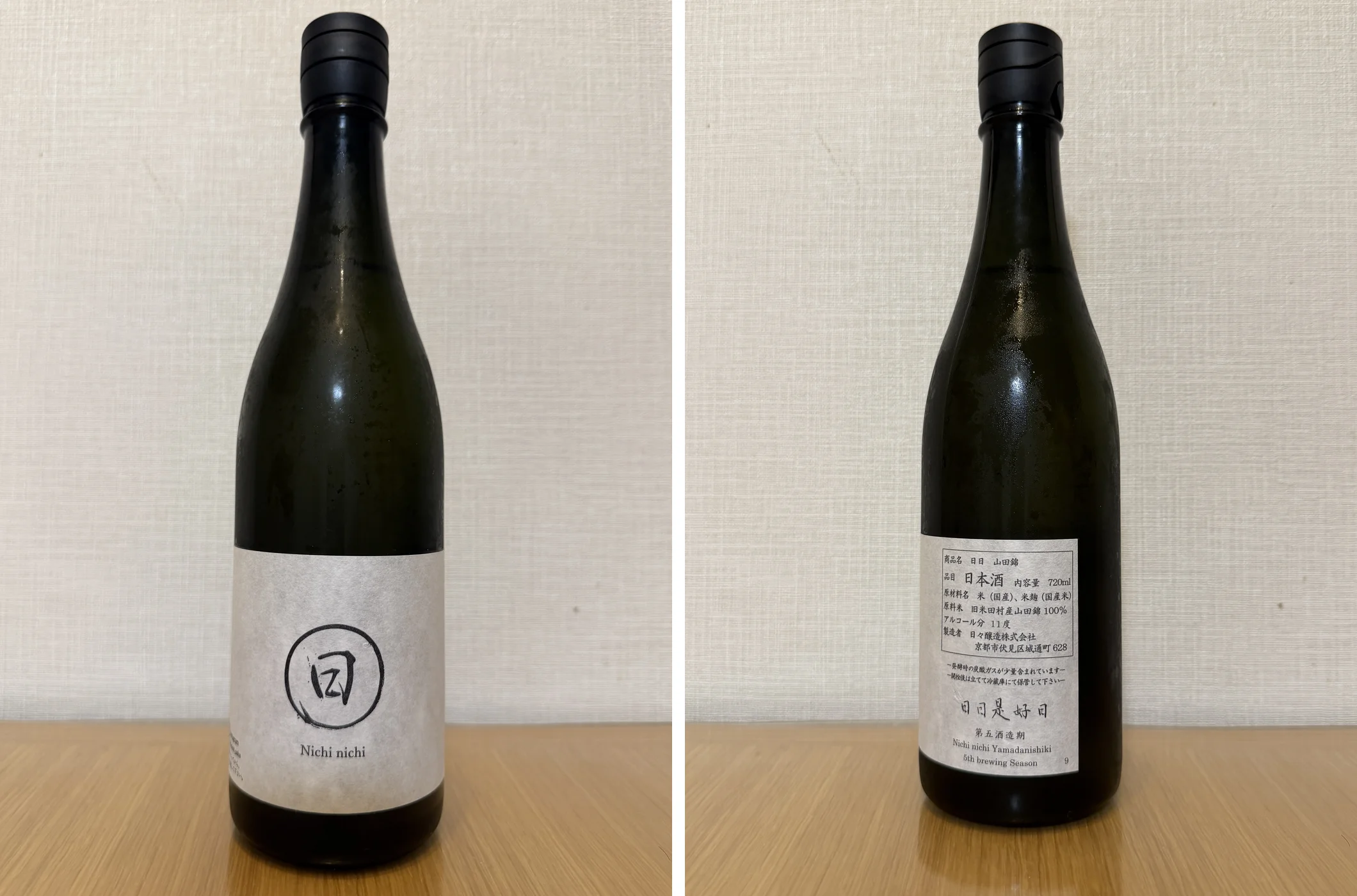
The bottle I tasted was made with 100% Yamadanishiki from the former Yoneda Village area of Hyogo Prefecture, at 11% alcohol, from the brewery’s fifth brewing season.
| Item | Detail |
|---|---|
| Brewery | Nichinichi Brewery |
| Prefecture | Kyoto |
| Brand | Nichi Nichi |
| Rice | Yamadanishiki 100% |
| Rice origin | Former Yoneda Village, Hyogo Prefecture |
| Polishing ratio | Not disclosed on the label |
| Alcohol | 11% |
| Volume | 720ml |
| Brewing season | 5th |
Rice and Water Only
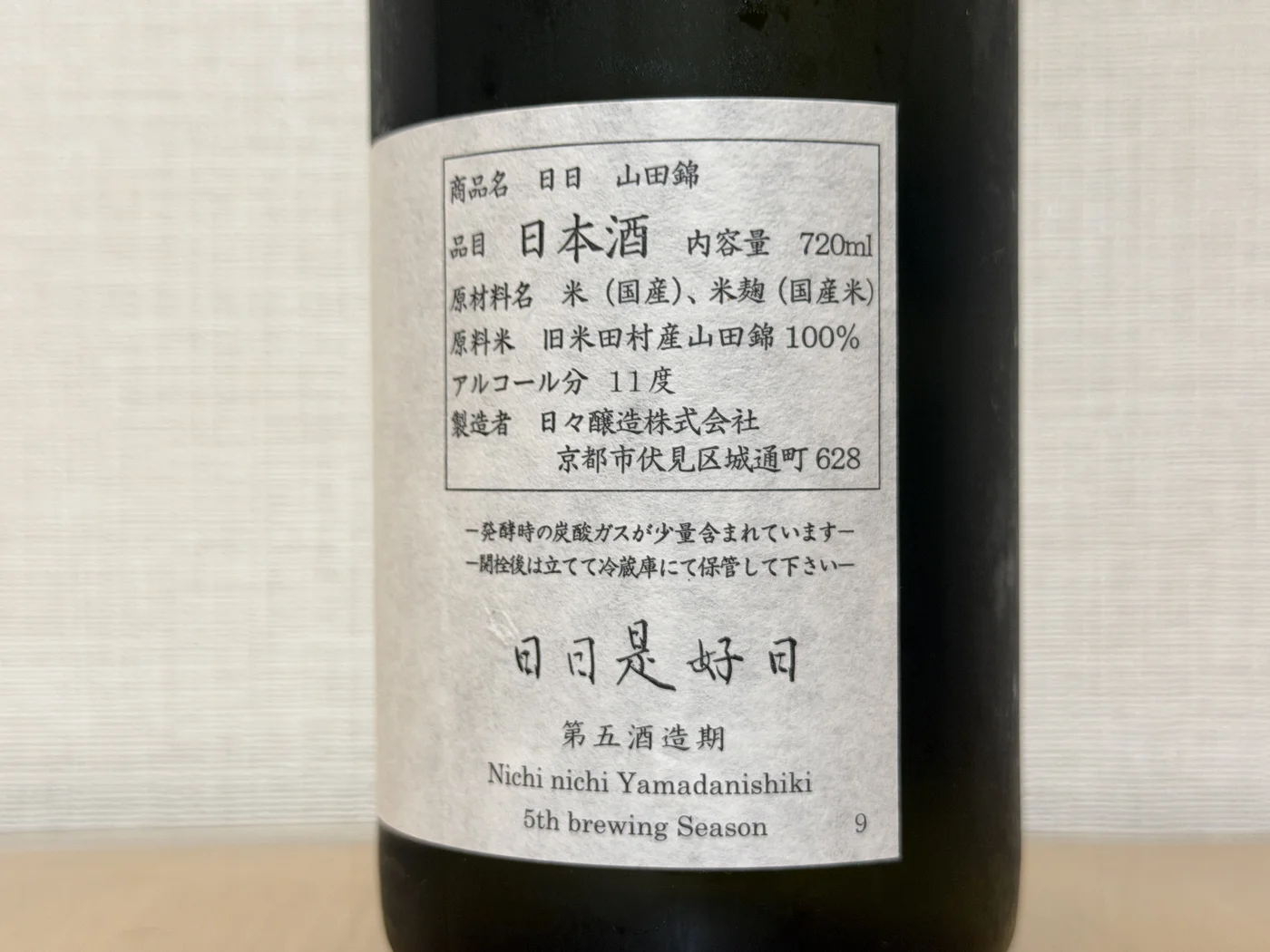
The ingredients list on the back label reads simply: rice and rice koji. No brewer’s alcohol.
What is not on the label is just as telling. There is no polishing ratio, and no classification such as junmai ginjo or junmai daiginjo. Instead, the label gives the name of the village where the rice was grown and the number of the brewing season.
Product databases record the classification for this bottle as undisclosed, which suggests the omission is a deliberate choice rather than an oversight.
That choice says something about where the brewery places its emphasis. Most Japanese sake labels lead with how much the rice was polished. This one leads with where the rice came from.
If you are unfamiliar with terms such as muroka, nama, or genshu, see my guide to Muroka, Nama, and Genshu Explained.
The back label also notes that a small amount of carbon dioxide from fermentation remains in the bottle and asks you to store it upright in the refrigerator after opening.
Both turned out to be relevant.
The Brewery Behind It
Nichinichi Brewery was established in Kyoto in 2021 by Hidehiko Matsumoto, with the first Nichi Nichi sake released in May 2022.
Before starting his own brewery, Matsumoto had served as toji at his family’s brewery in Kyoto. After leaving in 2020, he spent the following year making sake with several other producers before establishing his own brewery in Fushimi — a district long associated with sake and known for its soft groundwater.
The brewery makes one brand and nothing else: Nichi Nichi.
All of its Yamadanishiki comes from contracted growers in the Banshu region of Hyogo, with particular attention paid to the village where each crop is grown.
The bottle I tasted used rice from the former Yoneda Village.
Product information for this bottle describes Yoneda as sitting in the hills roughly 50 meters higher than Akitsu, making it a slightly cooler farming area — conditions linked to a more delicate expression of Yamadanishiki, with refined umami and gentle acidity.
That makes the village name on the label feel less like a geographical footnote and more like part of the identity of the bottle.
Why “Nichi Nichi”?
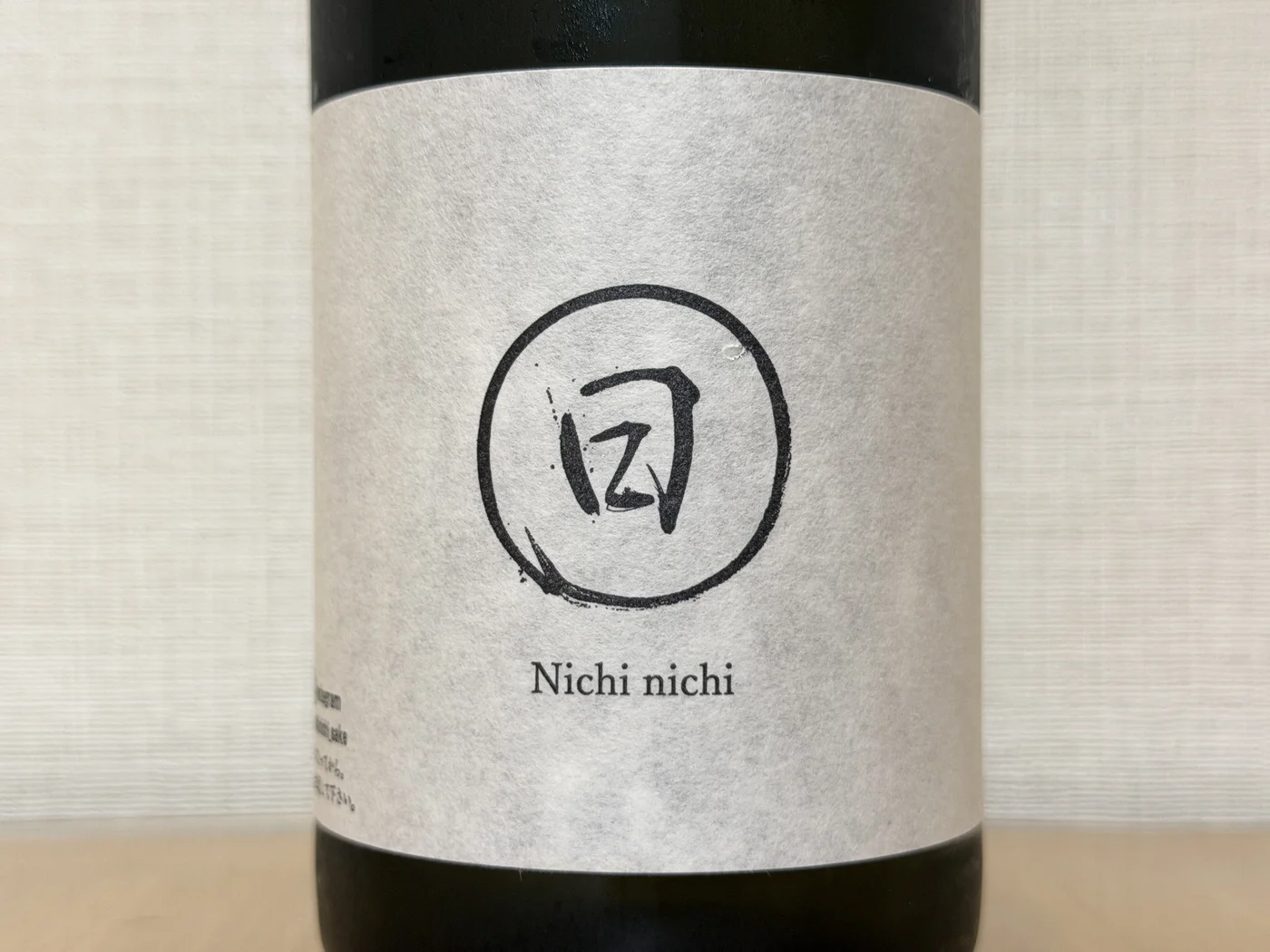
The name comes from a Zen phrase printed on the back label of this very bottle:
日日是好日 — nichi nichi kore kōjitsu, usually translated as “every day is a good day.”
The brewery has described its aim as making sake that can remain comfortably at the table through a meal rather than simply impressing in a single ceremonial glass.
After drinking it, that description felt accurate.
Where in Japan
This sake is tied to two places — and I found it in a third.
Nichinichi Brewery is in Shirodori-cho, Fushimi Ward, Kyoto City — roughly fifteen minutes south of Kyoto Station, in a district associated with sake brewing for centuries.
The rice comes from the former Yoneda Village area of Hyogo Prefecture, in the Banshu region widely known for Yamadanishiki production.
I bought this bottle far from both, at Inomoto Saketen in Kumamoto City on Kyushu — a specialist sake and shochu shop that has been in business since 1974.
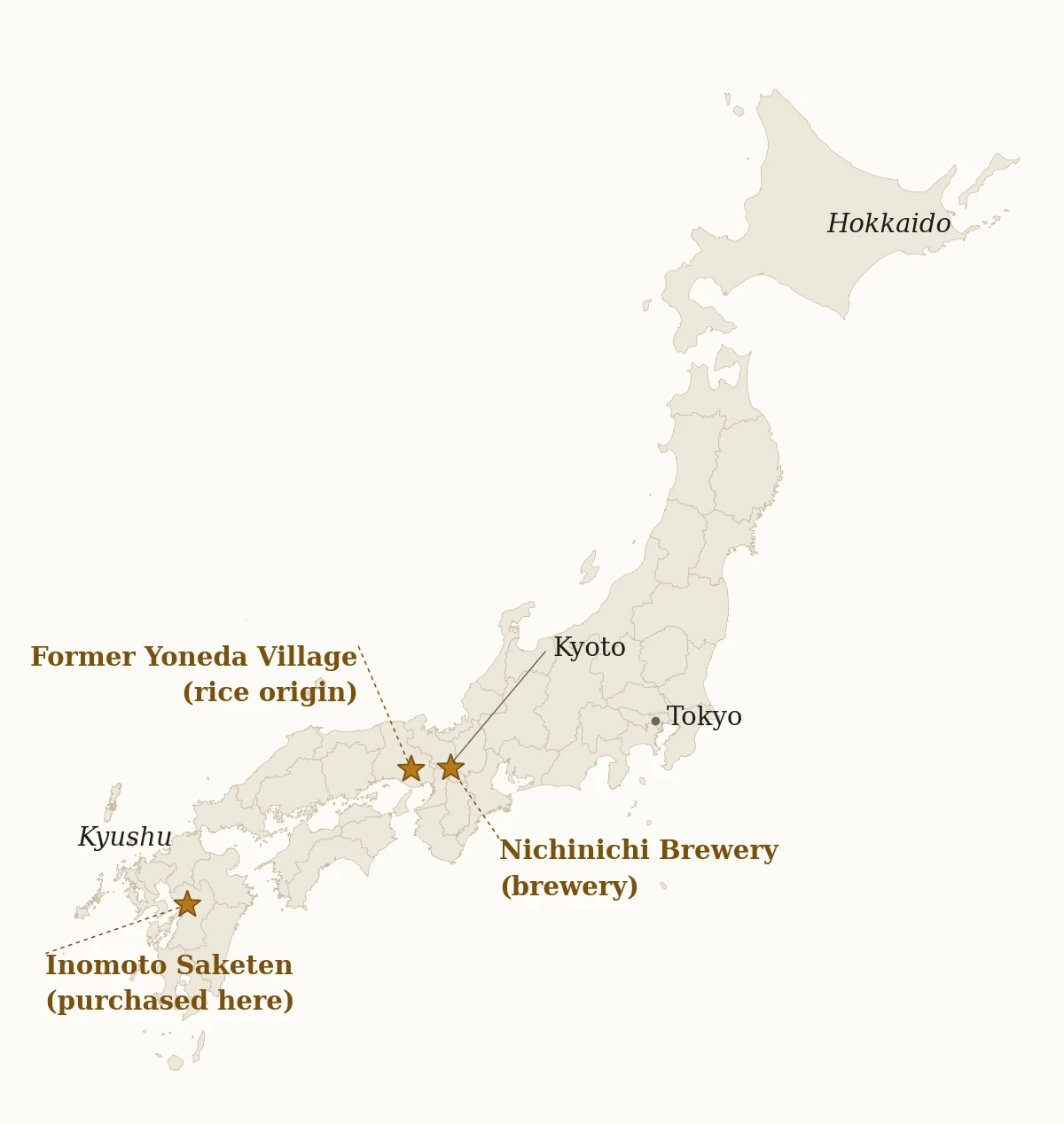
Where in Japan: Nichi Nichi is brewed in Fushimi, Kyoto, using Yamadanishiki from the former Yoneda Village area of Hyogo. I bought this bottle at Inomoto Saketen in Kumamoto.
A Coincidence Worth Noting
The last sake I reviewed here, Nabeshima Summer Moon, was also made with Yamadanishiki from the former Yoneda Village.
Two bottles, back to back, using rice from the same small area of Hyogo — but brewed in two very different places, one in Saga and one in Kyoto.
Summer Moon was a 15% ginjo with a crisp, dry finish.
Nichi Nichi was an 11% sake with gentle carbonation, softer acidity, and lingering umami.
Same rice variety. Same village. Entirely different results.
Tasting them consecutively made the contrast unusually clear: the rice origin stayed constant, while the brewery philosophy changed almost everything else.
If anything, these two bottles together are a useful reminder that rice variety and origin matter, but they do not determine by themselves what a sake will taste like.
How I Tasted It
I bought this 720ml bottle at Inomoto Saketen in Kumamoto on August 8, 2026, and opened it at home on September 12.
The bottle had been kept in the refrigerator and was opened immediately after taking it out, so it was thoroughly chilled at the first pour.
I used a small clear-glass sake cup because I wanted to see the carbonation.
I tasted it first straight from the refrigerator, again after ten to fifteen minutes as it warmed, again later as it came closer to room temperature, and once more the following day.
First Impression
The cap came off with a noticeably loud pop.
Bubbles formed on the inside of the glass almost immediately, and fine ones were still rising several minutes later.
This was not sparkling sake in the Champagne sense. The gas was clearly there, but it was quiet.
The first sip brought sweetness and umami together, with a soft lactic character underneath and a light prickle of gas on the tongue.
My first reaction was not analytical.
It was simply that this tasted good.
Tasting Notes
Appearance
Clear and colorless.
Fine bubbles cling to the glass from the moment it is poured and continue rising for several minutes.
Aroma
Restrained overall.
The ginjo-type fragrance is not pronounced. I found pear and muscat, rice, and a gentle lactic note.
There were no obvious herbal or green impressions and very little alcohol on the nose.
Sweetness
Medium.
Present and easy to notice, but never the dominant element.
Acidity
Medium and soft in quality — more lactic than sharp.
It shapes the sake without cutting through it.
Umami
Medium to high.
This was the strongest element and the main reason the sake never felt thin despite its low alcohol.
Bitterness
Low.
It plays almost no part.
Body
Light to medium.
Smooth and easy, with just enough weight to carry the umami.
Texture
Fine and clean, with gentle carbonation that lifts the whole impression.
Light without being watery.
Finish
Short to medium.
Sweetness, acidity, and umami all remain briefly and then fade together, cleanly.
The sweetness does not linger or turn heavy, and there is almost no alcohol rising through the nose.
The palate resets, and the next sip follows naturally.
The Carbonation
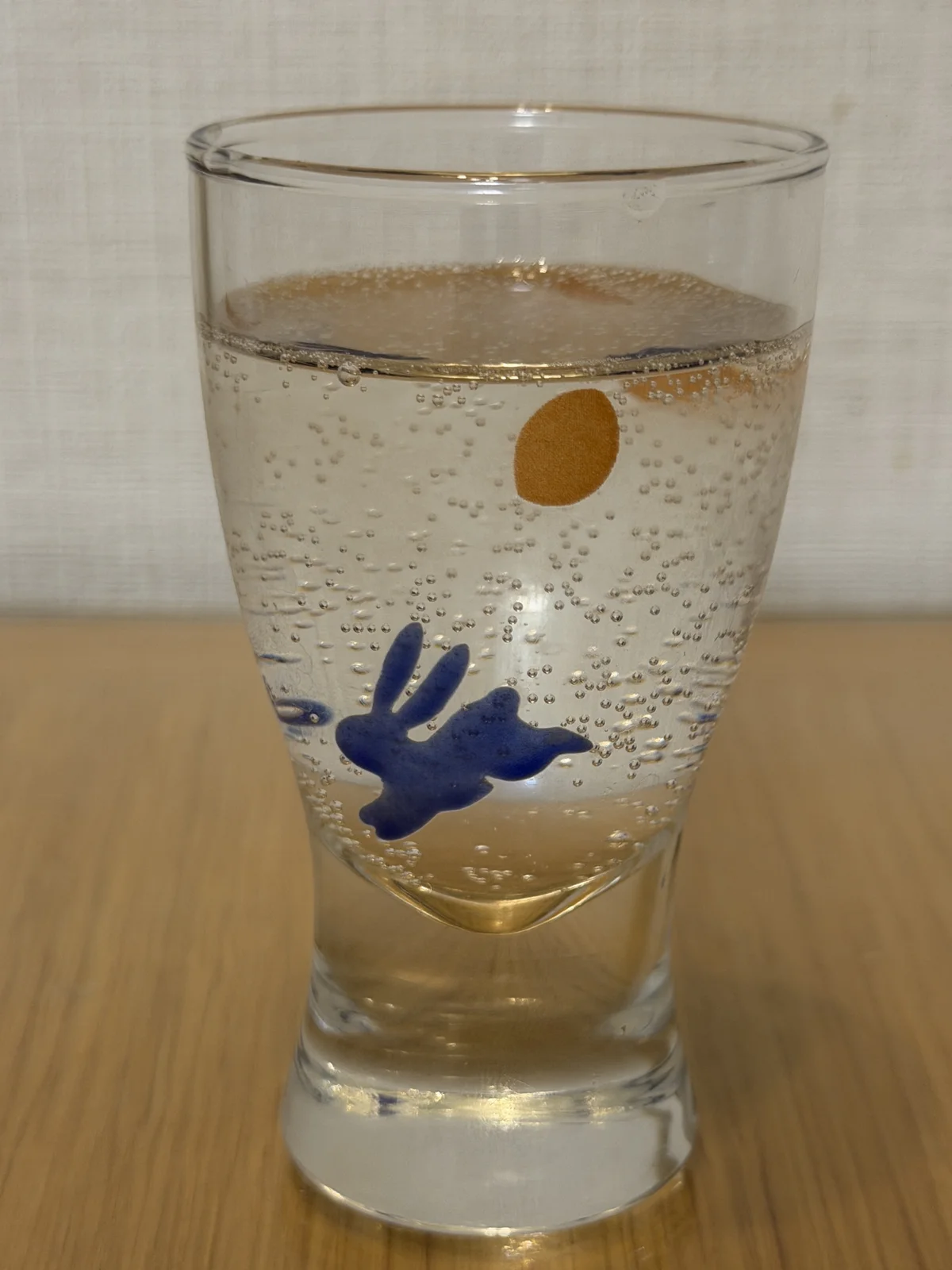
The gas deserves its own mention because it does real work here.
It is described on the back label as residual carbon dioxide from fermentation rather than anything added, and that is how it behaves — fine, persistent, and integrated rather than fizzy.
On the tongue it registers as a light tingle, not a sting.
What it mainly does is make the sake feel lighter than its umami content would suggest.
Without the gas, I suspect the same liquid would read as rounder and slower.
With it, everything feels quick.
How Temperature Changed the Sake
Temperature changed this sake more than most I have tasted.
Straight from the refrigerator, sweetness, acidity, and umami arrived as a single integrated impression. Acidity and umami were the most noticeable, the carbonation was at its liveliest, and the overall effect was clean and decisive.
After ten to fifteen minutes, some of the gas had gone and sweetness came forward. The sake rounded out.
This was a different pleasure rather than a lesser one.
Warmer still, umami moved firmly to the front. The sweetness stayed light and, importantly, never became cloying.
The acidity remained clean, the aroma held steady, and the alcohol stayed unobtrusive.
I enjoyed all three stages.
If I had to choose, the coldest pour felt the most precise and refreshing, while the warmest was the most flavorful.
And the Next Day
The following day, the bottle felt lighter still and just as easy to drink.
With more gas gone, umami sat further forward and the acidity had softened — though it had never been sharp to begin with.
The aroma was largely unchanged, and so was the sense of lightness.
With Food: Surprisingly Good with Yakiniku
I drank this alongside yakiniku, which is not the pairing I would have predicted.
With grilled meat, I usually reach for beer.
Sake can struggle against that much fat and char. Nichi Nichi handled it better than most sake I have tried in the same situation.
Its lightness seemed to lift some of the heaviness of the fat rather than fight it.
The sake did not become weaker next to the food, but it did not sharpen its outline either.
The two simply sat together.
Acidity stayed perceptible, umami connected across sake and meat, bitterness did not emerge, and neither side got in the other’s way.
Most of all, it did not tire me out.
That is harder to achieve than it sounds.
Approachability: 4 / 5
I rate Nichi Nichi Yamadanishiki 4 out of 5 on my approachability scale.
What makes it easy: the aroma makes no demands, the sweetness is light rather than sticky, the acidity is soft, the bitterness is minimal, and at 11% the alcohol is barely noticeable. There is almost no burn through the nose after swallowing. The gentle carbonation adds freshness without sharpness, and the sake works both with food and on its own.
What holds it back: the aroma is quiet. Someone hoping for an immediately fragrant, fruit-forward sake may find Nichi Nichi understated. Its pleasure comes more from texture, balance, and the way the elements fit together than from one obvious hook.
It lands at the same 4 / 5 score as Senkin Senko-Hanabi 2026, but the two arrive there by different routes. Senko-Hanabi felt juicier, sweeter, and a little fuller, with melon-like fruit, a gentle lactic character, and refreshing acidity. Nichi Nichi is lighter, quieter, and more restrained, leaning more heavily on umami, fine carbonation, and the near absence of alcoholic weight. Different styles, but a similar result for someone relatively new to sake: neither asks very much before it starts to become enjoyable. That contrast is one of the reasons I find the Approachability score useful — two bottles can receive the same number without tasting remotely alike.
See what Approachability means on this site for the full method behind this score.
A Note on Availability
Nichinichi Brewery is small and produces only the Nichi Nichi brand.
Its releases vary by brewing season and by rice-growing area, so the exact bottles available can change through the year.
At the time of writing, I could not confirm a regular U.S. retail listing for Nichi Nichi Yamadanishiki. I checked Palate Project directly, including a search of their catalog, and found no listing for Nichinichi Brewery or Nichi Nichi.
Within Japan, Nichi Nichi is sold through selected specialist sake retailers, including Inomoto Saketen in Kumamoto, where I bought this bottle.
For readers outside Japan, availability will depend heavily on specialist importers and retailers.
Final Thoughts
Nichi Nichi Yamadanishiki is not a sake that tries to impress you in the first glass.
The aroma is quiet, the alcohol is low, and nothing about it is dramatic.
What it has instead is balance: sweetness, acidity, and umami arriving together, carried by fine carbonation that keeps everything moving, and then disappearing cleanly enough that the next sip feels inevitable.
What impressed me was not simply that an 11% sake could carry this much flavor.
It was that the flavor never seemed to work against its lightness.
That is a harder thing to build than a striking first impression, and it is exactly what the brewery seems to be aiming for.
A sake meant to stay at the table through an evening without ever becoming work.
The label says every day is a good day.
This is a bottle that would not feel out of place on any of them.
Related Reading
- Nabeshima Summer Moon — the same Yamadanishiki-growing area, a completely different sake
- Senkin Senko-Hanabi 2026 — another bottle that scored 4 / 5 on approachability
- Muroka, Nama, and Genshu Explained — how to read what a sake label does and does not tell you
Sake is an alcoholic beverage. This article is intended for readers of legal drinking age in their country — please drink responsibly.