
What Does Sake Taste Like? A Beginner's Guide to Sweet, Dry, Fruity, and Umami Flavors
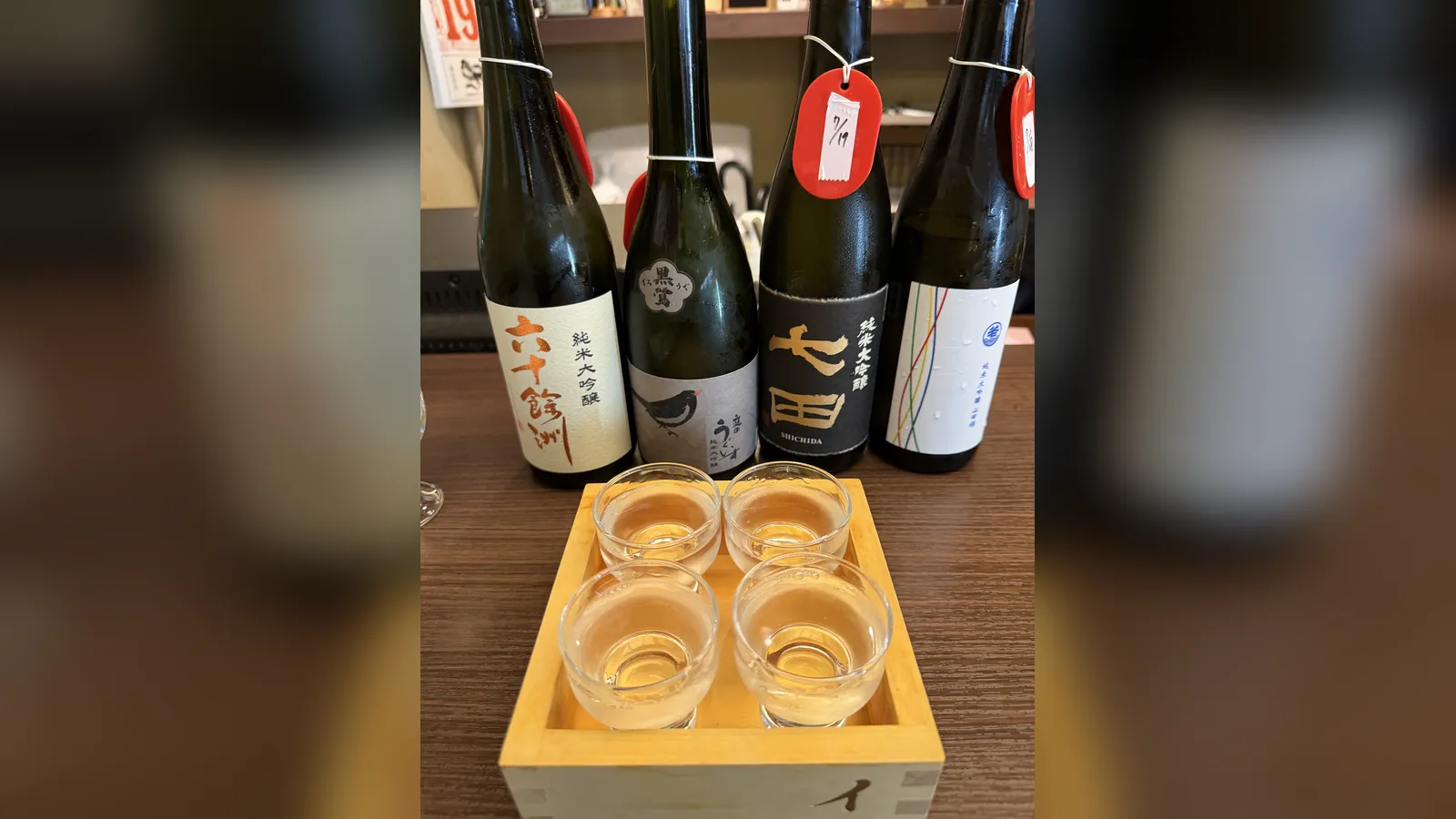
Four sakes, four different personalities—tasting several styles side by side shows how much sake can vary.
Table of Contents
- What Does Sake Taste Like?
- Is Sake Sweet or Dry?
- Can Sake Taste Fruity?
- What Is Umami in Sake?
- Is Sake Strong? What Does the Alcohol Taste Like?
- Does Sake Taste Like Wine?
- Does Sake Taste Different When Warm?
- Sake for Beginners: What Should You Try First?
- How to Taste Sake for the First Time
- Frequently Asked Questions
- Final Thoughts: Discovering Your Own Taste in Sake
This article contains affiliate links. If you buy through my Palate Project link or use my discount code, you may get 10% off as a first-time customer, and I may earn a small commission at no extra cost to you — it never changes what I recommend. Full disclosure.
If you’ve never tried Japanese sake, you might expect it to taste strongly of alcohol—or simply of rice. After all, sake is made from rice. What else could it taste like?
The answer is much more interesting.
Sake can taste fruity, floral, sweet, dry, savory, or surprisingly light. Some bottles remind me of fresh pears or melons; others are defined by refreshing acidity, gentle sweetness, or deep umami. Two sakes can taste completely different even when they’re made from the same variety of rice.
I write The Sake Encounter from Kyushu, Japan, where I buy and taste sake myself. I wasn’t always a sake enthusiast—I once thought sake simply wasn’t for me. Then one bottle changed my mind.
In this guide, I’ll explain what sake tastes like, why its flavors vary, and how to find a style you might enjoy, using examples from sakes I’ve actually tasted.
What Does Sake Taste Like?
Japanese sake generally has a smooth, delicate flavor that ranges from gently sweet and fruity to crisp, dry, and savory. Although it is made primarily from rice, it doesn’t necessarily taste strongly of rice. Fermentation can create aromas reminiscent of fruit or flowers, and different brewing techniques produce a wide range of sweetness, acidity, umami, and texture.
| Characteristic | What It Can Taste or Feel Like |
|---|---|
| Sweetness | Gentle sweetness, sometimes reminiscent of ripe fruit |
| Fruitiness | Apple, pear, melon, banana, or lychee-like aromas |
| Acidity | Freshness, brightness, or a lightly tart impression |
| Umami | Savory depth, richness, and a satisfying finish |
| Dryness | A crisp impression with little obvious sweetness |
| Texture | Light, smooth, silky, rich, or occasionally fizzy |
These aren’t ingredients added to sake; they’re ways of describing aromas and sensations that develop through brewing. Some sake is simple and refreshing; some is layered and complex. There isn’t one flavor that defines all Japanese sake.
Is Sake Sweet or Dry?
Sake can be sweet, dry, or anywhere in between—and sweetness isn’t always obvious from the label.
You may see a number called the Sake Meter Value (SMV), or nihonshudo, which indicates the sake’s relative density. A higher positive number often suggests a drier style, but on its own it can’t tell you how sweet or dry a sake will actually taste. Acidity, aroma, umami, and serving temperature all shape the impression. I explain this in more detail in my guide to the Sake Meter Value.
A Real Example: Mii no Kotobuki Fuku vs +14
I once compared two very different sakes from Mii no Kotobuki, a brewery in Fukuoka Prefecture. Junmai Daiginjo Fuku was soft, fruity, and rounded, with noticeable but balanced sweetness. Junmai Ginjo +14 felt considerably drier and sharper—rather austere on its own, but more enjoyable when I tried it with cured ham.
Same brewery, strikingly different personalities: a reminder that sweetness and dryness can’t be read from a brewery name, or from one number on a label.
Read my Mii no Kotobuki Fuku vs +14 comparison
Can Sake Taste Fruity?
Absolutely—even though no fruit is added. Common descriptions include apple, pear, melon, banana, citrus, and lychee. These aromas develop naturally during fermentation, particularly through aromatic compounds produced by yeast. Ginjo-style sake is often associated with fruity and floral aromas, although not every ginjo has the same character.
Fruity doesn’t necessarily mean sweet, either. A sake can smell like ripe fruit while tasting relatively dry; another may combine a fruity aroma with clearly noticeable sweetness.
A Real Example: Ohmine HANABI CUP
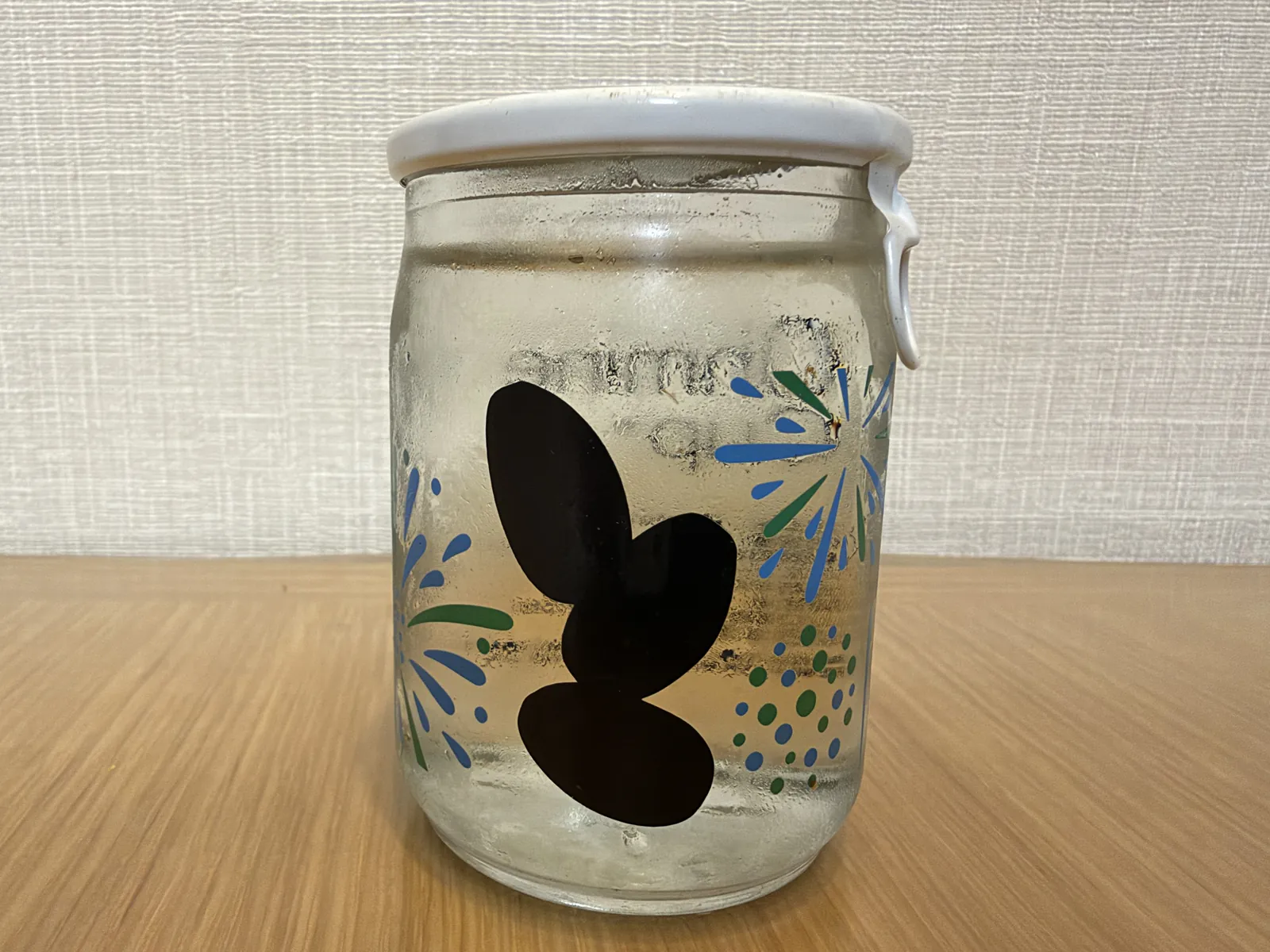
Ohmine HANABI CUP: fruity, gently sweet, and light.
One of the most approachable sakes I’ve tasted recently was Ohmine HANABI CUP, a 100 ml seasonal release from Ohmine Shuzou in Yamaguchi Prefecture. Its aroma reminded me of lychee, muscat grapes, and melon. On the palate it was gently sweet and notably light, with moderate acidity and umami, relatively low bitterness, and restrained alcohol.
Someone seeking powerful, rice-driven umami or deep, layered complexity may find it too light. But for a newcomer, it shows how gentle and fruit-forward Japanese sake can be.
Read my full Ohmine HANABI CUP review
Want to try Ohmine in the U.S.?
The seasonal HANABI CUP I reviewed may be difficult to find outside Japan. However, Palate Project also lists Ohmine 3 Grain Yamadanishiki.
This is a different sake from the Omachi-based HANABI CUP, so don’t expect exactly the same flavor. Still, I’ve enjoyed it before and find it close in style, so it’s a good way to explore Ohmine’s sake. Ohmine 2 Grain Yamadanishiki is also delicious, but it’s considerably more expensive—so for a first bottle, I’d start with 3 Grain. If price isn’t a concern, 2 Grain is worth trying too.
Explore Ohmine at Palate Project
First-time Palate Project customers can use the discount code FRIEND-8V4N8XZ for 10% off one-time purchases (not subscriptions). The code can be used once per customer and can’t be combined with other discount codes.
Affiliate link: I may earn a small commission at no extra cost to you.
A quick note on sake rice: Omachi and Yamadanishiki are two different rice varieties used in sake brewing. The rice variety can influence flavor, but it isn’t the only factor—brewing methods also play an important role.
Curious how much difference the rice can make? I compared two Nabeshima Junmai Ginjo sakes made with Omachi and Yamadanishiki, tasted side by side under similar conditions.
Read my Nabeshima Omachi vs Yamadanishiki comparison
Another Example: Senkin Modern
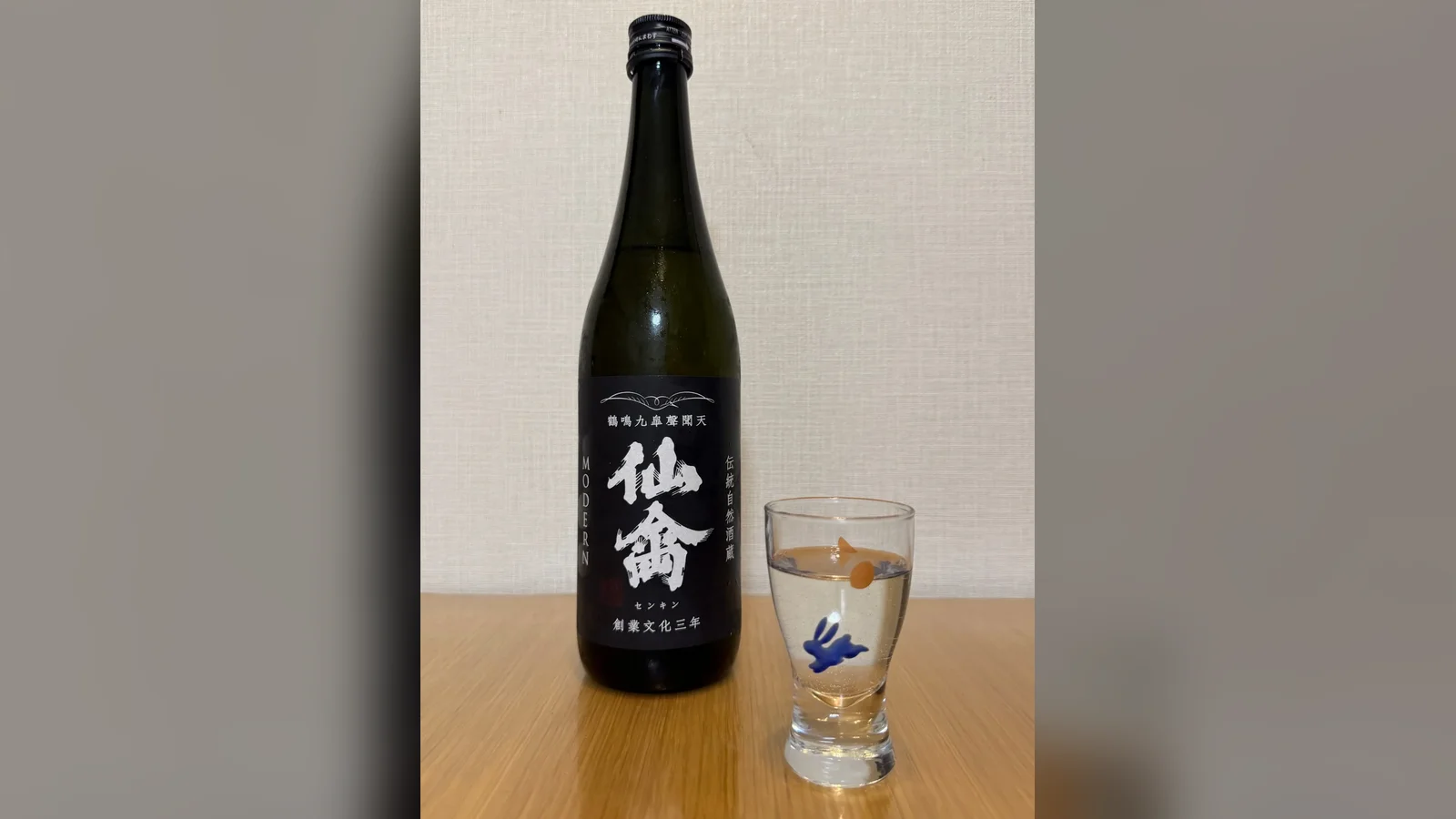
Senkin Modern: fruitiness with a lactic, refreshing edge.
A special edition of Senkin Modern, made with Homashi rice from Kumamoto, showed a different kind of fruitiness: a delicate aroma reminiscent of Japanese nashi pear, with a lactic character, refreshing acidity, and a light prickle of gas.
Where Ohmine felt direct and gently sweet, Senkin combined its fruitiness with more pronounced lactic and acidic notes—two fruity sakes, two quite different experiences.
What Is Umami in Sake?
Umami is one of the five basic tastes, alongside sweetness, sourness, saltiness, and bitterness. It is often described as the savory sensation associated with foods such as mushrooms, broth, and aged cheese.
Sake doesn’t taste like those foods. Instead, umami can give it depth, fullness, and a satisfying finish, adding richness that balances sweetness and acidity.
A Real Example: Shichida Omachi Hiyaoroshi
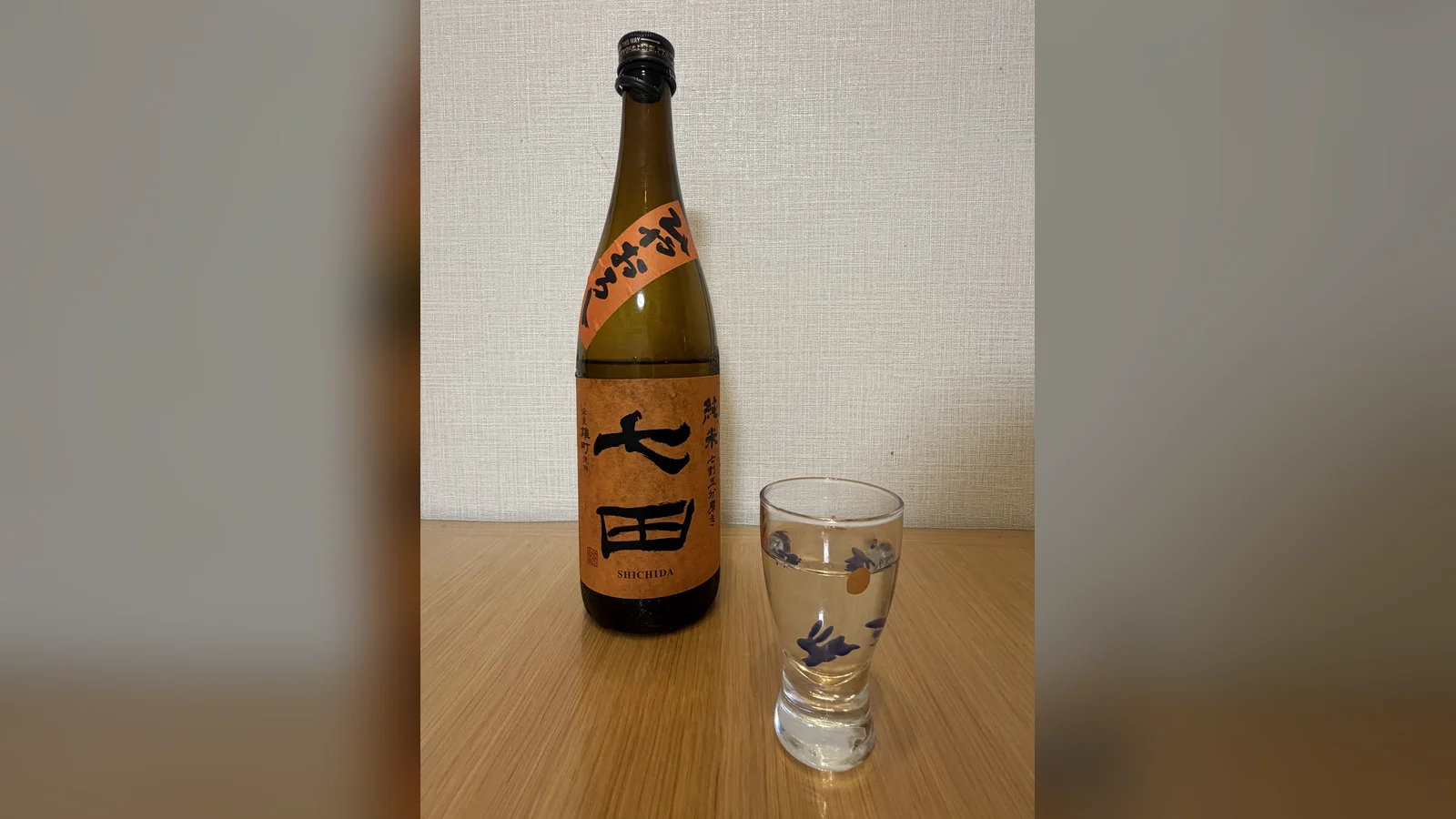
Shichida Omachi Hiyaoroshi: fuller body and savory depth.
One sake that made me appreciate a fuller flavor profile was Shichida Junmai Omachi Hiyaoroshi from Saga Prefecture. Made with Omachi rice polished to 75%, it offered substantially more body and flavor intensity than the light-bodied Ohmine HANABI CUP—even though both use Omachi rice.
That contrast shows why rice variety alone cannot predict a sake’s flavor.
Read my Shichida Omachi Hiyaoroshi review
Is Sake Strong? What Does the Alcohol Taste Like?
Many standard Japanese sakes contain around 13–16% alcohol by volume, although some are lower and some higher—Shichida Omachi Hiyaoroshi, for example, is 17%. That puts many of them in a broadly similar range to wine, rather than spirits such as vodka or whisky.
But alcohol content and perceived alcohol warmth are not the same. A relatively high-alcohol sake can feel surprisingly smooth, while another may taste sharper or more assertive.
A Real Example: Nichi Nichi Yamadanishiki
Nichi Nichi Yamadanishiki from Kyoto contains just 11% alcohol, yet it didn’t seem thin or watery. I found delicate carbonation, gentle acidity, a soft lactic impression, and lingering umami—more subtle layers than Ohmine HANABI CUP (13%), which offered more immediate fruitiness.
Read my Nichi Nichi Yamadanishiki review
If you’re concerned about alcohol warmth, consider the whole flavor profile—not just the percentage on the label. And remember that a sake tasting smooth or light doesn’t make its alcohol content insignificant.
Does Sake Taste Like Wine?
Sake and wine share several characteristics—both are fermented, and both can offer fruit-like aromas, acidity, sweetness, and considerable complexity—but they are not interchangeable. Sake is made from rice rather than grapes, and its balance of acidity, umami, and texture can be quite different.
| Characteristic | Japanese Sake | Grape Wine |
|---|---|---|
| Main ingredient | Rice | Grapes |
| Fruity aromas | Can arise during fermentation | Come from grapes and fermentation |
| Acidity | Often relatively gentle | Frequently more prominent |
| Umami | Can be particularly noticeable | Varies considerably |
| Texture | Often smooth and rounded | Ranges from light to rich |
| Serving temperature | Chilled, room temperature, or warmed | Depends on the style |
If you enjoy fragrant white wines, you might appreciate a fruity, aromatic sake. If you prefer savory flavors alongside food, a more umami-driven sake could be an interesting alternative. Just don’t expect sake to taste exactly like wine.
Can You Drink Sake from a Wine Glass?
Yes. A clean wine glass is a perfectly reasonable choice, especially when you want to explore aroma—its bowl can make fruit-like and floral fragrances easier to notice.
I’ve enjoyed sake served in wine glasses at bars in Japan, as well as in small ceramic and glass sake cups at home. Each offers a different experience, but none is required for a beginner.
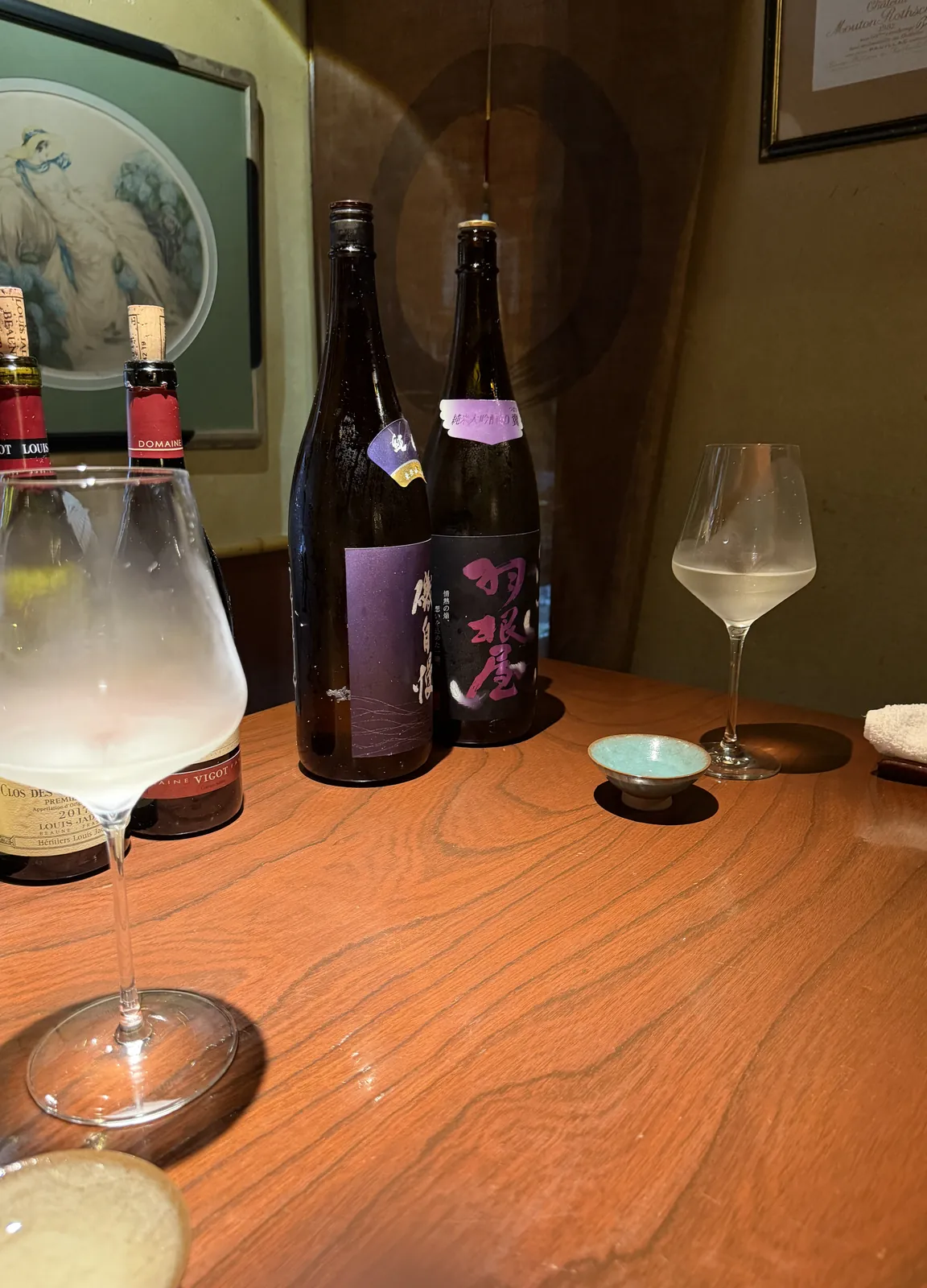
A wine glass can be a useful starting point for exploring sake’s aroma.
Does Sake Taste Different When Warm?
Yes. Serving temperature can noticeably change how a sake smells and tastes. Chilling can emphasize freshness and make certain flavors feel more restrained. Warming some styles may bring forward sweetness, umami, or richness, although it can also change delicate fruity aromas. Not every sake is suited to warming, and personal preference matters.
What I Found Comparing Cold and Warm Sake
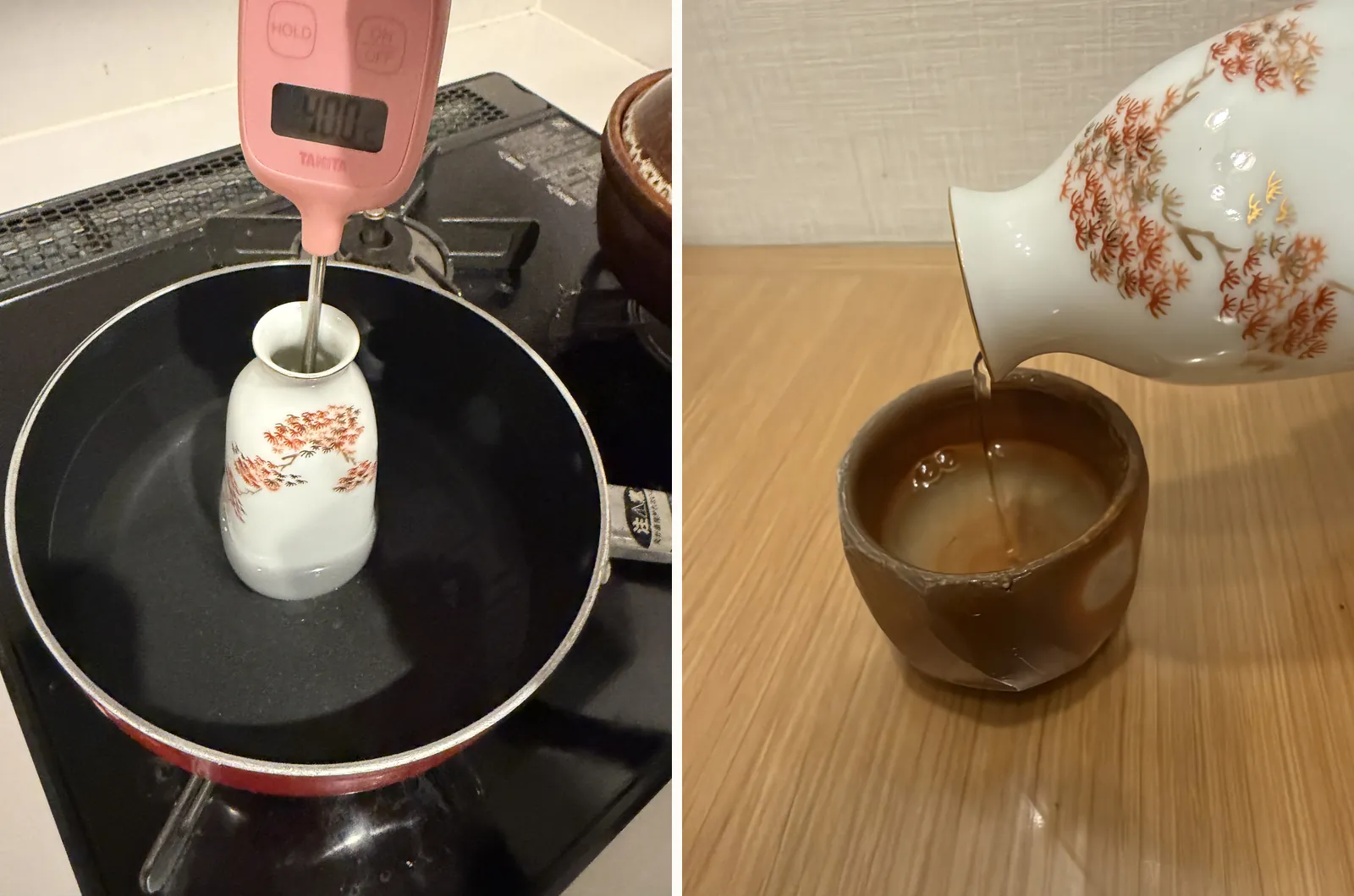
Warming Amabuki Omachi Hiyaoroshi to 40°C in a water bath.
I tasted Amabuki Junmai Omachi Hiyaoroshi straight from the refrigerator and again warmed to 40°C, using a porcelain tokkuri in a warm-water bath and measuring the temperature with a thermometer rather than relying on touch.
Warm, it showed more aroma, sweetness, and umami, while acidity felt less prominent—but bitterness and alcohol warmth also became more noticeable. It didn’t simply become gentler; it became different.
Ohmine HANABI CUP went the other way for me: its fruity aroma was strongest straight from the refrigerator, and I preferred it well chilled.
These are observations of two sakes, not rules. But they taught me that serving temperature is part of a sake’s personality.
See how I warmed sake to 40°C at home
Sake for Beginners: What Should You Try First?
If you’re choosing your first bottle, I wouldn’t start by memorizing brewery names or rice-polishing percentages. I’d start with the flavors you already enjoy.
| If You Enjoy… | Look for Sake Described As… |
|---|---|
| Fruity white wine | Fruity, floral, smooth |
| Light, refreshing drinks | Crisp, light-bodied, clean |
| Gentle sweetness | Soft, rounded, mildly sweet |
| Savory food pairings | Umami-rich, balanced, dry |
| Subtle sparkling sensations | Lightly fizzy or sparkling |
These aren’t strict rules—they’re starting points. The goal isn’t to find the most expensive sake or the most prestigious brewery. It’s to discover the flavors you actually enjoy.
My Suggestion for Your First Sake
If you’re new to sake and enjoy fruity, gently sweet drinks, I’d start by looking for a light-bodied sake with moderate acidity and little noticeable alcohol warmth.
Ohmine HANABI CUP is one example of this style from my own tasting experience. If you prefer something more delicate and layered, Nichi Nichi Yamadanishiki offers a different direction.
Neither is guaranteed to suit everyone, but both illustrate how approachable Japanese sake can be.
How I Judge Whether a Sake Is Beginner-Friendly
For every sake I review on The Sake Encounter, I give an Approachability score out of 5. It reflects how welcoming a sake might feel to someone who has tried sake only a few times, considering perceived sweetness, aroma, body, bitterness, alcohol warmth, and finish. It is not a measure of quality.
- Nabeshima Junmai Daiginjo — 5 / 5: The sake that originally changed my opinion of Japanese sake.
- Ohmine HANABI CUP — 4 / 5: Fruity, gently sweet, light-bodied, and low in perceived alcohol warmth.
- Nichi Nichi Yamadanishiki — 4 / 5: Gentle in alcohol presence, with delicate carbonation and layered flavor.
- Shichida Omachi Hiyaoroshi — 3 / 5: Fuller body and more flavor intensity—rewarding, but less immediate for a newcomer.
- Mii no Kotobuki +14 — 2 / 5: A much drier, sharper character that I found particularly interesting with food.
These scores don’t tell you which sake is objectively better. They help explain which styles may feel easier to approach as a newcomer.
Learn how I score Approachability
How to Taste Sake for the First Time
You don’t need special equipment or expert knowledge. A small, clean glass is enough.
- Start with a small pour. You don’t need to fill the glass.
- Notice the aroma. Does it remind you of fruit, flowers, rice, or something else?
- Take a small sip. Pay attention to sweetness, acidity, and body.
- Notice the finish. Does the flavor disappear quickly or linger?
- Try another small sip. As the sake changes temperature, you may notice something different.
There’s no need to identify every aroma correctly. Even an observation such as “fruity but not very sweet” is a useful tasting note.
Try a Small Tasting Flight
One way to understand sake’s variety is to try a few different styles side by side in small pours. I once tried four Kyushu sakes at Sumiyoshi Shuhan in Hakata Station, and comparing them in small glasses was a reminder of how much variety exists within Japanese sake.
You don’t need four bottles at home. Even two small pours with contrasting flavor profiles can help you discover what you enjoy.
Read about my four-sake tasting at Sumiyoshi Shuhan
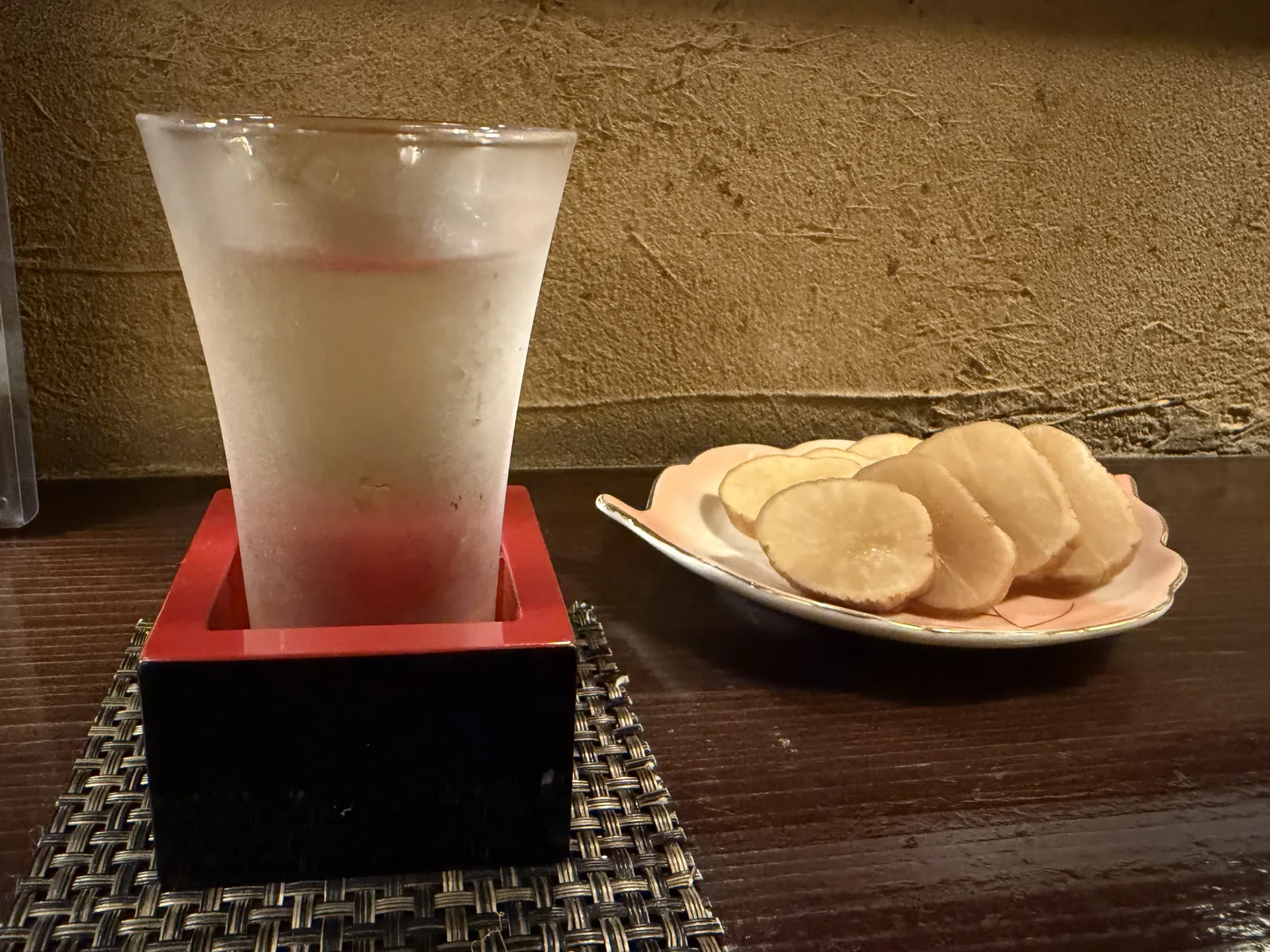
You can explore sake through simple, everyday drinking—no elaborate equipment needed.
Frequently Asked Questions
Does sake taste like rice?
Sometimes. Certain sakes have noticeable rice-like or grain-like aromas and flavors, while others are much fruitier or more floral.
Is sake better hot or cold?
Neither is universally better. Some sakes are especially enjoyable chilled, while others reveal different qualities when gently warmed.
What does good sake taste like?
There’s no single correct flavor. A well-made sake can be fruity, dry, delicate, rich, or savory. Personal preference and balance matter more than matching one particular style.
Final Thoughts: Discovering Your Own Taste in Sake
When I first tried Japanese sake, I thought I knew what it tasted like—and decided it wasn’t for me. Then I encountered Nabeshima Junmai Daiginjo. That bottle changed my impression of sake and eventually led me to start The Sake Encounter.
Since then, some sakes have appealed to me immediately. Others became more interesting with food or at a different serving temperature. That variety is what keeps me curious.
If you’re curious about Japanese sake but haven’t found one you enjoy yet, don’t assume your first glass represents the entire category. Start with flavors you already like, try a small amount, and pay attention to what appeals to you.
You might be surprised by what you discover.
Next, you can learn what the names on the label mean in Junmai vs Ginjo vs Daiginjo: What’s the Difference in Sake?.
Explore my sake reviews or learn how I score Approachability.
Written from my own tasting experiences in Kyushu, Japan. Flavor descriptions are subjective, and individual bottles and releases may differ. This article is intended for adults of legal drinking age. Please enjoy sake responsibly.
This article contains affiliate links. If you buy through one, I may earn a small commission at no extra cost to you. It never changes what I honestly think.Full disclosure here.
Sake is an alcoholic beverage. This article is intended for readers of legal drinking age in their country — please drink responsibly.