Hagi Ware Plate by Tenryu Kiln|My Mukozuke for Sashimi and Sake
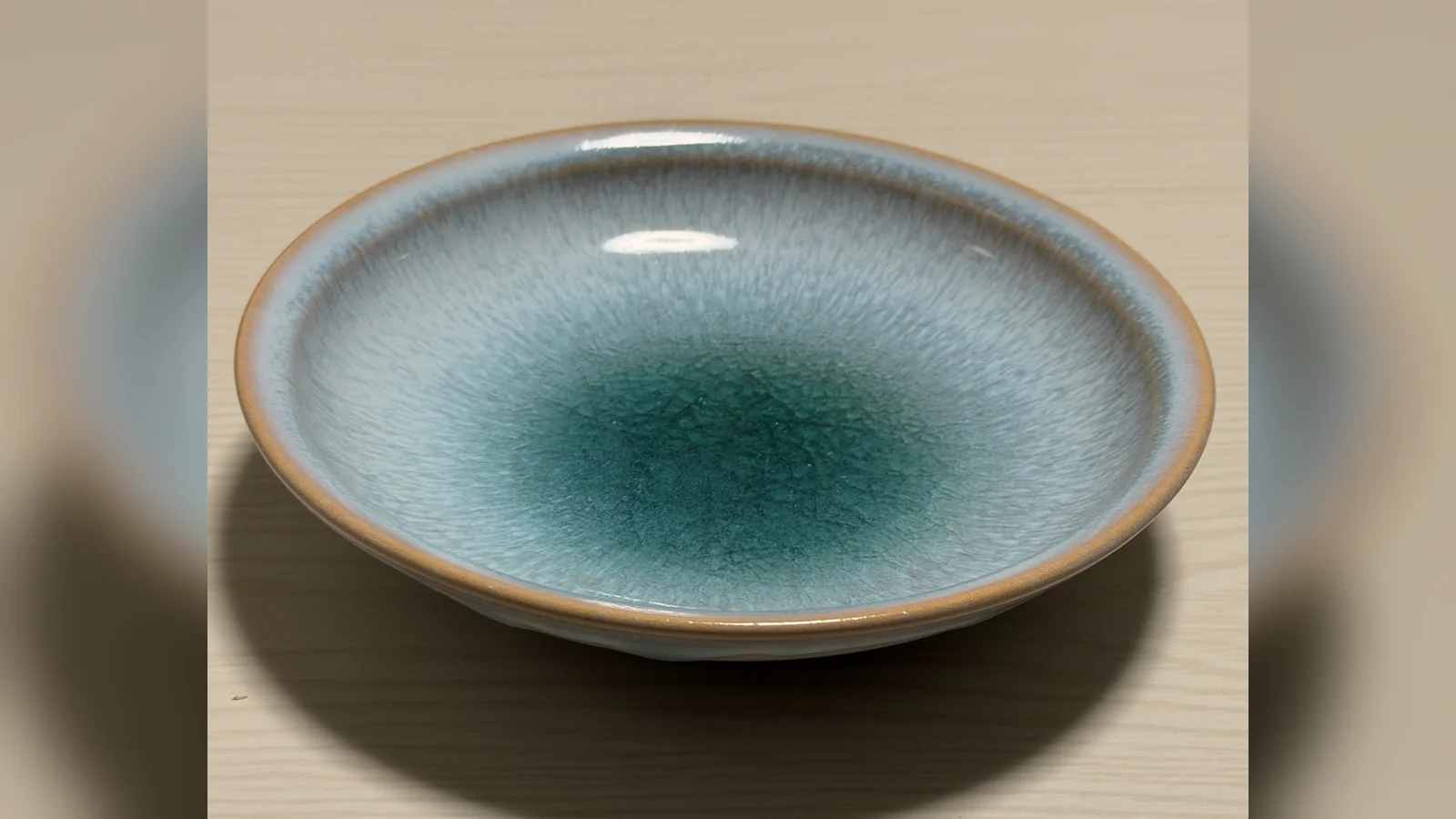
Table of Contents
- Plate Details
- Is This Tenryu Kiln's Sorairo 5-sun Plate?
- What Is Hagi Ware?
- The Color That Caught My Wife's Attention
- Hagi no Nanabake: A Vessel That Changes With Use
- Why I Use It as Mukozuke
- With Shichida Omachi Hiyaoroshi
- What I Like About This Plate
- Caring for the Plate
- Where in Japan
- Where I Bought It — and Exploring More Hagi Ware
- Final Thoughts
- Related Reading
I was not looking for Hagi ware.
At the 48th West Japan Ceramics Fair in Kitakyushu, my wife stopped at one booth because she liked the color of a small plate.
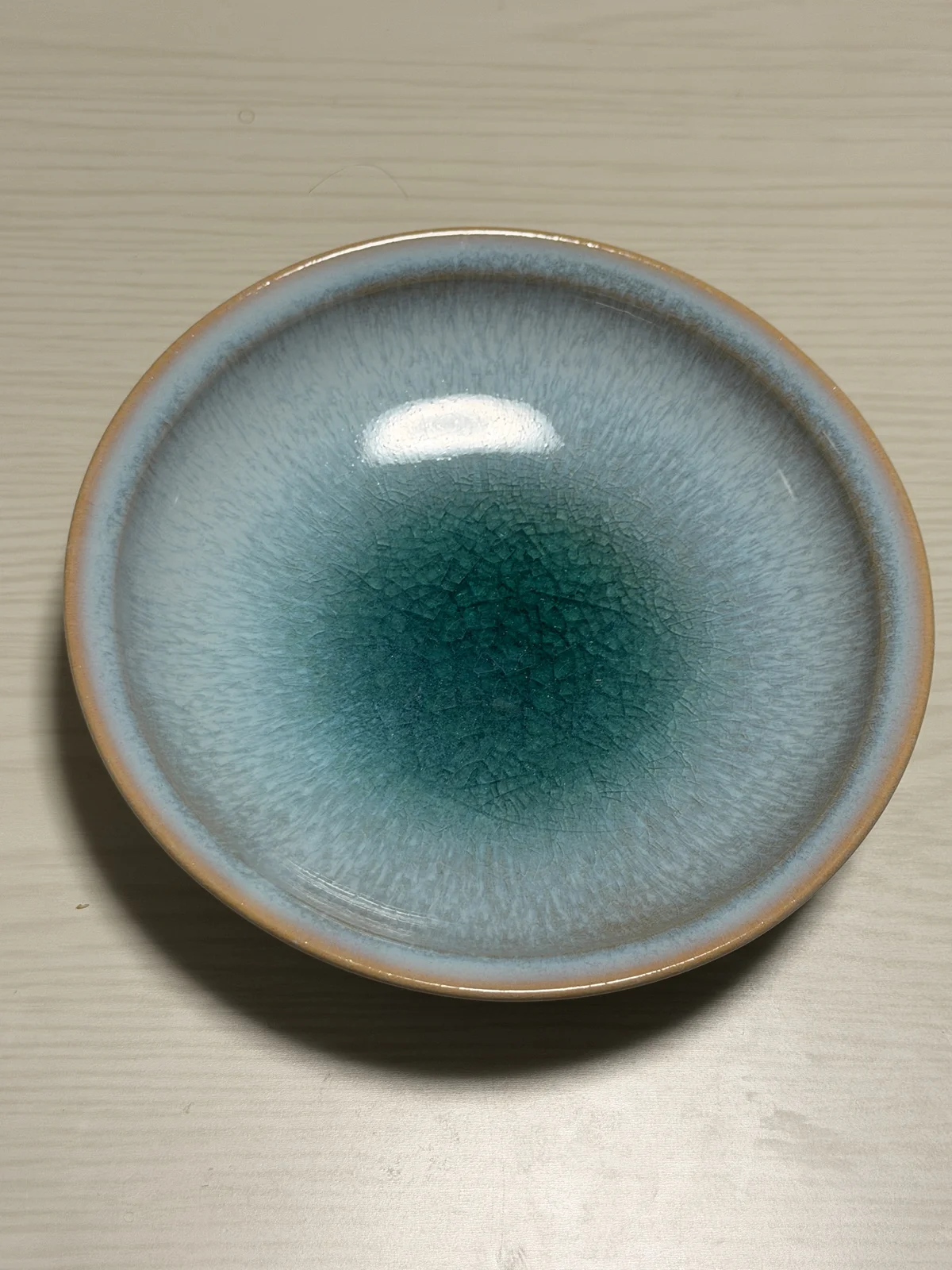
Soft blue spread across the surface, deepening into turquoise toward the center, with warm earthy tones showing at the rim.
The price was approachable — somewhere in the ¥1,000 range, under about ¥1,500 each, as far as we remember — so we bought two.
Only afterwards did I look more closely at what they were: Hagi ware, made by Tenryu Kiln in Hagi, Yamaguchi Prefecture.
Since then, the plate has found a clear role on my table. I use it mainly for sashimi and other small dishes served with sake — close to how a mukozuke is used in Japanese dining.
It may not have been sold as a mukozuke. That is simply the job it has taken on at home.
Plate Details
| Detail | Information |
|---|---|
| Maker | Tenryu Kiln (Hagi, Yamaguchi) |
| Ware | Hagi ware |
| Possible product | Sorairo 5-sun plate (very likely, not confirmed) |
| Diameter | Approx. 15–16 cm, measured at home |
| How I use it | Mukozuke-style plate for sashimi and sake dishes |
| Purchased at | 48th West Japan Ceramics Fair, Kitakyushu (2026) |
| Price paid | ¥1,000 range, under approx. ¥1,500 each |
| Quantity | Two |
Is This Tenryu Kiln’s Sorairo 5-sun Plate?
After buying the plate, I found a piece in Tenryu Kiln’s online store called the Sorairo 5-sun plate (sold out at the time of writing). The resemblance is strong, for three reasons.
Color. The blue-to-turquoise glaze looks very similar.
Size. Japanese tableware is often sized in the traditional unit sun, and one sun is about 3.03 cm. A 5-sun plate is therefore roughly 15.2 cm across. Mine measures about 15–16 cm.
Price. The kiln’s Momoiro 5-sun plate, the pink version of the same size, is listed at ¥1,375 at the time of writing — consistent with what we remember paying.
However, I did not photograph a product tag or keep a receipt showing the item name. So in this article I call it simply my Tenryu Kiln Hagi ware plate, very likely from the Sorairo series.
What Is Hagi Ware?
Hagi ware, or Hagi-yaki, comes from Hagi in Yamaguchi Prefecture. It is one of Japan’s best-known ceramic traditions, with a particularly close relationship to tea culture.
But Hagi ware is not limited to tea bowls. Today’s makers produce sake ware, plates, and everyday tableware as well.
Tenryu Kiln describes its work as valuing the expression of Hagi clay and glaze. Even with the same shape, clay, and glaze, differences in kiln position, temperature, season, and weather can change the color, glaze flow, and crackle — so no two pieces are exactly alike.
That makes an interesting contrast with the Bizen ware guinomi I bought at the same fair. Bizen ware is typically unglazed, and its character comes directly from clay, flame, and ash. Hagi ware is glazed — but, as this plate shows, a glazed surface can be anything but predictable.
→ Read about my Bizen Ware Guinomi by Ryohei Sakai
The Color That Caught My Wife’s Attention
At first glance, the plate looks blue. Up close, the surface is more complicated.
The center is a deep turquoise-blue, with fine crackle visible in the glaze. Moving outward, the blue becomes softer and almost milky before reaching a warm beige-brown rim.
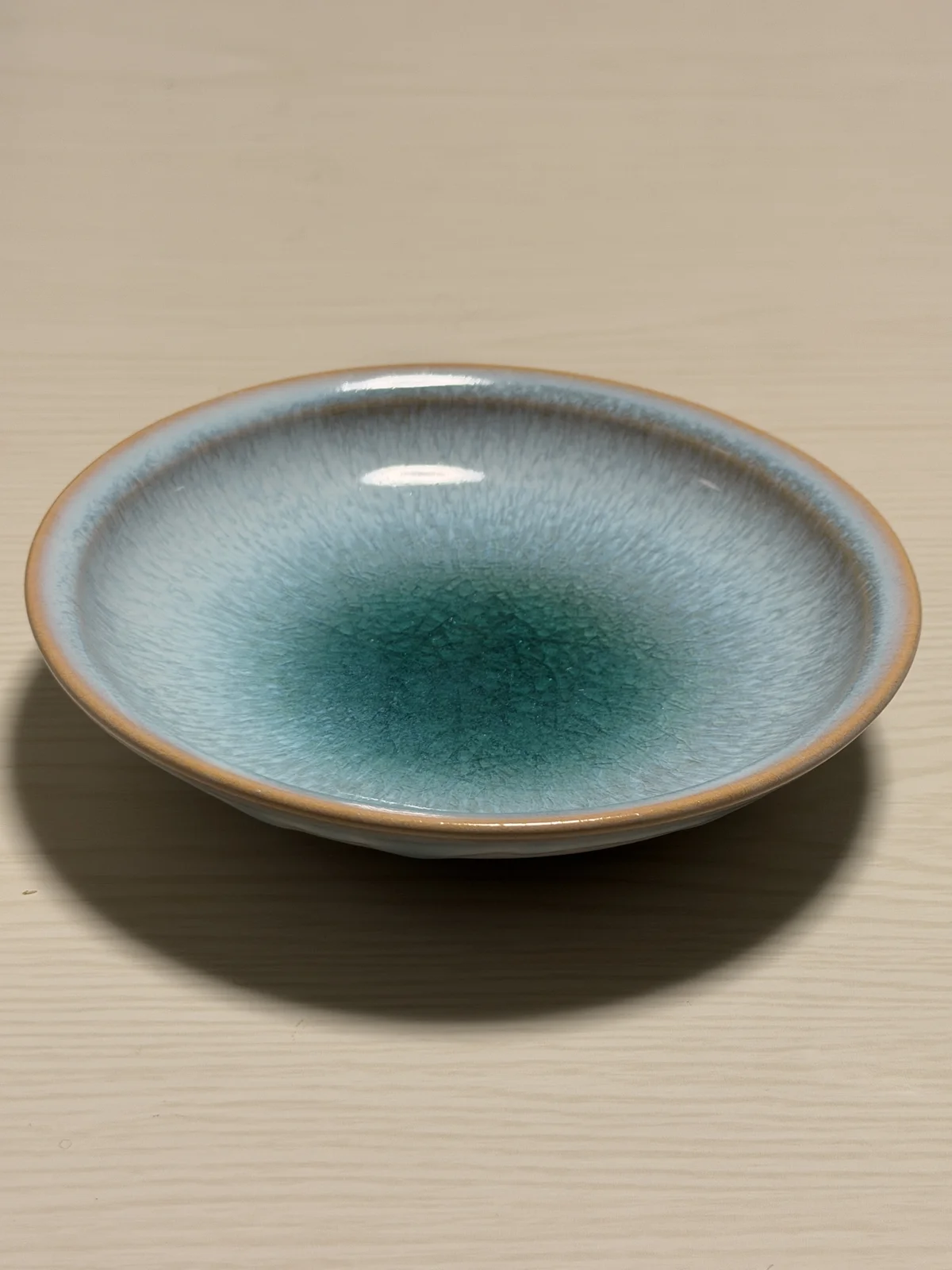
If this is indeed from the Sorairo series, the kiln’s own description offers a clue. Tenryu Kiln presents Sorairo as a glass-glaze line, in which glass flows down into the piece and catches the light. Looking at my plate with that in mind, the deep, glassy turquoise pooled at the center makes a lot of sense.
The reverse looks completely different. Much of the underside is covered in a soft pinkish-white glaze, edged with pale blue where the glaze has run, around a bare clay foot ring.
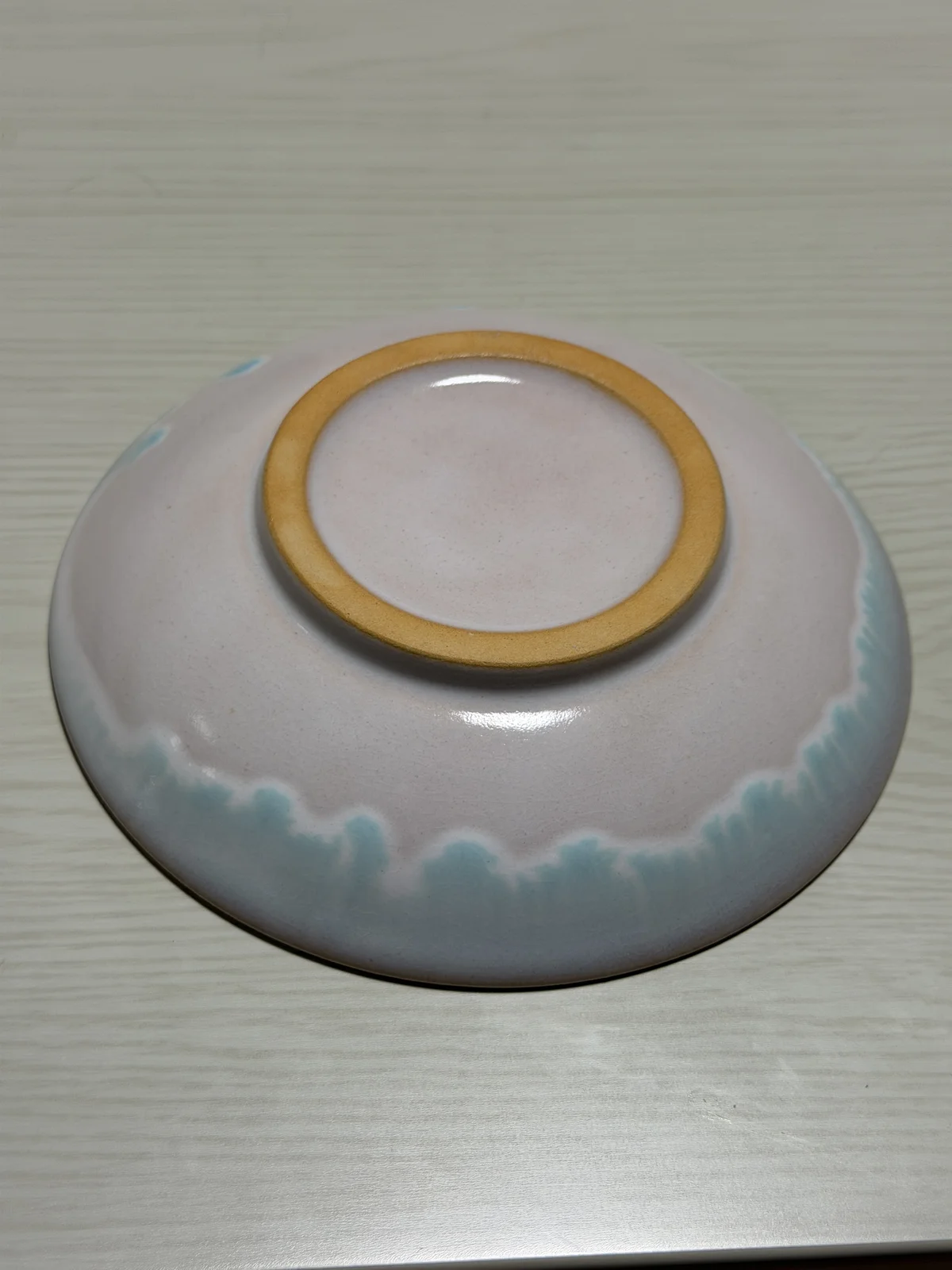
I did not fully appreciate that contrast until I started using the plate at home.
Hagi no Nanabake: A Vessel That Changes With Use
One of the best-known ideas in Hagi ware is Hagi no nanabake — literally, the “seven transformations of Hagi.”
The care leaflet that came with my plate explains it this way: Hagi clay and glaze shrink differently during firing, creating fine cracks in the glaze called kannyu. Over time, tea and sake seep into these cracks, and the vessel’s appearance slowly changes. The leaflet describes this as sodateru utsuwa — literally, “a vessel you raise,” or perhaps more naturally, a vessel that develops through use.
Tenryu Kiln also applies a water-repellent treatment before sale, so the change does not happen all at once. The leaflet notes that this treatment is not permanent; liquids gradually find their way into the crackle, and the owner can enjoy watching the vessel slowly become their own.
Many objects are expected to look new for as long as possible. Hagi ware almost encourages the opposite: use it, and let time become part of the surface.
Why I Use It as Mukozuke
In traditional Japanese dining, mukozuke commonly refers to a small dish placed beyond the rice and soup, often containing sashimi, vinegared food, or another seasonal preparation. The term is also used for the vessel in which it is served.
I am not using this plate in a formal kaiseki setting. At home, I use the idea more loosely: a small dish placed beside a cup of sake, usually holding sashimi or another simple accompaniment.
At about 15–16 cm, it gives the food enough space to look clean without taking over the table.
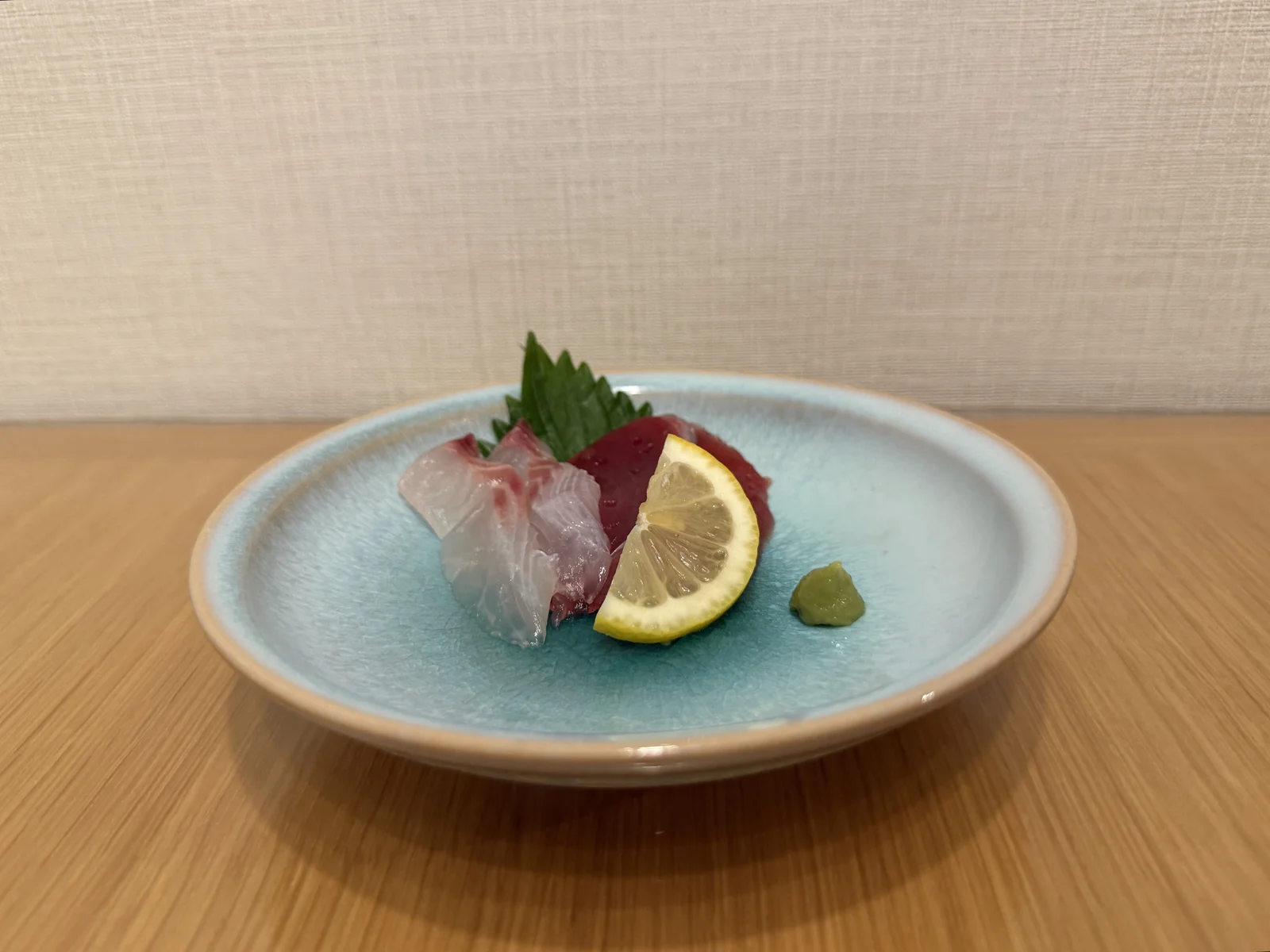
Sashimi works particularly well. The pale blue surface keeps white fish visible, red tuna looks even more vivid, and green shiso and wasabi stand out against the turquoise glaze. The plate is distinctive, but it does not overwhelm the food.
With Shichida Omachi Hiyaoroshi
One of the first pairings where this plate appeared in my photos was Shichida Junmai Omachi Hiyaoroshi from Saga. I served it with sashimi on the Tenryu Kiln plate and drank it from a Bizen ware guinomi by Ryohei Sakai.
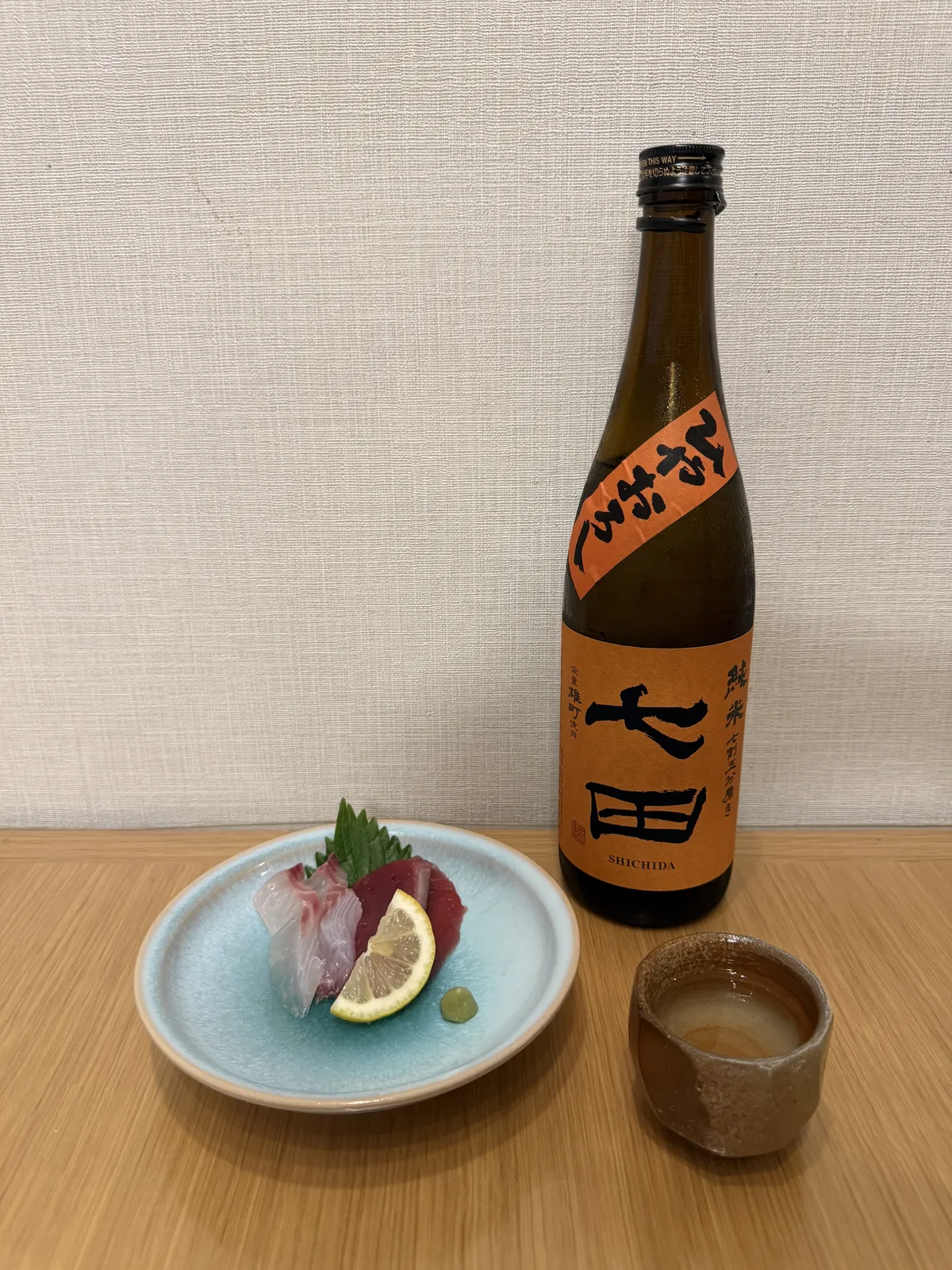
Each element now has its own story. The sake comes from Saga. The plate is Hagi ware from Yamaguchi. The guinomi is Bizen ware from Okayama.
I did not plan it as a showcase of regional Japanese craft. I simply used things I had bought because I liked them.
That is increasingly how I think about enjoying sake. The cup affects how sake feels in the hand, the food changes how it tastes, and the plate changes the atmosphere of the whole table.
→ Read my Shichida Junmai Omachi Hiyaoroshi review
→ Read about the Bizen ware guinomi by Ryohei Sakai
What I Like About This Plate
- The color. The shift from pale blue to deep turquoise has far more character than I noticed at the fair.
- The size. Large enough for a small serving of sashimi, small enough to sit beside a sake cup and bottle.
- The price. This is not a collector’s piece. It was inexpensive enough to buy two and use every week — a reminder that Japanese ceramics do not need to be rare or expensive to make a sake table more interesting.
- The story behind it. My wife chose it simply because she liked the design, without knowing it was Hagi ware. Learning about Tenryu Kiln and the glaze only afterwards made it a more memorable introduction to the craft than any research beforehand.
Caring for the Plate
Hagi ware asks for a little more care than everyday porcelain. Based on the care leaflet from Tenryu Kiln:
- Before first use: soak the plate in water for about half a day, then wash it clean.
- Avoid: microwaves, ovens, and dishwashers, which can cause damage or discoloration.
- Don’t leave food sitting on it: Hagi ware is absorbent, and oily, acidic, or alcoholic foods left in it for a long time can cause stains or odors. With sashimi, that means clearing away soy sauce and lemon rather than letting them sit.
- Dry thoroughly: after washing, let the plate dry completely before putting it away, to prevent mold and odors.
- Protect your table: the unglazed foot ring is rough and can scratch a table, so the kiln recommends using a mat or cloth.
For me, this care is part of the experience rather than an inconvenience. It is closely tied to the way Hagi ware changes with use.
Where in Japan
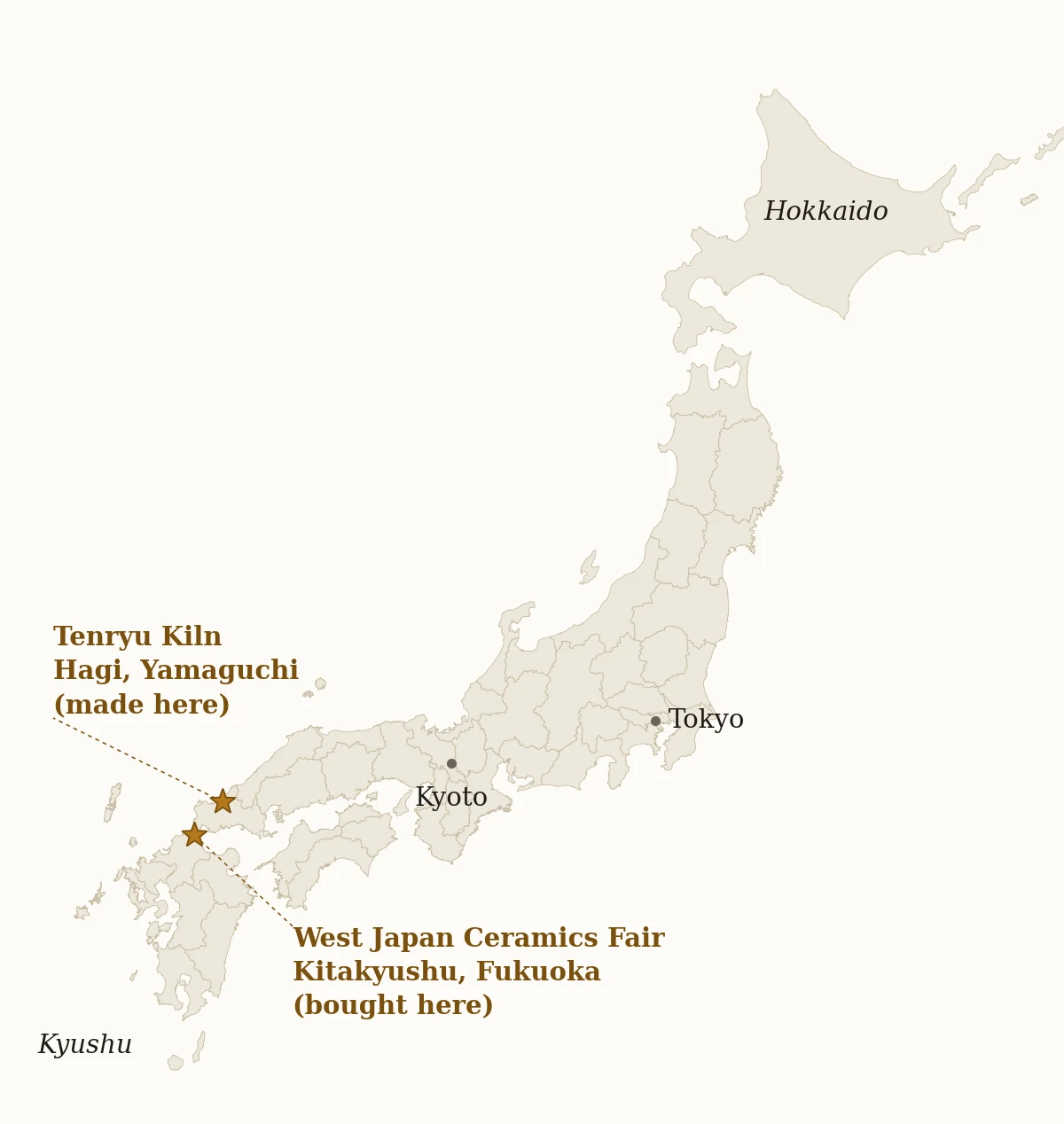
Where in Japan: This plate was made by Tenryu Kiln in Hagi, Yamaguchi Prefecture. I bought it at the West Japan Ceramics Fair in Kitakyushu, Fukuoka Prefecture.
Hagi, Yamaguchi Prefecture — where the plate was made. Hagi sits on the Sea of Japan coast at the western end of Honshu, and it is the home of Hagi ware and of Tenryu Kiln.
Kitakyushu, Fukuoka Prefecture — where I bought it, at the 48th West Japan Ceramics Fair. Kitakyushu lies at the northern tip of Kyushu, just across the Kanmon Straits from Yamaguchi, which makes it a natural place to meet potters from both sides of the strait.
Where I Bought It — and Exploring More Hagi Ware
I bought the plate directly from Tenryu Kiln at the 48th West Japan Ceramics Fair in Kitakyushu in 2026.
Ceramics fairs have become one of my favorite places to discover tableware. Many Japanese pottery traditions sit side by side, and sometimes it is the texture or glaze of a piece — not its name — that makes you stop. That is exactly what happened here.
Tenryu Kiln sells its work through its online store. Handmade pieces vary in color, glaze, shape, and size, so rather than hunting for an exact copy of my plate, I think it is more rewarding to explore Hagi ware as a tradition.
Final Thoughts
This plate entered our home almost by accident. My wife liked the color, the price was reasonable, and only later did I learn it was Hagi ware from Tenryu Kiln.
Now it is one of the plates I reach for most naturally when serving sashimi with sake.
A Bizen guinomi holds the sake. A Hagi ware plate holds the food beside it. Together, they make the table feel complete.
That is why I am starting to think about “sake ware” more broadly — not just the vessel that holds the sake, but also the ones that hold the food beside it.
Related Reading
Sake is an alcoholic beverage. This article is intended for readers of legal drinking age in their country — please drink responsibly.