
What Is Hiyaoroshi? A Guide to Japan's Autumn Sake
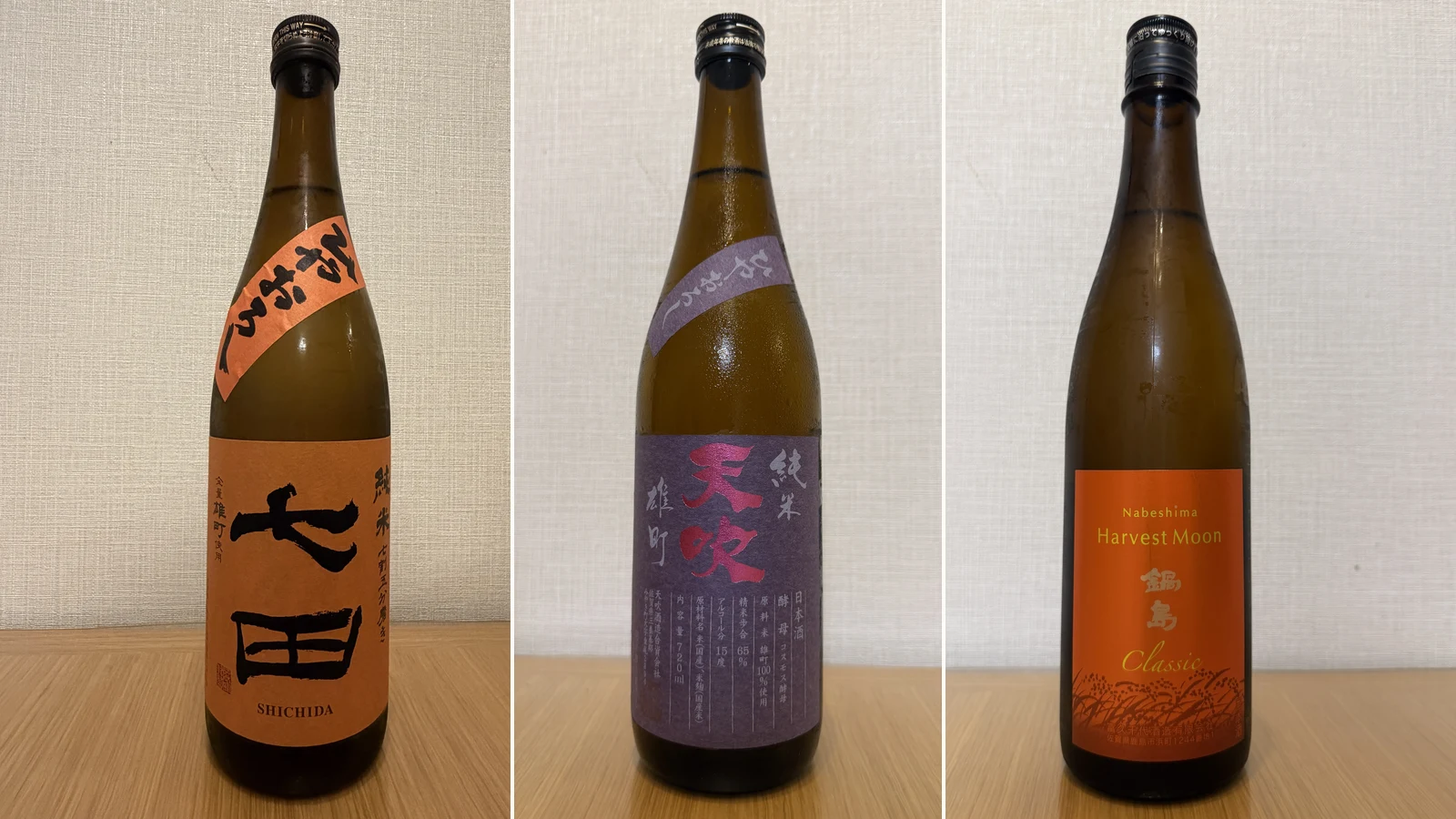
Table of Contents
- The Short Answer
- How Hiyaoroshi Is Made
- Why Is It Called Hiyaoroshi?
- Hiyaoroshi vs. Nama Sake vs. Akiagari
- When Does Hiyaoroshi Appear?
- What Does Hiyaoroshi Taste Like?
- Same Rice, Same Season, Very Different Results
- Is Every Autumn Sake a Hiyaoroshi?
- Should Hiyaoroshi Be Served Cold or Warm?
- What Food Goes with Hiyaoroshi?
- How to Choose a Hiyaoroshi
- Which Hiyaoroshi Should a Beginner Try?
- Final Thoughts
- Related Reading
Every September, the sake shelves in Japan start to change.
Bright summer labels give way to autumn colors, and one word begins appearing on bottle after bottle: hiyaoroshi (ひやおろし, pronounced hee-yah-oh-roh-shee).
Hiyaoroshi is sake that has rested through the summer and is released in autumn without the usual second pasteurization. It is one of the most recognizable seasonal styles in Japanese sake.
This autumn, I opened three bottles from Saga Prefecture within about a week. Two were labeled hiyaoroshi. They used the same rice variety, came from the same prefecture, and were opened only three days apart — yet tasted very different. The third, sometimes described as a hiyaoroshi but not labeled as one, was the freshest of all.
That made me look more closely at what the word actually tells you — and what it does not.
The Short Answer
| Japanese | ひやおろし / 冷やおろし |
| Season | Autumn, usually from September |
| Traditional process | Pasteurized once before summer storage, then released without a second pasteurization |
| Closely related term | Nama-zume |
| Typical impression | More settled, rounded, and integrated than freshly pressed sake |
| Does it guarantee a particular taste? | No |
Hiyaoroshi tells you about the sake’s seasonal journey. It is a production and release term, not a flavor guarantee.
How Hiyaoroshi Is Made
A traditional hiyaoroshi follows a simple seasonal rhythm.
Winter to spring: brewing. Sake is traditionally brewed in the colder months. Freshly pressed sake can taste youthful, lively, or a little rough around the edges.
After pressing: the first pasteurization. Most sake is heat-treated — a process called hiire — to stabilize it before storage. A traditional hiyaoroshi receives this first pasteurization before it is put away for the summer.
Summer: rest. The sake rests through the warmer months. During this time, its sharper edges can soften and its flavors can come together. This is one season of rest, not long-term aging in the sense of aged wine or whisky.
Autumn: release without the second pasteurization. Most sake is heated a second time before or during bottling. Hiyaoroshi traditionally skips this step and is released in the state it reached after the summer.
One pasteurization, one summer of rest, and an autumn release: that is the core idea.
Why Is It Called Hiyaoroshi?
The name comes from an older way of storing and shipping sake.
Historically, sake was pasteurized and stored in large vessels through the summer. By autumn, the outside air had cooled to roughly the same temperature as the stored sake, so it could be shipped to sellers as it was, without heating it again.
The word is usually explained in two parts:
- hiya (冷や) — sake served without warming, traditionally around room temperature
- oroshi (卸し) — shipping or wholesaling to sellers
Modern breweries use tanks, bottles, refrigeration, and controlled distribution, so the practical details have changed. The seasonal idea remains: hiyaoroshi is sake that has passed through summer and reappears in autumn.
Hiyaoroshi vs. Nama Sake vs. Akiagari
Three terms tend to cause confusion in autumn. Here is how they relate.
Hiyaoroshi Is Not Nama Sake
Nama sake has not been pasteurized at all. Traditional hiyaoroshi has been pasteurized once. That makes it closest to a style called nama-zume: pasteurized before storage, but not again at bottling.
| Style | Before storage | Before or at bottling |
|---|---|---|
| Typical twice-pasteurized sake | Pasteurized | Pasteurized |
| Nama | Not pasteurized | Not pasteurized |
| Nama-chozo | Not pasteurized | Pasteurized |
| Nama-zume | Pasteurized | Not pasteurized |
| Traditional hiyaoroshi | Pasteurized | Not pasteurized |
In other words, hiyaoroshi is not “aged nama sake.” It has already been heat-treated once.
I explain nama, nama-zume, and nama-chozo in more detail in my guide to Muroka, Nama, and Genshu.
Hiyaoroshi Is Not Exactly Akiagari
You may also see the word akiagari (秋上がり) in autumn. It means roughly “rising in autumn,” and describes sake that has improved through summer maturation.
The difference is one of emphasis:
- Akiagari describes how the sake developed.
- Hiyaoroshi describes a traditional way of handling and releasing it.
In practice, the two words often appear side by side and are sometimes used loosely. When in doubt, read the brewery’s own description rather than assuming they mean the same thing.
When Does Hiyaoroshi Appear?
Hiyaoroshi usually starts appearing in September and continues through autumn. These are seasonal bottles: what you see on the shelf in October may be gone by winter.
For anyone visiting Japan, this is one of the clearest ways to experience the seasonality of sake. Winter brings freshly pressed shiboritate, summer brings lighter seasonal releases, and autumn brings hiyaoroshi.
What Does Hiyaoroshi Taste Like?
Hiyaoroshi is commonly associated with:
- a calmer aroma
- a rounder texture
- deeper umami
- less youthful sharpness
- more integrated flavors
Those are useful expectations, not rules. Rice, polishing ratio, yeast, alcohol, acidity, storage conditions, filtration, and serving temperature can all push a sake in different directions.
The two bottles I tasted this year showed how far apart two hiyaoroshi can be.
Same Rice, Same Season, Very Different Results
Shichida Junmai Omachi Hiyaoroshi and Amabuki Junmai Omachi Hiyaoroshi look almost like twins on paper. Both are junmai, both use 100% Omachi rice, both come from Saga Prefecture, and both are labeled hiyaoroshi. I opened them three days apart.
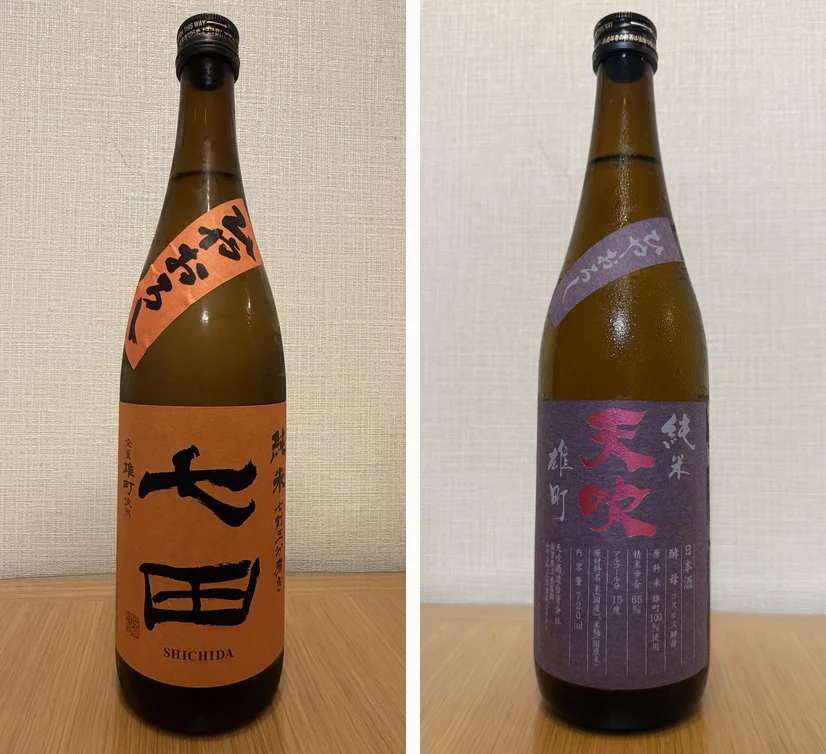
Shichida had a fruity, banana-like aroma, noticeable sweetness, and plenty of flavor — sweetness, acidity, umami, and a thread of bitterness arriving together — yet it finished cleanly. Its back label describes it as matured over one summer. It showed that a settled, integrated sake does not have to be quiet.
Amabuki went in the opposite direction. The aroma was quiet, sweetness stayed low, and acidity, bitterness, and perceived alcohol warmth stood out. It was drier and firmer — and it was the one that changed most as it warmed, which I come back to below.
| Shichida | Amabuki | |
|---|---|---|
| Rice | Omachi 100% | Omachi 100% |
| Polishing ratio | 75% | 65% |
| Alcohol (label) | 17% | 15% |
| Yeast (label) | Not stated | Cosmos flower yeast |
| Aroma | Fruity, banana-like | Quiet, rice-led |
| Sweetness | Noticeable | Low |
| Bitterness | Moderate | More pronounced |
| Overall impression | Layered, full, clean finish | Dry, firm, composed |
| Approachability | 3 / 5 | 2.5 / 5 |
This is why I would not choose a hiyaoroshi based on the word alone. If you already know whether you prefer fruity, dry, rich, or lighter sake, read the rest of the label too.
Is Every Autumn Sake a Hiyaoroshi?
No — and the third bottle made that clear.
Nabeshima Harvest Moon is an autumn release from Fukuchiyo Shuzo, also in Saga. Some retailers describe it as Nabeshima’s autumn hiyaoroshi, but the bottle I bought does not use the word, so I treat that as a retail description rather than a statement from the brewery.
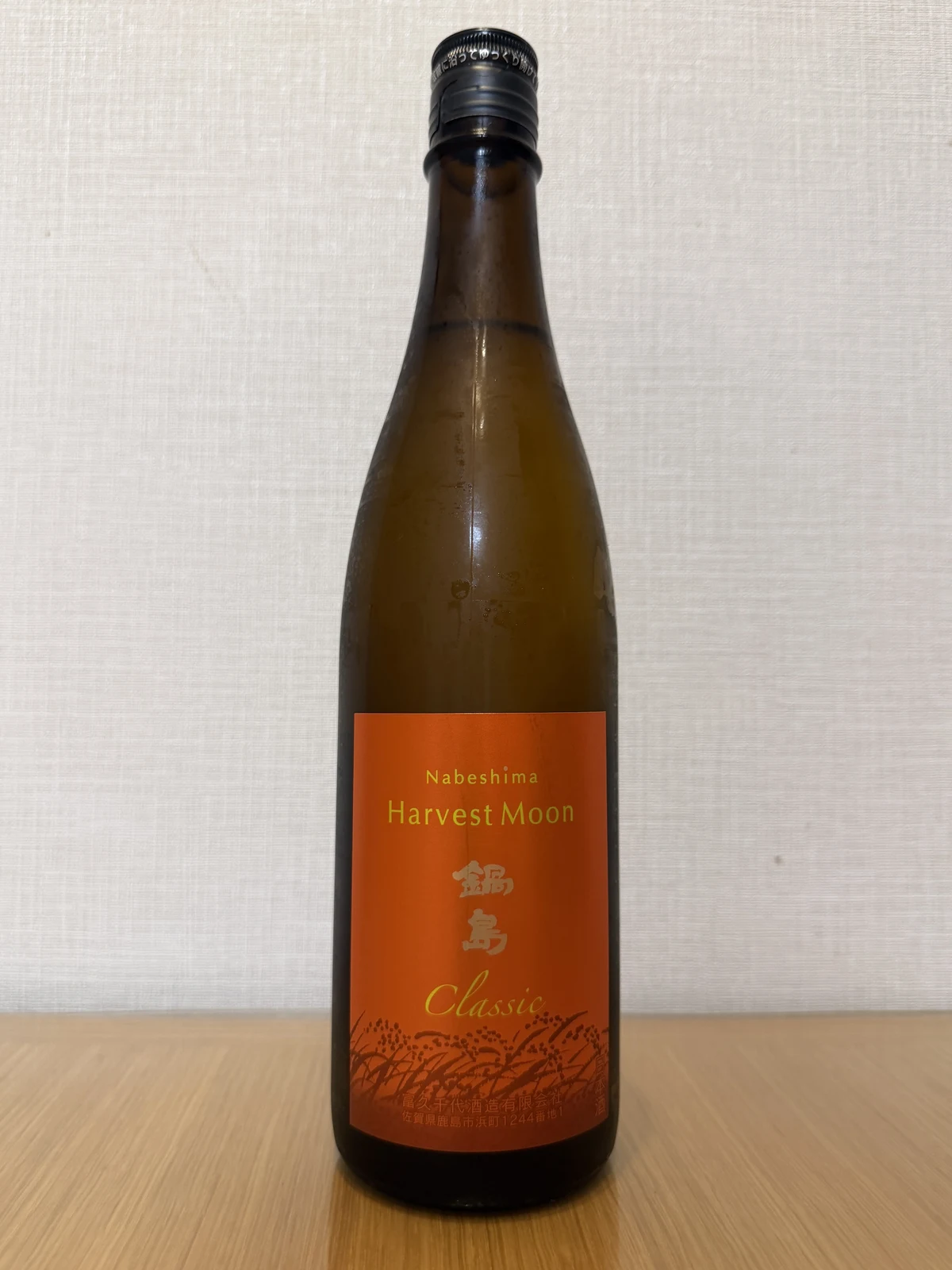
In the glass, it was the opposite of what hiyaoroshi usually suggests: fresh, juicy, fruity, and lightly sparkling, at its best while still cold. It felt the most youthful in character of the three.
“Autumn sake” is a broader idea than hiyaoroshi. A bottle can be released for autumn without calling itself hiyaoroshi — and a bottle sold alongside hiyaoroshi may not taste calm or mellow at all.
Should Hiyaoroshi Be Served Cold or Warm?
There is no single correct temperature, and my two bottles behaved differently.
Shichida stayed fairly consistent as it warmed in the glass. Its brewery recommends serving it either lightly chilled or warm, both warmer than straight from the refrigerator.
Amabuki changed more. Straight from the refrigerator, it was at its driest and firmest. After some time in the glass, sweetness and umami came forward and it became rounder. When I tried it as nurukan — gently heated — it gained sweetness but also more perceived alcohol warmth, so heating did not simply make it softer.
So I would not assume that hiyaoroshi means warm sake. A simple approach:
- Start chilled.
- Let it sit in the glass for 10–15 minutes and notice what changes.
- If the brewery recommends warming, try a small portion gently heated.
The change itself can be part of the experience.
What Food Goes with Hiyaoroshi?
Hiyaoroshi is often paired with autumn food, and its umami and roundness can work well with:
- grilled fish
- mushrooms
- simmered dishes
- hot pot
- richer seafood
- dishes built on soy sauce or dashi
But the bottle matters more than the category. My Shichida worked well with sashimi. My first attempt with Amabuki — cheese, nuts, and small dried fish — did not work, and I would rather record that mismatch than pretend every autumn pairing succeeds.
The useful question is not “What goes with hiyaoroshi?” but “What goes with this hiyaoroshi?”
How to Choose a Hiyaoroshi
When several hiyaoroshi are on the shelf, look beyond the seasonal word.
Rice. Omachi, Yamadanishiki, Gohyakumangoku, and other varieties may point in different directions — although rice alone never determines flavor. My two Omachi bottles are proof of that.
Polishing ratio. This tells you how much of each grain remains. It gives context, but my 75%-polished Shichida was neither heavy nor rough.
Alcohol. Higher alcohol can add weight or warmth, but perception does not always follow the number. My 15% Amabuki felt more alcohol-forward than the 17% Shichida.
The brewery’s description. Words such as dry, mellow, rich, aromatic, or crisp can narrow down the style.
Serving recommendations. If the brewery suggests both cool and warm temperatures, the sake may change noticeably in the glass.
Sake Meter Value, if listed. It can hint at a sweeter or drier direction, but it is only one clue. I explain why in my guide to the Sake Meter Value.
Which Hiyaoroshi Should a Beginner Try?
Of the two hiyaoroshi I tasted this year, I would start with Shichida. Its fruit and sweetness give a newcomer more to hold on to in the first sip, which is why I rated it 3 / 5 for approachability, against 2.5 / 5 for the drier, firmer Amabuki.
That does not make Shichida the better sake. It simply asks a little less of someone who has not drunk much sake before.
If you are open to an autumn bottle that is not labeled hiyaoroshi, Nabeshima Harvest Moon was the easiest of the three, at 3.5 / 5. You can read how I score approachability on my Approachability page.
Final Thoughts
Before tasting these bottles, I understood hiyaoroshi mostly as a definition: sake brewed earlier in the year, rested through summer, and released in autumn without a second pasteurization.
That definition is correct. But the bottles made it more useful.
Two sakes made with the same rice, from the same prefecture, and both labeled hiyaoroshi were fruity and layered in one case, dry and composed in the other. And an autumn bottle that does not call itself hiyaoroshi on the label turned out to be the freshest of all.
The word tells you where the sake has been. The glass tells you what became of it.
Related Reading
- Shichida Junmai Omachi Hiyaoroshi — fruity, layered, and surprisingly clean
- Amabuki Junmai Omachi Hiyaoroshi — dry, firm, and best understood beside Shichida
- Nabeshima Harvest Moon — an autumn bottle that tasted anything but settled
- Muroka, Nama, and Genshu Explained — the label terms behind pasteurization and filtration
- What Does +14 Mean on a Sake Label? — understanding the Sake Meter Value and why it does not predict taste on its own
Sake is an alcoholic beverage. This article is intended for readers of legal drinking age in their country — please drink responsibly.