
Kuzo Junmai Ginjo Fukuno Hana Shiboritate Review | A Fresh Sake from Kobe
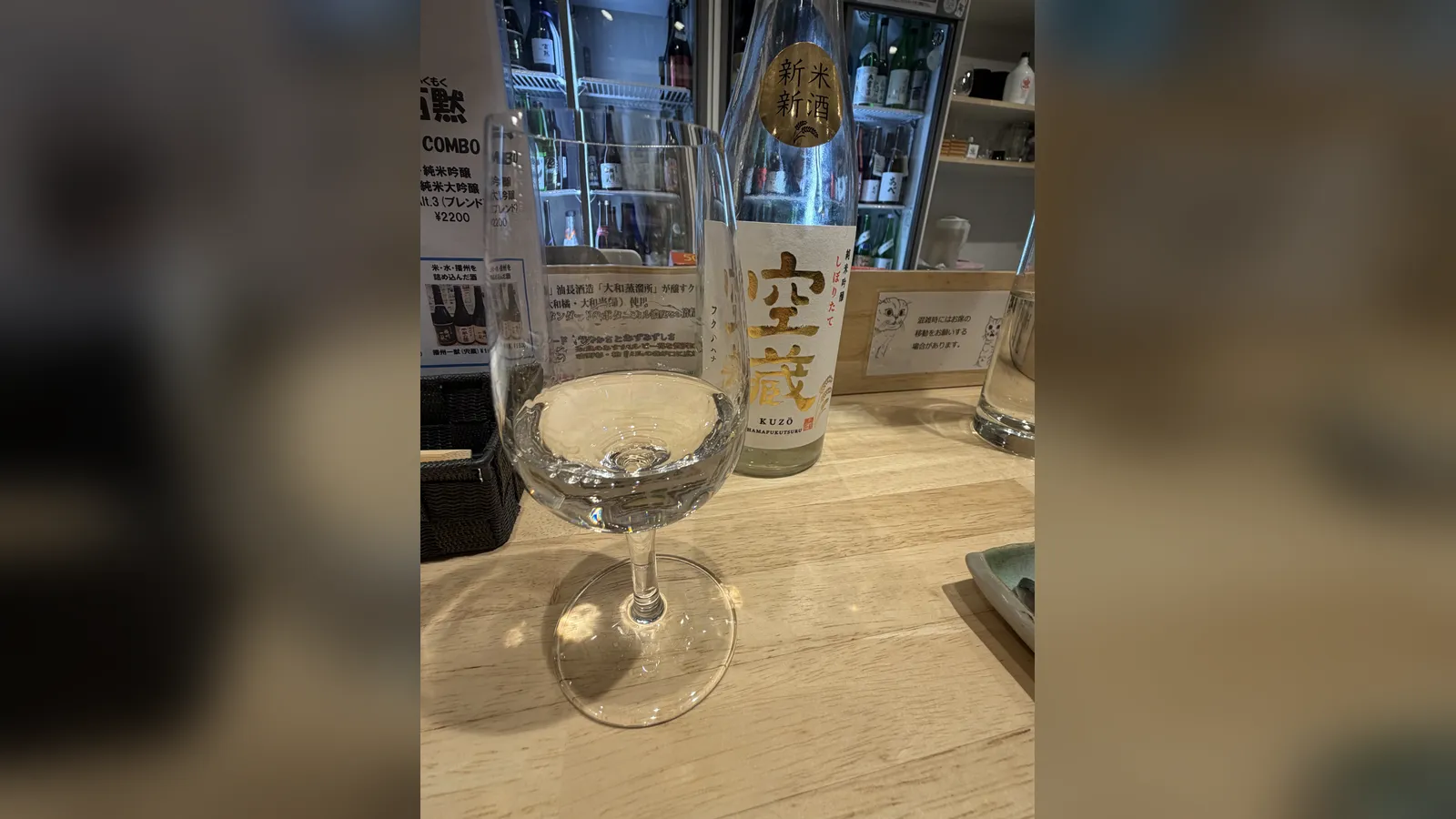
Table of Contents
This article contains affiliate links. If you buy through my Palate Project link or use my discount code, you may get 10% off as a first-time customer, and I may earn a small commission at no extra cost to you — it never changes what I recommend. Full disclosure.
I often associate freshly pressed sake with lively fruit aromas and a slight natural fizz. Kuzo Junmai Ginjo Shiboritate was different.
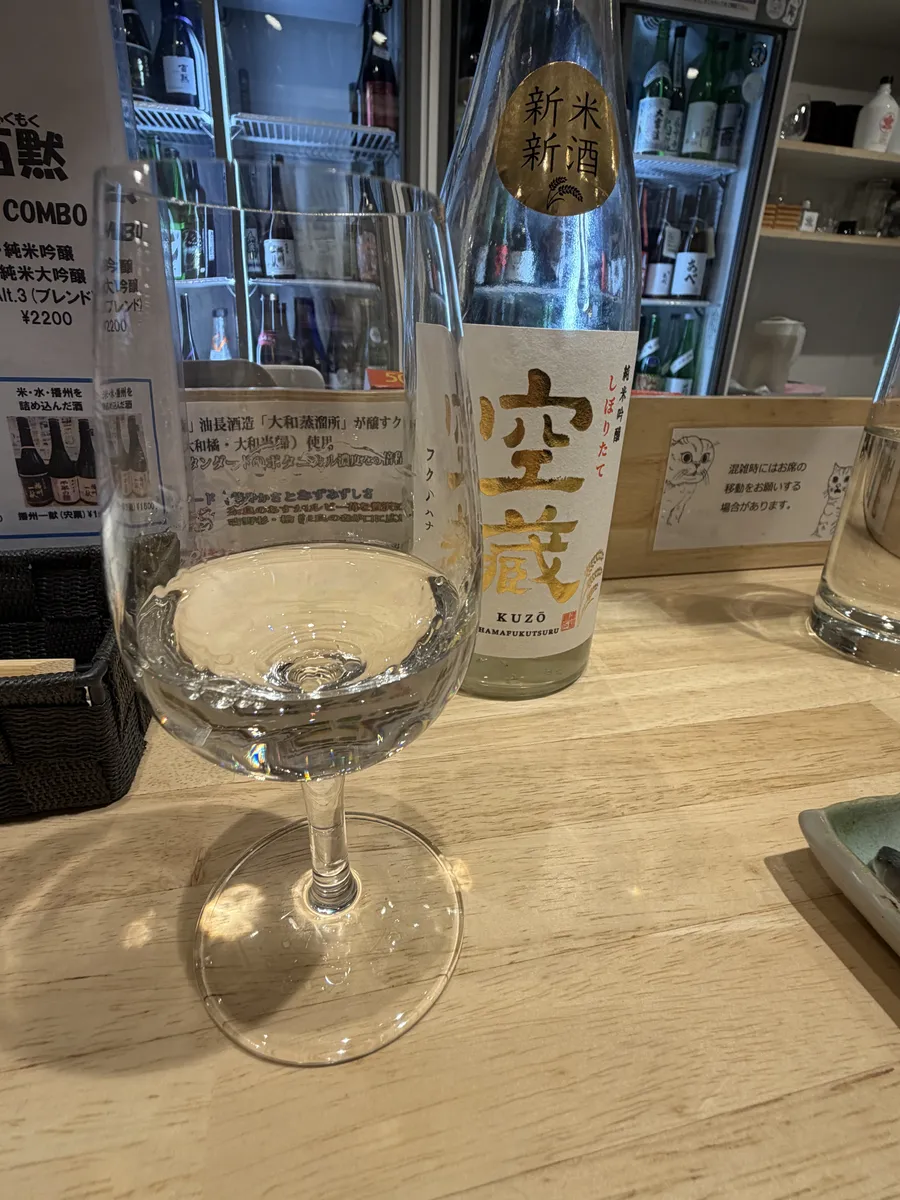
I tasted it by the glass at Asano Nihonshuten Sannomiya, a sake shop in Kobe where you can also drink at the counter. Made by Hamafukutsuru in Kobe’s Nada district with Fukuno Hana rice grown in northern Hyogo, it was a freshly pressed, unpasteurized sake from the new rice harvest. The first thing I noticed was a rich aroma of rice and koji; on the palate, gentle sweetness and umami arrived together, creating a rounded, full-bodied impression.
I enjoyed it alongside a plate of three small Japanese appetizers—which turned out to be a good way to see where this sake shines, and where it doesn’t.
At a Glance
| Detail | Information |
|---|---|
| Name | Kuzo Fukuno Hana Junmai Ginjo Shiboritate (空蔵 フクノハナ 純米吟醸 しぼりたて) |
| Brewery | Koyama Honke Shuzo, Nada Hamafukutsuru Brewery — Uozaki, Higashinada, Kobe (Nada), Hyogo Prefecture |
| Rice | 100% Fukuno Hana from Izushi, Toyooka City, Hyogo Prefecture |
| Ingredients | Rice and rice koji |
| Rice polishing ratio | 60% |
| Style | Muroka nama genshu (unfiltered, unpasteurized, undiluted); shinmai shinshu (new rice, new sake) |
| Alcohol | 16% |
| Bottle size | 720 ml |
| Storage | Keep refrigerated |
| How I tried it | By the glass in a stemmed glass, chilled, at a sake bar in Sannomiya, Kobe |
| Approachability | 3.5 / 5 |
Rice, ingredients, polishing ratio, alcohol, and style are from the bottle’s labels.
Muroka means the sake skipped charcoal filtration, nama means it was not pasteurized, and genshu means no water was added after pressing. For more on these label terms, see my guide to Muroka, Nama, and Genshu.
What Is Kuzo?
Kuzo (空蔵, written KUZŌ on the label) is a brand from Hamafukutsuru, a brewery in Uozaki-go, one of the five historic sake districts of Nada along the Kobe coast. Its parent company, Koyama Honke Shuzo, traces its roots to a founder who learned sake brewing in Nada more than 200 years ago before moving on to Saitama; in 1989 the company returned to Nada and joined forces with a local brewery then called Fukutsuru.
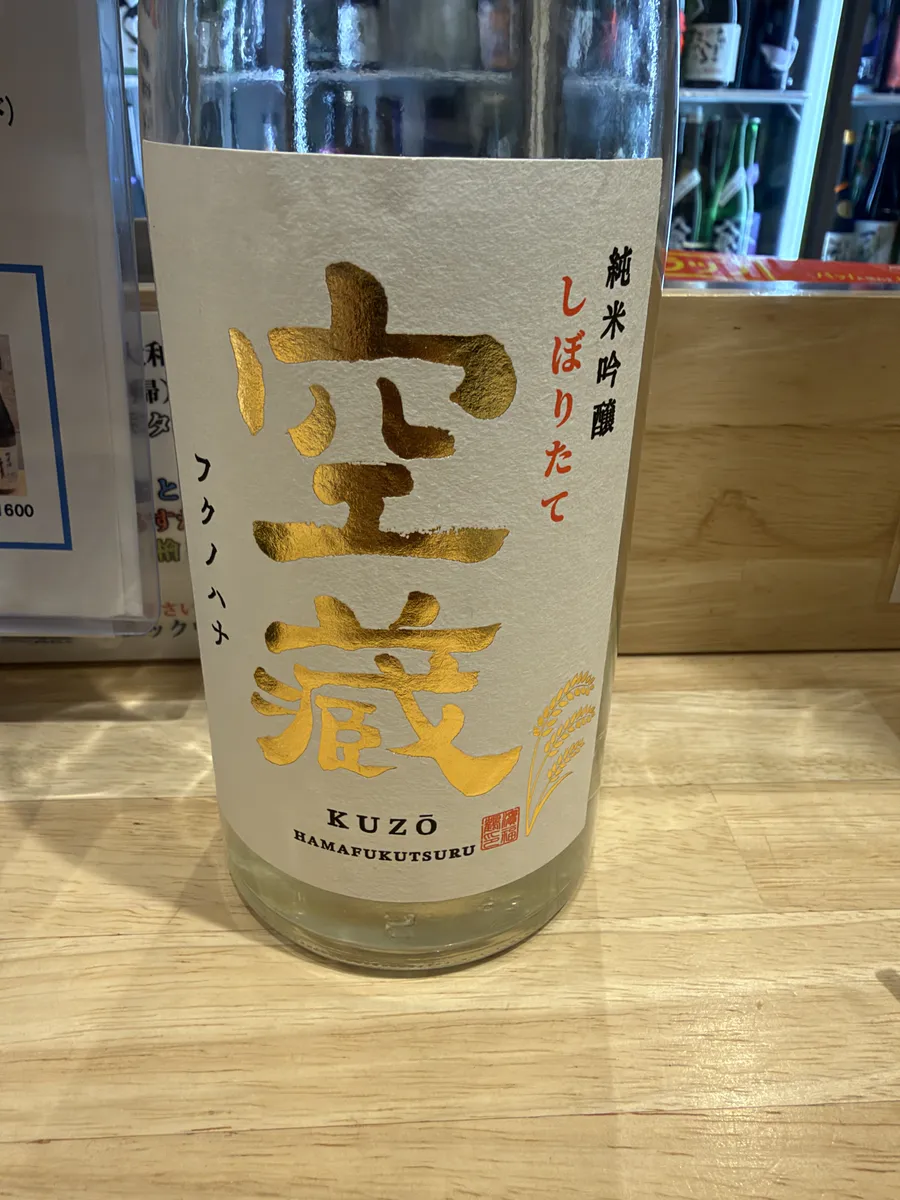
The bottle I tasted was a seasonal junmai ginjo, brewed with rice from that year’s harvest and bottled right after pressing. The front label says shiboritate (freshly pressed), and a gold sticker on the neck reads shinmai shinshu (new rice, new sake).
On its product pages, the brewery lists Kuzo junmai daiginjo made with Yamadanishiki, Omachi, and Aiyama rice, including unpasteurized versions, plus a Yamadanishiki junmai ginjo. I couldn’t find this particular Fukuno Hana Shiboritate edition among the brewery’s regular online listings. It may be a seasonal or limited-distribution release, although I haven’t confirmed its exact availability.
Rebuilding from Zero
The name Kuzo has a story of its own. According to the back label, Hamafukutsuru’s brewery was completely destroyed in the Great Hanshin-Awaji Earthquake, and Kuzo was created with the hope of starting again from zero—represented by the character ku (空), which means “empty” or “sky.”
The brewery’s website adds more detail. The 1995 earthquake flattened its old wooden brewery buildings, but the well that supplies its brewing water never ran dry; for about a month, the brewery shared that water with neighbors whose supply had been cut off. The brewery was rebuilt, and in 1996 it reopened as a visitor brewery where you can watch sake being made through glass windows.
The Rice: Fukuno Hana from Izushi
Hyogo is best known for Yamadanishiki, Japan’s most famous sake rice. This bottle uses something different: Fukuno Hana (フクノハナ).
The back label describes Fukuno Hana as a sake rice that was once widely used for brewing and is still carefully grown in Izushi, part of Toyooka City in northern Hyogo. So the rice comes from the north of the prefecture, while the sake is brewed on its southern coast—or, as the label puts it, “Hyogo rice, brewed in Nada.”
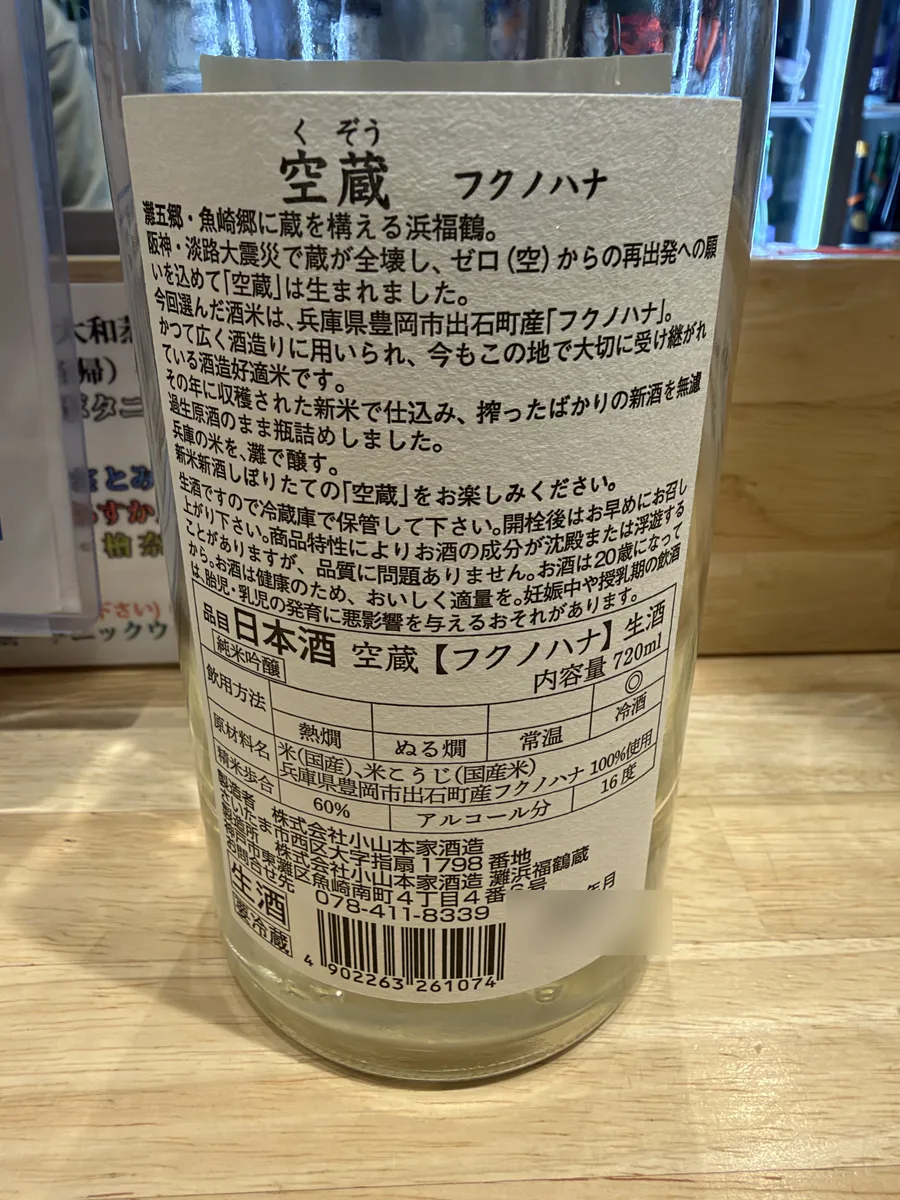
The label also notes that, because of the nature of the sake, some components may settle or float in the bottle, which does not affect quality. Among the serving temperatures listed on the back—hot, warm, room temperature, and chilled—chilled is the one marked as recommended.
How I Tasted It
The sake was served chilled in a stemmed glass at the counter. I tasted it on its own first, then with the appetizers.
This was a single glass at a sake bar, not one of my home tastings where I follow a bottle through different temperatures or over several days. I didn’t measure the serving temperature, and I didn’t compare it side by side with other Kuzo releases. The impressions below reflect this one glass.
Tasting Notes
Appearance
Clear and nearly colorless.
Aroma — Rice and Koji First
The most memorable part of the aroma was its rich rice and koji character. There was a hint of fruitiness, but it stayed in the background. Rather than suggesting a specific fruit such as apple, pear, or melon, the aroma reminded me of the ingredients sake is made from. For me, the koji notes were more expressive than the fruit.
Palate — Sweetness and Umami Together
Sweetness and umami appeared together from the first sip. The sweetness was moderate—clearly present, but this was not an especially sweet sake.
Umami was one of the defining features of this bottle, giving it richness and depth. Acidity supported the balance without becoming a focal point, and a light bitterness and a subtle spicy, dry impression were woven into the flavor rather than standing out. What I enjoyed was how these elements came together instead of competing for attention.
Body and Texture
Rounded, smooth, and relatively full-bodied. I noticed very little natural fizz; despite being a freshly pressed nama, it didn’t have the effervescence sometimes associated with this style. At 16%, the alcohol was noticeable but never harsh.
Finish
Medium in length. Sweetness and umami lingered with a little acidity, bitterness, and that gentle spicy impression, then faded together rather than with one flavor taking over. That balanced finish was one of the things I appreciated most.
Different from the Fresh, Fruity Style
Freshly pressed sake often makes its first impression through vivid fruit aromas, bright acidity, or gentle carbonation. Kuzo Fukuno Hana didn’t rely on any of these. Instead, it offered a rounded mouthfeel, rich rice and koji aromas, and a satisfying combination of sweetness and umami—more savory and substantial than light and sparkling. It was a good reminder that even within the same broad style, sake can be remarkably different.
Food Pairing: Three Japanese Appetizers
I ordered the shop’s three-item appetizer plate (¥720 on the menu at the time of my visit):
- Smoked fatty mackerel (torosaba kunsei) — according to the menu, sourced from SABAR, an Osaka restaurant that specializes in fatty mackerel
- Salmon with spicy cod roe (sake mentai)
- Grilled green onion miso (yaki negi miso)
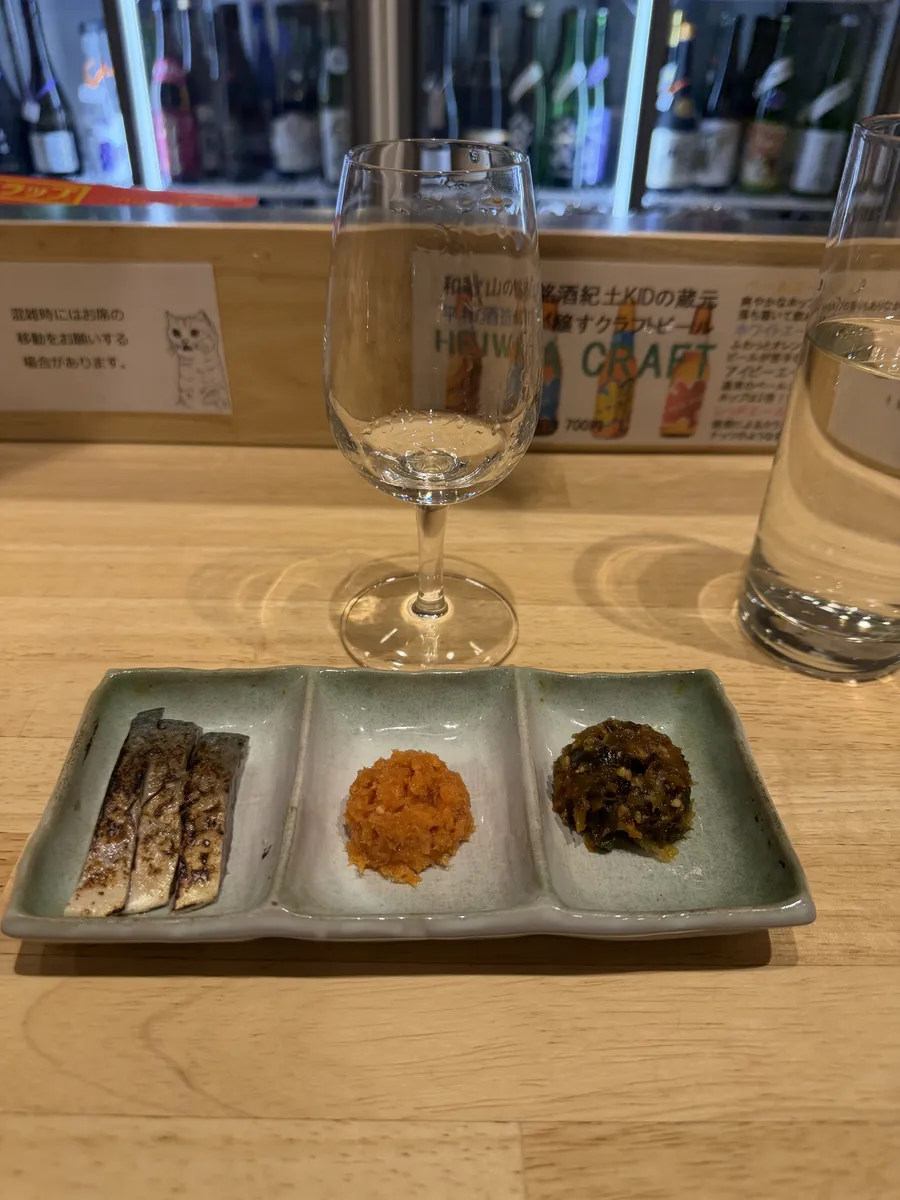
The three offered quite different combinations of saltiness, richness, and savory flavor.
Smoked fatty mackerel was one of my favorite pairings. Its oily texture and smoky flavor matched the sake’s body and umami, and the sake had enough depth to stand up to the fish without being overwhelmed.
Salmon with spicy cod roe worked just as well. The savory salmon and seasoned cod roe complemented the sake’s rice-driven umami.
Grilled green onion miso was less successful. Its seasoning was strong, and the miso flavor lingered on my palate, competing with the sake’s more subtle balance. It wasn’t an unpleasant combination, but I preferred the other two.
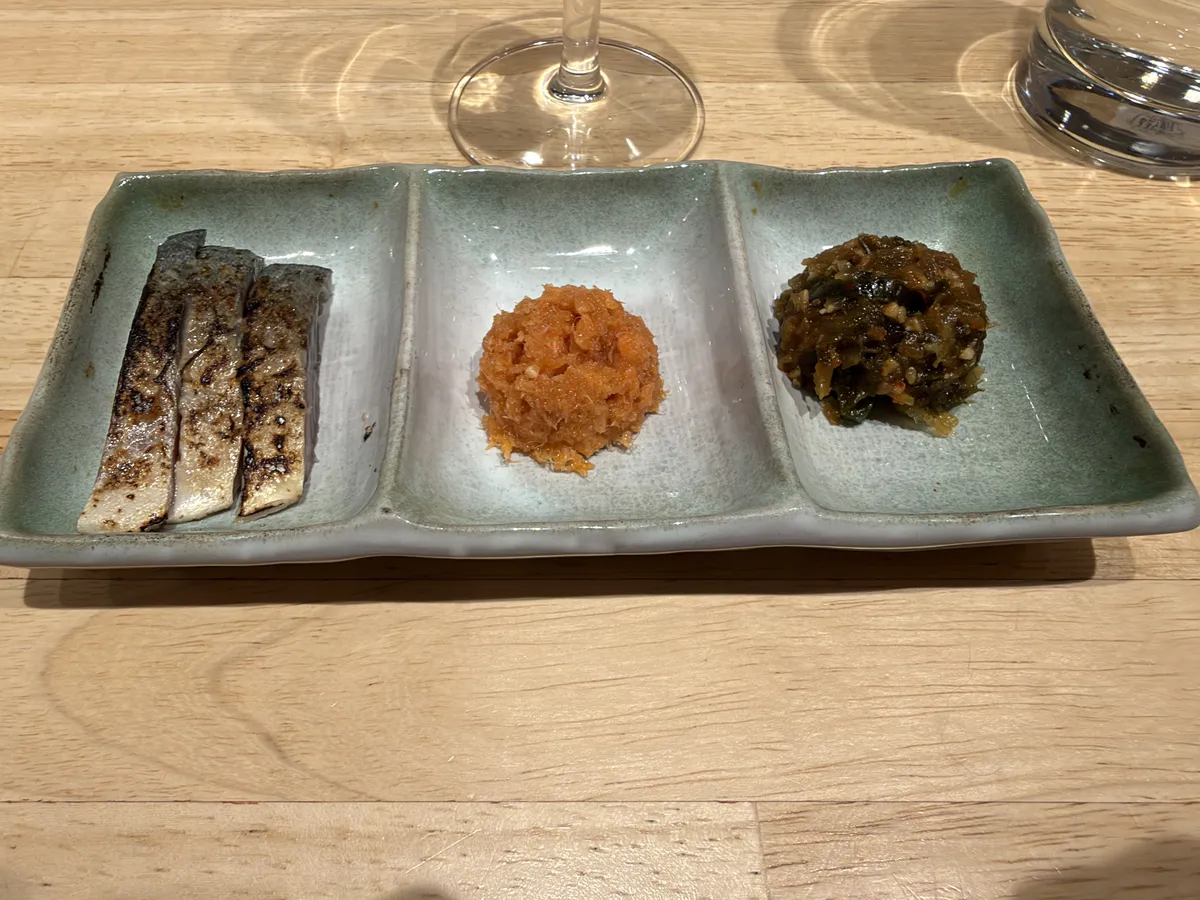
The takeaway: a rich, umami-forward sake doesn’t automatically work best with the strongest-flavored food. For this bottle, savory dishes with some richness, but without overpowering seasoning, worked best.
Approachability: 3.5 / 5
What makes it approachable:
- A smooth, rounded texture
- Moderate sweetness and balanced flavors
- Alcohol that is present without feeling harsh
What to keep in mind:
- It is fairly full-bodied, with a pronounced rice and koji character. If you are looking for something delicate, fruity, and refreshing, a lighter style may be a better first step.
- At 16% alcohol, it is a more substantial glass than many entry-level sakes.
- As an unpasteurized new-season release, it needs refrigeration and may be hard to find outside Japan.
For someone who already enjoys savory food and wants to explore the flavor of rice in sake, I think this could be a rewarding choice.
This score reflects how approachable the sake may be for beginners, not its overall quality. How I Score Approachability
Availability
In the U.S.: I couldn’t find this Fukuno Hana Shiboritate release—or any Kuzo or Hamafukutsuru sake—at Palate Project when I checked. Kuzo produces several versions with different rice, so a listing for “Kuzo Junmai Ginjo” or “Kuzo Junmai Daiginjo” shouldn’t be assumed to be this bottle. Look for the words Fukuno Hana, Shiboritate, and Shinmai Shinshu.
If you want to try sake made with Fukuno Hana rice: Palate Project lists Harushika Shiboribana, a junmai ginjo nama from Nara made with Fukuno Hana (spelled “Fukunohana” there), polished to 60% with 16% alcohol—on paper, a close match to Kuzo. Palate Project describes it as a slightly rich nama with strawberry and lychee aromas, so expect a fruitier profile than the Kuzo I tasted. It was out of stock when I checked in November 2026, so check the product page for current availability. I haven’t tasted it myself.
First-time Palate Project customers can use the discount code FRIEND-8V4N8XZ for 10% off one-time purchases (not subscriptions). The code can be used once per customer and can’t be combined with other discount codes.
This is an affiliate link. If you buy through it, I may earn a commission at no extra cost to you.
Where in Japan
- Nada Hamafukutsuru Brewery, Uozaki, Kobe — The brewery behind Kuzo, in Nada’s Uozaki-go district. Official website
- Izushi, Toyooka City, Hyogo — Where the Fukuno Hana rice was grown.
- Asano Nihonshuten Sannomiya, Kobe — Where I tried it.
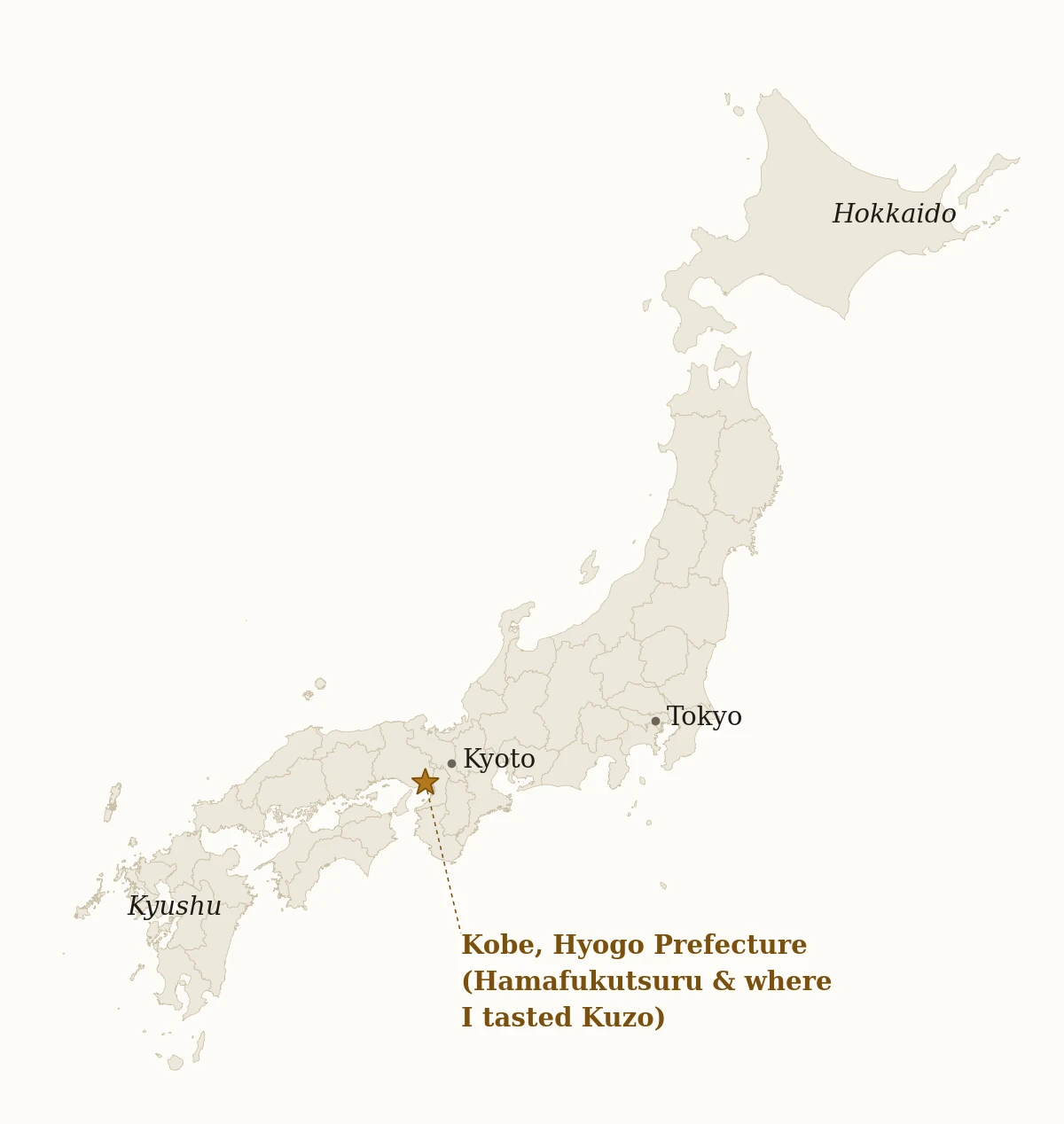
Kobe is in Hyogo Prefecture, in the Kansai region of western Japan. The map below zooms in on Hyogo.
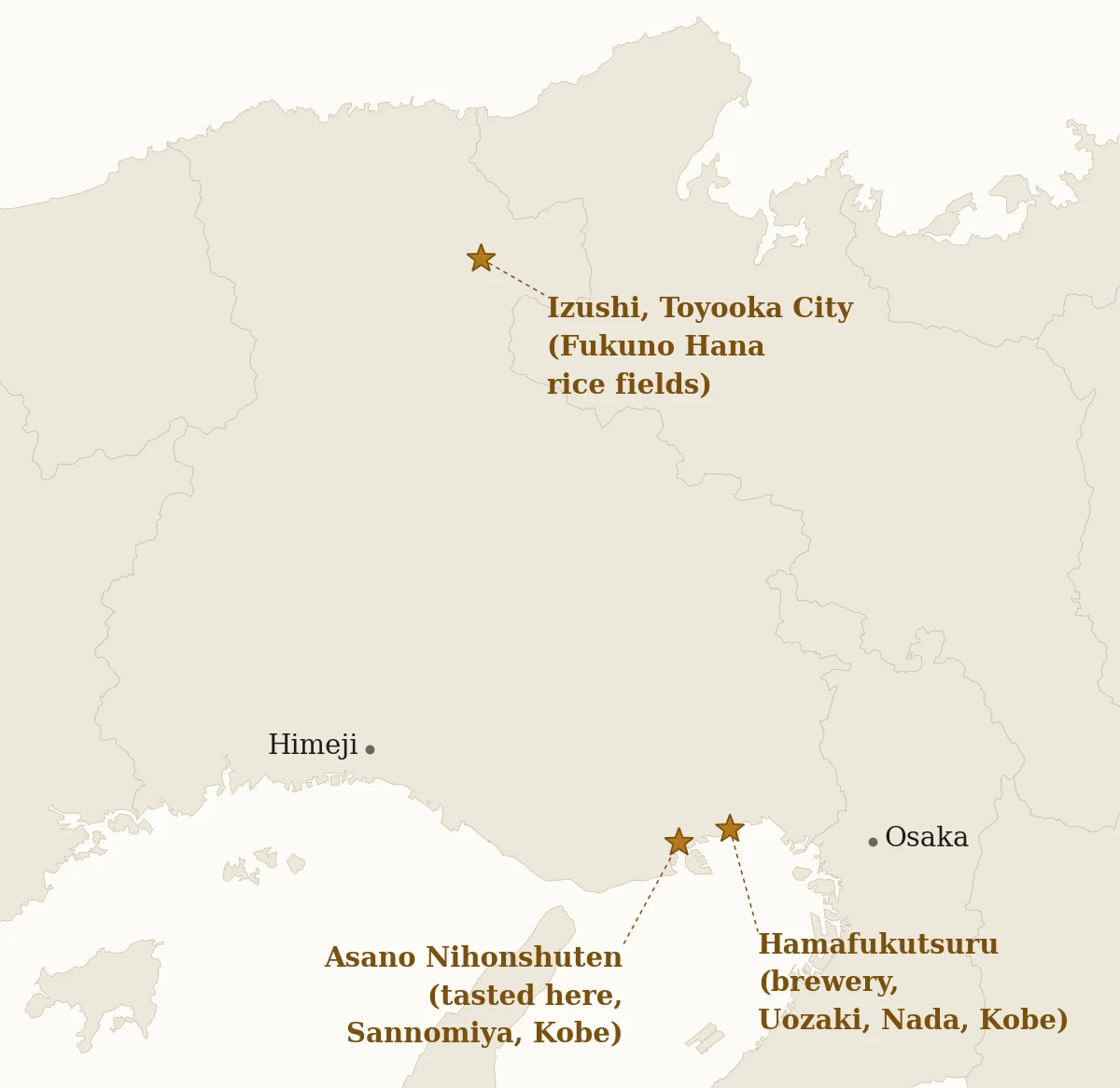
Where in Japan: Kobe, Hyogo Prefecture, in the Kansai region. Brewed by Hamafukutsuru in Kobe’s Nada district with Fukuno Hana rice grown in Izushi, northern Hyogo.
Visiting the Brewery
Hamafukutsuru runs a visitor brewery where you can watch sake being made through glass windows and taste at a paid tasting counter. According to its website, it is open 10:00–17:00 (tasting last order 16:15) and closed on Mondays (open on national holidays), about a 10-minute walk from Uozaki Station on the Hanshin Line. Check the website before visiting.
Where I Tried It
I tasted Kuzo at Asano Nihonshuten Sannomiya, the same shop where I tried Tatsuriki Junmai Daiginjo Komenosasayaki and Hyaku Moku Junmai Daiginjo. It combines a bottle shop with a casual counter where you can order sake by the glass, so you can explore without committing to a full bottle. (The shop’s address and hours are in the Tatsuriki article.)
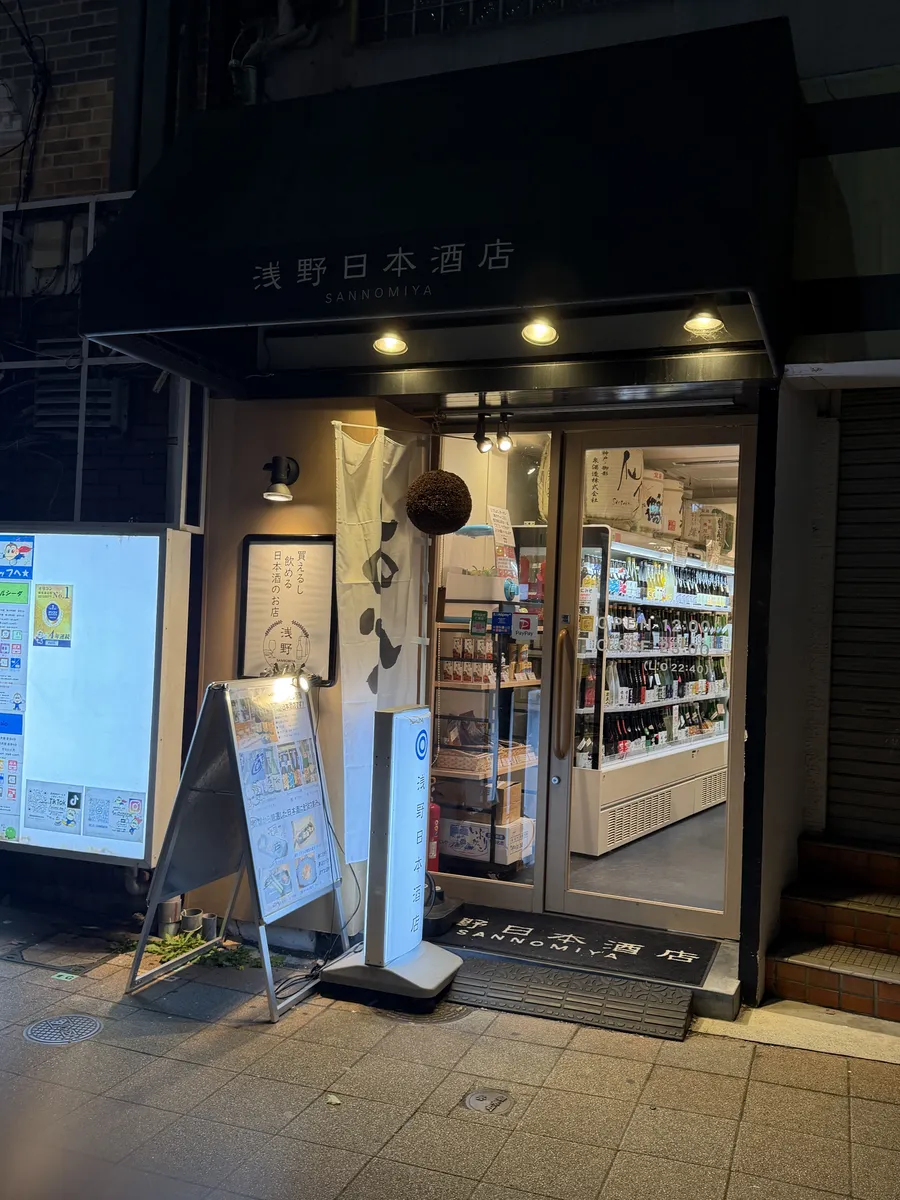
Rather than choosing a famous sake I already knew, I wanted something with a connection to Hyogo—and a bottle brewed in Kobe with rice from northern Hyogo seemed like a fitting choice. Selections change often, so the sake by the glass will differ from visit to visit.
Final Thoughts
What I remember most about Kuzo Fukuno Hana Shiboritate is not a particular fruit aroma or the freshness of natural carbonation, but the rich fragrance of rice and koji. Moderate sweetness and pronounced umami created a rounded, satisfying mouthfeel, and the finish brought acidity, a light bitterness, and a gentle spicy note together in balance.
Smoked fatty mackerel and salmon with spicy cod roe made excellent companions; the strongly seasoned green onion miso, less so.
Beyond the flavor, I appreciated the story in the bottle: a brewery rebuilt after the 1995 earthquake, using rice from northern Hyogo to make sake on the Kobe coast. It was exactly the kind of local discovery I enjoy when traveling in Japan.
My verdict: A freshly pressed nama that leads with rice and koji rather than fruit—rich, rounded, and at its best with savory food.
Approachability: 3.5 / 5
Freshly pressed sake doesn’t always have to be lively, fruity, or sparkling to leave an impression. Sometimes, the richness of rice and koji is more than enough.
This review is based on one glass served at a bar. Flavor impressions are personal, and other bottles may differ. Please enjoy sake responsibly.
Related Reading
- Muroka, Nama, and Genshu Explained: What These Sake Label Terms Mean — the brewing terms found on this bottle
- Hyaku Moku Junmai Daiginjo Review — another Nada sake, tasted at the same shop in Kobe
- Tatsuriki Junmai Daiginjo Komenosasayaki Review — another sake discovery from Hyogo Prefecture
- Senkin Modern Review|Kumamoto Homashi Rice and the Story of Tabimai — another sake with an interesting story behind its rice
- Sawaya Matsumoto Shuhari Gohyakumangoku Review — another sake encountered at a Japanese sake bar
This article contains affiliate links. If you buy through one, I may earn a small commission at no extra cost to you. It never changes what I honestly think.Full disclosure here.
Sake is an alcoholic beverage. This article is intended for readers of legal drinking age in their country — please drink responsibly.